How to Get Scratches Out of Leather: Simple and Effective Methods
To get scratches out of leather, first determine if they are light surface marks or deeper cuts by gently feeling the area. Understanding the type of scratch is crucial for effective leather scratch removal.
For light scratches, apply a small amount of leather conditioner or olive oil in circular motions using a soft cloth to blend them in.
If the scratches are deep, you will need to clean the area thoroughly, fill the scratch with a leather repair compound, and then perform color matching to restore the leather’s appearance.
Always test any product on a hidden patch first to avoid further damage.
Keep reading to discover detailed steps and prevention tips for maintaining your leather’s look and ensuring your leather stays scratch-free for longer.
Identifying Types of Leather Scratches

Although scratches on leather can look similar at first glance, identifying whether they’re surface-level or deep is key to choosing the right repair approach. Surface scratches on leather usually appear as light, superficial marks that you can often rub out or minimize easily. To identify these, gently run your finger over the scratch—if it feels smooth and shallow, it’s likely a surface scratch.
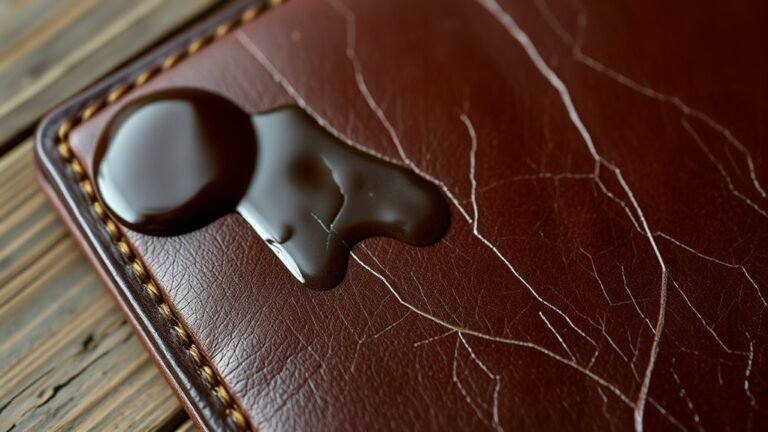
Deep scratches, on the other hand, penetrate the leather’s surface and leave visible indentations that demand more specialized repair techniques. Keep in mind that softer leathers show scratches more prominently, so always examine the texture and grain patterns.
Tools and Materials Needed for Scratch Repair

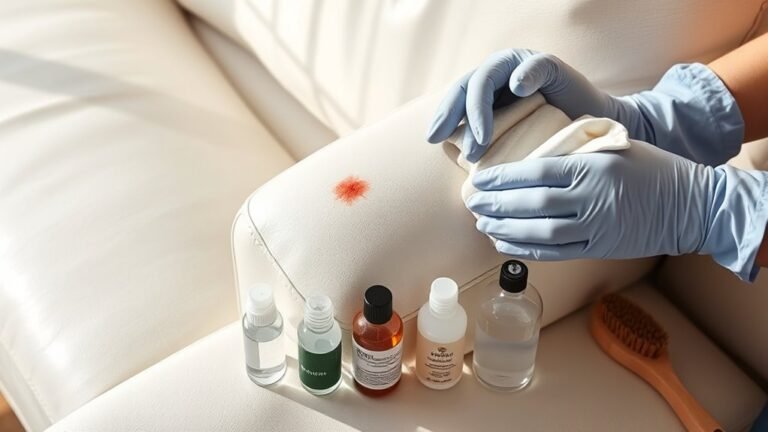
You’ll need a few essential supplies like soft cloths, leather cleaner, and suitable oils such as olive oil or leather conditioner to start repairing scratches. Choosing the right cloth is important to avoid further damage, so opt for something gentle and non-abrasive.
With the right tools and materials, you can effectively restore your leather’s appearance.
Essential Repair Supplies
A few essential supplies can make all the difference when repairing scratches on leather. Start with proper leather cleaning products to remove dirt and prepare the surface. You’ll need leather cleaners, conditioners, and colorless shoe polish to blend minor scratches seamlessly.
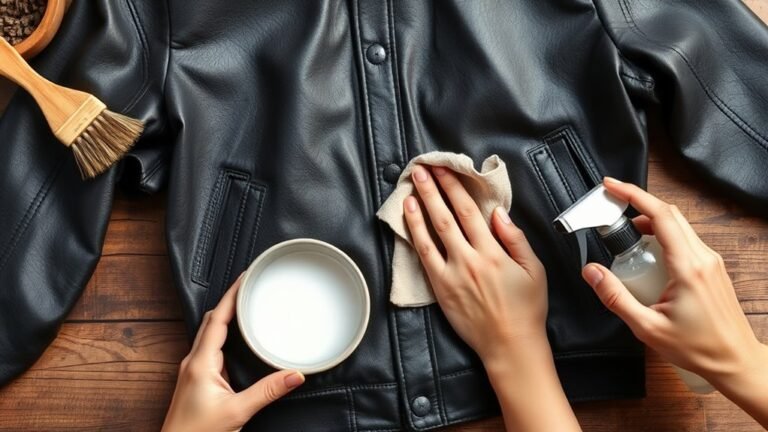
Soft cloths, brushes, or sponges help you apply these treatments evenly while buffing the surface. For superficial scratches, a small amount of olive or leather oil works well to conceal damage and condition the leather.
More severe scratches require specialized repair gels or fillers like Perfect Gel for effective restoration. Depending on the scratch’s depth, additional tools such as a gentle heat source, fine sandpaper, or leather dye might be necessary to complete advanced repairs properly.
Having these essential supplies ready guarantees you can tackle any scratch efficiently.
Choosing the Right Cloth
How can you guarantee your leather repair goes smoothly? Start by choosing the right cloth. Use a clean, soft cloth, preferably microfiber or cotton, to avoid adding scratches or transferring dirt onto your leather.
These materials are gentle and perfect for applying treatments like oils, conditioners, or polish evenly. Make sure the cloth is dry before you apply any product to prevent uneven application.
For precise work on scratches, opt for a small, plush cloth to focus treatment exactly where it’s needed. Remember, regularly washing or replacing your cloth keeps it free from dirt and abrasive particles, so you don’t inadvertently worsen the scratches while treating your leather.
Selecting the right cloth is a simple but essential step to protect and restore your leather’s beauty.
Selecting Suitable Oils
Although selecting the right oil might seem straightforward, using the proper type and application method is crucial for effective leather scratch repair. You’ll want pure olive oil, free from additives or fragrances, to nourish your leather without causing damage. Before applying, test it on a hidden spot to ensure it won’t darken or harm the material.
Use a clean, soft cloth to apply a small amount in gentle circular motions, avoiding oversaturation. Afterward, buff the area with a dry, lint-free cloth for an even finish. Combining olive oil with a quality leather conditioner can restore moisture and flexibility, enhancing the repair’s longevity.
| Feel | Restore | Protect |
|---|---|---|
| Comfort | Shine | Durability |
| Softness | Renewal | Care |
Steps to Treat Light Scratches on Leather

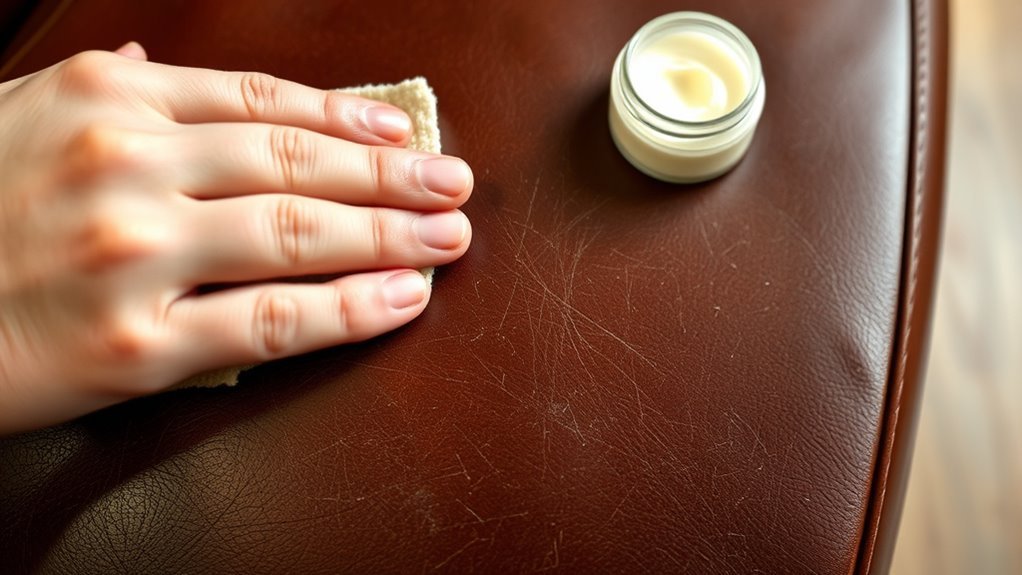
When you notice light scratches on your leather, start by applying a small amount of leather oil or conditioner with a soft cloth, rubbing it in gently using circular motions. This method helps remove scratches from leather by nourishing and softening the surface.
If you prefer, use a tiny dab of Vaseline instead, rubbing it onto the scratch with a dry cloth and buffing gently. Always test any product on an inconspicuous spot first to avoid discoloration.
After treatment, remove any excess oil or conditioner with a dry cloth to prevent residue buildup. Let the leather dry completely for at least 24 hours before checking if the scratches have faded. These steps effectively minimize the appearance of light scratches without damaging your leather.
How to Repair Deep Scratches Effectively
You’ll want to start by cleaning the deep scratch thoroughly to remove any dirt and prepare the surface for repair.
Next, focus on blending the color carefully to make the repair seamless and natural-looking. These steps are key to restoring your leather’s appearance effectively.
Deep Scratch Cleaning
If a deep scratch mars your leather, start by thoroughly cleaning the area with a leather cleaner to remove dirt and oils. This step guarantees the repair products adhere properly.
Next, apply a color-matched leather filler or repair compound directly into the scratch to level the surface. Let it dry completely.
Once dry, gently sand or buff the area to blend the filler with the surrounding leather seamlessly. To maintain uniformity, apply a colorless leather dye or polish over the repair.
Finally, finish by applying a leather conditioner to restore moisture and protect the area from further damage. This careful cleaning and repair process will help your leather look smooth and well-maintained again.
Colour Blending Techniques
After repairing a deep scratch with filler, blending the color perfectly guarantees the fix remains virtually invisible. Start by testing a matching leather dye or colorant on a hidden spot to ensure the shade and adhesion are right.
Use a fine brush to apply the dye carefully into the scratch, layering multiple thin coats rather than one thick one. This approach prevents uneven color and helps the repair blend naturally with the surrounding leather.
Once the dye dries, gently buff the area with a soft cloth to merge the repair seamlessly. Finally, seal the spot with a clear leather finish or conditioner to protect the repair and maintain the leather’s consistency.
These color blending techniques guarantee your deep scratch repair looks flawless and lasts longer.

Using Olive Oil for Scratch Minimization
While olive oil might seem like a simple household item, it can work wonders in minimizing scratches on leather. Dab a small amount of olive oil onto a soft cloth and gently rub it into the affected area using circular motions.
Use olive oil and circular motions on a soft cloth to gently reduce leather scratches.
This home remedy hydrates the leather and fills in minor surface scratches, making them less noticeable. After application, let the area dry for about 24 hours to allow the oil to fully absorb.
If scratches remain visible, repeat the process for better results. Once dry, remove excess oil with a clean cloth to avoid a greasy finish.
Always test olive oil on a hidden spot first to ensure it won’t darken or damage your leather. This simple technique is a handy, natural way to refresh your leather’s look.
Applying Leather Conditioner and Oil Safely
Before applying any leather conditioner or oil, you’ll want to pick a product that suits your leather type to avoid damage. Always test it on a hidden spot first to check for any color changes or reactions.
When you’re ready, apply a small amount gently with a soft cloth, focusing just on the scratched area to prevent over-saturating.
Proper Application Techniques
Although applying leather conditioner or oil might seem straightforward, you should always test it on a small, hidden spot first to avoid discoloration. Once you’re sure the product won’t harm your leather, use a clean, soft cloth to apply a small amount of conditioner.
Gently rub it in with circular motions, focusing on the scratched area and gradually building up coverage. This helps blend the scratch seamlessly with the surrounding leather.
Be careful not to over-saturate the surface, as too much conditioner or oil can cause staining or leave a greasy residue. After application, let the leather dry completely, usually at least 24 hours, before deciding if you need to apply more.
Following these steps ensures safe and effective treatment of your leather’s scratches.
Choosing Suitable Products
How do you choose the right product to treat scratches on your leather? Start with a quality leather conditioner designed for your leather type. Always test any leather conditioner or oil on a hidden spot first to avoid unwanted color changes or damage.
Use only a small amount, whether it’s a leather conditioner or something like olive oil, and apply it gently with a soft cloth in circular motions. Make sure the leather is clean and dry beforehand to help absorption and effectiveness.
Avoid over-applying, as too much product can darken the leather or cause buildup, leading to more issues. Finally, follow the manufacturer’s instructions carefully to guarantee safe, effective treatment and keep your leather looking its best.
Special Considerations for Suede and Nubuck
Since suede and nubuck are highly sensitive to water, you’ll want to clean them with a dry or slightly damp cloth and steer clear of water-based cleaners to prevent damage. To tackle light scratches and surface dirt, gently rub with a pencil eraser without pressing too hard.
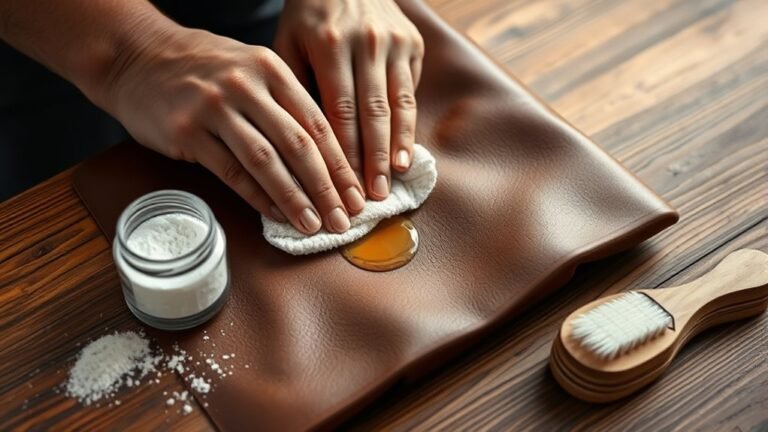
If you notice any oily spots, use an absorbent material like cornstarch or talcum powder to soak up the oil before brushing. Afterward, lift the nap by brushing with a soft wire brush or toothbrush to restore texture and reduce scratch visibility. Avoid oils or liquid conditioners that can darken or stain these materials. Instead, apply a conditioner specifically made for suede or nubuck to maintain softness and protect your leather, but always test it on a hidden spot first.
Tips for Testing Products on Leather Surfaces
When working with any leather surface, including suede and nubuck, you’ll want to evaluate repair products carefully before applying them broadly. Always test on a hidden, inconspicuous area first to avoid unwanted discoloration or damage.
Use a small, soft cloth to apply a tiny amount of the product and observe the leather’s reaction over 24 hours. Check for any changes in color, texture, or finish to ensure the product won’t harm your leather.
Keep a record of your test results, including the product used, amount applied, and time elapsed, so you can track what works best. If needed, repeat the test with different products to find the most suitable treatment that preserves your leather’s appearance without causing adverse effects.
Preventing Future Leather Scratches
To keep your leather looking its best, you’ll want to take proactive steps that prevent scratches before they happen. Start by regularly trimming any sharp nails or removing jewelry that could catch and damage the surface.
Applying leather protectant sprays adds an essential barrier, shielding your items from everyday scuffs and scratches. Be mindful to keep leather away from rough or abrasive surfaces during use and storage.
Use leather protectant sprays and avoid rough surfaces to prevent scuffs and scratches on your leather items.
When not in use, store your leather goods in soft dust bags or padded containers to minimize contact with scratch-causing objects. Finally, maintain your leather’s health by cleaning and conditioning it properly. This keeps the surface supple and more resistant to damage.
These simple habits will help preserve your leather’s appearance and durability over time.
Recommended Leather Repair Products and Alternatives
Although scratches on leather can be frustrating, you don’t have to accept them as permanent. Using leather repair products like Perfect Gel can effectively remove scratches, scuffs, and stains, especially deeper ones.
For minor surface scratches, applying colourless shoe polish helps blend the affected area with the rest of the leather, concealing imperfections. Leather conditioners such as Chamberlain’s Leather Milk and Leather Nova moisturize and soften the leather, reducing the appearance of light scratches.
If you’re looking for a quick, temporary fix, petroleum jelly fills in scratches and makes them less noticeable. However, for stubborn or deep scratches, professional-grade leather repair products like Leather Spa’s Perfect Gel deliver the best results, restoring your leather’s smooth, flawless look.

Frequently Asked Questions
Can You Get Scratch Marks Out of Leather?
Yes, you can reduce scratch marks on leather by cleaning the area, then applying leather conditioner, oil, or repair gels. Test treatments first and consistently maintain your leather to keep it looking great and minimize damage.
How to Remove Scuffs From Leather?
Like brushing away dust from a window, gently rub scuffs with a vinegar-dampened cloth, then apply leather conditioner or petroleum jelly.
Buff softly, and if needed, warm the leather to blend and restore its smooth shine.
How to Remove Deep Scratches From a Leather Bag?
You’ll want to clean the scratched area first, then apply a leather filler or repair kit to smooth it out.
Afterward, blend it with colorless dye and finish by conditioning your leather bag for best results.
Can You Reverse Leather Damage?
You can’t fully reverse leather damage, especially deep scratches, but you can minimize their appearance with conditioning, gentle buffing, and repair products.
For severe damage, you’ll likely need professional help to restore your leather’s look.
Conclusion
Getting scratches out of leather isn’t as tricky as it seems. With the right tools and techniques, you can restore its smooth look, much like a skilled painter touching up a canvas. Whether you’re dealing with light or deep scratches, treating them promptly helps keep your leather looking fresh.
Just remember to test products first and protect your leather to prevent future damage. With a little care, your leather can stay beautiful for years to come. Following these steps on how to get scratches out of leather ensures your items remain in top condition and maintain their appeal over time.