How to Remove Oil Stains From Leather Step by Step
First, identify your leather type to avoid damage when removing oil stains from leather. Blot excess oil quickly using a clean cloth—don’t rub. This helps prevent the stain from spreading further.
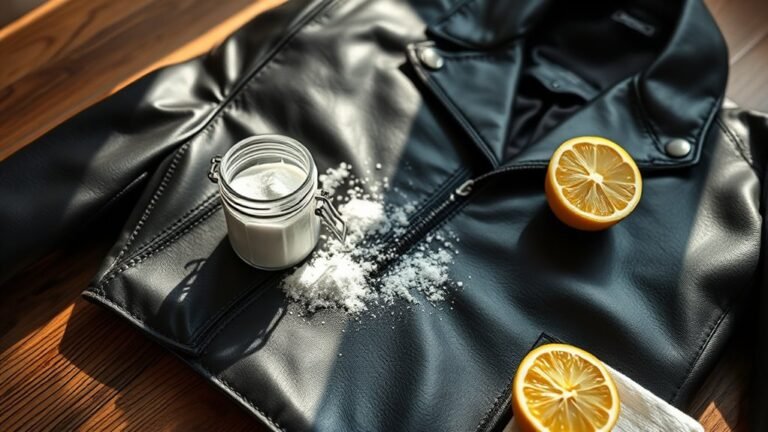
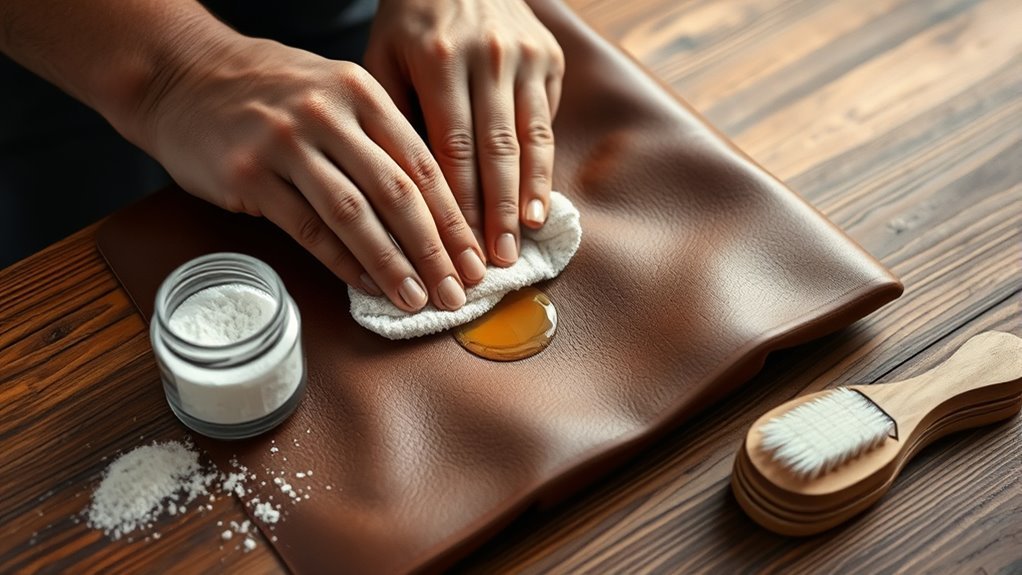
Then, sprinkle baking soda or cornstarch generously and let it sit for several hours to absorb the oil. Gently brush off the powder afterward.
Next, apply a leather-specific cleaner on a tested spot, and wipe away any residue. Finally, condition the leather to restore softness and prevent cracks.
Following these steps carefully guarantees effective stain removal and leather care, with more tips to keep your leather looking great ahead.
Identify the Type of Leather

Before you start treating an oil stain, you need to identify the type of leather you’re working with. Different leathers react differently to cleaning methods, so knowing the type helps prevent damage.
Check whether your leather is aniline, semi-aniline, or pigmented. Aniline leather is soft, natural-looking, and absorbs oils quickly, requiring gentle care. Semi-aniline has a thin protective coating, making it slightly more resistant to stains but still delicate. Pigmented leather has a durable finish and can handle more aggressive cleaning.
You can usually find this information on the product tag or ask the manufacturer. If you’re unsure, test a hidden area with a small amount of water; if it darkens quickly, it’s likely aniline or semi-aniline, which need cautious treatment.
Check the product tag or test a hidden spot with water to identify your leather type before cleaning.
Identifying your leather’s type sets you up for effective stain removal.
Blot the Excess Oil Immediately

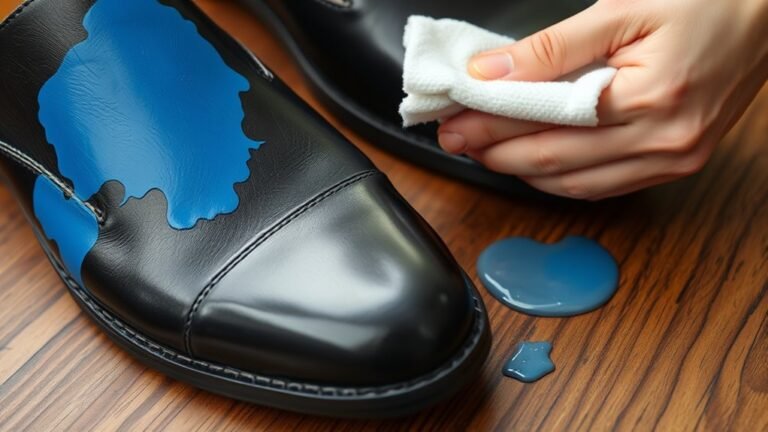
Once you notice the oil stain, grab a clean, absorbent cloth and gently blot the area to soak up as much oil as possible without rubbing it in. Rubbing can push the oil deeper into the leather, making the stain harder to remove.
Instead, press lightly and lift the cloth repeatedly to draw out the excess oil. Use fresh sections of the cloth as it becomes saturated to avoid spreading the stain.
Act quickly because the longer the oil sits, the more it soaks into the leather fibers. Remember, blotting is about absorption, not smearing.
Apply a Suitable Absorbent Powder

After you’ve blotted up as much oil as possible, the next step is to apply an absorbent powder to draw out any remaining grease from the leather.
Choose powders like baking soda, cornstarch, or talcum powder, as they work effectively without harming the leather.
Sprinkle a generous layer evenly over the stained area, ensuring full coverage.
Don’t rub the powder in, just let it rest on the surface.
This method pulls the oil from deep within the leather fibers, helping to lift the stain.
Be careful not to use anything abrasive that might damage the leather’s finish.
Applying the powder correctly sets you up for easier removal of the oil and prepares the leather for the next cleaning steps.
Let the Powder Sit and Absorb Oil
While the absorbent powder sits on the stain, it pulls the oil out of the leather’s pores, making it easier to remove. You want to leave the powder undisturbed for at least a few hours, or ideally overnight, to give it enough time to soak up as much oil as possible.
Avoid pressing or rubbing the powder into the leather, as this can push the oil deeper. Instead, let it work quietly on its own. The longer you let it sit, the better it absorbs.
If you’re in a hurry, a minimum of one hour can still help, but patience really pays off here. Keep the area dry and avoid exposing it to heat, which can set the stain further.
Gently Brush Off the Powder
Though the powder has absorbed much of the oil, you should gently brush it off to prevent any residue from settling back into the leather. Use a soft-bristled brush or a clean, dry cloth to carefully remove the powder.
Avoid scrubbing too hard, as this can damage the leather’s surface. Instead, use light, sweeping motions to lift away the powder without pushing it deeper.
Take your time and be thorough, making sure to remove all traces of the powder.
If you notice any areas where the powder clumps or sticks, gently loosen it before brushing it away.
Once you’ve removed the powder, inspect the leather to determine if any oil stains remain before moving on to the next cleaning step.
Use a Leather Cleaner for Residual Stains
If some oil stains still linger on your leather, you’ll want to apply a specialized leather cleaner designed to break down and lift those stubborn spots without damaging the material.
Choose a cleaner formulated specifically for leather, avoiding harsh chemicals.
Apply a small amount of cleaner onto a soft, clean cloth and gently rub it into the stained area using circular motions. Don’t soak the leather; a little cleaner goes a long way.
After treating the stain, wipe away any excess cleaner with a damp cloth, then let the leather air dry naturally.
Always test the cleaner on an inconspicuous spot first to ensure it won’t discolor or harm your leather.
This method helps remove residual oil without compromising your leather’s integrity.
Condition the Leather After Cleaning
After cleaning your leather, you’ll want to condition it to restore moisture and keep the material supple. Choose a high-quality leather conditioner designed for your leather type. Apply a small amount onto a soft cloth, then gently rub it into the surface using circular motions.
Don’t forget to cover the entire area to guarantee even conditioning. Let the leather absorb the conditioner for about 20 minutes, then buff off any excess with a clean cloth.
Conditioning prevents drying and cracking, extending your leather’s life and maintaining its appearance. Repeat this process every few months or whenever the leather starts feeling stiff.
Proper conditioning also helps protect against future stains, so don’t skip this essential step after cleaning oil stains.
Test Cleaning Products on a Hidden Area
Conditioning your leather helps protect it, but you still need to be careful when applying cleaning products. Before you tackle an oil stain, always test your chosen cleaner on a hidden spot, like inside a seam or under a flap.
This lets you see how the leather reacts without risking visible damage. Apply a small amount of the product, wait a few minutes, and check for discoloration, texture changes, or any adverse effects.
If the leather looks good and feels the same, you’re safe to proceed. However, if you notice fading, darkening, or stiffness, try a milder cleaner or consult a professional.
Testing first guarantees you preserve your leather’s appearance while effectively removing stains.
Prevent Future Oil Stains on Leather
To keep your leather looking its best, you’ll want to take steps that stop oil stains before they start. Preventing stains not only protects your investment but also saves you time and effort later.
Here’s how you can guard your leather effectively:
Apply a leather protector spray designed to repel oils and liquids. Wipe hands clean before handling leather items to avoid transferring oils.
Keep leather away from greasy foods or lotions that can leave marks. Regularly clean and condition your leather to maintain its natural barrier.
Frequently Asked Questions
Can Oil Stains Permanently Damage Leather if Left Untreated?
Yes, oil stains can permanently damage leather if you leave them untreated. They soak in, causing discoloration and weakening the material.
Acting quickly helps prevent lasting harm and keeps your leather looking its best.
Are Natural Oils Like Coconut Oil Safe for Leather Conditioning?
Yes, you can use natural oils like coconut oil for leather conditioning, but be cautious. They might darken or soften leather excessively over time, so test on a small area first to avoid damage or unwanted changes.
Is It Safe to Use Household Items Like Baking Soda on Leather?
You might find baking soda a bit too enthusiastic for leather’s delicate nature. It’s safer to choose gentler, leather-specific products to avoid any unintended wear or fading, preserving your leather’s elegance and longevity.
How Often Should Leather Be Professionally Cleaned to Prevent Stains?
You should get your leather professionally cleaned every 12 to 18 months to prevent stains and maintain its quality.
Regular cleaning keeps oil and dirt from settling, so your leather stays looking fresh and lasts longer.
Can Oil Stains on Leather Be Removed Without Any Cleaning Products?
You can gently dab oil stains using soft cloths or sprinkle some baking soda to absorb the excess, but without cleaning products, results might be a bit shy.
For best care, a proper cleaner’s your friend.
Conclusion
Like a gentle rain washing away grime, removing oil stains from leather takes patience and care. By acting quickly, using the right powders, and treating your leather with love through cleaning and conditioning, you’ll restore its natural glow.
Remember to test products on hidden spots and protect your leather to keep it looking flawless. With these steps, your leather will shine bright, ready to face the world without a trace of oil’s shadow.
Following this guide on how to remove oil stains from leather ensures your cherished items stay beautiful and well-maintained. Proper cleaning and conditioning are key to preserving the leather’s texture and appearance over time.