What Happens If You Use Wood Stain on Leather?
If you use wood stain on leather, you’ll likely end up with uneven colors and a stiff, sticky feel. Wood stain contains chemicals designed for wood, not leather, so it can dry out the material, cause cracking, and alter the texture permanently. Leather absorbs these chemicals unevenly, leading to blotchy, unattractive patches and weakened fibers.
To avoid damaging your leather, it’s helpful to understand why wood stain reacts this way and what safer alternatives you can try instead. Using the right products ensures your leather stays in good condition without unwanted side effects. Always choose stains and dyes formulated specifically for leather to maintain its natural look and feel.
Understanding the Composition of Wood Stain

Before you apply wood stain to leather, it’s important to understand what wood stain is made of. Wood stains typically contain pigments or dyes suspended in a solvent, like mineral spirits or water.
These solvents help the stain penetrate porous wood surfaces, enhancing their color and grain. You’ll also find binders that help the pigment adhere to the surface.
However, these ingredients are formulated specifically for wood’s porous structure and chemical makeup. Since leather has a very different texture and composition, the solvents and pigments in wood stain mightn’t interact well with it.
Knowing this helps you anticipate potential issues and decide if wood stain is suitable for your leather project.
Understanding the stain’s chemistry is your first step toward making an informed choice.
How Leather Reacts to Wood Stain

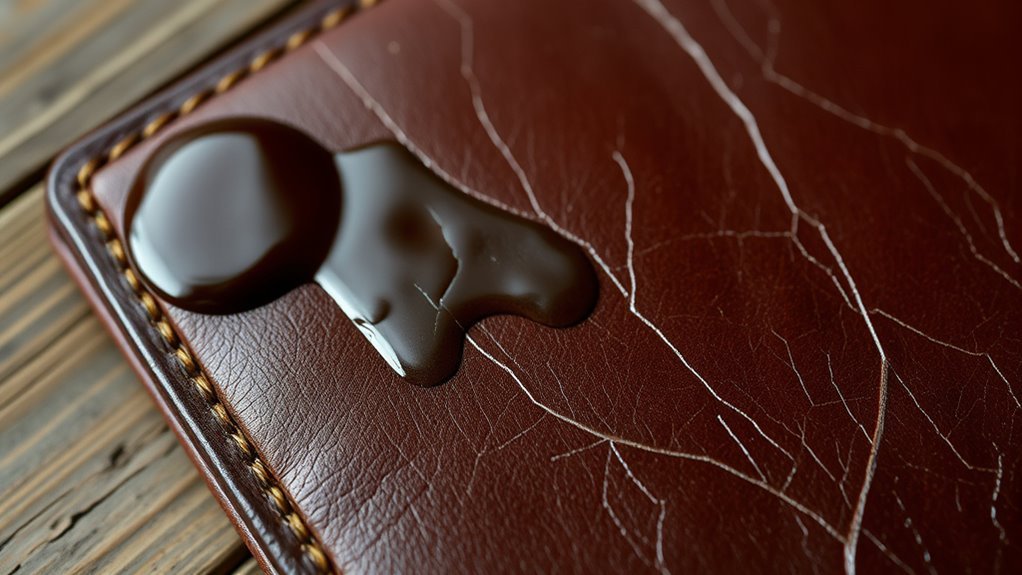
Although wood stain is designed for wood, applying it to leather triggers a different set of reactions due to leather’s unique texture and composition. When you use wood stain on leather, the material absorbs the stain unevenly because leather is porous with varying densities. This causes discoloration and patchy results.
The chemicals in wood stain can also interact with leather’s tanning agents, altering its surface texture. You might notice a stiff or sticky feel as the stain dries. Understanding these reactions helps you anticipate how leather responds to substances not meant for it.
Leather absorbs stain inconsistently
Surface texture may become rough or sticky
Color changes can be unpredictable
Interaction with tanning agents alters finish
Drying process affects leather flexibility
Potential Damage Caused by Wood Stain on Leather

Since leather absorbs wood stain unevenly and reacts chemically with its components, you risk causing lasting damage when applying wood stain to leather.
Applying wood stain to leather can cause uneven absorption and chemical reactions, leading to permanent damage.
The stain’s harsh chemicals can dry out the leather, leading to cracking and brittleness over time.
Uneven absorption might result in blotchy, unattractive patches that are tough to fix.
You might also notice discoloration that alters the leather’s natural tone permanently.
Additionally, wood stain can weaken the leather’s fibers, reducing its flexibility and durability.
Once damaged, restoring leather to its original condition is challenging and often requires professional intervention.
If you want to maintain your leather’s beauty and integrity, it’s best to avoid wood stains and opt for products designed specifically for leather care.
Differences Between Wood Stain and Leather Dye
When you choose between wood stain and leather dye, understanding their fundamental differences is essential for achieving the desired finish. Wood stain is formulated to penetrate porous wood fibers, enhancing grain while offering durability for hard surfaces.
Leather dye, however, is designed to soak into leather’s fibrous structure, maintaining flexibility and preventing cracking. Using the wrong product can lead to unsatisfactory results.
- Wood stain contains solvents suited for wood, which may dry out leather.
- Leather dye uses oils and pigments that preserve leather’s softness.
- Wood stain often leaves a glossy or matte finish; leather dye offers a natural look.
- Leather dye bonds chemically with leather fibers; wood stain sits more on the surface.
- Wood stain colors can be harsher; leather dyes provide more subtle, even tones.
Risks of Using Wood Stain on Different Types of Leather
If you apply wood stain to leather, you risk damaging its texture and flexibility, especially depending on the leather type. Aniline leather, being untreated, absorbs stain deeply, causing uneven color and stiffness.
Semi-aniline leather may resist some stain, but the chemicals can still dry it out. Corrected-grain leather has a protective coating, but wood stain can crack or peel it. Bonded leather, made from scraps, reacts unpredictably and often deteriorates quickly.
| Leather Type | Risk Level | Effects of Wood Stain |
|---|---|---|
| Aniline | High | Uneven color, stiffness, cracking |
| Semi-aniline | Medium | Dryness, surface damage |
| Corrected-grain | Medium-High | Cracking, peeling of surface layer |
| Bonded | Very High | Quick deterioration, unpredictable |
Always consider these risks before experimenting with wood stain on leather.
Safer Alternatives for Coloring or Restoring Leather
Given the risks wood stain poses to various types of leather, you’ll want to explore safer options for coloring or restoring your leather items. Using products designed specifically for leather ensures better results and preserves the material’s integrity.
Avoid wood stain on leather; opt for leather-specific products to preserve and enhance your items safely.
Consider these alternatives:
- Leather dyes formulated for flexibility and deep penetration
- Leather paints that provide vibrant color without cracking
- Leather conditioners with tinting agents for subtle restoration
- Professional leather repair kits containing color-matched compounds
- Natural oils like neatsfoot or mink oil that enhance color and softness
These options protect leather from drying and damage, maintaining its look and durability. Avoid harsh chemicals and solvents that can weaken or discolor leather over time.
Choosing the right product keeps your leather items looking great without the risks wood stain carries.
Tips for Proper Leather Maintenance and Care
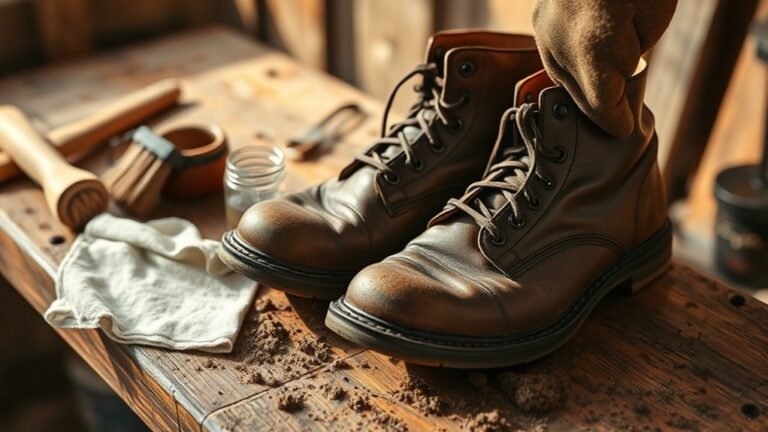
Although leather is durable, it demands regular care to stay supple and attractive. You should clean it gently with a soft cloth and mild soap, avoiding harsh chemicals that can dry it out.
Condition your leather every few months using a quality leather conditioner to prevent cracking and maintain flexibility. Keep leather items away from direct sunlight and heat sources, which can cause fading and brittleness.
If your leather gets wet, let it air dry naturally. Never use a hairdryer or heater.
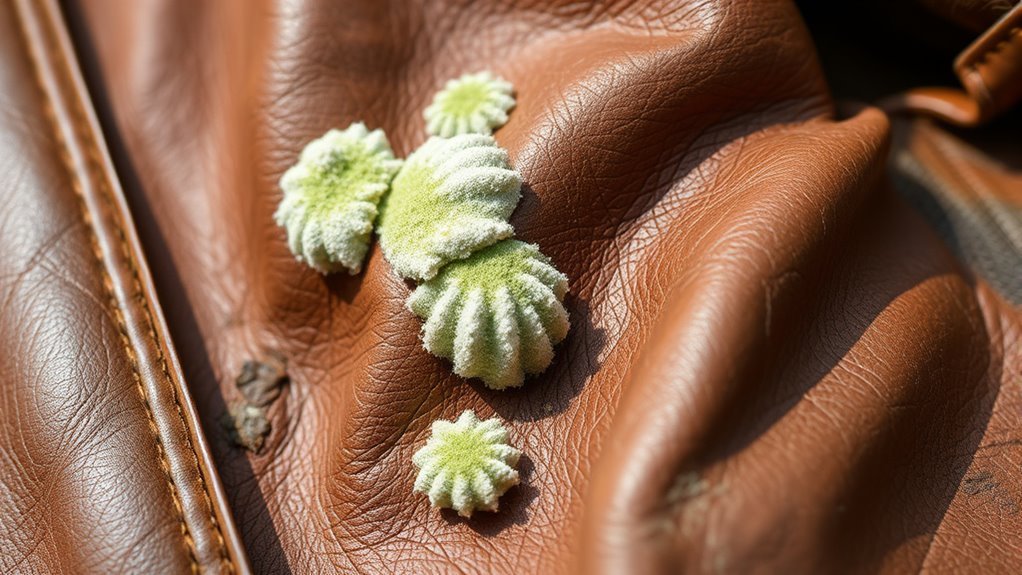
Store leather in a cool, dry place, ideally in a breathable bag to prevent mold.
Frequently Asked Questions
Can Wood Stain on Leather Cause Allergic Reactions?
Yes, wood stain on leather can cause allergic reactions because it contains chemicals and solvents that may irritate your skin.
Always test a small area first and wear gloves to protect yourself from potential allergens.
How Long Does Wood Stain Take to Dry on Leather?
Wood stain on leather dries like a slow sunset, usually taking 24 to 48 hours to fully set.
You’ll want to give it plenty of time to cure, or it might smudge and ruin your work.
Will Wood Stain on Leather Emit Harmful Fumes?
Yes, wood stain on leather can emit harmful fumes because it contains chemicals not meant for skin contact or indoor air quality.
You should use it in a well-ventilated area and consider safer alternatives for leather.
Can Wood Stain Be Removed From Leather Easily?
You might find wood stain on leather a bit stubborn to erase. It doesn’t exactly vanish effortlessly, so you’ll need gentle cleaners and patience to coax it out without harming the leather’s natural charm.
Does Temperature Affect Wood Stain Absorption on Leather?
Yes, temperature affects wood stain absorption on leather. If it’s too cold, the stain dries slowly and absorbs unevenly.
When it’s warm, the leather soaks it up faster, giving you a more consistent finish.
Conclusion
If you use wood stain on leather, you risk discoloration, damage, and a ruined texture. Wood stain isn’t made for leather; it dries harsh, seeps unevenly, and can cause cracking. This can permanently affect the leather’s appearance and durability.
Instead, choose leather dye, leather paint, or specialized conditioners designed specifically for leather care. These products penetrate properly and maintain the material’s softness and flexibility.
Protect your leather by cleaning gently, moisturizing regularly, and avoiding harsh chemicals. Remember, treating leather with care preserves its beauty, extends its life, and keeps it looking vibrant.
Never compromise on leather care, never guess with unsuitable products, and always choose wisely to ensure the best results for your leather items.