Can Leather Get Wet? How to Protect and Care for Leather Items
Yes, leather can get wet, but you need to act quickly to protect it. When leather gets wet, blot excess moisture with a dry cloth to prevent water from soaking in too deeply. Then, air dry the leather away from direct heat or sunlight to avoid damage and stiffness.
Different types of leather react differently to moisture—suede and nubuck absorb water faster than full-grain leather.
After the leather is dry, conditioning it helps keep the material flexible and prevents cracking.
Proper care after leather gets wet is essential to maintain its appearance and durability. Learn how to handle wet leather correctly for lasting results and to preserve its natural beauty.
Understanding Leather and Water Interaction

Although leather is prized for its durability and style, it’s important to understand how it reacts to water. Leather is a porous material, so it readily absorbs moisture, which can lead to water damage if not handled correctly.
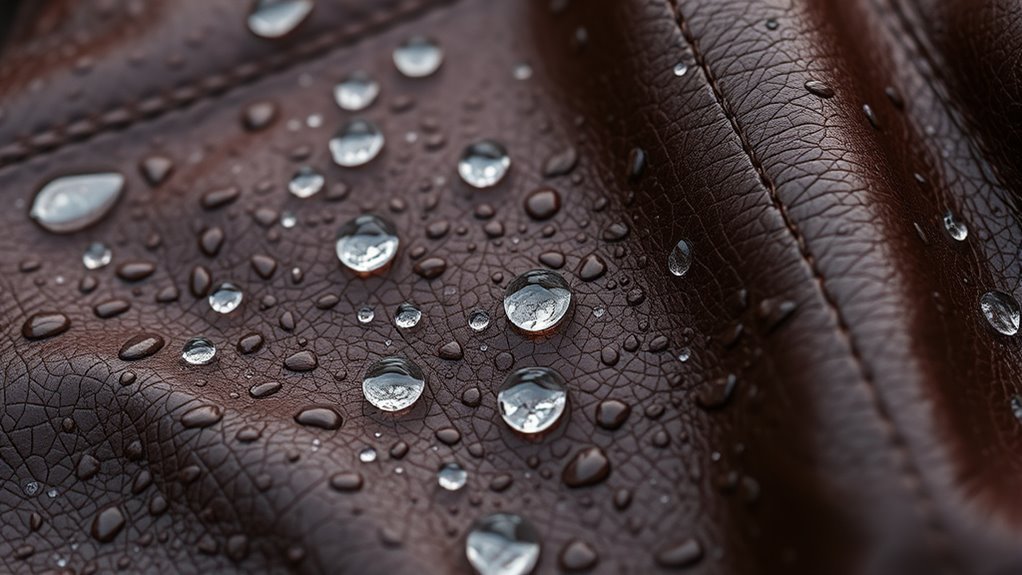
When water bonds with the oils and tannins in leather, it causes water stains, discoloration, and a loss of suppleness. You should avoid exposing leather to excessive moisture because repeated contact weakens its fibers, leading to cracking and deformation.
For proper leather care, always let it air dry at room temperature after exposure to water. Never use heat sources, as they can cause stiffness and damage. While some leathers offer water resistance, most need cautious drying to maintain their beauty and longevity.
Effects of Water on Different Types of Leather

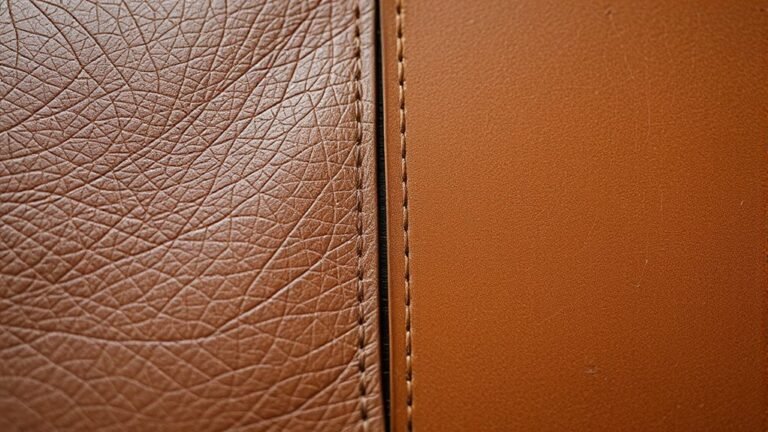
Understanding how water affects leather means recognizing that not all leather reacts the same way. Full-grain leather is naturally more water-resistant, so it handles getting wet better than suede or nubuck.
Those leather types are porous and absorb water quickly, leading to stains and damage. Chrome-tanned leather also offers better water resistance compared to vegetable-tanned leather, which tends to suffer more when exposed to water.
Porous leathers absorb water fast, causing stains; chrome-tanned leather resists water better than vegetable-tanned varieties.
Bonded leather is the least water-resistant, as its composite materials absorb water easily, causing deterioration. No matter the leather type, if it gets wet, proper drying is vital to prevent lasting damage.
While treatments can improve water resistance, they don’t make your leather fully waterproof, so understanding your leather’s nature helps you protect it effectively.
How Tanning Methods Influence Water Resistance

You’ll notice that chrome-tanned leather naturally resists water better than vegetable-tanned leather because of its chemical treatment and smoother surface. This difference affects how each type handles moisture and impacts their overall durability.
Understanding these tanning methods helps you choose leather that fits your needs for water exposure.
Chrome Vs Vegetable Tanning
When you compare chrome-tanned leather to vegetable-tanned leather, you’ll notice a clear difference in water resistance. Chrome-tanned leather undergoes a chemical tanning process using chromium salts, resulting in a dense surface with a smooth, waterproof finish.
Vegetable-tanned leather, made with natural tannins, absorbs moisture more readily, making it prone to water damage without extra care. Here’s what you should know:
- Chrome-tanned leather offers better inherent water resistance due to its protective layer from chemical tanning.
- Vegetable-tanned leather needs additional waterproofing treatments to resist moisture absorption.
- The tanning process directly impacts how each leather type withstands water exposure.
Choosing between them depends on how much exposure to water you expect and whether you’re prepared to maintain the leather accordingly.
Impact on Water Resistance
Although both chrome and vegetable tanning transform rawhide into durable leather, they affect water resistance in very different ways. Chrome-tanned leather generally offers higher water resistance because it undergoes chemical processing that helps repel moisture.
If you choose full-grain leather that’s chrome-tanned, you’ll benefit from natural oils and finishes that enhance waterproofing, reducing water stains and speeding up leather drying.
On the other hand, vegetable-tanned leather tends to absorb water more readily due to its natural tanning process. This makes it less water-resistant and more prone to water stains if left untreated.
To maintain its look and longevity, you’ll need to apply additional waterproof treatments to vegetable-tanned leather. Understanding how tanning influences water resistance helps you care for your leather items and keep them protected.
Durability and Moisture Response
Because tanning methods shape how leather handles moisture, they play a crucial role in its durability. Your leather’s moisture response and water resistance depend largely on whether it’s chrome-tanned or vegetable-tanned.
Chrome tanning produces denser, water-resistant leather that resists water penetration better, while vegetable tanning results in a more absorbent material needing careful drying and conditioning.
To maintain leather durability and prevent water stains, you should:
- Use conditioning products rich in natural oils to restore moisture after exposure
- Allow a proper drying process to avoid damage or warping
- Apply waterproofing treatments to boost water-resistant leather qualities
Understanding your leather’s tanning method helps you protect it and extend its life against moisture challenges.
Immediate Steps to Take When Leather Gets Wet
When your leather item gets wet, start by blotting off any excess moisture with a dry, lint-free cloth. Next, stuff it with newspaper or paper towels to help keep its shape and soak up internal dampness. Finally, let it air dry naturally in a cool, well-ventilated spot away from direct heat or sunlight.
Blot Excess Moisture
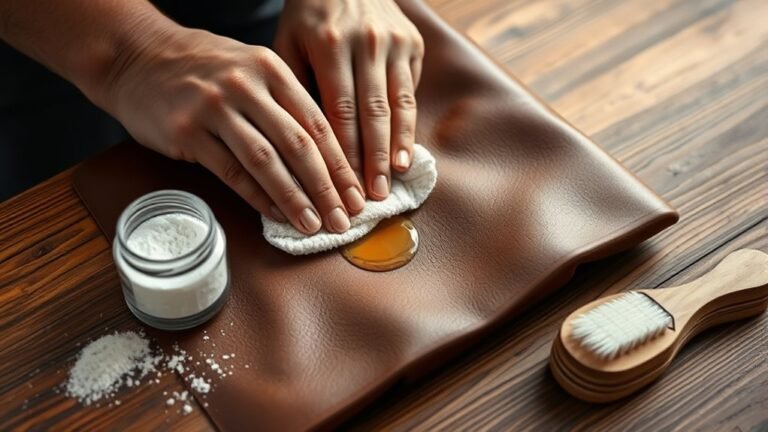
If your leather item gets wet, start by blotting excess moisture immediately with a dry, lint-free cloth to stop further absorption. Use a dry cloth to gently press the leather’s surface, don’t rub or scrub, as that can spread water and cause damage. Instead, let the cloth absorb the moisture without pulling or stretching the material. Taking these steps helps prevent damage and prepares the leather to air dry properly.
Here’s how to blot excess moisture effectively:
- Gently press a dry cloth onto the wet leather to absorb water.
- Avoid rubbing to protect the leather surface.
- Allow the leather to air dry naturally in a cool, ventilated space.
These actions help maintain your leather’s quality and prevent long-term moisture damage.
Maintain Shape Internally
To maintain your leather item’s shape after it gets wet, stuff its interior with crumpled newspaper or paper towels to absorb moisture and provide gentle support. This internal drying method aids in moisture absorption and shape preservation, preventing distortion as the leather dries.
Make sure not to overstuff the leather to avoid stretching. Place the item on a hard, flat surface to support shape maintenance during the drying process. Keep it in a cool area with good ventilation and air circulation, away from direct heat or sunlight, to promote even moisture control.
Check the crumpled newspaper regularly and replace it if damp to maximize drying efficiency. Following these steps helps maintain your leather’s original form and ensures effective internal drying without compromising its integrity.
Air Dry Naturally
Although leather can be durable, it requires careful handling once it gets wet to prevent damage. When leather gets wet, you need to let the leather dry slowly to protect its texture and shape. Avoid drying in closed, heated spaces that can trap water molecules and cause stiffness or cracking.
Instead, air dry naturally by following these steps:
- Blot excess water gently with a dry, lint-free cloth to remove surface moisture.
- Stuff the leather item with crumpled paper to absorb deeper moisture and maintain form.
- Place it in a cool, well-ventilated area, away from direct sunlight or heat sources.
Drying Techniques for Wet Leather Items
When leather gets wet, you need to dry it carefully to prevent damage. First, gently pat away excess water with a soft cloth without rubbing to avoid pushing moisture deeper.
Then, air dry your wet leather at room temperature in a well-ventilated area, steering clear of direct sunlight or heat sources that cause water stains and cracking. For bags or shoes, stuff them with crumpled paper to absorb internal moisture and maintain shape.
Air dry leather away from heat and sunlight; stuff bags or shoes with paper to keep shape and absorb moisture.
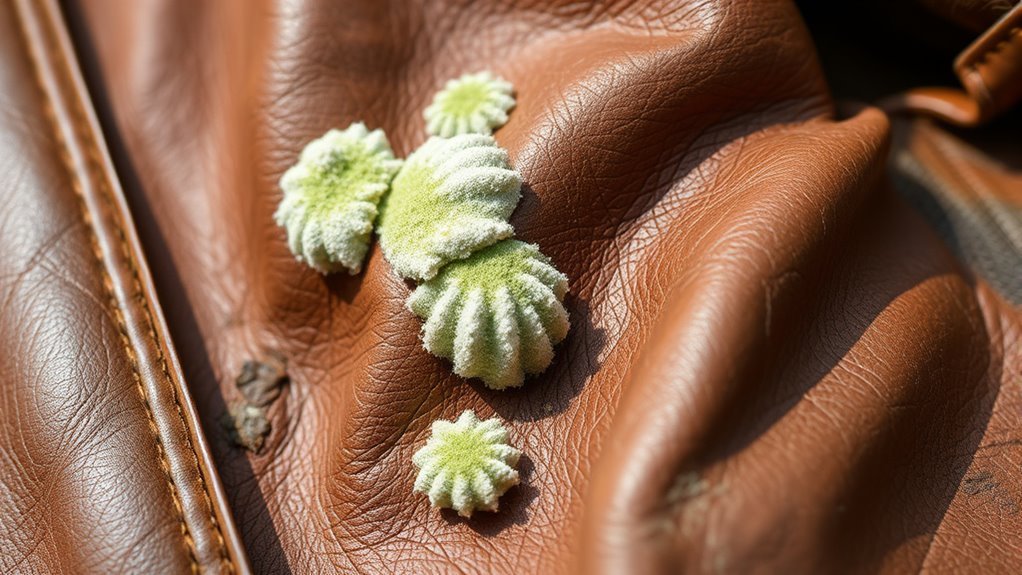
Lay flat items like wallets on a hard surface to dry evenly. Leave your leather to dry completely. This can take 24 to 48 hours to prevent mold and prepare it for later care.
Avoid applying leather cleaner or conditioner until it’s fully dry, so you protect and eventually restore oils without trapping moisture.

Conditioning Leather After Water Exposure
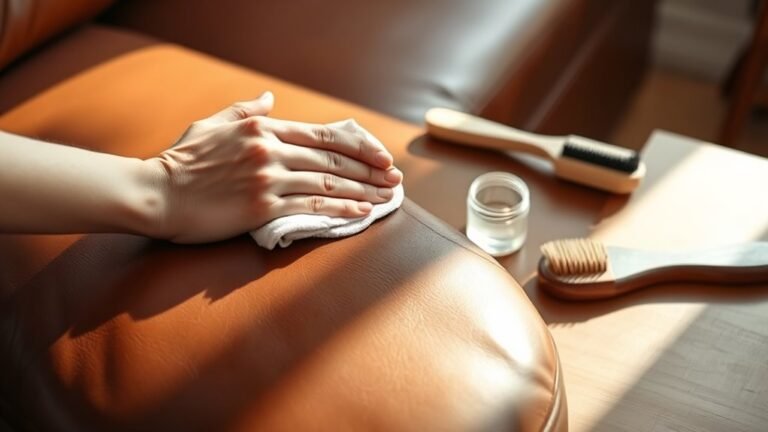
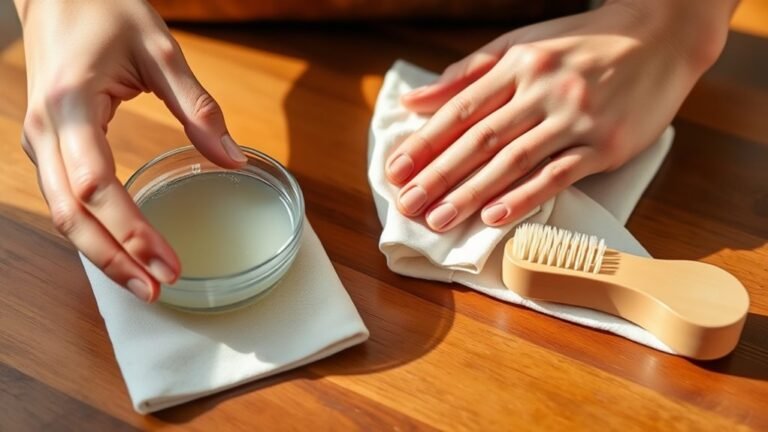
Once your leather is completely dry, you should apply a high-quality conditioner to restore its moisture and flexibility. Conditioning leather after water exposure helps restore oils lost due to water damage, preventing stiffness and cracking.
Make sure to wait 8-10 hours after drying to avoid trapping moisture beneath the surface. When applying leather conditioner, use circular motions for even application and maximum moisture absorption.
Regular maintenance through conditioning leather every six months supports leather protection and keeps dry leather supple. Key points to remember include:
- Wait until the leather is fully dry before conditioning
- Use a high-quality conditioner for best results
- Apply in circular motions to cover water stains evenly
Following these steps ensures your leather stays resilient and protected after water exposure.
Removing Water Stains From Leather Surfaces
After conditioning your leather to restore moisture, you may notice some water stains still visible on the surface. To remove water marks, start by gently cleaning the affected area with a leather cleaner and a soft cloth. This helps lift the stains without damaging the material.
For stubborn water stains, apply conditioner after cleaning to restore moisture and blend the marks with the surrounding leather. Always guarantee proper drying by letting your leather air dry in a cool, shaded spot to prevent stains from setting deeper.
While cleaning, avoid harsh rubbing, and never use heat to dry. If you have suede items, remember to brush suede gently instead of using liquid cleaners. Following these steps keeps your leather clean and looking its best.
Caring for Special Leather Types: Suede, Nubuck, and Faux Leather
How do you care for delicate leather types like suede, nubuck, and faux leather? Both suede and nubuck are highly absorbent and prone to water damage, so you need special care. When they get wet, gently blot moisture with a dry cloth, then use a suede brush for restoring texture. Dry them slowly at room temperature. Never use direct heat. Faux leather is more water-resistant but still dislikes excessive moisture.
Keep these tips in mind:
- Use specialized brushing for suede and nubuck after drying.
- Apply a water and stain repellent spray to protect absorbent suede and nubuck.
- Clean faux leather with a damp cloth and avoid soaking it.
This approach helps maintain the integrity and appearance of these special leather types.

Preventative Measures to Protect Leather From Water Damage
Although leather naturally resists some moisture, you can’t rely on it to stay dry without extra care. To prevent water damage, always pre-treat leather with waterproofing creams or a water-repellent spray to create a moisture barrier.
Regular conditioning with natural oils also helps maintain leather’s water resistance. Proper storage in a cool, dry place reduces water absorption risk. Before full application, testing the product on a hidden area prevents unwanted stains.
| Preventative Step | Purpose | Tips |
|---|---|---|
| Waterproofing Creams | Minimize water absorption | Apply evenly on all surfaces |
| Water-Repellent Spray | Create moisture barrier | Reapply regularly |
| Conditioning | Restore lost moisture | Use natural oil-based products |
| Storage | Avoid humidity & rain | Store in breathable bags |
| Testing | Ensure no discoloration | Test on inconspicuous spot first |
Frequently Asked Questions
What Happens if You Get Leather Wet?
If you get leather wet, it stiffens as water bonds with oils, causing stains, color changes, and weaker fibers. You’ll risk cracking, mold, and odors if it’s not dried properly, reducing its durability and lifespan.
Is It Okay for Leather to Get Rained On?
It’s okay if leather gets rained on briefly, but don’t let it soak, don’t let it sit, and don’t let it dry near heat.
Blot, air dry, and condition to keep it supple and strong.
Is 100% Leather Waterproof?
No, 100% leather isn’t waterproof. You’ll need to treat it with waterproof sprays or waxes to protect it.
Otherwise, water can damage and weaken the leather, causing stains, cracks, or stiffness over time.
Is a Leather Couch Ruined if It Gets Wet?
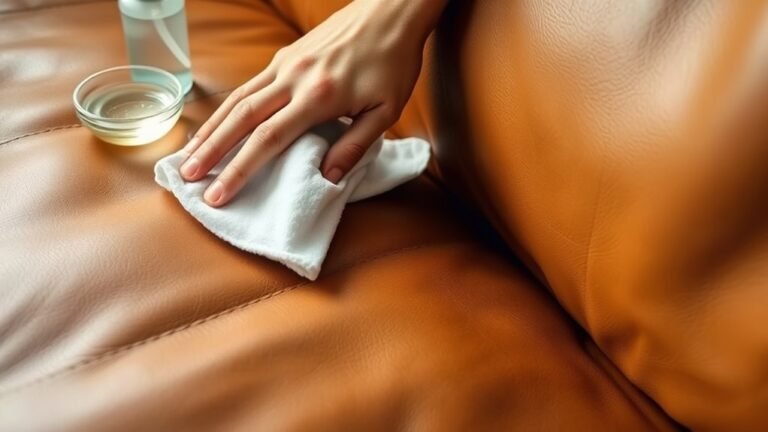
Imagine a leather couch soaked in rain; it’s not ruined if you act fast. You’ll want to gently blot, air-dry at room temperature, and condition it to keep cracks and stains from settling in.
Conclusion
Leather loves a little liquid, but too much moisture might mean misfortune. When wet, work wisely: wipe, wait, and watch while drying delicately. Don’t delay conditioning to combat cracking and creasing.
Remember, regular rituals reinforce resilience, reducing risks of rips and ruin. Whether it’s suede, shiny, or synthetic, safeguarding your supple surfaces with smart steps keeps leather looking lively and lasting longer.
Protect, pamper, and preserve—your leather will thank you with timeless toughness and terrific texture. Keeping leather dry and well-conditioned ensures it can get wet occasionally without damage, maintaining its beauty and durability over time.