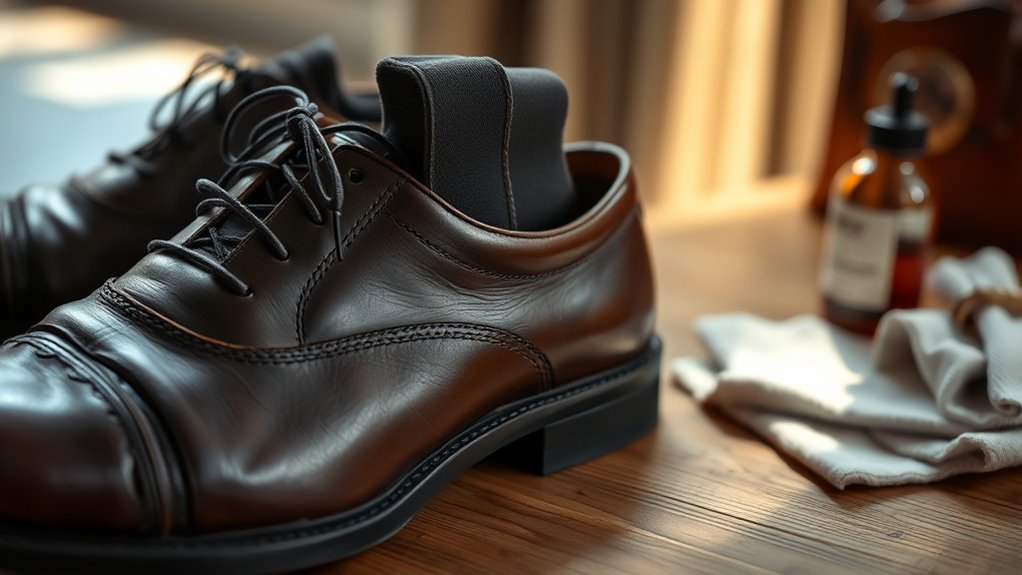
How to Stretch Leather Shoes: Easy Tips for a Comfortable Fit
If your leather shoes feel tight, start by cleaning and conditioning them to soften the material. Proper care is essential when you want to stretch leather shoes without damaging them.
Use shoe stretchers or wear thick socks while walking to naturally expand the leather.
Applying gentle heat with a blow-dryer or a bit of rubbing alcohol can loosen tight spots. Be careful not to over-stretch or damage the shoes.
After stretching, condition the leather to maintain its flexibility.
Keep going, and you’ll discover more ways to perfectly fit your leather shoes. With patience and the right techniques, your shoes will become more comfortable and better suited to your feet.
Signs Your Leather Shoes Need Stretching

How do you know when your leather shoes need stretching? If they feel painfully tight or squeeze your feet right from the start, that’s a clear sign. When your toes feel cramped or you notice pressure on the front and sides of the shoe, stretching can help.
You might also feel discomfort or pinching while walking, indicating the shoe is too small. Sometimes, shoes seem fine initially but cause pain after a few hours due to foot swelling or leather tightness. These shoes need stretching too.
Additionally, if you can’t wiggle your toes freely or see tightness around the toe box, it’s time to stretch your leather shoes. Paying attention to these signs ensures a comfortable fit and prevents foot pain.
Understanding Leather’s Stretching Potential

Understanding Leather’s Stretching Potential
Although leather is naturally pliable, its ability to stretch depends on factors like thickness, quality, and treatment. When stretching leather, you need to contemplate these elements to avoid damage and achieve a comfortable fit. Softer, thinner leather stretches more easily, while thicker, high-quality leather may require more effort.
| Factor | Impact on Stretching Leather |
|---|---|
| Thickness | Thinner leather stretches more easily |
| Quality | Higher quality offers controlled stretch |
| Treatment | Conditioners increase flexibility |
Leather’s elasticity responds to heat, moisture, and pressure, so using these can help with stretching leather effectively. Remember, over-stretching can harm your shoes, so understanding leather’s limits is key to maintaining their durability while improving fit.
Preparing Leather Shoes for Stretching

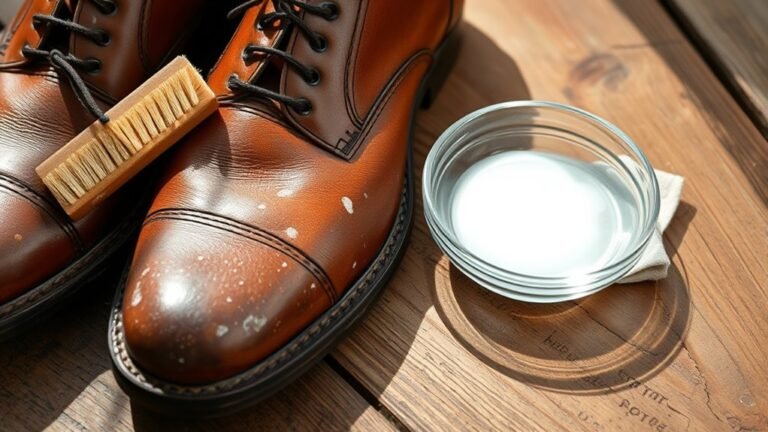
Before you start stretching, clean your leather shoes thoroughly to remove any dirt or dust. Next, apply a leather conditioner to soften the material and make it more flexible.
Finally, assess how tight your shoes feel to identify the exact areas that need stretching.
Clean and Condition Leather
Since dirt and debris can block the stretching process and damage your shoes, you should start by cleaning your leather with a damp cloth. This removes surface grime and prepares the leather for conditioning.
Next, use a gentle, pH-balanced cleaner designed specifically for leather to avoid stripping its natural oils. Once clean, apply a quality leather conditioner to soften and moisturize the material. This step increases pliability, making stretching more effective and preventing cracks.
Remember to:
- Use a damp cloth for initial cleaning
- Choose a pH-balanced leather cleaner
- Apply leather conditioner evenly
- Let shoes dry naturally, away from direct heat
Proper cleaning and conditioning keep your leather shoes supple and ready for stretching with minimal risk of damage.
Assess Fit and Tightness
After cleaning and conditioning your leather shoes, the next step is to assess their fit and tightness. You want to check if the shoes feel tight or uncomfortable, especially around the toe box or width.
Wear thick socks or use a shoe stretcher to pinpoint tight spots and decide how much stretching is needed. Ensure the material is leather or stretchable fabric because some materials won’t stretch well.
| Check Area | What to Look For |
|---|---|
| Toe Box | Toes pressing or squeezing |
| Width | Pinching or tight sides |
| Overall Fit | Too small or just tight |
| Material Type | Leather or stretchable |
| Comfort Level | Uncomfortable points |
This helps you target your stretching efforts effectively.
Using Ice Bags to Stretch Leather Shoes
If you want to stretch your leather shoes without risking damage, using ice bags is a clever and effective method. This technique involves inserting water-filled zip lock bags into your shoes and freezing them. As the water turns to ice, it expands, gently stretching the leather.
Here’s how to use ice bags for stretching shoes:
Fill two zip lock bags one-quarter full with water and seal tightly. Place the bags inside the toe boxes of your tight leather shoes.
Freeze the shoes for several hours or overnight until the water solidifies. Let shoes thaw for about 20 minutes before removing ice bags and drying thoroughly. Repeat if more stretch is needed, but be cautious not to over-expand or damage the leather.
Applying Heat to Loosen Leather Material
When you apply heat to your leather shoes, you soften the material and make it more pliable, which helps it stretch or mold to your feet more easily. Use a blow-dryer or warm air from a heater, keeping the heat source about 6-8 inches away to avoid damaging the leather.
Warming the leather softens the fibers evenly, reducing the risk of cracks or creases during shoe stretching. Heat the shoes until they feel warm, not hot, to the touch.
Once warm, you can either stretch the shoes manually or wear them to encourage molding. This method makes shoe stretching more effective and comfortable by loosening the leather, helping you achieve a better fit without harming the material.
Stretching Leather With Rubbing Alcohol Solutions
Heat isn’t the only way to soften leather for stretching; rubbing alcohol solutions can also help make the material more flexible. By mixing one part rubbing alcohol with three parts water, you create a solution that slightly breaks down leather fibers, making your leather shoes easier to stretch.
Rubbing alcohol mixed with water gently softens leather, easing the stretching process without heat.
To use this method effectively:
- Spray the solution evenly on the tight areas of your leather shoes.
- Avoid oversaturating to prevent damage or discoloration.
- Wear thick socks and put on the shoes as they dry to mold them to your feet.
- Always test the solution on a hidden spot before full application.
This technique offers a simple, controlled way to stretch leather shoes without heat.
Utilizing Shoe Stretchers for Precise Fit Adjustments
You can use different types of shoe stretchers to customize the fit of your leather shoes. By adjusting knobs and using inserts, you’ll target specific areas like the toe box or bunions with precision.
Just remember to stretch gradually and follow precautions to avoid damaging the leather.

Types of Stretchers
Although leather shoes often require careful stretching to achieve a perfect fit, using the right type of shoe stretcher makes the process much easier and more precise. A good shoe stretcher adjusts both width and length, helping you customize your leather shoes exactly where they need it.
Here are some common types you’ll find useful:
- Two-way shoe stretcher: Adjusts the toe box’s width and length simultaneously for precise fitting.
- Boot stretcher: Designed for taller shafts, with multiple adjustable sections to stretch calves and wider boots.
- Professional-grade stretcher: Includes bunion pads and heel inserts to target specific pressure points.
- Standard shoe stretcher: Ideal for basic width or length expansion.
Pairing a shoe stretcher with stretching sprays enhances flexibility, making leather easier to shape without damage.
Stretching Techniques
When you want a precise fit, using shoe stretchers lets you adjust both length and width incrementally to shape your leather shoes exactly where needed. Start by applying a leather stretching spray to soften the material, then insert a two-way stretcher to expand toe and heel areas simultaneously.
Turn the crank gradually over hours or days for even stretching without damage. Specialized accessories can target bunions or toes for custom relief. This method guarantees your leather shoes feel comfortable and properly fitted.
| Feeling | Result |
|---|---|
| Frustration | Reduced discomfort |
| Tightness | Increased space |
| Pain | Targeted relief |
| Pressure points | Evenly distributed |
| Stiffness | Enhanced flexibility |
Usage Precautions
Since leather is a natural material, handling shoe stretchers with care is essential to prevent damage. To stretch the width of your leather shoes effectively, follow these precautions. Always use a stretcher designed specifically for leather shoes to ensure precise adjustments.
Expand the stretcher slowly, one full turn every eight hours, to avoid overstretching. Before you start, apply leather conditioner or softening spray to make the material more pliable. If you need to target bunions or tight toes, use adjustable inserts for focused stretching.
After the desired stretch, remove the device and let the leather rest to maintain comfort and durability.
- Use stretchers made for leather shoes only
- Increase stretcher size gradually in small increments
- Apply conditioner before stretching for flexibility
- Target problem areas with adjustable pads or inserts
Wearing Thick Socks to Naturally Expand Leather Shoes
If you want to stretch your leather shoes naturally, wearing thick socks is a simple and effective method. Put on a pair of thick socks that fill the shoes more fully, then walk around for about 30 minutes to an hour.
Wearing thick socks and walking for 30-60 minutes helps naturally stretch leather shoes.
The added pressure from the thick socks encourages the leather to stretch gradually, molding to your foot shape. This natural expansion targets tight spots without risking damage.
Repeating this process regularly with your leather shoes can improve comfort and lessen the need for other stretching techniques. By combining thick socks with walking, you help the leather adjust gently and evenly, making your shoes fit better over time.
It’s an easy, low-risk way to break in new or snug leather shoes.

Caring for Leather After Stretching
Once you’ve stretched your leather shoes, it’s essential to apply a leather conditioner to keep them soft and flexible. You’ll also want to protect them from heat and sunlight to avoid drying out or cracking.
Regular care, like conditioning and using shoe trees, will help maintain their shape and extend their life.
Conditioning Leather Post-Stretch
Although stretching your leather shoes provides immediate comfort, you’ll want to condition the leather afterward to keep it supple and prevent damage. Applying a leather conditioner restores moisture, prevents cracking, and enhances pliability for future wear.
To properly condition leather post-stretch, follow these steps:
Use a soft cloth to apply a high-quality leather conditioner evenly over the shoe’s surface. Allow the conditioner to absorb fully, waiting at least 15-20 minutes before wearing. Conditioning leather regularly maintains flexibility and extends your shoes’ lifespan.
Avoid skipping this step, as untreated leather can dry out and become less comfortable over time.
Protecting and Maintaining Flexibility
To keep your leather shoes comfortable and durable after stretching, you’ll need to protect them carefully and maintain their flexibility. Applying a quality leather conditioner replenishes moisture, preventing cracks and stiffness.
Always clean your shoes gently before conditioning, and use a soft cloth to buff them afterward, preserving their smoothness. Avoid direct heat or sunlight exposure, which dries out leather and reduces flexibility.
Store your shoes in a cool, dry place to prolong their lifespan.
| Action | Purpose |
|---|---|
| Clean shoes | Remove dirt before conditioning |
| Apply leather conditioner | Restore moisture and flexibility |
| Buff with soft cloth | Maintain smooth, supple appearance |
| Avoid heat/sunlight | Prevent drying and stiffening |
| Proper storage | Retain flexibility and durability |
When to Seek Professional Shoe Stretching Services
If you’ve tried stretching your leather shoes at home without success or noticed any damage, it’s time to contemplate professional shoe stretching services. Professionals handle leather items with care, using specialized tools to safely adjust fit without risking further damage.
You should seek professional help in these cases:
- Your DIY attempts haven’t eased the tightness, causing discomfort.
- The shoes are high-value or made from delicate leather.
- You notice cracking, tearing, or excessive deformation on the leather.
- Precise or custom stretching adjustments are needed for an ideal fit.
Turning to a cobbler ensures proper technique and protects your investment, giving your leather shoes the best chance to fit comfortably and last longer.
Frequently Asked Questions
How Do You Stretch Leather Shoes Quickly?
You can stretch leather shoes quickly by wearing thick socks, applying heat with a hairdryer to soften the leather, then walking around.
Alternatively, use a shoe stretcher combined with stretching spray or leather conditioner for faster results.
Does Wetting Leather Shoes Stretch Them?
You can stretch leather shoes by wetting them, as leather fibers soften and expand when damp. Studies show leather can stretch up to 5% without damage, so moistening helps you comfortably widen your shoes safely.
Can You Permanently Stretch Leather Shoes?
Yes, you can permanently stretch leather shoes by using a shoe stretcher or applying leather conditioner regularly. Just be careful not to over-stretch, and your shoes will mold comfortably to your feet over time.
Does Alcohol Stretch Leather?
Yes, alcohol can stretch leather by softening its fibers, making it more flexible. Just spray a diluted solution lightly, then wear or stretch the shoes.
Be careful not to overuse it, or your leather might dry out.
Conclusion
Now that you know how to stretch your leather shoes, you’re ready to give them that perfect fit without resorting to medieval torture devices. Remember, patience and care are key—whether you’re using ice bags, heat, or trusty shoe stretchers.
Don’t forget to condition your leather afterward to keep it supple and strong. If things get tricky, don’t hesitate to call in the pros. Your feet will thank you for the comfort and style that properly stretched leather shoes provide!