How to Tell If Something Is Real Leather: Easy Tips to Spot Genuine Leather
You can tell if something’s real leather by checking the label for terms like “full-grain” or “Pelle Conciata al Vegetale.” Feel the texture—it should be soft, flexible, and warm, with natural grain and slight imperfections. These are key indicators of genuine leather.
Smell it for an earthy scent; fake leather often smells plastic.
Inspect the edges—they’ll be rough and fibrous, not smooth.
Try a quick water drop test—it should absorb, not bead.
Keep exploring to uncover more handy tips for spotting genuine leather.
Read the Label Carefully
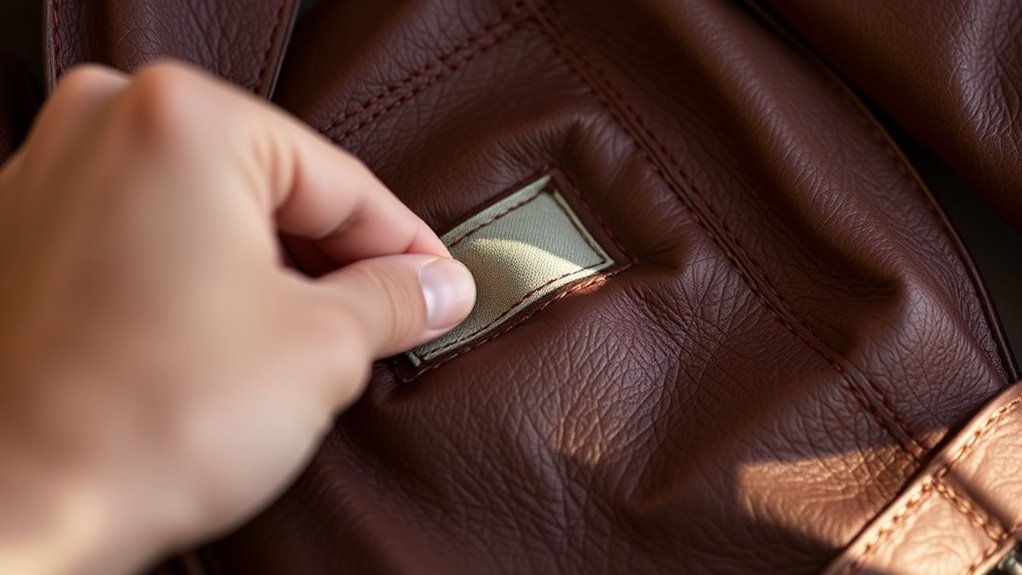
When you want to verify a product is real leather, start by reading the label carefully. Genuine leather items usually come with specific information about the leather type and origin, like “Pelle Conciata al Vegetale in Toscana” or “Cuoio Superiore.”
Look for clear descriptors such as “genuine leather,” “full-grain,” or “top-grain” to confirm authenticity. Avoid vague terms like “vegan leather,” “synthetic,” or “polyester,” which indicate artificial materials.
If you’re checking a Von Baer bag, it should include a certificate verifying the leather’s origin. Always be cautious if the label is missing, inconsistent, or hard to read. That’s often a red flag.
Feel the Texture and Flexibility
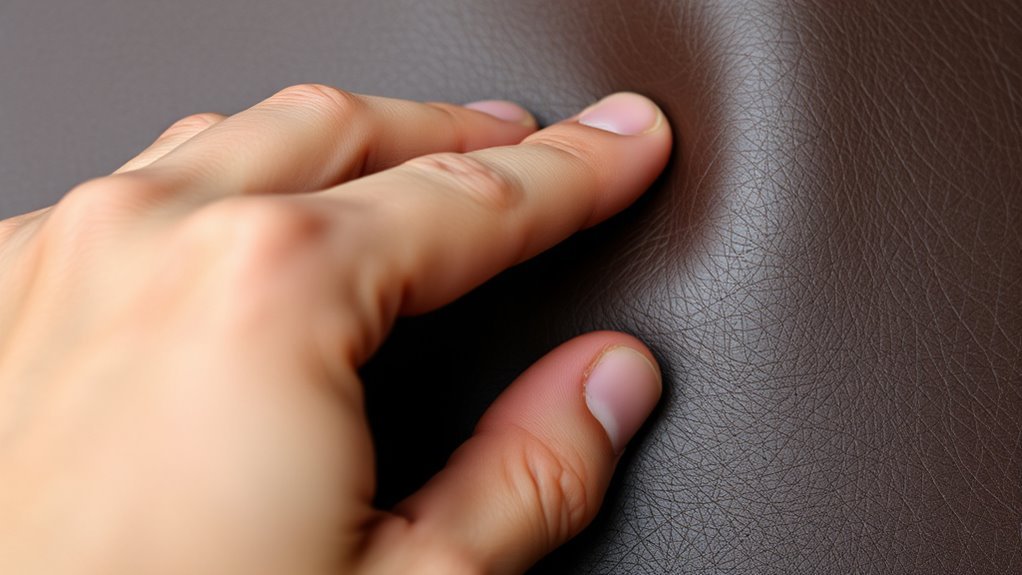
Run your fingers over the surface and notice how soft and warm it feels. Real leather has a textured grain and a bit of stretch that fake leather just can’t mimic.
Pay attention to how it responds when you press it. You should feel it flex and conform naturally.
Softness and Warmth
If you press your fingers against genuine leather, you’ll notice it feels soft, smooth, and supple, easily conforming to your touch without any stiffness. Real leather feels warm and inviting, gradually warming up as you hold it, unlike synthetic materials that stay cold and plasticky.
This warmth combined with its natural softness makes genuine leather comfortable to handle and wear. When you flex it, genuine leather feels slightly elastic and flexible, allowing it to stretch and recover without cracking.
These qualities come from its natural grain and texture, which vary across the surface, enhancing its softness. So, when you want to tell if something is real leather, trust how it feels in terms of softness and warmth. These are key indicators that set it apart from artificial alternatives.
Grain and Stretch
Because genuine leather features a natural, uneven grain with visible pores and slight imperfections, you can easily distinguish it from fake leather’s uniformly smooth surface. When you press or flex real leather, you’ll notice it’s soft, supple, and has some stretch, conforming to your touch without cracking.
In contrast, fake leather resists stretching and often cracks when bent. Feel the texture and gently bend the material to assess these qualities. The grain and stretch reveal much about authenticity.
| Feature | Genuine Leather |
|---|---|
| Grain | Uneven, natural, visible pores |
| Stretch | Soft, supple, slight stretch |
| Edges | Rough, fibrous |
| Flexibility Test | Stretches without cracking |
Conduct a Smell Test
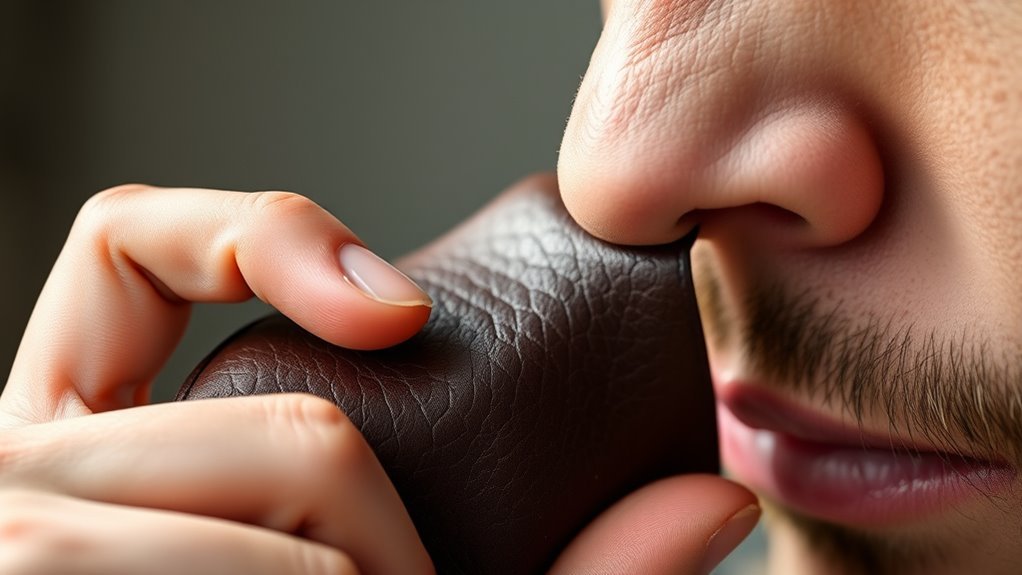
You can often tell real leather by its distinctive earthy, woody scent, which synthetic materials usually can’t mimic. If you notice a plastic or chemical smell, it’s likely artificial leather.
Keep in mind, combining the smell test with other checks gives you the best chance of spotting genuine leather.
Identifying Genuine Leather Smell
Although scent alone won’t guarantee authenticity, you can often identify genuine leather by its distinctive earthy, woody, or oaky aroma that synthetic materials struggle to mimic. When you sniff real leather, you’ll notice a natural, rich smell that sets it apart from fake alternatives.
Remember, leather can smell like this because of the tanning process and natural animal hide. In contrast, fake leather often emits a sharp plastic or chemical odor, especially in cheaper products. Some high-end faux leathers may have little to no smell, so don’t rely solely on scent.
Use this smell test alongside visual and tactile checks to better confirm authenticity. Trust your nose as a helpful clue, but combine it with other methods for the best results.
Recognizing Artificial Leather Odors
While genuine leather carries a rich, earthy scent, artificial leather often gives off a sharp chemical or plastic odor, especially when new. When you conduct a smell test, notice that artificial leather tends to have a synthetic smell that can be quite pungent.
Keep in mind that leather will absorb surrounding odors, so a strong artificial smell might also indicate added chemicals or finishes. Some high-quality vegan leathers have little to no smell, making scent alone unreliable.
Over time, real leather’s distinctive scent fades but remains recognizable, whereas artificial odors usually dissipate or stay plasticky. Using smell as one clue helps, but don’t rely on it exclusively—combine it with other tests for a more accurate identification.
Combining Smell With Tests
How can you confidently tell if leather is genuine? Start by conducting a smell test to identify real leather. Genuine leather has a distinctive earthy, woody aroma that synthetic materials struggle to replicate.
If you detect a plastic or chemical scent, especially in cheaper items, it’s likely faux leather. However, some high-quality vegan leathers may have little to no smell, so don’t rely solely on scent.
To accurately identify real leather, combine the smell test with tactile and visual checks. Feel the texture and look for natural imperfections. Using all these methods together gives you a clearer picture, making it easier to distinguish genuine leather from artificial alternatives and avoid costly mistakes.
Examine the Grain and Surface Imperfections
When you examine the grain and surface imperfections of leather, you’ll notice that genuine leather shows an inconsistent texture with natural pores and irregularities. Full-grain leather, in particular, displays these unique variations, which act like a fingerprint, setting it apart from synthetic materials. You might also find tiny marks like stretch lines or even insect bites, flaws that confirm authenticity. In contrast, faux leather tends to have a uniform, often embossed grain pattern that looks too perfect and lacks natural depth.
Inspect the Edges of the Material
Because the edges of leather reveal much about its authenticity, you should inspect them closely. Real leather typically has rough, uneven, and fibrous edges, showing tiny imperfections that highlight its natural origin. When you run your fingers along these edges, you’ll feel a coarse, textured surface rather than a smooth one.
In contrast, fake leather usually has perfectly straight, machine-cut edges that look clean and uniform, almost like paper cuts. These smooth, consistent edges are a clear sign the material is artificial. By focusing on the irregularities and roughness at the edges, you can confidently distinguish real leather from synthetic alternatives.
This simple yet effective inspection helps ensure you’re getting genuine leather every time.
Perform a Water Absorption Test
After examining the edges of the material, you can further verify leather’s authenticity with a simple water absorption test. Place a few drops of water on the surface; genuine leather will absorb the moisture quickly, usually within a minute.
This happens because authentic leather is porous, allowing water to soak in and often causing a slight darkening at the spot. In contrast, fake leather tends to repel water, making it bead up and remain on the surface without any absorption.
The water absorption test is quick and non-destructive, making it a reliable way to distinguish real leather from synthetic alternatives. Just be careful not to use too much water or test delicate or finely finished surfaces to avoid any damage.
Check the Backside and Perform the Oil Test
Although the front surface reveals much, checking the backside of the material gives you valuable clues about its authenticity. Genuine leather’s backside is fibrous and textured, showing natural imperfections like uneven fibers or tiny hair pores.
In contrast, faux leather, vegan leather, or patent leather usually have smooth or fabric-like backs. A telltale sign is how the material reacts to oil: apply a small amount to the backside of a piece of leather, and real leather will absorb it and darken, while fake leather repels it.
| Material Type | Backside Texture |
|---|---|
| Genuine Leather | Fibrous, rough, porous |
| Faux Leather | Smooth, uniform, fabric |
| Vegan Leather | Smooth, synthetic feel |
| Patent Leather | Smooth, glossy backing |
| Oil Test Result | Absorbs oil or repels it |
Frequently Asked Questions
How to Test if Something Is Real Leather?
You can test if something’s real leather by feeling its texture, dropping water to see if it absorbs, smelling for that earthy scent, checking rough edges, and carefully using a flame test to notice how it burns.
What Does Fake Leather Look Like?
Fake leather looks like a smooth, plastic canvas, too perfect and uniform. You’ll notice clean-cut edges, a cold, stiff feel, and often a chemical smell.
Its backside is usually fabric, unlike real leather’s rough texture.
How to Test Leather With a Lighter?
Hold a lighter near a small, hidden spot on the leather. Real leather chars slowly and smells like burnt hair, while fake leather melts quickly and smells like chemicals.
Don’t hold the flame too long to avoid damage.
What Is the Symbol for Fake Leather?
About 70% of synthetic leather products show a crossed-out leather icon or a “PU” symbol. When you see these on labels, you’ll know it’s fake leather, helping you quickly spot genuine versus synthetic materials.
Conclusion
If you don’t take these simple steps to check if your leather is real, you might as well be buying a spaceship made of plastic! Real leather isn’t just a material—it’s an experience you can feel, smell, and see.
Skipping these tests means risking fake, stiff, and disappointing “leather” that’ll fall apart faster than you can blink. So take a moment, trust your senses, and don’t settle for anything less than the genuine article!
By learning how to tell if something is real leather, you ensure you invest in quality, durability, and authenticity every time. Real leather stands out with its unique texture, natural smell, and lasting feel—qualities that fake leather just can’t match.