How to Get Rid of Mold on a Leather Bag Step by Step
First, identify the mold on your leather bag by spotting fuzzy white, green, or black patches and a musty smell. Mold on leather can damage the material if not treated promptly. Gather mild soap, white vinegar, soft cloths, gloves, and a mask.
Work in a well-ventilated area, then gently brush off the mold without scrubbing hard. Cleaning mold off leather requires care to avoid damaging the bag’s surface. Clean the spots with a diluted soap or vinegar solution, wipe dry, and disinfect with an alcohol mix.
Finish by conditioning the leather to keep it supple and prevent future mold growth. Regular maintenance will help preserve your leather bag’s appearance and durability. Keep going, and you’ll discover tips to protect your bag from mold in the future.
Identifying Mold on Your Leather Bag

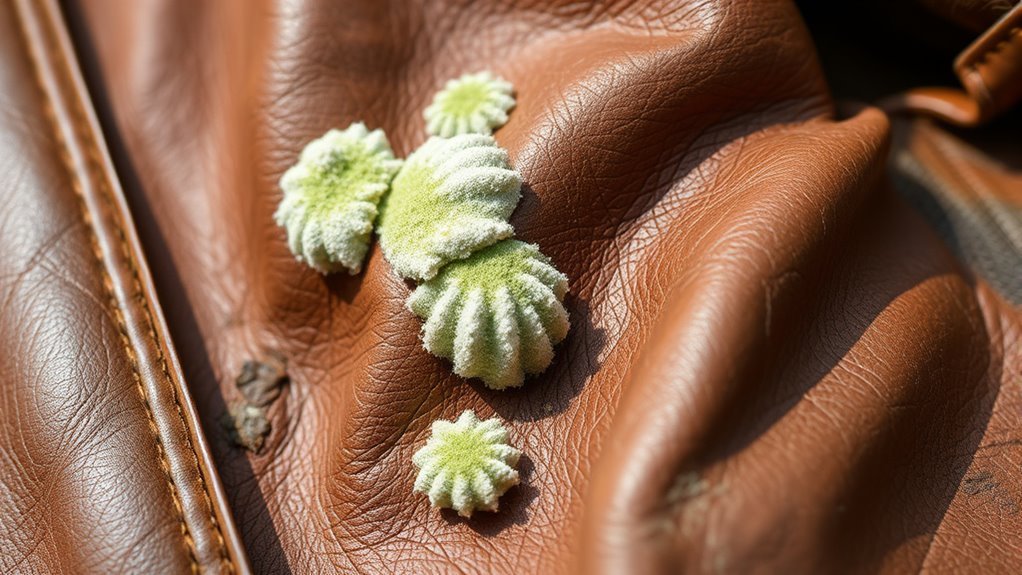
Before you can remove mold from your leather bag, you need to recognize it. Mold often appears as small, fuzzy spots in white, green, or black. You might notice a musty odor, which is a strong clue that mold is present.
Check the seams, folds, and any areas where moisture could have settled. If you spot discoloration that seems powdery or slimy, that’s likely mold. It’s important to act quickly because mold can damage the leather’s surface and cause stains that become harder to remove over time.
Don’t confuse mold with dirt or dust. Mold usually grows in patches and has a distinct texture. By identifying mold early, you’ll be prepared to take the right steps to clean your leather bag effectively.
Gathering the Necessary Cleaning Supplies

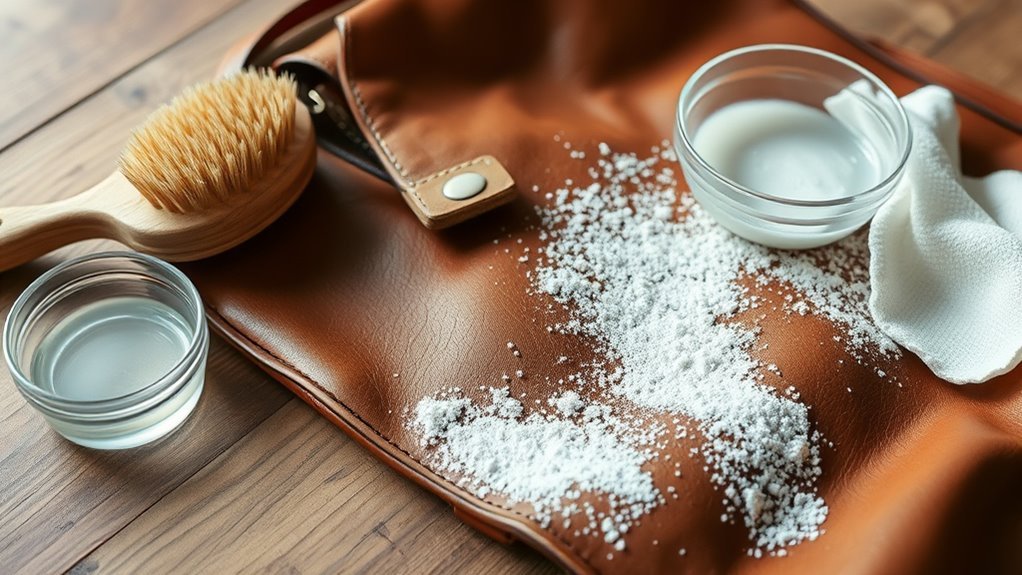
Although tackling mold on your leather bag can seem intimidating, gathering the right cleaning supplies makes the process much easier and more effective. Start by getting a soft brush or microfiber cloth to gently remove mold without damaging the leather.
Gathering the right cleaning supplies makes removing mold from your leather bag easier and safer.
You’ll need a mild soap, like saddle soap or a gentle dish detergent, diluted with water to clean the surface safely. Have white vinegar on hand; it’s great for killing mold spores without harsh chemicals.
Prepare a spray bottle for easy application. Don’t forget gloves to protect your hands and a mask to avoid inhaling mold spores.
Finally, keep a few clean towels nearby for drying and blotting.
With these supplies ready, you’ll be set to clean your leather bag thoroughly and safely.
Preparing Your Work Area for Cleaning

Since mold spores can spread easily, you’ll want to set up your cleaning area in a well-ventilated space to keep the air fresh and reduce inhalation risks. Choose a spot near an open window or use a fan to encourage airflow.
Lay down old newspapers or a plastic sheet to protect surfaces from moisture and mold residue.
Wear gloves and a mask to minimize exposure and avoid touching your face during the process.
Keep pets and children away from the area to prevent contamination.
Arrange your cleaning supplies within easy reach but away from direct contact with the bag until you’re ready to start.
Taking these precautions guarantees a safer, cleaner environment for tackling the mold on your leather bag effectively.
Removing Surface Mold Gently
Once your work area is set up safely, you can start tackling the mold on your leather bag. Removing surface mold gently is key to preserving the leather’s integrity.
- Put on gloves and a mask to protect yourself from spores.
- Use a soft, dry cloth or a very soft brush to lightly wipe away visible mold.
- Avoid scrubbing hard. This can push mold deeper or damage the leather.
- Work outdoors or near an open window to prevent mold spores from spreading inside.
Cleaning and Disinfecting the Leather
Before you start cleaning and disinfecting the leather, make sure the mold you removed is completely dry to prevent it from spreading.
Use a soft cloth dampened with a mixture of equal parts water and isopropyl alcohol to gently wipe the affected areas. This solution kills remaining mold spores without saturating the leather. Avoid soaking the leather; instead, use light, circular motions to clean.
Afterward, wipe the bag with a clean, dry cloth to remove excess moisture.
For tough spots, a mild leather cleaner can be applied sparingly, followed by the alcohol solution. Always test any cleaner on a hidden area first to ensure it won’t damage the leather.
Proper cleaning and disinfecting will help stop mold from returning and keep your bag safe.
Conditioning the Leather After Cleaning
Although you’ve thoroughly cleaned and disinfected your leather bag, it’s essential to condition it next to restore moisture and flexibility.
Conditioning prevents the leather from drying out and cracking, keeping it soft and durable.
Conditioning maintains leather’s softness and durability by preventing dryness and cracking.
Here’s how to do it effectively:
- Choose a leather conditioner suitable for your bag’s type.
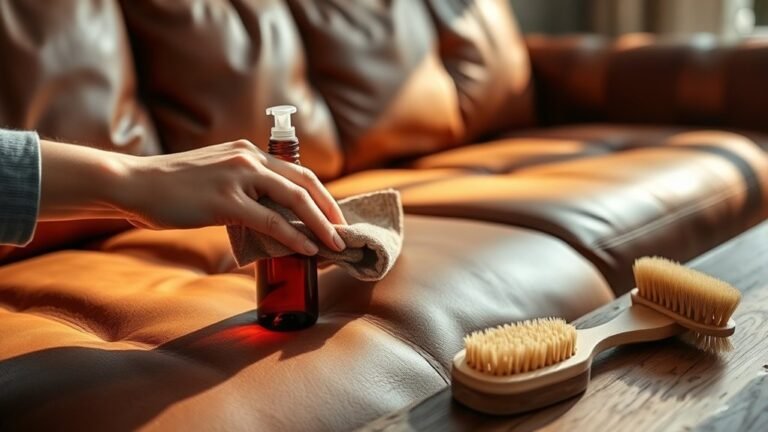
- Apply a small amount evenly using a soft cloth, working in gentle circular motions.
- Let the conditioner absorb naturally for at least 15 minutes.
- Buff the leather lightly with a clean cloth to remove excess product and enhance shine.
Preventing Future Mold Growth on Leather Bags
To keep mold from coming back on your leather bag, you need to control the moisture and storage conditions carefully. Always store your bag in a cool, dry place away from direct sunlight and humidity.
Use silica gel packets or dehumidifiers in storage areas to absorb excess moisture.
Avoid plastic bags, which trap moisture; instead, opt for breathable cotton dust bags.
Regularly air out your bag and inspect it for early signs of mold.
When cleaning or conditioning, make sure your hands and tools are dry to prevent introducing moisture.
Finally, avoid leaving your leather bag in damp environments like basements or bathrooms.
Frequently Asked Questions
Can Mold on Leather Cause Health Problems?
Yes, mold on leather can cause health problems, especially if you have allergies or respiratory issues. You’ll want to clean it promptly to avoid triggering symptoms like sneezing, coughing, or skin irritation.
Is It Safe to Use Mold Removers on Vintage Leather?
You shouldn’t use harsh mold removers on vintage leather since they can damage it. Instead, try gentle cleaning methods and test any product on a small area first.
When in doubt, consult a professional restorer.
How Long Does Mold Take to Develop on Leather?
Mold can start developing on leather within 24 to 48 hours if it’s exposed to moisture and warmth.
You’ll want to keep your leather dry and well-ventilated to prevent mold from taking hold quickly.
Can Sunlight Damage the Leather While Drying It?
Yes, sunlight can damage your leather by causing it to dry out and crack.
Instead, dry your bag in a well-ventilated, shaded area to protect the leather while removing moisture safely and effectively.
Are There Professional Services for Mold Removal on Leather Bags?
Yes, you can find professional services specializing in mold removal on leather bags. They use safe techniques to clean and restore your bag without causing damage,
so you don’t have to worry about handling it yourself.
Conclusion
Think of your leather bag as a delicate garden. Mold is like an unwelcome weed that, if left unchecked, can choke its beauty. By carefully uprooting the mold, cleansing the leather soil, and nourishing it with conditioner, you help your garden thrive again.
Keep your bag in a dry, airy place—your gentle care will be the sunshine that keeps those weeds from returning. Regular cleaning and proper storage are essential to prevent mold growth.
By following these steps to get rid of mold on a leather bag, you ensure your leather blooms beautifully for years to come. Proper maintenance and mold prevention will keep your leather bag looking its best.