What Is Fake Leather Made Of? Materials, Types & Facts
Fake leather is made by coating fabric like polyester or cotton with synthetic materials such as polyurethane (PU) or polyvinyl chloride (PVC). These plastic coatings give it durability, water resistance, and a leather-like texture.
Sometimes, plant-based fibers or shredded leather scraps are used to create eco-friendly or bonded leather alternatives.
Depending on the material, fake leather can vary in feel and use. Keep exploring, and you’ll uncover the history, types, and environmental impact of these leather substitutes.
Composition of Fake Leather

Although it looks like real leather, fake leather is mainly made from synthetic polymers such as polyurethane (PU) or polyvinyl chloride (PVC). These materials create a durable, water-resistant surface that mimics genuine leather’s texture and appearance.
Underneath the plastic coating, you’ll usually find a base fabric, often polyester or cotton, which adds strength and flexibility. The coating of polyurethane or PVC is carefully applied to the fabric, giving it that smooth, leather-like finish.
If you prefer vegan leather, some options incorporate plant-based materials like agave leaves or pineapple fibers instead of synthetic polymers. Whether synthetic or plant-based, these materials offer cruelty-free alternatives but differ greatly from real leather in composition and environmental impact.
Manufacturing Processes
You’ll find that fake leather starts with base fabrics like polyester or cotton, giving it strength and flexibility. Then, manufacturers apply plastic coatings such as polyurethane or PVC using techniques that guarantee durability and texture.
Understanding these steps helps you see how synthetic materials transform into leather-like surfaces.
Base Fabrics Used
A key part of making fake leather involves choosing the right base fabric, which usually consists of polyester or cotton. This base fabric provides the structural support and breathability essential for flexibility and comfort. Most commonly, synthetic fibers like polyester are used due to their durability and ease of coating.
However, some manufacturers opt for biodegradable materials or natural fibers to create eco-friendlier alternatives. The base fabric’s porosity and texture directly influence how well the coating process adheres and how the final product looks and feels.
During the coating process, plastic materials bond with the fabric, but the choice of base fabric remains vital for the fake leather’s overall quality and performance. You’ll notice that the fabric’s role goes beyond just a foundation; it shapes the product’s character.
Plastic Coating Techniques
The choice of base fabric sets the stage for how the plastic coating will adhere and perform. In the coating process, manufacturers apply a layer of polyurethane or polyvinyl chloride onto fabrics like cotton or polyester.
They melt or extrude the plastic material, spreading it evenly over the textile using rollers or spray methods. This plastic layer forms the foundation of synthetic leather, providing durability and texture.
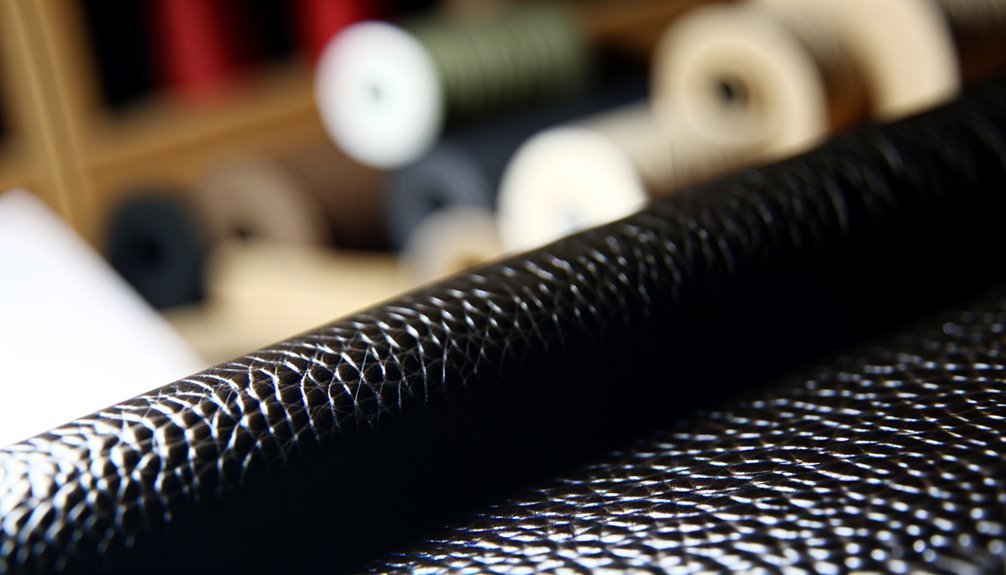
After coating, embossing adds grain patterns that mimic natural leather, enhancing the look and feel. The coated fabric is then dried, cured, and sometimes dyed to improve appearance and longevity.
The thickness and chemical makeup of the plastic layer directly affect the flexibility, waterproofing, and breathability of the final fake leather product you use.
Historical Methods of Production
You’ll find that early leather alternatives like cork leather offered natural options long before synthetic versions appeared. Mid-20th century innovations introduced materials such as Rexine and Leatherette, which used coatings to mimic leather’s texture.
During wartime, solutions like Presstoff emerged, providing practical substitutes when real leather was scarce.

Early Leather Alternatives
Although genuine leather has long been prized, early substitutes emerged to offer more affordable and accessible options. These materials cleverly mimicked leather’s look and feel using innovative techniques.
- Presstoff, developed in Germany during World War II, layered paper pulp treated with resins to imitate leather’s texture and durability.
- Rexine, popular from the 1920s, combined fabric with nitrocellulose coating, creating a flexible, leather-like surface.
- Poromerics, including Corfam, used polyurethane plastic coatings on fibrous bases to produce waterproof, durable alternatives.
Additionally, cork leather made from cork oak bark offered a natural, biodegradable option. These early leather alternatives balanced cost-effectiveness with appearance, leveraging materials like paper pulp and polyurethane to meet demand before mid-20th century innovations transformed the industry.
Mid-20th Century Innovations
When wartime shortages limited access to genuine leather, manufacturers turned to innovative synthetic methods like Rexine, Presstoff, and Poromerics to meet demand. Rexine was a durable fabric made by coating cloth with nitrocellulose, mimicking leather’s texture.
Presstoff, developed in WWII Germany, used layered paper pulp treated with resins to create a flexible, leather-like material. Poromerics introduced polyurethane-coated fabrics, applying a plastic layer onto fibrous bases for realistic appearance and feel.
These mid-20th century innovations marked a shift from natural hides to synthetic alternatives, driven by the need for cost-effective and uniform materials. By experimenting with different fabrics and coatings, these historical methods laid the foundation for modern fake leather, influencing today’s vegan and biotechnological leather substitutes.
Wartime Material Solutions
The demands of World War II pushed manufacturers to find practical substitutes for scarce leather supplies. You’d see synthetic leather becoming essential, with several innovative materials stepping in. Here are three notable wartime solutions:
- Presstoff: Made from layered paper pulp treated with resins, it replaced leather in military gear.
- Rexine: A cloth coated with nitrocellulose, used mainly for upholstery and bookbinding since the 1920s.
- Poromerics: Including Corfam, these used plastic coatings like polyurethane on fibrous bases to mimic leather’s look and feel.
Additionally, cork leather, crafted from cork oak bark, offered a sustainable, durable alternative. These materials helped overcome wartime shortages while laying groundwork for modern synthetic leather technologies.

Types of Fake Leather Materials
What kinds of materials make up fake leather? Most fake leather uses synthetic materials like PVC (polyvinyl chloride) and PU (polyurethane) leather, which mimic real leather’s texture and durability.
You’ll also find bonded leather, made by combining shredded genuine leather scraps with polyurethane or latex adhesives, creating a cost-effective option. Recently, eco-friendly, plant-based alternatives have gained popularity.
These use natural fibers from sources like pineapple leaves, mushroom mycelium, or cactus, offering a sustainable twist while maintaining leather’s look. PU leather is especially common because it’s versatile and easier to recycle than PVC.
Whether you choose classic synthetic materials or innovative plant-based options, fake leather provides a range of choices suited to different needs and values.
Environmental Impact of Fake Leather
Although fake leather offers an animal-friendly alternative, you should consider its environmental impact before choosing it. Most fake leather, especially PVC-based, isn’t biodegradable and can linger in landfills for centuries. Producing it consumes fossil fuel resources and releases toxic chemicals like dioxins, which harm ecosystems and human health.
When burned or discarded, it emits hazardous substances contaminating air, soil, and water. Even biodegradable options involve chemical processing and energy use, though they tend to have a smaller footprint.
Here’s what to keep in mind:
- PVC fake leather releases dioxins during production and disposal, posing serious environmental risks.
- Manufacturing relies heavily on fossil fuel resources, increasing greenhouse gas emissions.
- Biodegradable fake leather reduces lasting waste but still impacts ecosystems through chemical treatments.
Common Brand Names and Variants
How do you recognize different types of fake leather on the market? You’ll often see brand names like Naugahyde, Pleather, and Vinyl, common labels for synthetic leather made from PVC or PU. Variants like bi-cast leather combine a leather layer with a PU coating for a realistic look.
Leatherette, another term, usually refers to PVC or PU-backed fabric used in upholstery. Vegan leather often means synthetic materials, including plant-based fibers, offering cruelty-free alternatives.
| Brand Name | Material Type | Common Use |
|---|---|---|
| Naugahyde | PVC | Upholstery, fashion items |
| Pleather | PU (polyurethane) | Clothing, accessories |
| Bi-cast leather | Leather + PU | Furniture, shoes |
| Leatherette | PVC or PU backed fabric | Upholstery, bags |
These names help you identify different faux leather options easily.
Frequently Asked Questions
What Is Most Fake Leather Made Of?
Most fake leather is made of synthetic materials like polyvinyl chloride (PVC) or polyurethane (PU). You’ll find PU coated over fabric, and sometimes eco-friendly options use plant-based fibers like pineapple or mushroom leather.
What Is 100% Faux Leather?
Imagine wearing a sleek, plastic cloak. 100% faux leather is exactly that.
It’s fully synthetic, made from polyurethane or PVC, giving you leather’s look and feel without any animal parts involved.
Is Faux Leather Made From Animals?
No, faux leather isn’t made from animals. You’re using synthetic or plant-based materials instead, so it’s cruelty-free and vegan-friendly.
It mimics real leather without involving animal hides or products.
What Is Used to Make Fake Leather?
You use synthetic polymers like PVC or PU combined with fabrics such as polyester or cotton to make fake leather. Additives improve flexibility and appearance, while finishing layers mimic genuine leather’s look and feel.
Conclusion
You might worry that fake leather feels cheap or looks fake, but modern materials like polyurethane and polyvinyl chloride are designed to closely mimic real leather’s texture and durability.
Knowing it’s made from synthetic or recycled materials helps you see its eco-friendly side compared to animal leather.
So, when you choose fake leather, you’re not just getting style—you’re making a conscious choice that balances quality, variety, and environmental impact.
Understanding what is fake leather made of can help you appreciate its benefits and make informed decisions about sustainable fashion.