How to Clean Cat Urine From a Leather Sofa Step by Step
To clean cat urine from your leather sofa effectively, start by blotting the area immediately with a soft cloth. This will soak up as much liquid as possible without rubbing, which can spread the stain or damage the leather.
Next, prepare a gentle solution by mixing warm water, mild soap, and a bit of vinegar. Before applying it to the stained area, test this solution on a hidden spot of the sofa to ensure it won’t cause discoloration or damage.
Lightly blot the stain with the cleaning solution, then dry the area with a clean cloth. Finally, apply a leather conditioner to keep the leather soft and supple.
Follow these steps carefully, and you’ll find even more ways to restore your sofa’s freshness and maintain its quality over time.
Gather Necessary Cleaning Supplies

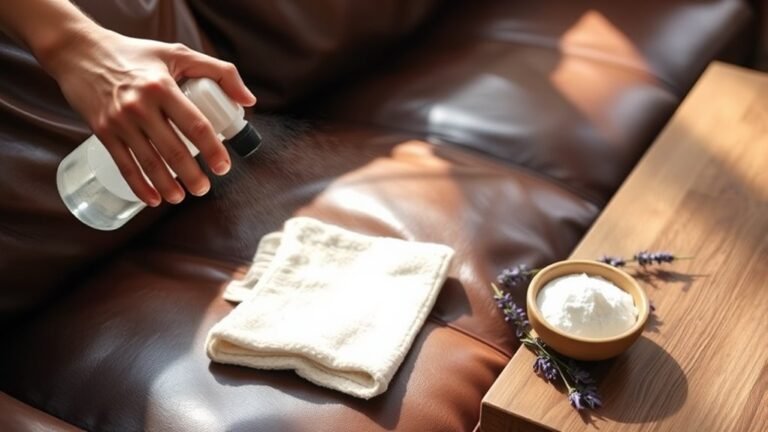
Before you begin cleaning, gather all the necessary supplies to tackle cat urine on your leather sofa effectively. You’ll need a clean, soft cloth or paper towels to absorb the liquid without damaging the leather.
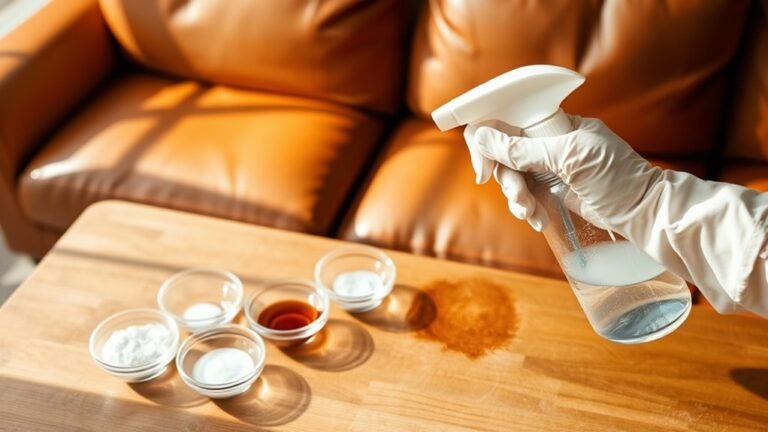
Have a spray bottle filled with a mixture of equal parts distilled water and white vinegar ready. This natural solution helps neutralize odors and disinfect.
Keep a mild leather cleaner on hand to treat any lingering stains after you’ve addressed the urine. Avoid harsh chemicals that can strip or discolor the leather.
Additionally, prepare a small bowl of lukewarm water and a separate soft cloth for rinsing.
Finally, have a fan or hairdryer set to cool nearby to speed up drying once the cleaning is complete.
Being prepared ensures you act quickly and protect your sofa.
Blot the Urine Immediately

As soon as you notice the cat urine, grab your clean cloth or paper towels and press firmly to soak up as much liquid as possible. Don’t rub, as this can spread the stain and push urine deeper into the leather.
Blotting prevents the urine from seeping in and reduces odor buildup.
Use a clean section of the cloth each time you blot to avoid reapplying urine.
| Action | Why It Matters | Tip |
|---|---|---|
| Press Firmly | Absorbs maximum liquid | Use multiple towels if needed |
| Avoid Rubbing | Prevents stain spread | Pat gently instead |
| Use Clean Cloths | Stops reapplying urine | Change cloth frequently |
Immediate blotting is your best defense against lasting damage.
Prepare a Gentle Cleaning Solution

Since harsh chemicals can damage your leather sofa, you’ll want to mix a gentle cleaning solution that effectively breaks down urine without harming the material. Begin by combining one cup of warm water with a few drops of mild liquid dish soap or a leather-specific cleaner.
Avoid anything containing bleach or ammonia, as these can strip the leather’s finish.
For added deodorizing power, you can add a tablespoon of white vinegar, which helps neutralize odors naturally. Stir the mixture gently until it’s well blended.
This solution will be safe enough to clean without causing discoloration or damage. Keep the solution ready in a spray bottle or a bowl with a soft cloth nearby for the next step in tackling the stain.
Test the Cleaning Solution on a Hidden Area
Although your cleaning solution is gentle, you should always test it on a hidden spot of your leather sofa first. This step guarantees the solution won’t discolor or damage the leather.
Find an inconspicuous area, like under a cushion or the back of the sofa. Apply a small amount of the solution and wait 10-15 minutes.
Check for any color changes, texture alterations, or other damage. If everything looks fine, you’re ready to proceed confidently.
| Step | Action |
|---|---|
| 1 | Choose a hidden spot |
| 2 | Apply a small amount of solution |
| 3 | Let it sit for 10-15 minutes |
| 4 | Inspect for discoloration or damage |
| 5 | Confirm it’s safe before full cleaning |
Gently Clean the Affected Leather Area
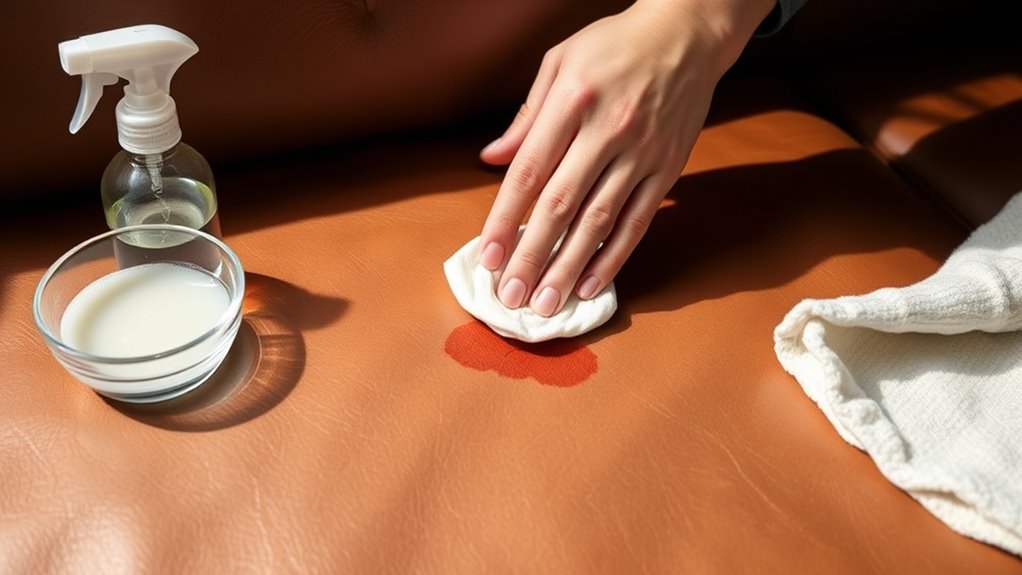
Once you’ve confirmed the cleaning solution won’t harm your leather, you can gently clean the affected area. Dampen a soft cloth or sponge with the solution, then lightly blot the urine stain. Avoid rubbing, as this can push the urine deeper or damage the leather’s surface.
Work from the outside of the stain toward the center to prevent spreading. Use gentle, circular motions, applying minimal pressure. If needed, reapply the solution sparingly, but don’t soak the leather.
Start cleaning from the stain’s edge inward with gentle, circular motions and minimal pressure.
Keep the cleaning focused and controlled to protect the leather’s finish. This careful approach helps lift the urine without causing discoloration or stiffness.
After cleaning, allow the leather to air dry naturally before moving on to further steps in the cleaning process.
Remove Excess Moisture With a Dry Cloth
After gently cleaning the leather, you’ll want to eliminate any excess moisture to prevent damage. Grab a clean, dry cloth, preferably microfiber, as it absorbs liquid well without scratching the leather.
Gently press the cloth against the damp area, allowing it to soak up the moisture. Avoid rubbing or scrubbing, which could spread the stain or harm the leather’s surface.
Change to a dry section of the cloth as it becomes wet to ensure maximum absorption. Continue this process until the leather feels just slightly damp, not wet.
Properly removing moisture helps prevent water stains and keeps the leather in good condition. Once you’ve done this, you’re ready to move on to the next step to restore your sofa’s appearance.
Apply a Leather Conditioner
Because cat urine can dry out and damage leather, you’ll want to apply a leather conditioner to restore moisture and keep the material supple. Start by choosing a conditioner specifically made for leather, avoiding oil-based or harsh chemical products that could cause further damage.
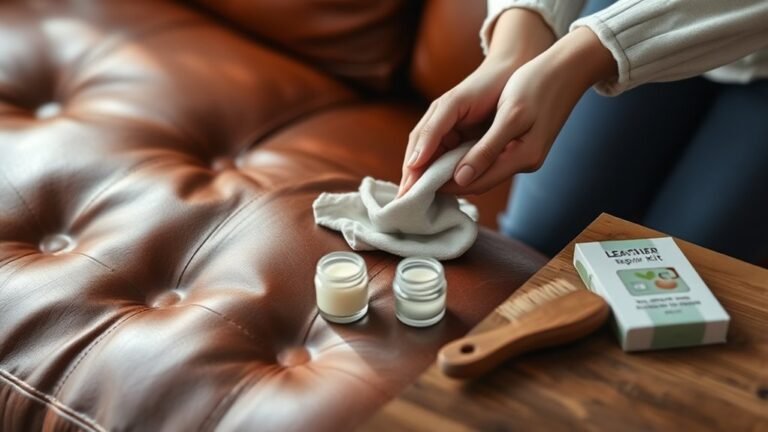
Use a soft cloth to apply a small amount of conditioner in gentle, circular motions, covering the affected area evenly. Allow the leather to absorb the conditioner for at least 20 minutes.
Then, buff it lightly with a clean, dry cloth to remove any excess. Conditioning not only replenishes lost oils but also helps prevent cracking and stiffness, extending the life of your sofa after cleaning.
Repeat this process periodically to maintain your leather’s softness and durability.
Use an Enzymatic Cleaner for Lingering Odors
Although you may have cleaned the urine stain thoroughly, lingering odors can still attract your cat back to the same spot. To fully eliminate these smells, use an enzymatic cleaner specifically designed for pet urine.
These cleaners break down the proteins and bacteria causing the odor, rather than just masking it. Before applying, test the cleaner on a hidden area of your leather sofa to guarantee it won’t damage the material.
Spray or gently dab the enzymatic cleaner onto the affected area, following the product instructions carefully. Allow it to sit for the recommended time so it can work effectively.
Afterward, blot the area with a clean cloth to remove excess moisture.
This step is essential for truly getting rid of odors and preventing repeat accidents.
Prevent Future Accidents on Your Leather Sofa
To keep your leather sofa safe from future accidents, you need to address the root causes of your cat’s behavior and create an environment that discourages them from marking the spot again. Cats often urinate outside their litter box due to stress, territorial marking, or medical issues.
By tackling these factors, you can protect your sofa effectively.
Here’s what you can do:
- Keep the litter box clean and accessible to encourage proper use.
- Reduce stressors like loud noises or new pets to create a calm atmosphere.
- Consult your vet to rule out any health problems causing inappropriate urination.
Taking these steps helps prevent accidents and keeps your leather sofa fresh and protected.
Frequently Asked Questions
Can Cat Urine Damage Leather Permanently?
Yes, cat urine can permanently damage leather if you don’t clean it quickly. The acids and salts can cause stains, discoloration, and weaken the leather’s fibers.
Is It Safe to Use Vinegar on Leather Sofas?
You shouldn’t use vinegar on leather sofas because its acidity can damage and discolor the leather.
Instead, opt for specially formulated leather cleaners to safely clean and protect your sofa without causing harm.
How Long Does It Take for Urine Odor to Disappear?
Urine odor can take anywhere from a few hours to several days to disappear, depending on how well you clean it and the ventilation.
Prompt cleaning and proper treatment speed up odor elimination considerably.
Can I Use a Hairdryer to Dry the Leather Faster?
You shouldn’t use a hairdryer to dry leather faster because heat can damage it.
Instead, let the leather air dry naturally in a well-ventilated area to preserve its texture and prevent cracking or warping.
What if My Cat Keeps Urinating on the Sofa?
If your sofa’s a battlefield, your cat’s marking territory—it’s time to set clearer boundaries.
You’ll need to clean thoroughly, use deterrents, and consult a vet to address any medical or behavioral issues causing this persistent habit.
Conclusion
Cleaning cat urine from your leather sofa might seem like a tall order, but with these steps, you’ll have it looking fresh in no time. Just remember, don’t let the stain sit and worsen—nip it in the bud quickly.
By acting fast and using gentle care, you’ll protect your sofa’s beauty and keep it smelling clean. Follow the process, and you’ll be back to relaxing on your leather throne before you know it!
Effective cat urine removal and proper cleaning techniques are key to maintaining your leather sofa’s condition. With patience and the right approach, your leather sofa can stay stain-free and fresh.