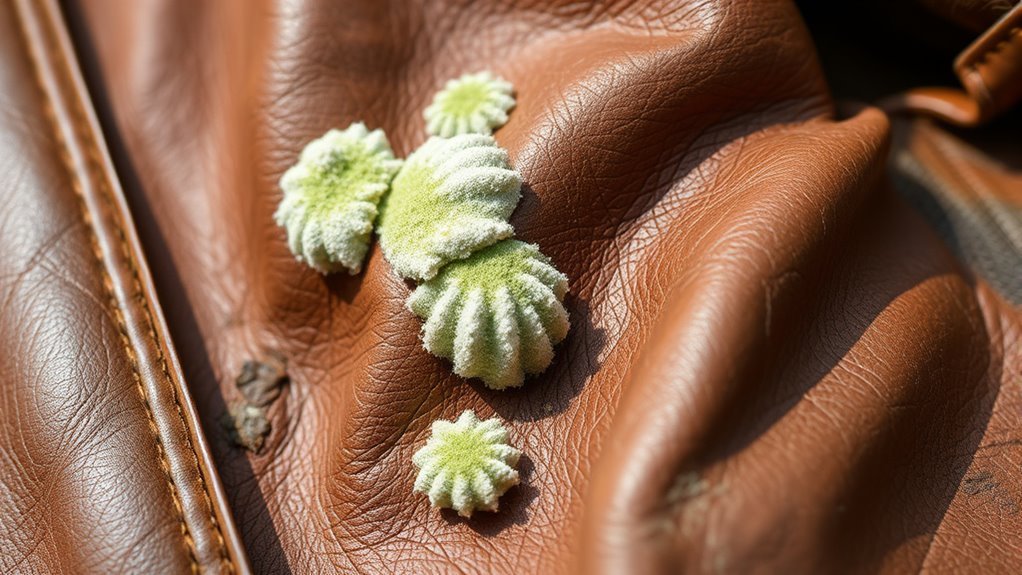
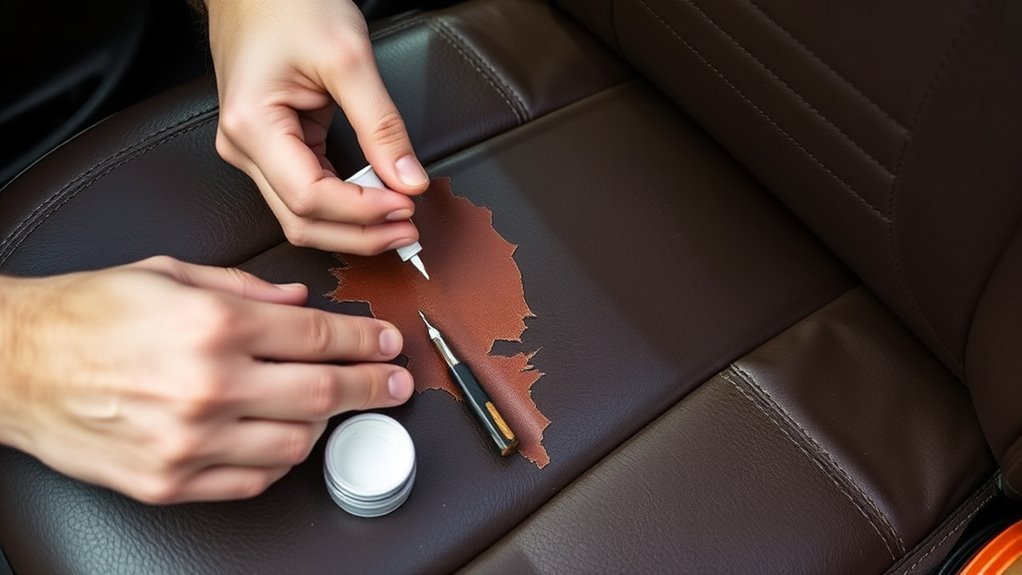
How to Repair Large Tear in Leather Car Seat
To repair a large tear in your leather car seat, start by cleaning and trimming the damaged area. This initial step is crucial for a strong bond.
Slide a leather backing patch underneath the tear and secure it with a strong adhesive, then let it cure fully.
Next, apply filler in thin layers, smoothing and sanding between each coat to ensure a seamless finish.
Matching the color is important, so mix dyes carefully to blend with your seat’s original shade.
Finally, finish by sealing the repair to protect it from future damage.
Taking these steps carefully helps restore your seat’s look and durability. Keep going to learn how to perfect the process.
Assessing the Damage Before Repair

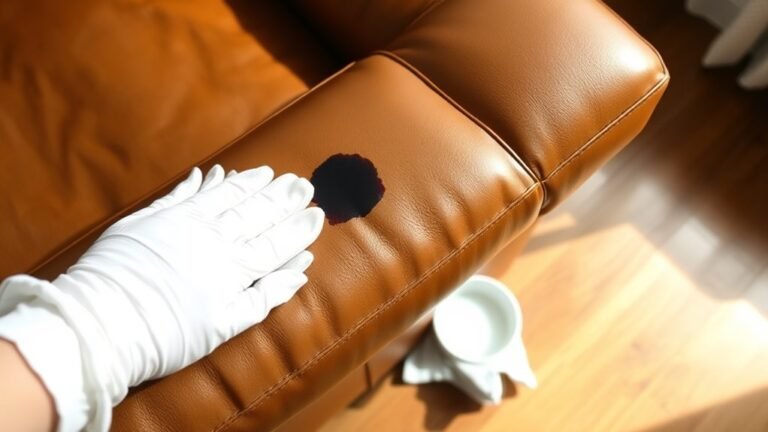
Before you begin repairing a large leather car seat tear, carefully assess the damage to understand its extent and nature. First, evaluate the size and shape of the tear. Determine if it’s a straight split or a jagged rip. Check if the backing materials like foam or fabric are exposed beneath the leather car seat surface.
Next, identify the leather type: aniline, semi-aniline, or pigmented, as this affects the repair materials you’ll need. Don’t forget to inspect the surrounding leather for cracks, wear, or color fading, since these factors influence the repair outcome.
Finally, measure the tear accurately to decide whether patching, sewing, or a combination with adhesive is necessary. This thorough assessment ensures you choose the best approach to fix your leather car seat damage effectively.
Essential Tools and Materials Needed

Although repairing large tears demands patience, having the right tools and materials will make the process smoother and more effective. For successful leather repair and seat repair, start with a leather backing fabric and a strong adhesive to reinforce the tear.
You’ll also need industrial-grade filler to rebuild the surface and a color-matched repair dye to blend the patch seamlessly. Essential tools include spatulas for applying filler, fine-grit sandpaper for smoothing, and a scalpel or scissors for trimming.
To finish, use a matte or satin sealant to protect the repair from future damage. For precise color matching, custom toner mixing equipment or a leather colourant kit is invaluable. With these essentials, your seat repair will be durable and visually appealing.
Preparing the Leather Seat for Repair

When you prepare the leather seat for repair, start by thoroughly cleaning the damaged area with a pH-balanced leather cleaner to remove oils, dirt, and debris. Next, trim any loose fibers or frayed edges around the tear to create a smooth surface.
For large tears, insert a backing fabric beneath the damaged area to support the repair and prevent filler sagging. Lightly roughen the surface with an abrasive pad or leather prep solution to improve adhesion.
Then, wipe the area with an alcohol-based cleaner to remove dust and oils completely. Even if you’re fixing small tears, this careful preparation ensures your leather glue bonds effectively, resulting in a durable, seamless repair. Proper prep sets the foundation for a professional-looking restoration.
Step-by-Step Process for Fixing Large Tears
Start by cleaning the tear and trimming any frayed edges to create a smooth workspace.
Next, secure a backing patch underneath the tear to provide support.
Then, apply filler in thin layers, smoothing each one before adding the next for a strong, even repair.
Preparing Tear Area
Before you apply any adhesive or filler, you need to thoroughly prepare the torn area to guarantee a strong repair. Start by cleaning the leather with a pH-balanced leather cleaner to remove oils, dirt, and debris. This ensures ideal adhesion later on.
Next, carefully trim any frayed edges or loose fibers around the tear using scissors or a scalpel. Remove any lips or protruding leather to create a flat, even surface. Make sure the area is completely dry and free from contaminants before moving forward.
Proper preparation sets the foundation for a durable repair and helps prevent filler sagging or patch failure. Taking these steps seriously ensures your leather repair will hold up and look professional.
Applying Backing Patch
Although repairing large tears can seem intimidating, applying a backing patch is a crucial step that strengthens the leather from underneath. This patch reinforces the damaged area, preventing the tear from worsening and providing a stable base for further repair.
To apply the backing patch effectively:
Cut a patch slightly larger than the tear, with at least a 1cm margin around the damage on a leather surface. Use tweezers to slide the patch carefully underneath the tear, ensuring it lies flat against the backing.
Secure the patch by applying a thin layer of adhesive around its edges, pressing firmly for several minutes.
Allow the adhesive to cure fully, typically 24 hours, before moving on to the next repair step.
Layering Filler Smoothly
Once the backing patch has fully cured, you’ll want to apply the filler in thin, even layers to rebuild the tear’s surface. Start with a heavy filler, pressing it into the tear so it fills the gap evenly over the patch underneath.
Use a palette knife to smooth each layer, feathering the edges to blend with the surrounding leather. Allow each layer to dry completely, about 20 minutes, to avoid shrinkage.
Build up the layers gradually with 2-3 coats until the surface matches the original thickness of the seat. After the final layer dries, gently sand the filler with fine-grit sandpaper to create a smooth, even surface.
This careful layering filler process ensures a seamless repair ready for color matching.
Color Matching and Finishing Techniques
When you want your repair to blend seamlessly with the original leather, hand-mixing pigments to match the color and patina is vital. Accurate color matching ensures your repair won’t stand out, preserving your seat’s appearance. Before applying, always test your mixture on a hidden spot or sample piece.
Hand-mix pigments for perfect color and patina match, testing first on a hidden area to ensure seamless repair.
For finishing, apply multiple thin, feathered coats using a sponge or airbrush for even coverage and flexibility. Finally, seal the repaired area with a clear protective finish like matte or satin to lock in color and boost durability.
Remember these key steps:
- Hand-mix pigments carefully for precise color matching
- Use thin, layered coats for smooth, even coverage
- Seal with a clear finish to protect and enhance longevity
Following these techniques guarantees a flawless, lasting repair.

Tips for Maintaining Repaired Leather Seats
To keep your repaired leather seats looking great and lasting longer, you need to follow a consistent maintenance routine. Start by cleaning your seats regularly with a pH-balanced leather cleaner suitable for your leather types to prevent dirt buildup that can weaken the Repair Kit’s work.
Every 3-6 months, apply a leather conditioner to keep the material supple and avoid future cracks or tears. After repairing, use a protective sealant to enhance durability and resist stains.
Avoid exposing the repaired area to direct sunlight, as UV rays can cause discoloration and damage. Finally, consider using seat covers or cushions to evenly distribute weight and reduce stress on repaired sections, extending the repair’s lifespan and maintaining your car’s interior quality.
Frequently Asked Questions
How to Fix a Big Tear in a Leather Car Seat?
You’ll start by cleaning and trimming the tear, then insert backing fabric underneath. Apply filler in thin layers, color-match carefully, sand smooth, and finish with sealant. This guarantees a durable, seamless repair on your leather seat.
How Much to Fix a Rip in a Leather Car Seat?
You’ll likely pay between $150 and $500 to fix a rip in your leather car seat. Bigger tears cost more because they need sewing and color matching, while small ones usually just need patching or gluing.
Does Autozone Sell Leather Repair?
AutoZone sells some leather cleaners and conditioners, but they rarely stock full leather repair kits or color-matching dyes.
You’ll want to check your local store or consider specialty shops for major leather repairs.
Does Leather Filler Really Work?
Yes, leather filler really works if you prep the surface well and apply it in layers.
You’ll need to color and seal it afterward to match the leather, ensuring a durable, smooth, and natural-looking repair.
Conclusion
Now that you know how to repair a large tear in your leather car seat, don’t you feel more confident tackling it yourself? With the right tools, careful preparation, and a bit of patience, you can restore your seat to looking great again.
Remember, matching the color and finishing properly makes all the difference. Keep up with regular maintenance, and your leather will stay durable and stylish for years to come.
Why pay for expensive replacements when you can fix it yourself? Repairing a large tear in leather car seats is a cost-effective solution that preserves your car’s interior beauty and value.