How to Remove Stains From Leather: Safe & Effective Methods
To remove stains from leather effectively, start by identifying your leather type and acting quickly to prevent permanent damage. Removing stains from leather requires gentle care and the right approach to maintain its quality and appearance.
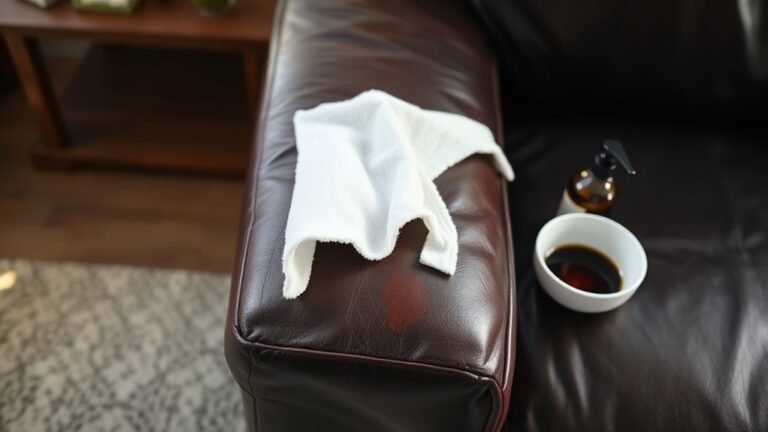
Gently dab—not rub—with a soft microfiber cloth dampened with distilled water or a mild cleaner suited for your leather.
For oil stains, blot immediately and use absorbent powders like baking soda before cleaning.
Always test products on a hidden spot first to ensure they don’t cause discoloration.
After cleaning, condition the leather to restore moisture and keep it supple.
Want to make sure your leather stays vibrant and lasts long? There’s plenty more to know about proper leather care and stain removal techniques.
Why Proper Leather Care Matters

Although leather is durable, you need to care for it properly to keep it looking its best and last longer. Proper leather care involves regular cleaning and conditioning, which helps maintain the leather’s natural texture and appearance.
When you address stains on leather promptly and correctly, you prevent permanent damage like cracking or discoloration. Using the right leather products is essential; harsh chemicals or unsuitable cleaners can cause surface abrasions or accelerate deterioration.
Before tackling any stain, preparing the leather ensures your cleaning efforts are effective and safe. Consistent maintenance not only preserves your leather items’ value but also keeps them looking new for years.
Identifying Leather Types and Their Cleaning Needs
Since leather varies widely in texture and finish, identifying its type is essential before cleaning. Different types of leather require specific cleaning tips to avoid damaging stains or discoloration.
For example, aniline leather is natural and porous, so it soaks up stains easily and needs gentle, pH-neutral cleaners. Semi-aniline leather has a protective coating, making it more durable. You can clean it with a damp cloth and mild soap.
Pigmented leather features a tough polymer layer, allowing for stronger cleaning products without harm. Knowing your leather type helps you choose the right products and methods, preventing damage and preserving its look.
Tailoring your approach to the leather guarantees stains don’t worsen and keeps your leather items looking their best.
Basic Tips for Removing Stains From Leather
Before you start cleaning, make sure you identify the type of stain so you can choose the right approach. Always use gentle dabbing motions instead of rubbing to protect the leather’s surface.

Identifying Stain Types
How you identify a stain on leather makes all the difference in removing it effectively. Different stains like water, oil, ink, or blood each need specific approaches because of their unique properties.
Before you clean, take a moment to recognize the stain type. Water stains usually show as rings or dark spots and respond well to gentle blotting without wetting the leather further. Oil or grease stains soak deep into the material, so applying absorbent powders like baking soda or talcum immediately can help lift the excess.
Knowing the stain’s origin helps you choose the right method, whether a water-based cleaner or a specialized leather product, and prevents damage. Properly identifying stains ensures you treat your leather with care and get it clean without harm.
Gentle Cleaning Techniques
When you clean leather, you’ll want to use gentle techniques that protect its delicate surface. Tackling leather stains carefully ensures you don’t cause further damage. Here are three basic tips using gentle cleaning techniques:
- Always test any cleaning product on a hidden area before applying it widely. This prevents unexpected discoloration or damage.
- Use a soft microfiber cloth dampened with distilled water to gently dab the stain. Avoid scrubbing, which can wear down the leather.
- Avoid soaking the leather; excess moisture can cause swelling or water stains. For tough stains, try a specialized cleaning product or a mild household remedy, but test first.
These steps help you effectively clean leather stains while preserving the leather’s integrity.
How to Remove Water Stains From Leather
Although water stains can be tricky, you can effectively remove them from leather by carefully dabbing the area with a soft, dry cloth to soak up excess moisture without spreading it. For cleaning leather, use a slightly damp microfiber cloth with distilled water to gently wipe the stained spot. Avoid over-wetting.
Once done, let the leather air dry naturally at room temperature, keeping it away from direct sunlight or heat sources to prevent damage. If the water stains persist, lightly buff the area with a dry, soft cloth to blend the mark into the surrounding leather.For stubborn stains, apply a leather conditioner after the leather has dried to restore moisture and prevent cracking. This method keeps your leather looking its best without harsh chemicals.
How to Remove Oil and Grease Stains From Leather
Why act quickly when oil or grease stains land on your leather? Because the longer you wait, the deeper the stain sets, making it harder to remove. To effectively remove oil stains from leather, follow these steps:
Act quickly on oil stains to prevent deep setting and ensure easier removal from leather surfaces.
- Blot the stain immediately with a paper towel or microfiber cloth to prevent oil from soaking in.
- Cover the stain with an absorbent powder like talcum, baking soda, or cornstarch. Let it sit for 15 minutes to several hours to draw out the oil.
- Brush off the powder gently, then clean the area with a leather cleaner or mild soap solution. Repeat if necessary.
Finally, apply a leather conditioner to restore moisture and protect your leather from future stains. Acting fast helps keep your leather looking its best.
Techniques for Removing Blood and Ink Stains
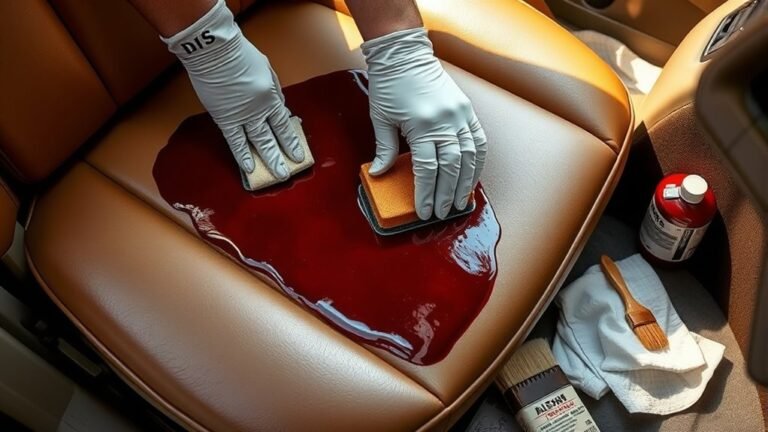
Just like oil and grease stains, blood and ink marks require prompt and careful attention to keep your leather looking its best. For fresh blood stains, gently dab the area with cold water using a clean cloth. Avoid rubbing to prevent spreading.
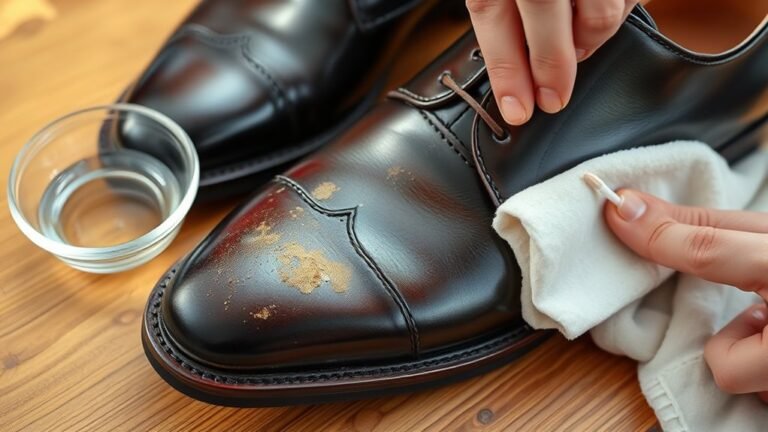
Ink stains need a delicate touch: apply rubbing alcohol or a specialized ink remover on a cotton swab and blot carefully. Older stains may need multiple leather cleaning sessions with mild soap and water or a commercial remover.
Always test any product on a hidden spot first to avoid discoloration. After successful stain removal, condition your leather to restore moisture and prevent drying or cracking. Following these steps ensures effective blood stains and ink stains management, preserving your leather’s appearance and longevity.
Removing Sunscreen and Ballpoint Pen Marks
When you notice sunscreen or ballpoint pen marks on your leather, act quickly to prevent permanent damage. Sunscreen often leaves oily residues, so start by gently blotting the stain with a damp cloth to avoid spreading.
For removing oil stains, sprinkle baking soda or baby powder on the area and wait 15-20 minutes before wiping gently with a soft cloth. For ballpoint pen marks, avoid harsh chemicals; instead, use a cotton swab dipped in isopropyl alcohol, testing first on an inconspicuous leather spot. Here’s a quick tip list:
- Blot sunscreen stains gently with a damp cloth before applying powder.
- Use baking soda or baby powder to absorb oil stains from sunscreen.
- Apply isopropyl alcohol sparingly with a cotton swab to remove pen marks.
Always finish by conditioning the leather to restore moisture and protect the surface.

Home Remedies for Common Leather Stains
Although professional cleaners offer effective solutions, you can tackle many common leather stains at home using simple remedies. For oil stains, sprinkle baking soda or baby powder on the area and leave it for 15-20 minutes to absorb the grease before brushing it off gently.
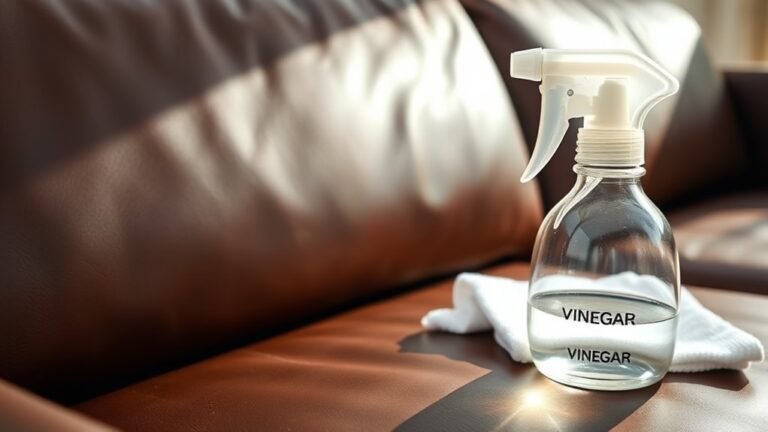
To remove water-based stains, mix equal parts vinegar and water, test it on a hidden spot, then lightly dab the affected area with a soft cloth. Raw potatoes also work well for lifting old grease stains. Rub the cut surface over the dry stain carefully.
For tough oil stains on dark leather, household dry shampoo can help absorb excess oil. Remember, always finish by applying a proper leather cleaner to restore your leather’s natural look without causing damage.
Caring for Light Versus Dark Leather
When caring for light leather, you’ll want to avoid color transfer by sticking to colorless, gentle cleaners that won’t alter its natural shade. Dark leather hides stains better but demands careful testing of products to prevent discoloration.
Whether light or dark, using the right cleaning and conditioning methods helps protect your leather’s look and durability.
Light Leather Cleaning
How do you keep light leather looking spotless without causing discoloration? When you remove stains from leather, especially light-colored leather, you need to be extra cautious. Follow these cleaning tips to protect your leather:
- Always use colorless or neutral leather cleaners to avoid darkening or discoloration.
- Test any product on a small, hidden area first to ensure it doesn’t affect the finish or color.
- After cleaning, apply a gentle leather conditioner regularly to maintain suppleness and prevent stains from setting.
Remember to dry your leather away from direct sunlight and heat to avoid fading and cracking. By treating light leather with care and using appropriate products, you’ll keep it looking fresh and vibrant for years to come.

Dark Leather Care
Since dark leather resists visible stains better than light leather, you might think it requires less care, but it still demands attention to prevent color transfer and fading. To remove oil stains, regularly clean your dark leather using colorless or dark-specific cleaners.
Always test a cleaner on a hidden spot first, and care not to rub vigorously to avoid damaging the finish. Conditioning helps prevent drying and keeps the leather supple.
| Care Step | Purpose | Tip |
|---|---|---|
| Remove oil stains | Maintain appearance | Use gentle cleaner |
| Regularly clean | Avoid buildup | Test cleaner on hidden area |
| Care not to rub | Protect finish | Use soft cloth |
| Prevent drying | Preserve color and texture | Apply conditioner routinely |
Color Transfer Prevention
Although dark leather hides stains better, you still need to watch out for color transfer, especially with heavily pigmented fabrics. Light-colored leather is more vulnerable to dye migration from dark clothing like denim.
To protect your leather, follow these steps:
- Use colorless or neutral leather protectants regularly to create a barrier that minimizes color transfer.
- Avoid exposing light-colored leather to dark dyes or garments to reduce the risk of stains.
- Store light leather in a cool, dry, and dark place to prevent dye migration and maintain its appearance.
Essential Maintenance Practices for Long-Lasting Leather
To keep your leather items looking their best, you should regularly clean them with a damp, soft cloth to remove dust and dirt that cause surface wear. Proper maintenance involves applying a suitable leather conditioner every 6 to 12 months to keep the material supple and shielded from stains.
Avoid exposing leather to direct sunlight or heat, as this can dry out and crack the surface, leading to fading. When spills or stains occur, address them promptly using appropriate cleaning methods to prevent permanent damage.
Additionally, store your leather items in cool, dry, and well-ventilated areas, using breathable covers like cloth or paper bags to avoid moisture buildup and mildew. Consistent cleaning and care will extend the life and beauty of your leather goods.

Frequently Asked Questions
What Is the Best Cleaner for Stubborn Stains on Leather?
You should use professional-grade leather stain removers or leather-specific cleaners like saddle soap. They gently lift stubborn stains without damaging the surface.
Always test first on a hidden spot to avoid discoloration or damage.
Does Vinegar Remove Stains From Leather?
Vinegar can remove some leather stains like water marks, but it’s like walking a tightrope—you’ve got to dilute it carefully. Always test first and condition afterward to keep your leather soft and intact.
Does Leather Permanently Stain?
Yes, leather can permanently stain, especially if the stain penetrates deeply or you delay cleaning. You should act quickly and use appropriate products to prevent damage.
Some stains like ink or oil may become irreversible.
Is Dawn Dish Soap Safe on Leather?
You’d think Dawn dish soap could clean an entire city, but yes, it’s safe on leather if you dilute it well and don’t overuse.
Always test a hidden spot first to avoid any damage or drying out.
Conclusion
Taking care of your leather is like giving it a fresh breath—it keeps it looking vibrant and lasting longer. By knowing your leather type and tackling stains promptly with the right methods, you’ll prevent damage and maintain its natural beauty.
Remember, a little care goes a long way, turning your leather items into timeless treasures. So, treat your leather well, and it’ll reward you with style and durability for years to come. Proper stain removal and regular maintenance are key to preserving your leather’s quality and appearance.