How to Get Smoke Smell Out of Leather: Easy DIY Methods
To get smoke smell out of leather, start by identifying the type of leather and assessing the strength of the odor. This initial step helps determine the best cleaning approach for your specific leather item.
Gently remove any surface dust using a soft cloth.
Next, clean the leather with a suitable leather cleaner or a mild vinegar-water mixture. Avoid harsh chemicals that can damage the material.
Allow the leather to air out in a well-ventilated area, keeping it away from direct sunlight to prevent fading.
For deeper deodorizing, sprinkle baking soda on the surface or use odor absorbers like activated charcoal.
Finally, apply a leather conditioner to restore softness and keep the leather supple.
By exploring these methods, you can effectively refresh and protect your leather items from smoke odors.
Identify the Type of Leather

Before you tackle smoke odor removal, you need to identify the type of leather you’re dealing with. Leather varies widely, from full-grain, which is durable with a natural, textured surface, to suede and nubuck, which have a soft, velvety feel and matte finish.
You can check care labels, visit the manufacturer’s website, or consult a leather expert to pinpoint your leather type. This step is vital because full-grain leather can handle more thorough cleaning, while suede and nubuck require gentler, waterless methods to avoid damage.
Recognizing your leather ensures you choose the right deodorizing technique and protect your item from warping or discoloration. Proper identification sets the foundation for effective smoke smell removal without harming your leather.
Assess the Severity of the Smoke Odor

Start by smelling your leather item closely to judge how strong the smoke odor is: faint, moderate, or strong. Check the leather’s condition for any discoloration or residue that might signal deeper contamination.
Finally, try to pinpoint where the odor is coming from to tailor your cleaning approach effectively.
Identify Odor Intensity
Although smoke odor on leather can vary widely, identifying its intensity is crucial for effective treatment. Start with a quick sniff test to gauge the smell’s strength. If the odor is faint and only noticeable up close, it’s likely superficial.
However, if the smell lingers strongly even after airing out or initial cleaning, it has probably penetrated the leather’s pores deeply. You can also assess intensity by noticing how easily the smell is detected in a controlled environment.
This evaluation helps you decide whether simple deodorizing methods will work or if you need more intensive treatments or professional help. Being precise about the odor’s severity ensures you tackle the problem effectively without wasting effort on unnecessary steps.
Check Leather Condition
When you check the leather’s condition, look closely for stains, discoloration, or residue that signal the smoke odor may have seeped in deeply. Smell the leather directly to gauge if the scent is just on the surface or embedded within.
Older or worn leather tends to hold onto odors more stubbornly, so factor in its age and overall state. Inspect for cracks or wear that cleaning might worsen. Before applying any cleaner broadly, test a small, hidden spot to see how the leather reacts.
This careful assessment helps you understand the severity of the smoke smell and prevents damage during treatment, ensuring your leather item stays in good shape while you work to remove the odor.
Determine Odor Source
Because smoke odors can vary in intensity, you’ll need to carefully determine whether the smell is surface-level or deeply embedded in the leather. Start by inspecting the leather for any visible stains or discoloration caused by smoke.
Consider how long the leather has been exposed, since prolonged exposure usually means a stronger, more stubborn odor. Identify if the smoke smell is just on the surface or if it has penetrated the leather’s pores and nearby materials.
Check whether the odor lingers after basic cleaning, as persistent smells require more thorough treatments. Ultimately, evaluate the leather’s condition to verify you can safely clean and deodorize it without damage.
- Look for smoke stains or discoloration
- Note duration of smoke exposure
- Assess depth of smoke penetration
- Test odor persistence after cleaning
- Confirm leather’s condition for treatment
Remove Surface Debris and Dust

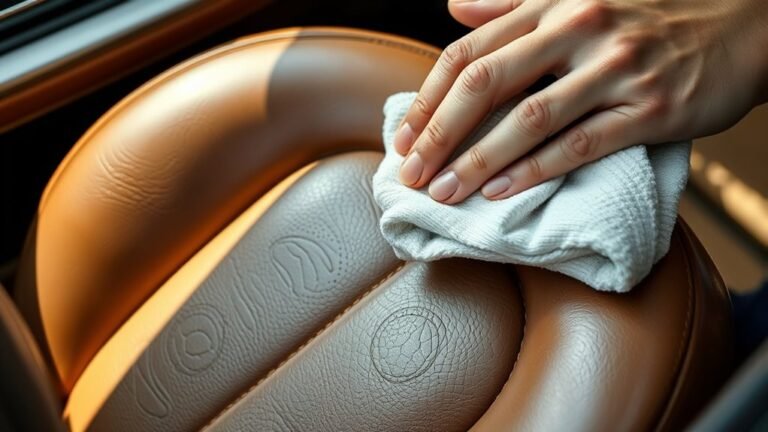
Start by gently dusting your leather with a soft cloth or a soft-bristled brush to remove loose debris. Using the right tools helps prevent dirt buildup that can trap smoke odors.
If needed, lightly dampen a microfiber cloth to tackle stubborn dust without soaking the leather.
Gentle Dusting Techniques
Although leather can trap dust and debris, you can easily remove surface particles by using a soft, dry microfiber cloth or a gentle brush. Regular dusting is vital to prevent dirt buildup that can worsen smoke smell on leather.
Lightly dampen the cloth with distilled water to wipe down the surface, keeping dust from settling in crevices. For textured or suede leather, use a specialized suede brush to lift dirt without damage. Always work in gentle, circular motions to avoid scratching.
- Use a soft, dry microfiber cloth for dusting leather
- Lightly dampen cloth with distilled water for better cleaning
- Dust leather surfaces at least once a week
- Use a suede brush for textured or suede leather
- Employ gentle, circular motions to protect leather quality
Tools for Debris Removal
When tackling smoke odor in leather, you’ll want to use the right tools to remove surface debris effectively. Start by gently brushing away loose dust with a soft-bristled brush or wiping with a microfiber cloth. These tools help avoid scratching the leather while lifting dirt.
For tight spots, use a vacuum cleaner equipped with a soft brush attachment to extract dust from crevices and seams without causing damage. If you encounter stubborn grime, dampen a clean cloth with distilled water and gently wipe the area, being careful not to oversaturate.
Don’t forget to clean handles, straps, and other areas that come into contact with smoke regularly. Removing debris thoroughly before applying any cleaning products ensures better odor removal and protects your leather’s finish.
Clean Leather With Appropriate Solutions
If you want to effectively remove smoke odors from leather, using the right cleaning solutions is essential. Start with a leather cleaner made specifically for your leather type to gently lift dirt and odors without causing damage. Apply it with a soft cloth in circular motions, avoiding soaking the leather.
For tougher smells, mix equal parts water and white vinegar to neutralize odors safely. Always test any solution on a hidden spot first to prevent discoloration. After cleaning, use a leather conditioner to keep the material soft and protect it from future odors.
-
- Choose a suitable leather cleaner
- Use a soft cloth and circular motions
- Avoid oversaturating the leather
- Try a water and vinegar mix for strong odors
- Finish with a leather conditioner
Air Out the Leather in a Ventilated Area
Because fresh air helps break down smoke particles, you should place your leather item in a well-ventilated outdoor area away from direct sunlight. Find a dry, shady spot with good airflow to air out the leather in a ventilated area effectively.
Open windows or use fans to boost ventilation if you’re indoors, but avoid stuffy rooms with poor airflow, as they trap the smoke smell. Leave the leather exposed to fresh air for at least 24 hours, turning or repositioning it periodically to ensure even airing.
If the smoke smell is strong, extend this airing period to several days to help dissipate the odor thoroughly. Regularly airing your leather this way is a natural, gentle step toward eliminating smoke smell.
Apply Odor-Neutralizing Products
After airing out your leather, the next step is to tackle any remaining smoke odors with odor-neutralizing products. These products help break down and neutralize stubborn smells without harming your leather.
You can use commercial leather deodorizers or a DIY mix of water and white vinegar for a gentle yet effective solution. When applying, lightly mist the surface to avoid oversaturation. Here’s how to proceed:
- Choose a suitable odor-neutralizing spray made for leather.
- Lightly mist the affected areas evenly.
- Allow the leather to dry completely in a well-ventilated space.
- Avoid soaking the leather to prevent damage.
- Repeat as needed until the smoke smell diminishes.
Using these odor-neutralizing products ensures your leather stays fresh and undamaged.
Use Baking Soda and Other Natural Absorbers
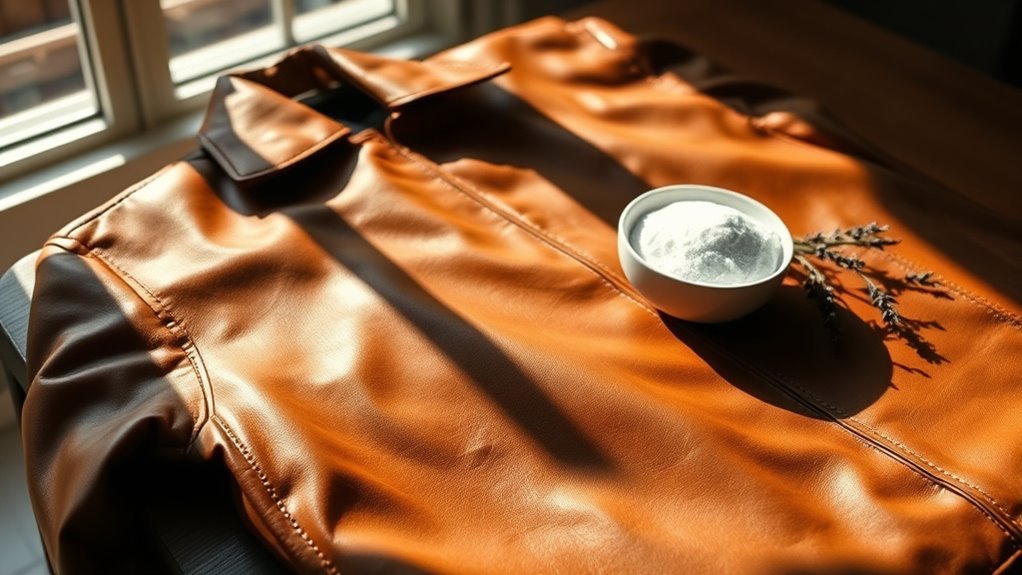
Though commercial products work well, you can also use baking soda and other natural absorbers to tackle smoke odors in leather. Sprinkle a generous layer of baking soda over the leather surface and let it sit for several hours or overnight to absorb the smoke smell effectively.
Afterward, vacuum or brush off the baking soda thoroughly to remove trapped odor particles. For added odor control, place activated charcoal or coffee grounds inside the leather item. They’re excellent natural deodorizers.
You can also enhance baking soda’s effect by mixing it with vanilla extract or diluted essential oils before applying, giving your leather a fresh scent while neutralizing odors. These natural methods are simple, safe, and effective for reducing smoke smells without harsh chemicals.

Employ Advanced Techniques for Persistent Odors
If you’ve tried natural methods but the smoke smell still lingers, you can employ advanced techniques like ozonation to tackle persistent odors. Using an ozonator inside a sealed plastic bag breaks down smoke molecules effectively, removing deep-set smoke odor from your leather.
Seal the leather tightly with duct tape in heavy-duty garbage bags to maximize ozone contact. Ozonation neutralizes odor-causing particles on a molecular level, making it highly effective for stubborn smells. After treatment, clean and condition the leather to restore its suppleness and remove ozone residues.
Use an ozonator in a sealed environment
Seal leather with heavy-duty bags and duct tape
Ozonation neutralizes odors molecularly
Combine with vinegar cleaning and airing
Condition leather post-ozonation for best odor removal results
Condition and Maintain the Leather Regularly
Maintaining your leather by conditioning it every 3 to 6 months keeps it supple and prevents cracking, which also helps resist smoke odors. Use a leather conditioner suited to your leather type to preserve its natural scent and moisture.
Apply small amounts with a soft cloth in gentle circular motions for even coverage without oversaturating. This regular conditioning creates a protective barrier that reduces odor absorption and simplifies future cleaning.
Frequently Asked Questions
What Do Car Dealers Use to Remove Smoke Smell?
Car dealers use ozone generators to break down smoke odors. They also apply deodorizing sprays, deep steam clean interiors, use activated charcoal filters, and sometimes seal the leather to keep the smoke smell from coming back.
How Do You Get the Smell Out of Leather?
Think of your leather as a sponge soaking up smoke. You’ll want to air it out, clean with vinegar and water, sprinkle baking soda overnight, then condition it to restore softness and banish the stubborn smell completely.
Does Vinegar Damage Leather?
Yes, vinegar can damage leather if you use it undiluted or too often. You should always dilute it, test a hidden spot first, and condition the leather afterward to prevent dryness or cracking.
How to Remove Smoke Smell From Leather Seats?
Think of your leather seats as a blank canvas. You’ll freshen them by airing them out, wiping with vinegar solution, sprinkling baking soda overnight, then vacuuming.
Finish with a leather-safe deodorizer for lasting freshness.
Conclusion
Getting smoke smell out of leather might feel like trying to erase a wildfire, but with the right steps, it’s totally doable. By identifying your leather type, cleaning properly, and using natural absorbers like baking soda, you’ll breathe fresh life back into your items.
Don’t forget to air them out and condition regularly—your leather deserves the best care to stay soft, fresh, and smoke-free for years to come. With patience and the right techniques, removing smoke odor from leather can be effective and long-lasting.
You’ve got this! Keep following these tips to get smoke smell out of leather and restore your belongings to their original, fresh state.