How to Get Latex Paint off Leather: Safe & Effective Methods
To get latex paint off leather effectively, start by gently blotting fresh paint with a soft cloth. This initial step helps prevent the paint from setting deeper into the leather.
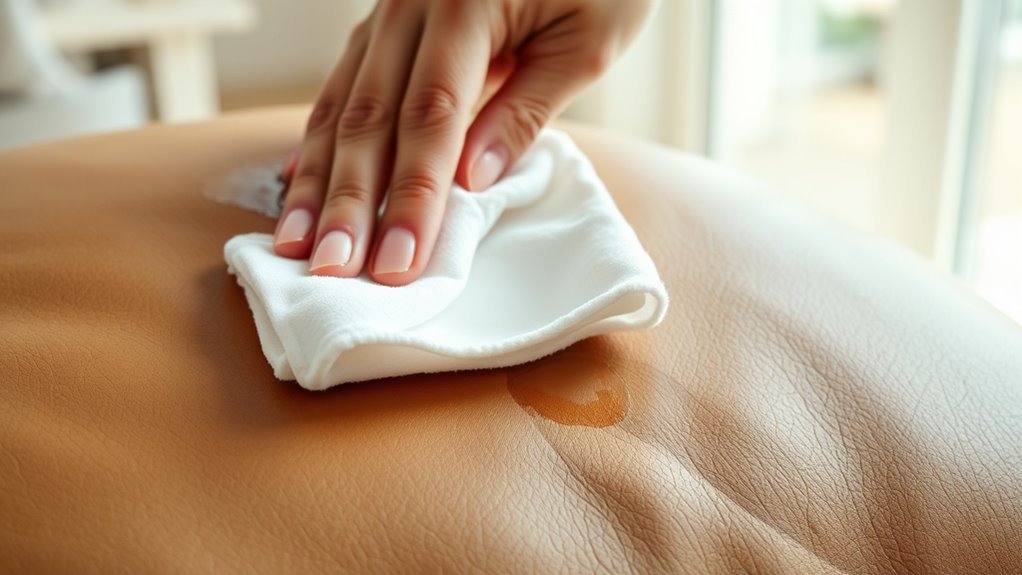
Use warm, soapy water to loosen the stain, wiping along the grain without soaking the leather.
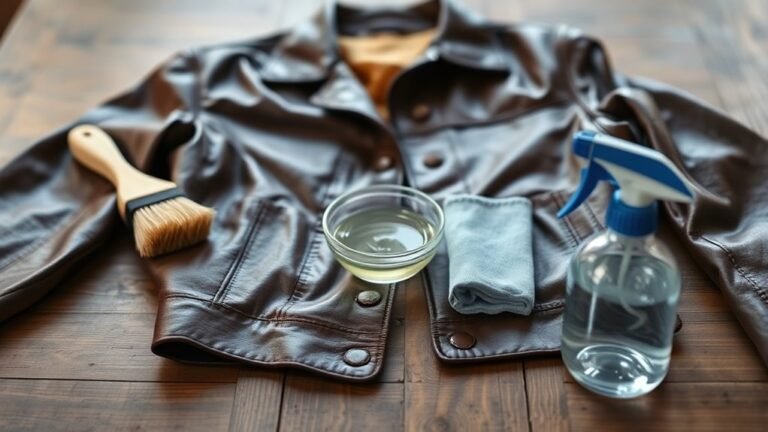
For stubborn spots, apply a small amount of vegetable oil or a vinegar-water mix to soften the paint.
Then carefully scrape it off with a plastic tool, taking care not to damage the leather surface.
Always test solutions on a hidden area first to avoid discoloration or damage.
Once the paint is removed, finish by conditioning the leather to restore its natural oils and flexibility.
You can discover more tips to protect your leather’s finish throughout the process, ensuring it stays in great condition.
Identifying the Type of Leather and Paint

Before you start removing latex paint from leather, it’s important to identify both the type of leather and the paint involved. Different leather types, such as genuine, faux, or pleather, react differently during paint removal.
Genuine leather usually shows a natural grain and absorbs liquids more, so you’ll want to be cautious with cleaning solutions. To identify your leather type, check for labels, feel the texture, or consult the manufacturer if possible.
Knowing that latex paint is water-based and thicker than oil-based paints helps you choose safer methods that won’t damage the material. Understanding both the leather type and latex paint characteristics guarantees your paint removal efforts won’t cause discoloration or harm, making the process more effective and preserving your leather’s appearance.
Preparing the Leather Surface for Cleaning

Before you start cleaning, make sure you know what type of leather you’re working with to avoid damage. Gently remove any dirt or excess paint using a soft cloth or scraper.
Always test your cleaning product on a hidden spot to check for any adverse reactions.
Identify Leather Type
How can you guarantee your cleaning efforts won’t damage your leather? First, identify whether your leather is genuine, bonded, or faux since cleaning methods differ. Check for manufacturer labels or tags that provide specific cleaning recommendations or restrictions.
Before applying any cleaner, perform spot tests on a small, hidden area using a mild soap solution to confirm the color won’t fade or bleed. Use a damp, not soaked, cloth to gently wipe away surface dirt or loose paint without harming the finish.
Avoid harsh chemicals or abrasive tools during these initial cleaning tests to protect the leather’s texture and appearance. Taking these careful steps ensures your cleaning approach suits your leather type, preventing damage while effectively preparing the surface for paint removal.
Initial Dirt Removal
Once you’ve identified your leather type, start by gently removing any loose or wet latex paint using a soft, dry cloth or a blunt knife to avoid spreading the stain further. Next, use a damp cloth with warm, soapy water to wipe the leather surface, helping to remove surface dirt, dust, and any leftover paint particles.
This step prepares the leather for deeper cleaning without damaging it. Make sure the leather is completely dry and free of debris before moving on. If you notice dried or stubborn paint, you can lightly sand the area with fine-grit sandpaper to lift residues without harming the leather.
Taking these steps will effectively remove initial dirt and paint, setting the stage for successful paint removal.
Test Cleaning Products
Why risk damaging your leather when you can test cleaning products first? Before tackling the visible paint stain, always test any cleaning solution on a small, hidden area of the leather.
Use a cotton swab or soft cloth to apply a tiny amount of the product, then wait 5 to 10 minutes to check for adverse effects like discoloration or surface damage. Make sure the leather is clean and dry before testing to gauge the cleaning solution’s true impact.
Avoid harsh chemicals or abrasive tools during this step, as they can harm the leather’s finish. Record your observations and wait several hours to confirm no fading or deterioration occurs.
Only after a successful test should you proceed with treating the main stain.
Initial Cleaning With Warm Soapy Water

You should start by gently cleaning the leather with warm soapy water to loosen any fresh latex paint. Mix a small amount of mild soap with lukewarm water to create a gentle cleaning solution.
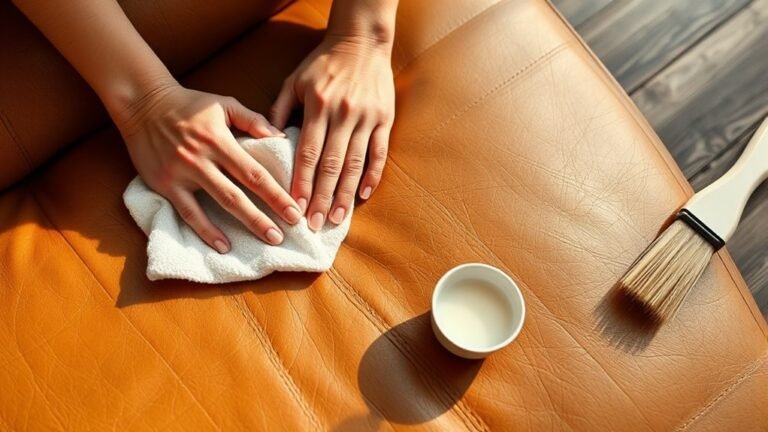
Dip a soft cloth or sponge into the mixture, making sure it’s only lightly soaked to avoid saturating the leather. Gently wipe the painted area along the grain, applying minimal pressure to protect the leather’s surface.
Afterward, use a clean, damp cloth dipped in plain water to rinse away any soap residue. Finally, pat the leather dry with a clean towel and let it air dry completely before moving on. This careful approach helps you clean leather effectively without causing damage.
Using Vegetable Oil to Loosen Latex Paint
Although latex paint can cling stubbornly to leather, applying a small amount of vegetable oil can help you loosen it effectively. Start by putting a few drops of vegetable oil directly on the paint stain.
Gently rub the oil into the latex paint using a soft cloth or your fingertip, then let it sit for several minutes to break down the paint’s grip. Once the paint softens, carefully peel or scrape it off with a blunt object like a plastic scraper or your fingernail.
Wipe away the loosened paint and excess oil with a clean cloth. Finally, clean the area with warm soapy water to remove any leftover residue. Applying a leather conditioner afterward will restore moisture and keep the leather from drying out after using vegetable oil to remove paint.
Applying a Vinegar and Water Solution
You’ll want to mix equal parts white vinegar and water to create a gentle solution for removing latex paint from leather.
Dampen a soft cloth or cotton swab with the mixture and carefully dab or rub the paint spots. Remember to rinse your cloth often to avoid spreading the paint and to keep the leather safe.
Vinegar and Water Mix
How exactly does a vinegar and water mix help remove latex paint from leather? This gentle leather cleaner breaks down the paint without harsh chemicals that could damage the surface.
To create the solution, mix equal parts white vinegar and water. Dampen a soft cloth or sponge with this vinegar and water mix, then apply it carefully to the latex paint stain. Work in small circular motions to lift the paint while preserving the leather’s integrity.
Remember to rinse the cloth frequently and reapply the mixture as needed to avoid spreading the paint further. Once the stain is gone, wipe the area with a clean, damp cloth. Finally, condition the leather to restore its softness and maintain its natural look.
Application Techniques
When applying the vinegar and water solution, start by mixing equal parts to guarantee a gentle yet effective cleaner. Dampen a soft cloth with the mixture and do a patch test on a hidden area to ensure it won’t damage the leather.
Once tested, use the damp cloth to gently rub the latex paint spots, applying light pressure to avoid harming the surface. Vinegar remove paint properties work best with gentle rubbing, so take your time.
After loosening the paint, wipe away residue with a clean, dry cloth. Repeat the process as needed, keeping the leather damp but not soaked.
Finish by conditioning the leather to restore moisture and maintain its softness. This method balances effectiveness with leather care.
Creating and Applying a Rubbing Alcohol Mixture
Although leather requires gentle care, you can effectively remove latex paint by creating a simple rubbing alcohol mixture. Mix two parts rubbing alcohol with one part water to form a cleaning solution that targets paint stains on your leather item.
Before applying, test the mixture on a small, hidden area to guarantee it won’t discolor or damage the leather. Dampen a soft cloth or cotton swab with the solution, then gently apply it to the paint stain. Avoid pressing too hard to prevent harming the leather. Once treated, wipe the area with a clean, damp cloth to remove residue. Finally, apply leather conditioner to restore softness and maintain the item’s quality after cleaning with the rubbing alcohol mixture.
Gently Removing Dried Latex Paint With a Soft Cloth
Since dried latex paint can be stubborn, start by gently peeling or scraping off as much as possible using a soft, plastic spatula or your fingernail to protect the leather surface. Next, dampen a clean, soft cloth with warm water and carefully wipe around the paint stain to loosen any adhered paint particles.
Use the slightly damp cloth to softly rub the dried latex paint, working from the edges inward to avoid spreading it. If needed, lightly dampen the cloth with a mix of water and mild soap, then gently dab the area to soften the paint without soaking the leather.
After you remove paint from leather, wipe the area with a dry soft cloth and condition the leather to keep it supple.
Utilizing Commercial Leather Cleaners for Stubborn Stains
When tackling stubborn latex paint stains, pick a commercial leather cleaner designed specifically for delicate surfaces. Always test it on a hidden spot first, then apply gently with a soft cloth following the instructions.
Afterward, condition the leather to keep it soft and prevent cracking.
Choosing the Right Cleaner
If you’re dealing with stubborn latex paint stains on leather, using a commercial leather cleaner designed for tough spots can make a big difference. To choose the right cleaner, keep these steps in mind:
- Select a commercial leather cleaner formulated for your leather type and tough stains.
- Always perform a patch test on a hidden area to avoid discoloration or damage.
- Follow the product instructions carefully to maximize effectiveness without harming the leather.
- After cleaning, apply a leather conditioner to restore moisture and protect the surface.
Application Techniques
Although stubborn latex paint stains can be tricky, you can effectively remove them by applying a commercial leather cleaner with care. Start by choosing a specialized cleaner formulated for leather to protect the leather surface.
Apply the cleaner to a soft cloth or sponge, then gently rub the paint stains in circular motions. This helps lift the paint without damaging the material. Always follow the manufacturer’s instructions, including any recommended dwell time, to ensure the best results.
Before applying widely, perform a patch test on a hidden area to avoid discoloration. After treatment, wipe the area with a damp cloth to remove leftover cleaner and paint particles, then dry thoroughly. Using these careful application techniques will help restore your leather without harm.
Conditioning After Cleaning
Since removing latex paint can strip your leather of its natural oils, you’ll want to condition it promptly to restore softness and prevent cracking. Start by using commercial leather cleaning products or saddle soap to thoroughly clean stubborn stains before conditioning.
Follow these steps to care for your leather properly:
- Choose a suitable commercial leather cleaner and apply it according to the manufacturer’s instructions.
- Gently clean the leather to remove any residual paint and dirt.
- Allow the leather to dry completely before applying a leather conditioner.
- Use the leather conditioner to replenish lost oils and restore softness, maintaining the leather’s suppleness.
Regular conditioning after cleaning helps preserve your leather’s appearance and prolong its lifespan.
Conditioning Leather After Paint Removal
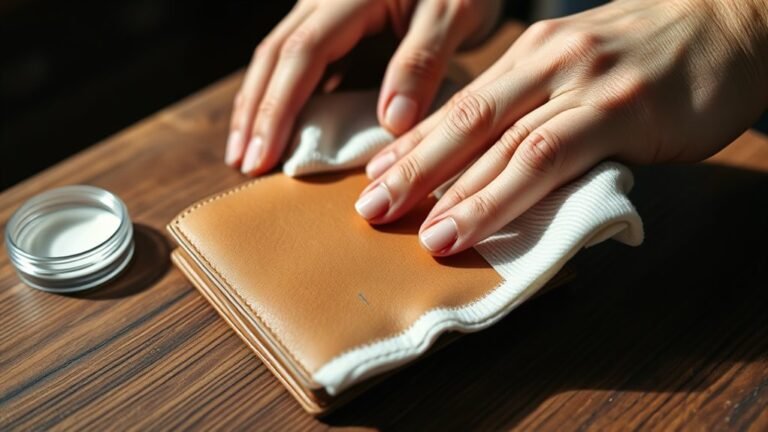
Once you’ve successfully removed the latex paint, you need to condition the leather to restore its moisture and flexibility. Applying a high-quality leather conditioner is essential to replenish the moisture lost during cleaning and prevent the leather from drying out or cracking.
Choose a conditioner specifically designed for leather surfaces and follow the manufacturer’s instructions carefully to ensure effective preservation. Conditioning after paint removal keeps the leather supple and maintains its appearance, prolonging its lifespan.
Make sure to allow the conditioner to fully absorb before using or exposing the leather to moisture again. Regular use of leather conditioner after cleaning safeguards your leather’s softness and durability, helping it stay in great shape long after the paint is gone.

Precautions to Protect Leather During the Cleaning Process
To protect your leather while removing latex paint, you need to handle it with care and use gentle methods. Before applying any cleaning solution, always test it on a hidden area of the leather to avoid discoloration or damage.
Follow these precautions:
- Ensure the leather is clean, dry, and free of debris before starting.
- Use a minimal amount of liquid solution to prevent soaking and warping.
- Choose gentle, non-abrasive tools and avoid scrubbing aggressively.
- Stick to manufacturer guidelines for any leather care products you use.
Frequently Asked Questions
What Removes Latex Paint From Leather?
You can remove latex paint from leather using warm, soapy water for fresh stains. For tougher spots, try rubbing alcohol or vinegar, but always test first.
Finish by applying leather conditioner to protect the surface.
What Removes Dried Latex Paint?
Like peeling morning frost, you can remove dried latex paint by gently softening it with warm, soapy water or rubbing alcohol. Then, carefully scrape or wipe it away, revealing the smooth surface beneath without harm.
Is Goo Gone Safe on Leather?
Goo Gone isn’t usually safe on leather because its solvents can damage or discolor it. You should test it on a hidden spot first, use it sparingly, then clean and condition the leather right after.
Will Rubbing Alcohol Damage Leather?
Don’t put all your eggs in one basket. Rubbing alcohol can damage leather if overused or undiluted.
You should always dilute it, test a hidden spot first, and condition the leather afterward to keep it supple.
Conclusion
Now that you know the steps to tackle latex paint on leather, don’t rush—each move counts to avoid damage.
You might think it’s a lost cause when stubborn spots linger, but hang tight. With a little patience and the right method, that paint will lift without a trace.
Remember, your leather’s beauty depends on how gently you treat it. Ready to see your leather look flawless again? You’re closer than you think to removing latex paint from leather effectively.