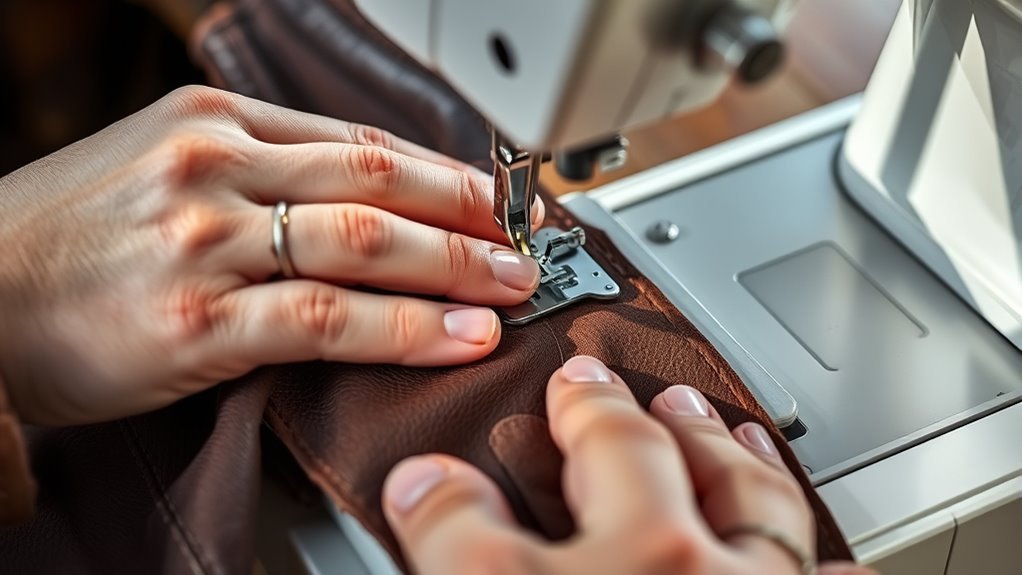
How You Sew Leather With a Regular Sewing Machine
You can sew leather with a regular sewing machine by choosing soft, thin leathers like lambskin or goatskin. Using leather needles and strong polyester thread is essential to prevent breakage. Adjust your machine by loosening tension, increasing stitch length, and lowering presser foot pressure for smooth stitching.
Avoid pins—use clips instead—and sew slowly for better control. Preparing your leather properly makes a big difference in the quality of your work.
Keep going to discover tips on handling thicker leather and finishing your project perfectly.
Understanding the Types of Leather Suitable for Sewing

Before you start sewing leather, it’s important to know which types work best with a regular sewing machine. You want to choose leather that’s soft and pliable, like lambskin or goatskin, because they’re easier to handle and won’t strain your machine.
Soft, pliable leathers like lambskin or goatskin are best for regular sewing machines to avoid strain.
Avoid thick, tough leather such as full-grain or vegetable-tanned leather unless you have a heavy-duty machine designed for thick materials.
Split leather and suede are also workable but might require special needles and thread.
Keep in mind that thinner leather layers sew more smoothly, while thick hides can cause needle breakage or skipped stitches. Picking the right leather ensures your machine runs smoothly and your project turns out professional.
Essential Tools and Supplies for Sewing Leather

Although sewing leather with a regular machine is doable, you’ll need specific tools and supplies to make the process smoother and protect both your material and equipment. Start with leather needles designed to pierce tough surfaces without breaking. Use strong polyester or nylon thread since cotton won’t hold up well.
A walking foot attachment helps feed leather evenly, preventing slippage. You’ll also want clips instead of pins to avoid permanent holes. A roller presser foot can ease thick layers through your machine.
Keep a seam ripper handy for corrections, but be gentle to avoid damaging the leather. Ultimately, a sturdy cutting mat and rotary cutter improve precision when trimming.
Having these essentials ready ensures your leather sewing project goes smoothly and looks professional.
Preparing Leather for Sewing

When you prepare leather for sewing, you’ll guarantee cleaner stitches and a smoother workflow. Start by cutting your leather precisely with a rotary cutter or sharp scissors to avoid jagged edges.
Precise cutting with sharp tools ensures cleaner stitches and a smoother sewing experience with leather.
Next, mark your stitching lines using a pencil or tailor’s chalk; this helps keep your seams straight. If your leather is thick, consider thinning the edges with a leather skiver or sandpaper to reduce bulk when stitching.
Always test your setup on a scrap piece first to adjust tension and stitch length.
Finally, clean the leather surface gently with a damp cloth to remove dust or oils that might interfere with sewing.
Taking these steps ensures your leather pieces align perfectly and your sewing machine handles the material without issues.
Choosing the Right Needle and Thread
After prepping your leather carefully, the next step is to choose the right needle and thread for your sewing machine. Use a leather needle, which has a sharp, wedge-shaped point designed to pierce leather without tearing it. Needles sized 90/14 or 100/16 work well for most leather projects.
For thread, pick a strong, durable option like bonded nylon or polyester thread; these resist abrasion and won’t break easily. Avoid regular cotton thread, as it’s too weak for leather’s toughness.
Also, opt for a thicker thread, usually between Tex 70 and Tex 135, to ensure your stitches hold up over time.
Matching your thread color to the leather’s tone can enhance your project’s appearance. With the right needle and thread, your sewing machine will handle leather smoothly and reliably.
Adjusting Your Sewing Machine Settings for Leather
Since leather is thicker and less flexible than fabric, you’ll need to adjust your sewing machine settings to prevent skipped stitches and needle damage.
Start by loosening the tension slightly to allow the thicker leather to feed smoothly. Use a longer stitch length, around 3.0 to 4.0 mm, so your stitches don’t bunch up or perforate the leather too much.
Lower your presser foot pressure to avoid compressing or marking the leather surface. Choose a slower sewing speed to maintain control and reduce strain on your machine.
Finally, test these settings on a scrap piece of leather before sewing your project.
Loosen thread tension
Increase stitch length
Reduce presser foot pressure
Slow down sewing speed
Test on scrap leather first
Techniques for Sewing Thick and Thin Leather
Although sewing leather requires some patience, mastering the techniques for handling both thick and thin leather will make your projects much easier.
Sewing leather demands patience, but mastering thick and thin leather techniques simplifies your projects significantly.
For thick leather, use a longer stitch length, around 3.5 to 4 mm, to prevent perforating and weakening the material. Also, sew slowly and apply steady pressure to feed the leather evenly. Using a walking foot can help manage thick layers without slipping.
When working with thin leather, choose a shorter stitch length, about 2 to 2.5 mm, to avoid puckering. Handle the leather gently to prevent stretching or distortion.
In both cases, always use sharp needles designed for leather to ensure clean punctures. Adjust your presser foot pressure to avoid marks, and test on scraps before starting your main piece.
Tips for Preventing Leather From Stretching or Tearing
When you sew leather, preventing stretching or tearing is essential to maintain its strength and appearance. To keep your leather project intact, handle the material carefully and follow these tips:
Use a leather needle to avoid unnecessary holes and stress on the material. Stabilize the leather with tissue paper or a water-soluble stabilizer to prevent distortion while stitching.
Avoid pulling or stretching the leather as you sew; guide it gently through the machine.
Adjust your stitch length to about 3-4 mm to provide strength without perforating the leather too much.
Lower the presser foot pressure to reduce dragging and help the leather feed evenly.
Finishing Seams and Edges on Leather Projects
After stitching your leather pieces together, you’ll want to focus on finishing seams and edges properly to guarantee durability and a polished look. Begin by trimming any excess seam allowance to reduce bulk, but be careful not to cut too close to the stitching.
Use a leather edge beveler or sandpaper to smooth rough edges. Applying edge paint or burnishing with a slicker can seal and protect the edges, preventing fraying and wear.
For seams, consider topstitching to reinforce strength and add a decorative touch. If your project allows, press seams open gently with a hammer or wooden tool rather than an iron, which can damage leather.
Taking these steps assures your leather project looks professional and lasts longer.
Common Mistakes to Avoid When Sewing Leather
Finishing seams and edges carefully sets the foundation for a strong leather project, but sewing leather presents its own set of challenges you’ll want to avoid. To make your work smooth and professional, watch out for these common mistakes:
- Using the wrong needle type or size, which can cause skipped stitches or damage.
- Failing to adjust stitch length; too short stitches perforate leather and weaken seams.
- Skipping the use of a walking foot or Teflon foot, leading to uneven feeding.
- Not testing on scrap leather first, risking errors on your main piece.
- Applying too much pressure or pulling fabric, which distorts the leather’s shape.
Avoid these pitfalls, and your leather projects will look polished and hold up beautifully.
Frequently Asked Questions
Can I Sew Leather Without Using a Thimble?
Yes, you can sew leather without a thimble, but it’s risky. Your fingers might get sore or injured.
Using a thimble protects you and makes pushing needles through tough leather easier and safer.
How Do I Clean My Sewing Machine After Sewing Leather?
Like a blacksmith wiping his forge, you’ll want to unplug your machine first.
Use a small brush or compressed air to clear out leather dust and lint. Then, oil the moving parts to keep it smooth.
What Types of Leather Glue Work Best for Sewing Projects?
You’ll want to use contact cement or leather-specific adhesives like Tandy Leathercraft’s Eco-Flo Leather Weld.
They dry flexible and strong, helping pieces stay in place for easier sewing without damaging your machine or leather.
Is It Necessary to Condition Leather Before Sewing?
You don’t have to condition leather before sewing, but it’s a smart move. Conditioning keeps leather supple, prevents cracking, and makes stitching smoother.
How Do I Store Leather Scraps After Sewing?
Treat your leather scraps like precious puzzle pieces—store them flat in a cool, dry place, away from sunlight.
Wrap them in breathable fabric or paper to prevent drying, keeping them ready for your next creative adventure.
Conclusion
Sewing leather with a regular machine might seem tricky, but with the right tools and patience, it’s surprisingly doable. While leather feels tough and unyielding, your sewing machine can handle it gently if you adjust your settings and choose the proper needle.
Remember, leather demands care—not force. So, instead of rushing through, take your time and enjoy the process.
After all, the smooth finish you achieve is worth every careful stitch. Sewing leather with a regular sewing machine requires attention to detail, but the results make it a rewarding experience.