How Often Should You Treat Leather Car Seats for Maintenance
You should treat your leather car seats every two to six months for proper maintenance, depending on how often you use your car, where you live, and the type of leather.
Daily use or hot, dry climates may require more frequent conditioning to prevent cracks and dryness. Signs like stiffness or water soaking in indicate it’s time to act.
Picking the right conditioner and practicing proper care are key. Keep reading to discover how to protect and extend your leather’s life.
Factors Influencing Leather Treatment Frequency

Although leather is durable, how often you need to treat your car seats depends on several key factors. First, consider how often you use your car. Daily drivers require more frequent conditioning than vehicles driven occasionally.
Leather durability varies; frequent use means more regular conditioning for your car seats.
Next, think about the climate where you live. Harsh sun and dry air can dry out leather faster, while humid conditions might demand less frequent treatment.
Your lifestyle also plays a role. If you often eat in your car or have pets, your seats might need extra care to prevent stains and damage.
Finally, the type of leather matters; some leathers are more porous and need more attention.
Signs Your Leather Seats Need Conditioning

Understanding the factors that influence how often you should treat your leather seats helps you recognize when they actually need conditioning. You’ll notice your leather seats start to look dull or feel dry to the touch. That’s a clear sign they need moisture.
If you see small cracks or creases forming, it means the leather is losing its natural oils and flexibility. When your seats begin to feel stiff or squeaky, conditioning is overdue.
Also, if water droplets stop beading and instead soak in quickly, the protective layer has worn off.
By spotting these signs early, you can prevent permanent damage and keep your leather seats soft, supple, and looking great for years.
Conditioning restores their natural luster and extends their lifespan.
Recommended Treatment Intervals for Different Climates

Because climate impacts how quickly leather dries and wears, you should adjust your treatment schedule accordingly.
Climate influences leather’s drying and wear rate, so adjust your care routine to match your environment.
If you live in a hot, dry climate, your leather seats will lose moisture faster, so conditioning them every 2 to 3 months helps prevent cracking and fading.
In humid or mild climates, treating your seats every 4 to 6 months is usually sufficient since moisture levels slow down the drying process.
For colder regions, leather may stiffen but won’t dry out as quickly, so conditioning twice a year often works well.
Keep in mind that heavy use or exposure to sunlight might require more frequent treatments regardless of climate.
Tailoring your routine to your environment keeps your leather supple and extends its life.
Choosing the Right Leather Conditioner
Adjusting your treatment schedule based on climate is only part of the equation; selecting the right leather conditioner makes a big difference in protecting and nourishing your seats. You want a product that suits your leather type and lifestyle. Here’s how to choose:
- Check the Ingredients: Opt for conditioners with natural oils and avoid harsh chemicals that can dry or damage leather.
- Match Your Leather Type: Different leather (aniline, semi-aniline, or pigmented) requires specific conditioners to maintain its texture and color.
- Consider Finish and Protection: Some conditioners offer UV protection and water resistance, essential if your car often sits in the sun or humid areas.
Pick a conditioner that balances nourishment, protection, and compatibility with your leather to keep your seats looking fresh longer.
Steps to Properly Treat Leather Car Seats
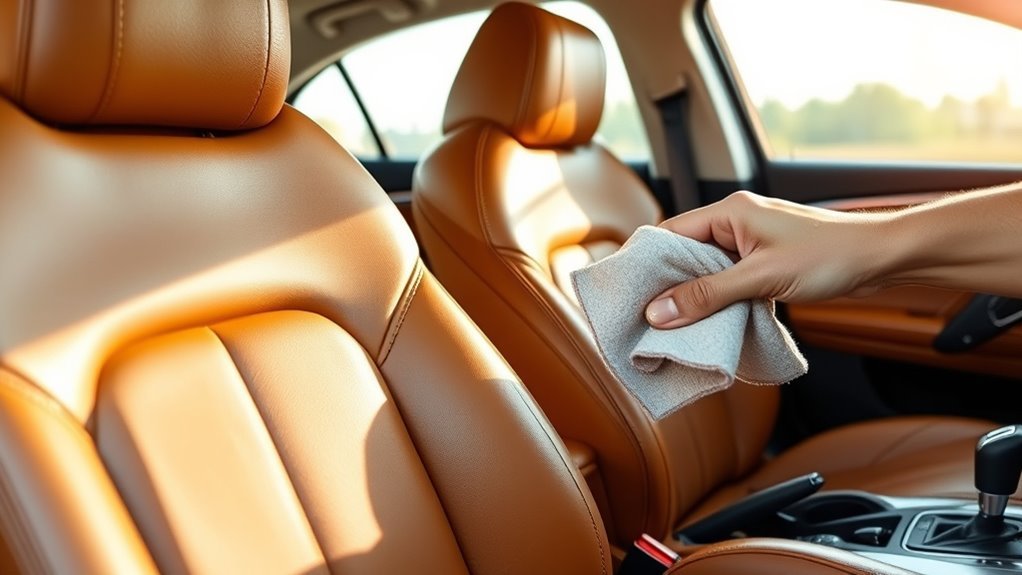
When you treat leather car seats properly, you not only enhance their appearance but also extend their lifespan. Start by vacuuming the seats to remove dirt and debris. Next, wipe them down with a damp cloth and a leather cleaner to lift grime without damaging the material.
After cleaning, apply a leather conditioner evenly to keep the leather soft and prevent cracking. Finally, let the conditioner absorb fully before using the seats again.
| Step | Purpose |
|---|---|
| Vacuum | Remove loose dirt and dust |
| Clean with leather cleaner | Eliminate grime and stains |
| Condition leather | Hydrate and protect surface |
Following these steps carefully guarantees your leather seats stay supple and look great longer.
Tips to Extend the Life of Leather Car Interiors
To keep your leather car interiors looking their best for years, you’ll want to adopt a few smart habits. First, protect your seats from direct sunlight as much as possible to prevent fading and drying. Use sunshades or park in shaded areas.
Second, clean spills immediately with a soft cloth to avoid stains and damage. Leather is porous and can absorb liquids quickly.
Third, regularly condition your leather with a quality product to keep it supple and prevent cracking. Conditioning also restores natural oils lost over time.
Frequently Asked Questions
Can I Use Household Oils to Condition Leather Car Seats?
You shouldn’t use household oils to condition leather car seats because they can clog pores and cause damage. Instead, stick to products made specifically for leather to keep your seats soft, protected, and looking great.
Is It Safe to Treat Leather Seats if I Have Pets?
Yes, you can treat leather seats if you have pets. Just choose pet-safe, non-toxic conditioners and keep pets away until seats dry.
This protects your leather and guarantees your furry friends stay safe and comfortable.
How Do Leather Treatments Affect Car Seat Warranty?
You won’t usually void your car seat warranty by using recommended leather treatments.
Just make sure you follow the manufacturer’s guidelines and use approved products to keep your warranty intact and protect your leather properly.
Can Leather Conditioners Prevent Seat Cracks Completely?
You can’t stop cracks completely with leather conditioners, but they act like a shield, greatly reducing dryness and wear.
If you treat your seats regularly, you’ll slow damage and keep them looking fresh much longer.
Are There Eco-Friendly Leather Conditioners Available?
Yes, you’ll find eco-friendly leather conditioners made from natural oils and plant-based ingredients. They’re gentle on your seats and the environment, so you can keep your leather soft without worrying about harmful chemicals or waste.
Conclusion
Think of your leather car seats as a trusted companion on every journey, deserving regular care to keep their strength and beauty alive. By treating them with the right conditioner at proper intervals, especially considering your climate’s demands, you’re not just preserving leather—you’re nurturing the story of every drive.
With each careful treatment, you shield your seats from wear and time, ensuring they remain a symbol of comfort and style for miles ahead.
Regular maintenance is key. How often should you treat leather car seats? Ideally, every three to six months, depending on usage and environmental factors, to maintain their quality and longevity. Proper leather care keeps them supple and prevents cracking, making your investment last longer and look better.