How to Clean Dog Urine From a Leather Couch Step by Step
To clean dog urine from your leather couch effectively, start by gently blotting the urine with a dry cloth, making sure not to rub the stain. This helps prevent the urine from spreading further into the leather.
Next, mix a mild soap solution or use a vinegar-water mixture, but always test it on a hidden area of the couch first to ensure it won’t damage the leather. Then, softly clean the affected spot with the solution.
After cleaning, rinse the area with a damp cloth to remove any soap or vinegar residue. Allow the leather to air dry naturally, keeping it away from direct heat sources to avoid drying out or cracking.
Once dry, apply a leather conditioner to maintain the couch’s suppleness and prevent stiffness. For odor removal, sprinkle baking soda over the area and let it sit to absorb smells before vacuuming it off.
Stay tuned to discover how to prevent future accidents and keep your leather furniture looking beautiful and fresh.
Assess the Damage and Gather Supplies

Before you begin cleaning, carefully assess the damage to understand the severity of the urine stain and odor on your leather couch. Check the size of the affected area and whether the urine has soaked deeply into the leather or just left a surface stain.
Inspect for any discoloration or changes in texture. This helps you decide the cleaning approach and products you’ll need.
Once you’ve assessed the damage, gather the right supplies: mild leather cleaner, distilled water, white cloths or paper towels, a soft-bristled brush, and leather conditioner. Avoid harsh chemicals that could harm the leather.
Having everything ready before you start ensures a smooth cleaning process and helps prevent further damage to your couch.
Blot Up Excess Urine Immediately

When you notice fresh dog urine on your leather couch, quickly blot up as much liquid as you can to prevent it from soaking in further. Use a clean, dry cloth or paper towels and gently press down on the affected area, don’t rub, as that can spread the urine and damage the leather.
Keep blotting with fresh sections of the cloth until no more moisture transfers. Acting fast limits staining and odor absorption.
If the urine has pooled, tilt cushions or the couch slightly to encourage drainage.
Avoid saturating the leather with water during this step; your goal is to absorb, not wet the surface further.
This immediate action sets the foundation for effective cleaning and helps preserve your couch’s appearance.
Prepare a Gentle Cleaning Solution

Once you’ve blotted up the urine, you’ll want to clean the area without harming the leather. Start by mixing a gentle cleaning solution: combine one part white vinegar with two parts warm water.
Vinegar neutralizes odors and helps break down urine without damaging leather. Alternatively, you can use a few drops of mild, moisturizing liquid soap diluted in warm water. Avoid harsh chemicals or anything abrasive.
Vinegar and mild soap gently break down urine and neutralize odors without harming your leather.
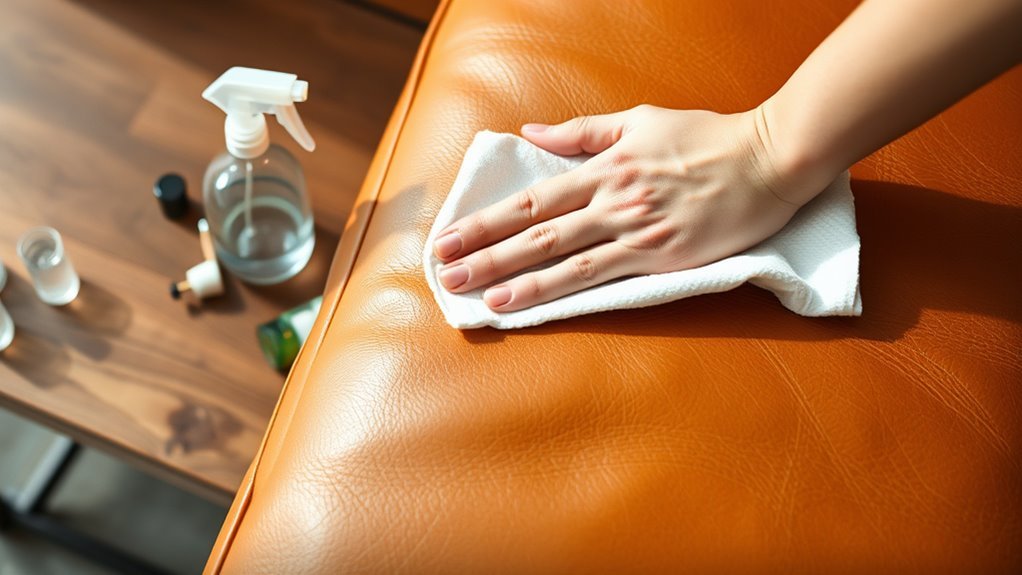
Stir the solution gently to blend. Use a soft cloth dampened (not soaked) with this mixture to gently wipe the stained area.
This approach helps lift the urine residue while preserving the leather’s natural oils and finish.
Preparing this gentle solution carefully guarantees effective cleaning without risking discoloration or stiffness in your leather couch.
Test the Cleaning Solution on a Hidden Area
Although you’ve prepared a gentle cleaning solution, you’ll want to test it on a hidden part of your leather couch first to verify it won’t cause discoloration or damage. Choose an inconspicuous spot, like the underside of a cushion or the back corner of the couch.
Apply a small amount of the solution with a soft cloth and wait for about 10 to 15 minutes. Check the area for any changes in color, texture, or finish.
If the leather looks unaffected and feels normal, it’s safe to proceed with cleaning the urine stain.
However, if you notice any discoloration or damage, stop immediately and consider using a different solution or consulting a professional cleaner to avoid ruining your couch.
Gently Clean the Affected Area
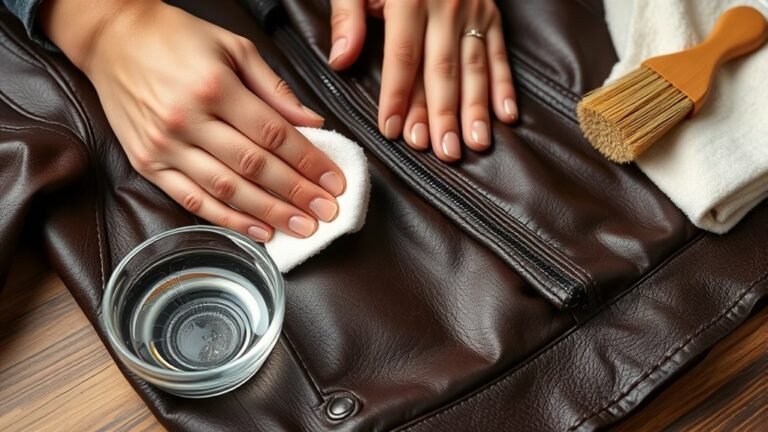
Since the cleaning solution has passed the test, you can gently clean the urine-stained area using a soft cloth or sponge.
Dampen the cloth slightly with the solution, avoiding soaking it, to prevent over-wetting the leather.
Lightly dab or wipe the affected spot, working from the outside toward the center to stop the stain from spreading. Don’t scrub aggressively, as this can damage the leather’s surface.
Gently dab from the outside in to remove stains without harming the leather surface.
Take your time and repeat the process if necessary, but always be gentle.
After you’ve treated the stain, let the leather air dry naturally.
Avoid using heat or direct sunlight to speed drying, as this can cause cracking.
This careful approach helps lift the urine while protecting your leather couch’s finish.
Wipe Down With a Damp Cloth
After gently treating the stain, you’ll want to wipe down the area with a damp cloth to remove any leftover cleaning solution. This step is essential to prevent residue buildup, which can damage the leather over time. Use a soft, slightly damp cloth. Avoid soaking it.
Follow these tips for best results:
- Use lukewarm water to dampen the cloth gently.
- Wipe in a circular motion to lift residue without spreading the stain.
- Rinse and wring the cloth frequently to keep it clean.
- Avoid harsh scrubbing to protect the leather’s finish.
- Check the area to ensure no soap or cleaner remains.
This careful wiping sets the stage for thorough drying, preserving your leather couch’s look and feel.
Dry the Leather Thoroughly
Once you’ve wiped the area clean, make sure you dry the leather thoroughly to prevent moisture damage. Use a soft, dry microfiber cloth to gently pat the surface, absorbing any remaining dampness. Avoid rubbing, as this could push moisture deeper into the leather or cause discoloration.
If possible, open windows or use a fan to increase air circulation around the couch, speeding up the drying process.
Steer clear of direct heat sources like hairdryers or radiators, which can dry out and crack the leather.
Give it enough time to air dry completely before sitting on it or applying any treatments.
Proper drying helps maintain the leather’s integrity and prevents mold or mildew from developing under the surface.
Apply Leather Conditioner
Although the leather may look clean and dry, applying a conditioner is essential to restore its natural oils and keep it supple. Urine and cleaning can strip away these oils, leaving your couch prone to cracking and fading.
Here’s how you should apply the conditioner:
Choose a high-quality leather conditioner suitable for your couch type. Test the conditioner on a small, hidden area first to check for colorfastness.
Apply a small amount of conditioner evenly using a soft cloth. Gently rub it in circular motions to ensure full absorption.
Allow the leather to absorb the conditioner for several hours before using the couch again.
This process nourishes the leather, prolonging its life and maintaining its appearance after cleaning.
Neutralize Odors With Natural Remedies
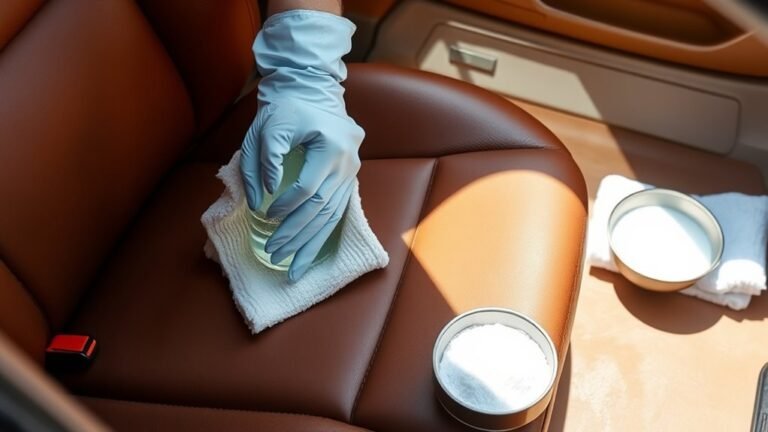
Since leather can absorb lingering smells, you’ll want to tackle any urine odors promptly to keep your couch fresh. Start by sprinkling baking soda over the affected area. This natural deodorizer absorbs moisture and neutralizes odors effectively. Let it sit for several hours or overnight, then vacuum it off gently.
Another powerful remedy is white vinegar diluted with equal parts water. Lightly mist the mixture onto the spot using a spray bottle, don’t soak the leather, and let it air dry. Vinegar breaks down odor-causing compounds without damaging the surface.
For added freshness, place a bowl of activated charcoal nearby to absorb any residual smells. These natural solutions help restore your leather couch’s comfort without harsh chemicals, keeping it clean and odor-free for you and your furry friend.
Prevent Future Accidents on Your Couch
Keeping your leather couch smelling fresh is just one part of the solution; preventing your dog from having accidents on it again is equally important. You can protect your couch by addressing the root cause and reinforcing good habits.
Start by establishing a consistent bathroom routine for your dog. Make sure your pup has plenty of outdoor breaks, especially after meals or naps. Consider using a waterproof cover or throw to shield your couch temporarily.
Training aids like repellents or positive reinforcement help discourage couch use for bathroom breaks. Ultimately, ensure your dog gets enough exercise and mental stimulation to reduce stress-related accidents.
Here are five tips to prevent future accidents:
- Set regular bathroom times
- Use couch covers or protectors
- Apply pet-safe repellents
- Reward good behavior consistently
- Provide ample outdoor activity
Frequently Asked Questions
Can Dog Urine Cause Permanent Discoloration on Leather?
Yes, dog urine can cause permanent discoloration on leather if you don’t clean it quickly. The acids and salts in urine damage the leather’s finish, so acting fast and using proper cleaning methods is essential.
If urine is left to sit, it can soak into the leather, leading to stains that are very difficult or impossible to remove. Prompt cleaning helps minimize the risk of lasting damage.
Using leather-specific cleaners and conditioners after cleaning can help restore and protect the leather’s surface from further harm.
Is It Safe to Use Commercial Leather Cleaners on Urine Stains?
Yes, you can use commercial leather cleaners on urine stains, but make sure they’re specifically designed for leather and test them on a small, hidden area first.
This prevents damage and keeps your couch looking great.
How Long Should I Wait Before Sitting on the Cleaned Area?
You should wait at least 1 to 2 hours before sitting on the cleaned leather area. This gives the leather enough time to dry completely and helps prevent any damage or lingering odors from the cleaning products.
Can Enzyme Cleaners Damage Leather Furniture?
Enzyme cleaners can damage leather if they’re too harsh or not designed for it. You should use a cleaner specifically made for leather or test a small hidden area first to avoid discoloration or deterioration.
What Should I Do if My Dog Frequently Urinates on the Couch?
When your couch becomes a frequent target, you’ve got to nip it in the bud: train your dog, provide more potty breaks, and use deterrents.
Consistency and patience will turn the tide in your favor, guaranteed.
Conclusion
Cleaning dog urine from your leather couch might seem tough, but with the right steps, you can protect your furniture and keep it smelling fresh. Did you know that nearly 60% of pet owners face accidents on their furniture? Acting quickly and using gentle methods not only saves your leather but also prevents lingering odors.
Follow these steps, and you’ll keep your couch looking great while keeping your furry friend happy and accident-free! Proper cleaning of dog urine from leather ensures longevity and maintains the couch’s appearance. By addressing accidents promptly, you can effectively remove stains and odors, preserving your leather couch’s quality and comfort.