Why Are No Leather Shoes Worn on Yom Kippur?
You don’t wear leather shoes on Yom Kippur because the tradition calls for humility and self-denial, helping you focus on spiritual reflection. Leather, made from animal hides, symbolizes comfort and status, so avoiding it reminds you to detach from worldly pleasures.
This practice, rooted in ancient customs, enhances your connection to atonement and purity. If you want to understand how this choice ties into fasting and modern adaptations, there’s a deeper meaning to explore.
Historical Origins of the Leather Shoe Prohibition

Although you mightn’t realize it, the prohibition against wearing leather shoes on Yom Kippur has deep historical roots tied to humility and mourning. Back in ancient times, leather shoes symbolized comfort and status, so removing them was a way to express penance.
You’ll find that early Jewish texts describe abstaining from leather footwear as a sign of self-denial during times of repentance. This practice wasn’t just about footwear; it reflected a broader cultural norm where people avoided luxuries to show respect for solemn occasions.
Over centuries, this custom became firmly established, reinforcing the idea that Yom Kippur is a day set apart from everyday life. So, when you don’t wear leather shoes, you’re connecting with a tradition that spans generations, emphasizing simplicity and reflection.
Religious Significance of Avoiding Leather on Yom Kippur

When you avoid wearing leather shoes on Yom Kippur, you actively participate in a religious tradition that underscores humility and spiritual purity. Leather, derived from animal hides, is considered a sign of physical comfort and worldly luxury.
By choosing not to wear leather, you symbolically detach from material pleasures, focusing instead on repentance and self-reflection. This practice aligns with the broader prohibitions of Yom Kippur, aimed at minimizing physical distractions to enhance spiritual connection.
Furthermore, avoiding leather shoes serves as a tangible reminder of the solemn nature of the day, reinforcing your commitment to atonement. Your choice reflects respect for the sanctity of Yom Kippur, helping you embrace its spiritual goals more fully through conscious, deliberate actions.
Symbolism of Humility in Footwear Choices

Since footwear often reflects status and confidence, choosing humble shoes on Yom Kippur sends a clear message about your mindset. When you opt for non-leather shoes, you’re signaling humility and a focus on spiritual rather than material values.
This choice aligns with the day’s themes of repentance and introspection.
You can think of the symbolism in three ways:
- Equality – Wearing simple shoes reminds you that everyone stands equal before God.
- Detachment – It helps you detach from physical comforts and status symbols.
- Simplicity – Choosing humble footwear reflects your intention to simplify and purify your life.
The Role of Fasting and Self-Denial in Yom Kippur Practices
By choosing to fast and practice self-denial on Yom Kippur, you actively participate in a powerful spiritual cleansing. This day isn’t just about abstaining from food or comfort, but about redirecting your focus inward and upward. Fasting helps you detach from physical needs, heightening your spiritual awareness and humility.
| Practice | Purpose | Effect |
|---|---|---|
| Fasting | Control physical urges | Deepens self-discipline |
| Avoiding leather shoes | Symbolizes humility | Enhances spiritual focus |
| Prayer & Reflection | Seek forgiveness | Purifies the soul |
| Self-denial | Reject worldly pleasures | Strengthens connection to God |
Each act complements the other, creating a holistic approach to repentance and renewal on this sacred day.
Differences Between Leather and Non-Leather Shoes in Jewish Law
Although both leather and non-leather shoes serve the basic function of protecting your feet, Jewish law treats them quite differently, especially on Yom Kippur. Leather shoes are traditionally seen as a sign of comfort and luxury, so wearing them on this day conflicts with the spirit of humility and self-denial.
Non-leather shoes, however, don’t carry this same status and are generally permitted.
Here’s why:
- Leather comes from an animal, symbolizing a higher level of comfort and status.
- Non-leather materials, like cloth or rubber, are considered less luxurious and more humble.
- The prohibition against leather shoes specifically emphasizes refraining from physical comfort on Yom Kippur.
How the Custom Is Observed Across Different Jewish Communities
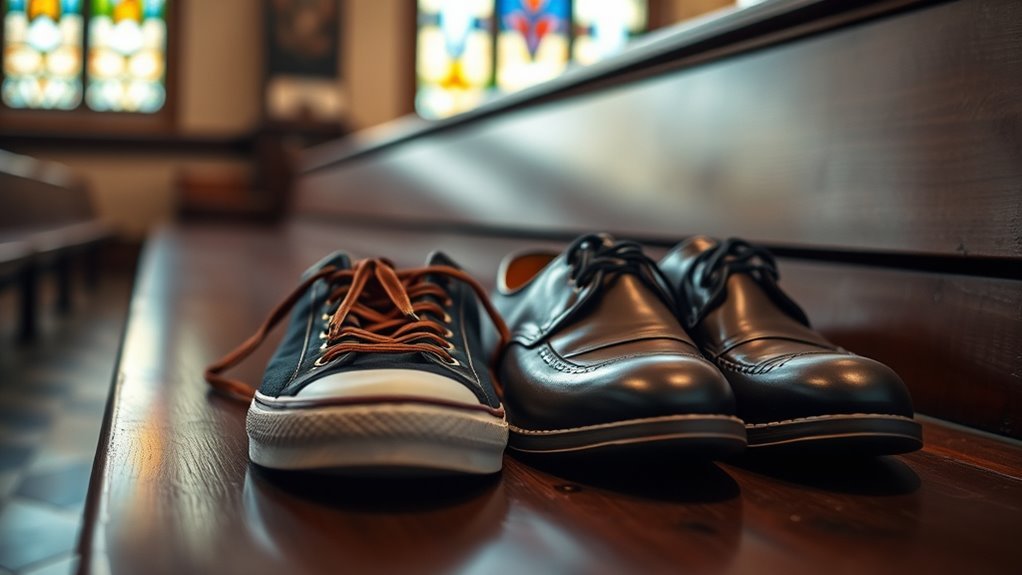
The distinction between leather and non-leather shoes shapes how various Jewish communities observe this custom on Yom Kippur. If you’re part of an Ashkenazi community, you’ll likely avoid leather shoes entirely, opting for cloth, canvas, or rubber footwear as a sign of humility and mourning.
Sephardic Jews might be more flexible, sometimes allowing leather shoes under certain conditions, reflecting differing rabbinic interpretations.
In ultra-Orthodox circles, this practice is strictly observed, and you’ll notice men wearing simple, non-leather shoes all day.
Conversely, some modern or less traditional communities mightn’t emphasize this custom as strongly, sometimes wearing leather discreetly.
Wherever you are, the practice centers on expressing penitence and self-denial, but how you observe it depends on your community’s traditions and halachic rulings.
Practical Alternatives to Leather Shoes on Yom Kippur
When you need to avoid leather shoes on Yom Kippur, several practical alternatives can keep you comfortable while honoring the tradition. You might consider these options:
- Cloth or Canvas Shoes – Lightweight and breathable, they’re perfect for the day’s observance.
- Rubber or Synthetic Footwear – Sneakers or slip-ons made from non-leather materials offer both comfort and respect for the custom.
- Open-toed Sandals – If the weather permits, sandals can be a simple, non-leather choice that aligns with the spirit of the fast.
The Connection Between Footwear and Spiritual Purity
Choosing non-leather footwear on Yom Kippur does more than follow tradition. It connects you to a deeper spiritual meaning. When you avoid leather shoes, you symbolically shed material comfort and status, focusing instead on humility and purity.
Leather, often seen as a luxury, contrasts with the solemnity of the day, reminding you to detach from earthly pleasures. By wearing simpler shoes, you physically express vulnerability and repentance, aligning your outer actions with your inner state.
This act helps you center on spiritual growth, making the day’s introspection more tangible. Your choice of footwear becomes a silent prayer, reinforcing the themes of self-denial and cleansing.
In this way, what you wear on your feet profoundly reflects your commitment to spiritual purity on Yom Kippur.
Modern Interpretations and Adaptations of the Tradition
Although traditional customs guide the practice, many people today adapt the leather shoe prohibition on Yom Kippur to fit modern lifestyles and needs. You might find yourself *orchestrating* these adaptations based on comfort, health, or personal interpretation.
Many adapt the leather shoe prohibition on Yom Kippur to fit personal comfort and modern needs.
For instance, some common modern approaches include:
- Wearing non-leather shoes like canvas or rubber sneakers to maintain the spirit of the law while staying comfortable.
- Using synthetic leather alternatives that look formal but respect the custom.
- Choosing sandals or slippers, especially in warmer climates, to avoid leather but still wear something appropriate.
Frequently Asked Questions
Can Leather Sandals Be Worn on Yom Kippur?
You shouldn’t wear leather sandals on Yom Kippur since leather is traditionally avoided to honor the day’s solemnity.
Instead, choose non-leather footwear to respect customs and maintain the spirit of the fast and repentance.
Are Leather Boots Allowed if They Are Not Fully Enclosed?
You can’t sneak leather boots onto Yom Kippur, even if they’re not fully enclosed. The rules block all leather footwear, so your feet should stay wrapped in fabric or non-leather materials to honor the day’s solemn spirit.
Do Children Have to Follow the Leather Shoe Prohibition?
Children generally aren’t obligated to follow the leather shoe prohibition on Yom Kippur until they reach the age of religious maturity, typically 12 or 13.
However, many families encourage them to observe as a meaningful practice.
Is the Leather Shoe Restriction Observed Outside of Israel?
Yes, you’ll find the leather shoe restriction observed by many Jews worldwide, not just in Israel.
Communities across the diaspora uphold this tradition on Yom Kippur to honor the solemnity of the day.
What if Someone Only Owns Leather Shoes and No Alternatives?
Like finding shade on a sunny day, if you only own leather shoes, you should try using non-leather alternatives like canvas or rubber ones for Yom Kippur.
If none exist, consult your rabbi for guidance.
Conclusion
When Yom Kippur arrives, choosing non-leather shoes isn’t just about tradition—it’s a gentle reminder to embrace humility and spiritual reflection. By setting aside the usual comforts, you quietly step into a mindset of self-restraint and purity.
This subtle shift in footwear nudges you to focus on the soul’s journey rather than outward appearances. So, as you slip into softer soles, you’re invited to walk a path of deeper meaning and connection. Wearing non-leather shoes on Yom Kippur symbolizes this sacred practice, reinforcing the day’s emphasis on atonement and spiritual renewal.