What Needle Do I Need to Sew Leather? Expert Tips for Choosing the Right One
When you sew leather, you need sharp, specialized leather needles designed to cut through fibers cleanly without damaging the material. Choosing the right needle is crucial for working with leather, as it ensures smooth stitching and prevents damage to your project.
Select a needle size that matches your leather’s thickness—smaller sizes for thin leather, larger for thick hides. Pair it with the right thread to avoid skipped stitches or tearing.
Using the wrong needle can ruin your project, so selecting and maintaining your needle properly is key. Understanding these details will help you achieve the best results with your leather sewing.
Why Special Needles Are Essential for Sewing Leather

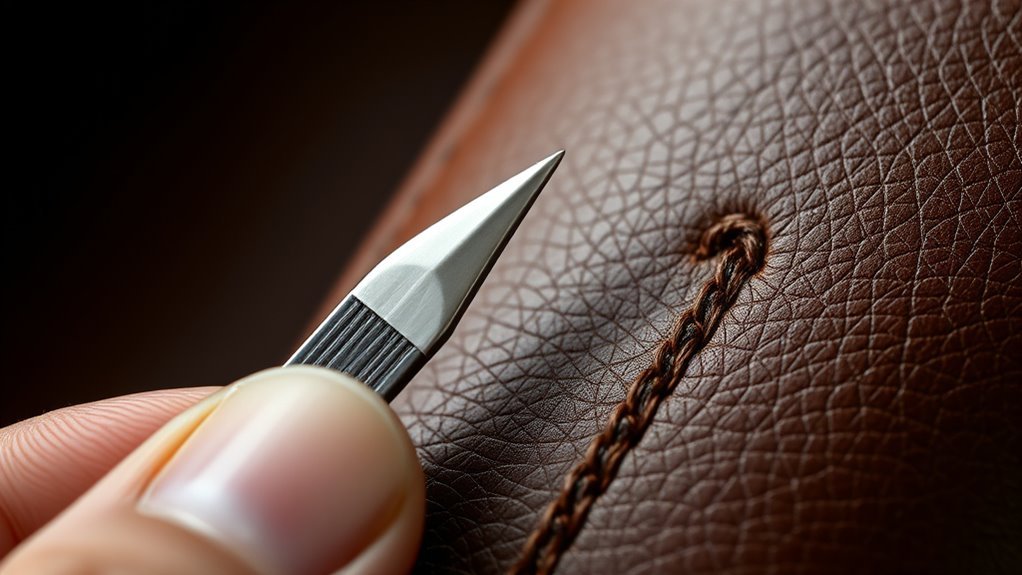
Although you might be tempted to use a standard needle, sewing leather requires special needles with sharp cutting blades to create clean, permanent stitch holes. A leather needle is designed with a unique cutting point that slices through dense fibers rather than pushing them aside like regular needles do.
This cutting point ensures each stitch hole is neat and precise, preventing the leather from tearing or closing up afterward. Using the wrong needle can damage your material and ruin your stitching, but choosing the right Needle to Use helps maintain the leather’s integrity and improves stitch durability.
Overview of Leather Sewing Machine Needle Types

Choosing the right needle for leather goes beyond just having a sharp cutting point; the variety of leather sewing machine needles available caters to different types of leather and stitching needs. You’ll find round or sharp point needles for general sewing on softer leather, while DI needles handle thick, dry leather with ease.
Specialized types like twist, perpendicular, and triangular needles are designed for decorative or structural seams, ensuring clean, precise holes without damaging the material. These needles typically range in size from 12 to 18, with larger sizes suited to heavier leather.
Unlike universal needles, leather needles feature a reinforced shank and a cutting tip, allowing them to penetrate tough leather efficiently. Understanding these needle types helps you achieve professional sewing results every time.
Selecting the Right Needle Based on Leather Thickness

When working with leather, matching your needle to its thickness guarantees smoother stitching and less damage. For leather up to 4 oz, use a sharp or universal needle type like the Groz-Beckert R point.
Thicker leather demands heavy-duty cutting or DI needles to pierce cleanly. Choose smaller needle sizes (12 or 14) for thin leather and larger sizes (16 or 18) for heavier materials.
The needle’s cutting tip should align with leather thickness: finer points for soft leather and robust DI or TRI points for dense hides. Always test on scrap leather since thickness can vary within your project.
Selecting the right needle type ensures clean holes and consistent stitches, making your sewing with leather efficient and damage-free.
Matching Needle Size With Thread and Stitch Requirements
Matching your needle size with the thread and stitch requirements plays a vital role in achieving clean, durable seams on leather projects. When using a leather sewing machine, you want to use the right needle size to match your thread thickness and stitch style.
For instance, thicker threads like 18/5 linen need larger needles, such as size 16 or 18, especially for long stitches on heavy leather. Conversely, fine threads like TKT40 pair best with smaller needles, around 12 or 14.
The needle’s point type also matters. It should suit the leather’s hardness and the stitch’s purpose, whether decorative or structural. Always test different needle and thread combos on scrap leather to find the best match, preventing stitch skipping, tearing, and ensuring a professional finish.
Tips for Maintaining Needle Performance When Sewing Leather
Although sewing leather demands durable needles, keeping them sharp and aligned is equally essential for smooth stitching. Regularly inspect your needle for dull points or damage, and replace it every few projects to ensure clean cuts through leather.
Always use the correct needle size and type that matches your leather’s thickness to avoid unnecessary stress and maintain needle sharpness. Clean your machine’s needle plate and bobbin area frequently to prevent buildup that can cause misalignment or breakage. When sewing thick leather, slow your speed instead of forcing the needle through tough spots to reduce wear. Finally, store your needles in a protective case to prevent bending and keep them organized for easy use during your leather projects.
Frequently Asked Questions
What Needles Are Best for Sewing Leather?
You’ll want diamond-point or TRI point needles for leather because they cut clean holes. Match needle size to thickness, using smaller needles for thin leather and larger ones for thick.
This guarantees tearing and ensures strong, professional stitches every time.
Do You Need a Special Needle to Sew Leather by Hand?
Think of sewing leather like carving a sculpture; you need a specialized chisel. Yes, you’ll want a leather needle with a sharp, wedge-shaped tip to pierce tough material cleanly and keep your stitches strong and neat.
Can I Sew Leather on a Regular Sewing Machine?
Yes, you can sew leather on a regular machine if you use a leather or heavy-duty needle and a walking foot. These help prevent skipped stitches and damage, making your leather projects smoother and more durable.
What Tension Should I Use to Sew Leather?
You should set your machine’s tension between 3 and 4 when sewing leather. Adjust it gradually on scrap leather to avoid puckering or skipped stitches, ensuring smooth, even seams for a professional finish every time.
Conclusion
When sewing leather, the right needle is your secret weapon to avoid frustration and achieve smooth stitches. Remember, using a specialized leather needle designed for your material’s thickness and thread type can make all the difference.
Don’t cut corners—keeping your needle sharp and well-maintained will help you hit the nail on the head every time. With the right tools and care, you’ll sew leather like a pro, making your projects strong and stylish.
Choosing the correct needle size and type is essential when you want to sew leather effectively. Investing in quality leather needles ensures your sewing machine can handle the tough material without damage.
In conclusion, to sew leather successfully, select a leather needle that matches your project’s thickness and thread type. This needle will help prevent skipped stitches and fabric damage, making your leatherwork neat and durable.