How to Waterproof Leather Boots: Step-by-Step Guide for Lasting Protection
To waterproof your leather boots effectively, start by cleaning off dirt with a soft brush. Proper cleaning is essential before applying any waterproofing product.
Use a suitable waterproofing product for your leather type—sprays for delicate leather, creams for smooth surfaces.
Apply thin, even coats, covering all seams and creases, then let them dry naturally away from heat.
Reapply every few months, especially after exposure to moisture.
Keeping your boots well-maintained extends their protection and durability.
If you want to protect your boots longer, there’s more to know about proper care. Following these steps ensures your leather boots stay waterproof and in great condition for years to come.
Clean Your Boots Thoroughly

Before you waterproof your leather boots, make sure you clean them thoroughly. Start by removing loose dirt and debris with a soft-bristled brush or a dry cloth to prepare the surface.
Begin by thoroughly cleaning leather boots with a soft brush or dry cloth to remove dirt and debris.
Then, use a damp cloth combined with saddle soap or a leather cleaner to tackle stains and ingrained dirt. Be careful not to soak the leather excessively, as too much moisture can damage it.
After cleaning, wipe off all soap residue completely to avoid buildup that could interfere with waterproofing absorption. Allow your boots to dry naturally in a well-ventilated area. Avoid direct heat sources like radiators or hairdryers.
To help absorb moisture and keep the boots’ shape, stuff them with newspaper or paper towels during drying. This clean, dry foundation ensures your waterproofing treatment works effectively.
Select the Appropriate Waterproofing Treatment

Choosing the right waterproofing treatment is essential to protect your leather boots effectively. Start by selecting waterproofing products specifically made for your leather type, whether full-grain, nubuck, or suede.
For smooth leather, liquid or cream-based waterproofing agents work best, penetrating deeply. For delicate or textured leather, waterproofing sprays provide gentle, even coverage without damaging the finish.
Always check the product label to ensure compatibility with your boots and avoid sealants that could alter texture or appearance. Consider how long the waterproofing process lasts and how often you’ll need to reapply based on your outdoor activities.
Before fully committing, test the waterproofing treatment on a small, hidden area to prevent discoloration or damage. Proper selection ensures your waterproofing leather boots stay protected and looking great.
Apply Waterproofing Products Correctly

When you apply waterproofing products correctly, you guarantee your leather boots get the best possible protection without damage. First, always clean your boots thoroughly to remove dirt and debris, especially if you’re working with full-grain leather. Use a soft brush to ensure a thorough cleaning without harming the leather’s surface.
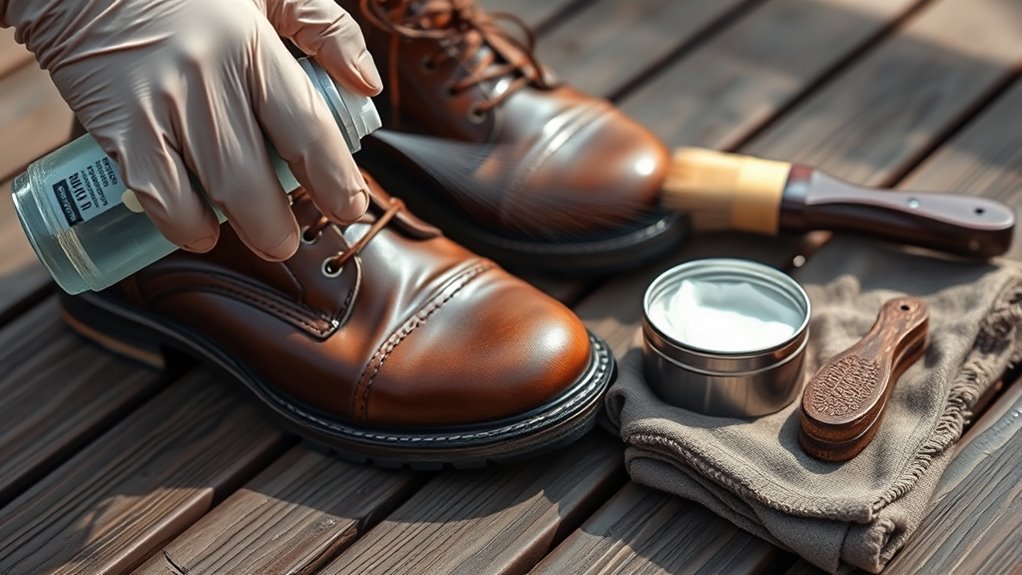
Next, apply the waterproofing product in thin, even coats. Hold the spray nozzle 6 to 8 inches away or spread creams with a soft brush, covering all areas, including seams and creases. Applying even coats prevents over-saturation and ensures consistent moisture protection.
Follow the manufacturer’s instructions carefully for the best results. Proper application helps keep your leather boots durable and resistant to water, extending their life and maintaining comfort.
Properly Dry and Maintain Your Boots
Although it might be tempting to speed up drying with direct heat, you should always let your leather boots dry naturally in a well-ventilated area to prevent cracking. To help your boots dry completely, stuff them with newspaper or absorbent material to draw out moisture and maintain their shape.
You can use fans or electric boot dryers, but avoid exposing your boots to excessive heat. Once dry, apply waterproofing again to restore the layer of protection that keeps water stops beading on the surface. This is especially important for new boots or leather work boots frequently exposed to moisture.
To maintain your boots, store them in a dry, ventilated space with boot trees inserted to prevent creases. Proper drying and upkeep ensure your waterproofing lasts longer and your boots stay in great condition.
Tips for Long-Lasting Waterproof Protection
To keep your leather boots reliably waterproof, you should reapply treatments every 2 to 3 months or after they’ve been exposed to wet conditions. This guarantees your waterproof leather stays effective whether you’re wearing hiking boots or work boots.
Before applying a new layer, clean and dry your boots thoroughly. Consider using Mink Oil or other suitable products to add an extra layer of protection.
Here are some tips for long-lasting waterproof protection:
- Clean and dry your boots before each waterproofing.
- Use products designed for your leather type.
- Inspect for water absorption or beading regularly.
- Store boots in a dry, ventilated space with boot trees.
- Reapply a waterproof layer promptly after heavy use or exposure.
Following these steps keeps your leather boots durable and waterproof.
Frequently Asked Questions
Is WD-40 Good for Waterproofing Boots?
No, you shouldn’t use WD-40 to waterproof boots. It may repel water briefly but can damage leather by drying it out.
Instead, use products made specifically to protect and waterproof leather effectively.
What Is the Best Waterproofing Spray for Leather Boots?
Think of Kiwi Protect-All or Nikwax Fabric & Leather Proof as your leather boots’ raincoat. You’ll want silicone-based or water-based sprays that keep breathability intact, applying thin coats every few months to stay dry and flexible.
Can Leather Be 100% Waterproof?
No, leather can’t be 100% waterproof because its natural pores let some moisture through. You can treat it to resist water longer, but total waterproofing would sacrifice breathability and flexibility you need for comfort.
What Oil Is Used to Waterproof Leather?
You’ll want to use mink oil or beeswax-based products to waterproof leather effectively. They penetrate deeply and create a protective barrier.
Avoid Vaseline for long-term use, as it can darken leather and isn’t ideal.
Conclusion
If you skip waterproofing your leather boots, you might as well invite a flood to live on your feet! By cleaning them well, choosing the right treatment, applying it correctly, and drying them properly, you’re basically turning your boots into unstoppable water warriors.
Keep up with maintenance, and your boots won’t just resist water—they’ll laugh in its face. Trust me, waterproofing isn’t optional if you want boots that survive every storm like superheroes.
In conclusion, proper waterproofing of leather boots is essential for durability and protection. Regular care and using the right waterproofing methods ensure your boots stay in top condition and ready for any weather challenge.