How to Tell if a Leather Jacket Is Real With a Step-By-Step Guide
To tell if your leather jacket is real, start by feeling its texture—real leather has uneven grain and feels soft, while fake leather is smooth and plasticky. Smell it; genuine leather has a natural, earthy scent. These are key steps in how to tell if a leather jacket is real.
Check the seams and edges for roughness and tight stitching. Drop a bit of water to see if it soaks in, not beads. Finally, inspect labels and price for authenticity clues.
Keep exploring to uncover even more helpful tips.
Examine the Texture and Grain of the Leather

Although, it might seem subtle at first, examining the texture and grain of the leather is one of the easiest ways to tell if a jacket is genuine.
When you run your fingers over real leather, you’ll notice an uneven, natural grain with tiny imperfections. These irregularities show the hide’s authenticity because genuine leather is made from animal skin, which isn’t perfectly uniform.
In contrast, fake leather often feels smooth and plasticky, with a consistent pattern that looks too perfect. Also, genuine leather tends to be softer and more flexible, whereas synthetic materials can feel stiff or overly firm.
Pay attention to the surface’s texture; real leather breathes and changes as you touch it, while faux leather usually stays flat and lifeless.
Check the Smell of the Jacket

After feeling the texture, your next step should be to check the smell of the jacket. Real leather has a distinct, natural scent that’s hard to replicate. It often smells earthy, rich, and slightly musky, a sign of genuine animal hide.
Synthetic leather, on the other hand, usually has a chemical or plastic-like odor, which can be sharp or artificial. To do this, bring the jacket close to your nose and take a few gentle sniffs around the collar and inside the sleeves.
If the smell feels off or overly sweet, it’s likely not real leather. Trust your nose here; the authentic leather scent is subtle but unmistakable, helping you confidently determine the jacket’s authenticity.
Inspect the Edges and Seams

When you inspect the edges and seams of a leather jacket, you’ll gain valuable clues about its authenticity. Real leather usually has rough, natural edges rather than perfectly smooth or plastic-like finishes. Check if the edges look uneven or fibrous, which indicates genuine material.
Look closely at the stitching along the seams. Authentic leather jackets have tight, even stitches without loose threads or glue residue. Machine-made seams on fake jackets often appear sloppy or overly perfect, suggesting synthetic materials.
Also, examine any folded edges. Genuine leather is thick and holds shape, while faux leather may feel thin or peel.
Perform a Water Absorption Test
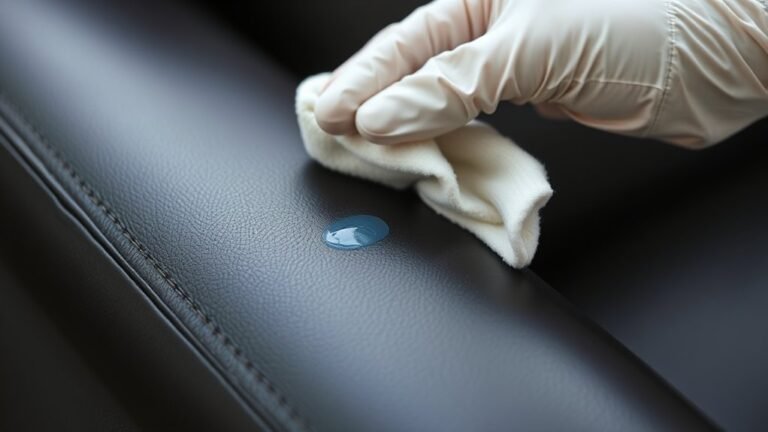
Since genuine leather is porous, it absorbs moisture differently than fake leather. To perform a water absorption test, place a small drop of water on an inconspicuous part of the jacket. If the water soaks in within a few seconds, it’s likely real leather.
Fake leather, often coated with plastic or synthetic materials, will cause the water to bead up and stay on the surface without being absorbed. Be careful not to use too much water, as soaking can damage the jacket.
This test gives you a quick indication of authenticity but shouldn’t be the only method you rely on.
Combine it with other checks to confidently determine if your leather jacket is genuine.
Look for Labels and Brand Information
How can you quickly verify if a leather jacket is genuine? Start by examining the labels and brand information carefully. Authentic leather jackets often have clear, detailed labels specifying the type of leather used and the country of origin.
Look for a reputable brand name known for quality leather goods. Check if the stitching around the labels is neat and consistent, as counterfeit products usually cut corners here. Also, pay attention to care instructions; they should be specific to leather rather than generic fabric care.
Key points to check include:
- Brand reputation and history
- Detailed material information on labels
- Precise care instructions for leather
- Quality and consistency of stitching around tags
These clues help you quickly distinguish real leather jackets from imitations.
Test the Flexibility and Softness
After checking the labels and brand details, the next step is to feel the jacket’s texture.
Real leather is naturally flexible and soft, so gently bend a small section of the jacket, like the sleeve or a corner.
If it wrinkles and quickly returns to its original shape, that’s a good sign.
Fake leather often feels stiff or plasticky and doesn’t bend as smoothly.
Also, run your hand across the surface; genuine leather feels warm and supple, while synthetic materials may feel cold or overly smooth.
Keep in mind that real leather breaks in over time, becoming softer, so brand-new jackets might feel a bit firmer but should still maintain flexibility.
This hands-on test helps you distinguish real leather from imitations effectively.
Consider the Price and Purchase Location
When you’re shopping for a leather jacket, pay close attention to the price and where you buy it. Genuine leather jackets typically come with a higher price tag because of the quality materials and craftsmanship involved.
If you find a jacket that’s suspiciously cheap, it might be fake or made from bonded leather.
Also, consider the store or website’s reputation; authorized retailers and well-known brands are more likely to sell authentic leather products.
Be cautious when buying from flea markets, street vendors, or unknown online sellers, as these places often offer counterfeit items.
Keep these tips in mind:
- Compare prices with official brand listings
- Check for authorized retailer status
- Avoid deals that seem too good to be true
- Research seller reviews before purchasing
Frequently Asked Questions
How Should I Care for a Real Leather Jacket?
You should clean your leather jacket gently with a damp cloth, condition it regularly to keep it soft, avoid direct sunlight, and store it in a cool, dry place.
Don’t use harsh chemicals or machine wash it.
Can Real Leather Jackets Get Wet in the Rain?
Around 60% of leather jackets show water damage if not treated. Yes, real leather jackets can get wet, but you shouldn’t let them soak.
Dry them naturally and apply conditioner to keep them supple and protected.
What Are the Common Types of Real Leather Used in Jackets?
You’ll find common real leather types like cowhide, lambskin, goatskin, and buffalo leather used in jackets. Each offers unique texture, durability, and softness, so pick one that matches your style and comfort preferences.
How Long Does a Genuine Leather Jacket Typically Last?
A genuine leather jacket typically lasts 15 to 25 years if you care for it properly.
You’ll be amazed that some well-maintained jackets even last over 50 years, becoming classic vintage pieces in your wardrobe.
Are There Any Ethical Concerns With Buying Real Leather Jackets?
Yes, buying real leather jackets raises ethical concerns about animal welfare and environmental impact.
You might consider alternatives like vegan leather or secondhand jackets to reduce harm while still enjoying stylish outerwear.
Conclusion
Now that you know how to spot real leather, you can shop with confidence and avoid getting fooled by fakes. Remember, genuine leather tells a story through its texture, smell, and feel—like a trusted friend who never hides its imperfections.
So next time you’re eyeing that jacket, trust your senses and these simple tests to guarantee you’re wrapping yourself in authenticity, not just style. After all, real leather lasts a lifetime.
By following this step-by-step guide on how to tell if a leather jacket is real, you ensure that your investment is both genuine and durable. Embrace the unique character of genuine leather and enjoy a timeless piece that truly stands out.