How to Remove Pen Stains From a Leather Couch
To remove pen stains from your leather couch, start by identifying the type of leather and ink involved. This is crucial for choosing the right cleaning method. Next, test a mild cleaner or rubbing alcohol on a hidden area to ensure it won’t damage the leather.
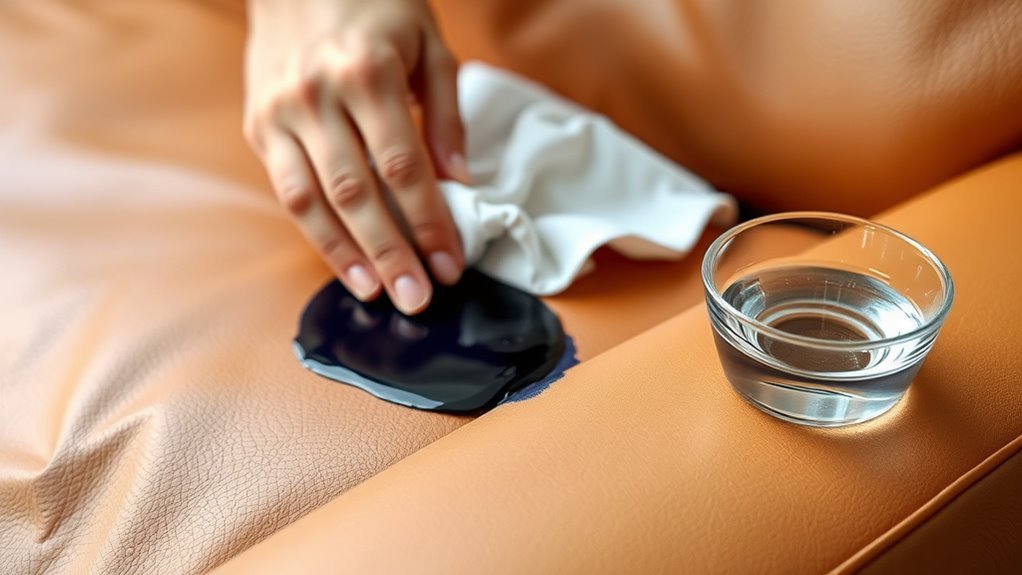
Gently dab the stain with a cotton swab, avoiding rubbing to prevent spreading the ink further. After treating the stain, wipe the area with a damp cloth to remove any residue.
Finally, apply a leather conditioner to restore moisture and maintain the couch’s softness. Acting quickly can help prevent permanent damage. If stains persist, professional cleaning might be your best option. You can explore more tips for effective leather care ahead.
Understanding Leather Types and Their Sensitivity

Before you tackle pen stains on your leather couch, it’s important to understand the type of leather you’re dealing with and how sensitive it may be. Some leathers, like full-grain or top-grain, are more durable and can handle gentle cleaning methods without damage.
Identifying your leather type is key before cleaning pen stains to avoid damage.
However, aniline or semi-aniline leather is more delicate because it lacks a protective coating, making it prone to staining and discoloration. You’ll want to avoid harsh chemicals or abrasive scrubbing on these types.
Additionally, bonded leather, made from leather scraps, is less resistant and may react differently to stain removal products. Knowing your couch’s leather type helps you choose the safest cleaning approach, preventing further damage while effectively addressing the pen stain.
Always test any cleaner on a hidden spot first to be sure.
Identifying the Ink Type on Your Couch

Knowing your leather type sets the stage for effective stain removal, but understanding the ink you’re dealing with plays an equally important role. Different inks respond to cleaning methods differently, so identifying whether the stain comes from ballpoint, gel, or permanent marker ink helps tailor your approach.
Ballpoint inks are oily and often easier to lift, while gel inks can be more stubborn due to their thicker consistency. Permanent markers are the toughest, as their pigments bond deeply with leather fibers.
You can usually tell the ink type by how it looks and feels. Ballpoint ink tends to be smooth and dark, gel ink slightly raised and glossy, and permanent ink bold and resistant to smudging. Correctly identifying the ink prevents damage and increases your chances of successful stain removal.
Essential Materials Needed for Ink Removal

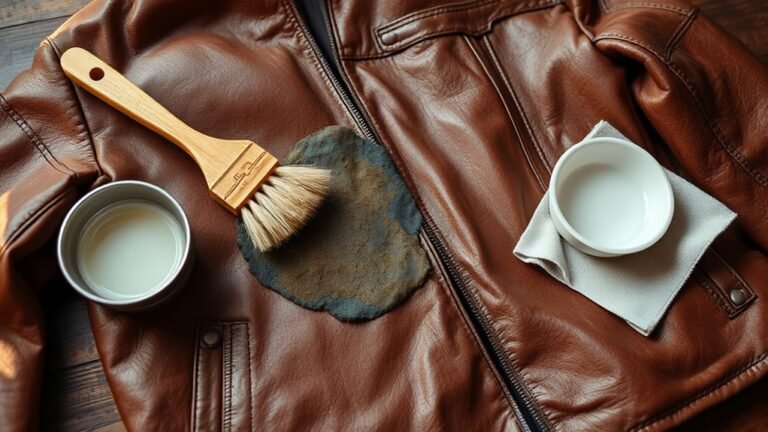
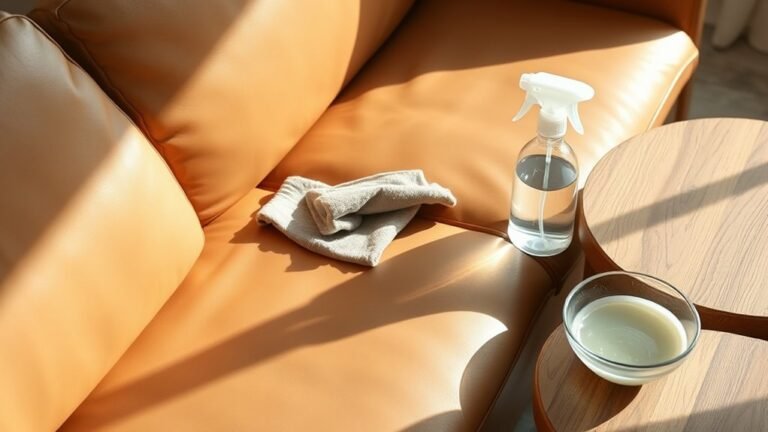
When tackling ink stains on your leather couch, gathering the right materials guarantees you can act quickly and effectively. Start with a clean, soft cloth or microfiber towel to avoid scratching the leather.
You’ll need a mild leather cleaner or a gentle soap solution. Avoid harsh chemicals that can damage the finish. Rubbing alcohol or a specialized leather ink remover can help dissolve stubborn ink, but use them sparingly.
Use mild leather cleaner or gentle soap; sparingly apply rubbing alcohol or leather remover for tough ink stains.
Have cotton swabs on hand for precise application in tight areas. A small bowl for mixing solutions and clean water for rinsing are essential too.
Finally, keep a leather conditioner nearby to restore moisture after cleaning. Having these materials ready ensures you’re prepared to remove pen stains safely and efficiently.
Testing Cleaning Solutions on a Hidden Area
Although you might be keen to remove the pen stains immediately, you should first test your chosen cleaning solution on a hidden spot of the leather. This step guarantees the product won’t discolor or damage the material.
Pick an inconspicuous area like beneath a cushion or the underside of an armrest. Apply a small amount of the cleaner using a cotton swab or soft cloth, then wait at least 10 minutes to observe any changes.
If the leather looks unchanged and feels soft, it’s safe to proceed with the stain removal. However, if you notice discoloration, stiffness, or deterioration, stop immediately and try a different cleaner.
Testing protects your couch from accidental damage and preserves its appearance throughout the cleaning process.
Using Rubbing Alcohol to Remove Pen Ink
Once you’ve confirmed your cleaner won’t harm the leather, you can move on to using rubbing alcohol to tackle the pen stains. Dampen a cotton ball or swab with isopropyl alcohol and gently dab the stained area. Avoid rubbing harshly to prevent damaging the leather.
After applying, let it sit briefly, then wipe with a clean, damp cloth. Repeat if necessary, but always test in small sections first.
| Step | Action | Tip |
|---|---|---|
| 1 | Apply rubbing alcohol lightly | Use a cotton swab |
| 2 | Let it sit for 5 minutes | Avoid soaking leather |
| 3 | Wipe with damp cloth | Moisturize leather after |
This method effectively lifts ink without harsh abrasion.
Applying Non-Acetone Nail Polish Remover Safely
Since non-acetone nail polish remover contains fewer harsh chemicals, you can use it to tackle pen stains on leather more gently.
Before applying, test it on a hidden spot to verify it won’t damage or discolor the leather.
Use a cotton swab dipped lightly in the remover, then dab the stained area carefully. Don’t rub, as that might spread the ink or harm the surface.
Work in small sections, blotting gently to lift the ink.
After treatment, wipe the area with a damp cloth to remove any residue.
Let the leather air dry completely before using the couch again.
Employing Leather Cleaner and Conditioner Products
When you want to restore your leather couch after removing pen stains, using specialized leather cleaner and conditioner products can make a big difference. Start by selecting a cleaner formulated specifically for leather to avoid damaging the material.
Apply a small amount to a soft cloth and gently wipe the stained area in circular motions. This helps lift residual ink without harsh chemicals.
After cleaning, use a leather conditioner to replenish moisture and maintain suppleness. Conditioners prevent cracking and dullness, keeping your couch looking fresh.
Make sure to test any product on a hidden spot first to check for colorfastness.
Regular use of these products not only removes stains but also protects your leather, extending its life and preserving its appearance over time.
Homemade Remedies for Ink Stain Removal
Although commercial products work well, you can often tackle ink stains on your leather couch using simple homemade remedies. Start by dabbing a cotton ball soaked in rubbing alcohol onto the stain. Be gentle and avoid rubbing harshly to prevent damage.
Another effective option is mixing equal parts lemon juice and cream of tartar into a paste. Apply it to the ink mark, let it sit for about 10 minutes, then wipe off with a damp cloth.
For fresh stains, you can try using diluted white vinegar. Dab it lightly and blot dry immediately.
Always test any remedy on a hidden area first to guarantee it won’t discolor your leather.
These easy, natural solutions can save you time and money while restoring your couch’s appearance.
Tips for Preventing Future Ink Stains on Leather
To keep your leather couch looking its best, you should take proactive steps to prevent ink stains before they happen. First, avoid using pens or markers near the couch. If you must, opt for ballpoint pens with quick-drying ink or use pencils instead.
Keep children’s art supplies and writing tools away from your leather furniture. Regularly clean your couch with a soft cloth and a leather-safe cleaner to remove dirt that can attract ink.
Applying a leather protector or conditioner creates a barrier against spills and stains.
Finally, educate household members and guests about handling pens carefully around the couch.
When to Seek Professional Leather Cleaning Services
If you notice ink stains that won’t budge despite your best efforts, it’s time to contemplate professional leather cleaning services. Professionals have specialized tools and cleaning agents designed specifically for delicate leather surfaces, ensuring the stain is removed without damaging the material.
Also, if the pen stain is extensive or has deeply set into the leather fibers, DIY methods might worsen the damage. When your leather couch shows signs of fading, cracking, or discoloration after attempting stain removal, seeking expert help can prevent further deterioration.
Additionally, if you’re unsure about the type of leather or the stain’s nature, professionals can assess and treat it safely. Don’t hesitate to call a leather cleaning specialist to restore your couch’s appearance and prolong its life.
Frequently Asked Questions
Can Pen Ink Permanently Damage Leather Couches?
Yes, pen ink can permanently damage leather couches if you don’t act quickly.
You’ll want to clean it gently and avoid harsh chemicals to prevent staining or discoloration that’s tough to remove later on.
How Long Does It Take for Ink Stains to Set on Leather?
Ink stains can start setting on leather within minutes to an hour. The longer you wait, the harder they become to remove.
Are Ballpoint Pen Stains Harder to Remove Than Gel Pen Stains?
Imagine you spilled ballpoint ink on your leather couch; it’s usually harder to remove than gel pen stains because ballpoint ink penetrates deeper.
You’ll need stronger cleaners and more patience to get it completely out.
Can Heat or Sunlight Help Remove Ink Stains From Leather?
You shouldn’t use heat or sunlight to remove ink stains from leather because they can cause discoloration or damage.
Instead, try gentle cleaning methods with leather-safe products to protect your couch’s finish and texture.
Is It Safe to Use Household Cleaners Not Intended for Leather?
Using household cleaners not meant for leather isn’t safe; it’s like pouring gasoline on a flame. You risk discoloration or damage.
Stick to products designed for leather to keep your couch looking great and lasting longer.
Conclusion
Removing pen stains from your leather couch might feel like trying to erase a permanent marker on a whiteboard—tricky but not impossible. Remember, just like a skilled gardener tends to delicate plants, you need to handle your leather with care using the right methods.
By understanding your couch’s leather type and testing solutions first, you’ll protect its beauty and keep it stain-free. With patience and the right approach, your couch can look as good as new.
Effective pen stain removal from leather requires gentle cleaning techniques and proper leather care products. Following these steps ensures your leather couch remains in excellent condition, free from pen stains and damage.