
How to Clean Pee From Leather Couch in 10 Easy Steps
First, check the affected spot on your leather couch and gently blot the excess pee with paper towels—don’t rub to avoid spreading the stain. Cleaning pee from a leather couch requires care to prevent damage.
Prepare a mild soap and water solution and test it on a hidden area to ensure it won’t harm the leather. Dab the stain softly with the solution, then wipe with a damp cloth to remove soap residue.
Let the leather dry naturally, away from direct sunlight to prevent cracking. After drying, apply a leather conditioner to restore moisture and flexibility.
To combat any lingering odors, sprinkle baking soda on the area and leave it overnight before vacuuming it off. Taking these steps quickly helps protect your couch, and there’s more to keep it looking great.
Assess the Damage and Act Quickly

Before the stain sets in, you need to assess the damage and act quickly. Check the affected area for how much urine has soaked into the leather. Is it a small spot or has the liquid spread across a larger surface?
Also, determine if the urine is fresh or has already dried. Fresh urine is easier to clean, so the sooner you start, the better. Look for any discoloration or odor as these signs indicate how deep the damage might be.
Keep in mind that leather is delicate and can stain or warp if you wait too long. Acting fast helps prevent permanent damage and makes the cleaning process simpler and more effective.
Blot up Excess Urine With Paper Towels

Once you’ve assessed the damage and determined the extent of the urine, start by blotting up as much excess liquid as possible using paper towels. Press the towels gently onto the affected area without rubbing, as rubbing can push the urine deeper into the leather.
Use multiple paper towels if needed, switching to dry ones as they become saturated. Continue blotting until no more moisture transfers to the paper towels. Be thorough but gentle to avoid damaging the leather’s surface.
This step is vital because removing excess urine quickly prevents it from soaking in and causing stains or odors. After blotting, let the leather air out briefly before moving on to the next cleaning steps to ensure the area is ready for treatment.
Prepare a Gentle Cleaning Solution

Although leather is durable, it requires a gentle cleaning solution to avoid damage when treating urine stains. You want something mild yet effective enough to break down the urine without stripping the leather’s natural oils.
To prepare a safe cleaning solution, mix one part mild dish soap with two parts warm water. Avoid harsh chemicals or anything acidic that can discolor or dry out the leather.
Here’s how to make your gentle cleaner:
- Use a few drops of mild, fragrance-free dish soap.
- Mix with warm water in a clean spray bottle or bowl.
- Stir gently until suds form, but don’t overdo it.
This solution will help lift the stain while preserving your leather couch’s finish.
Test the Cleaner on a Hidden Spot
Since leather can react unpredictably to cleaning solutions, you’ll want to test your mixture on a hidden area of your couch first. Choose a small spot that’s out of sight, like under a cushion or on the back side of the armrest.
Always test cleaning solutions on a hidden leather spot to prevent unexpected damage or discoloration.
Apply a small amount of your cleaning solution using a soft cloth or cotton swab. Wait for 10 to 15 minutes to see if there’s any discoloration, texture change, or damage.
If the leather looks the same and feels normal, your cleaner is safe to use on the affected area. However, if you notice any fading, darkening, or stiffness, stop immediately and try a different formula.
Testing helps safeguard your leather and ensures your cleaning process won’t cause further harm.
Gently Clean the Affected Area
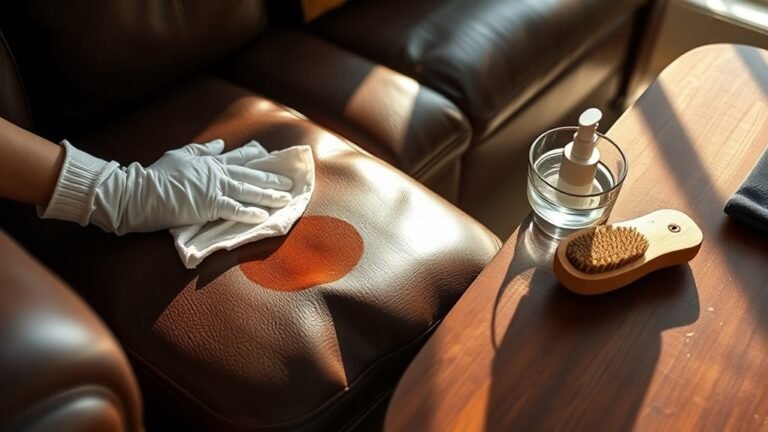
Before the stain sets in, gently blot the affected area with a soft cloth dampened in your tested cleaning solution. Don’t rub. This can push the urine deeper into the leather.
Instead, use light, dabbing motions to lift the stain out carefully. Keep your cloth slightly damp, not soaked, to avoid saturating the leather.
Remember these tips to clean effectively:
- Use a clean, white cloth to avoid color transfer.
- Work from the outside of the stain toward the center to prevent spreading.
- Change cloth sections frequently to avoid reapplying urine.
Wipe With a Damp Cloth to Remove Residue
After you’ve gently blotted the stain, wipe the area with a damp cloth to remove any leftover cleaning solution and urine residue. Use clean, lukewarm water on a soft cloth. Avoid soaking the leather.
Lightly dampen the cloth and carefully wipe the affected spot in slow, circular motions. This helps lift away any remaining dirt without damaging the leather’s surface. Make sure you don’t rub harshly, as that can cause discoloration or texture issues.
Rinse the cloth frequently to prevent spreading residue back onto the couch. If you notice stubborn spots, repeat the process gently until the area feels clean and free of sticky residue.
This step is essential to prevent lingering odors and protect your leather’s finish from any harmful substances.
Dry the Leather Thoroughly
Once you’ve wiped away all residue, make sure the leather is dried thoroughly. Moisture left on the surface can seep into the leather, causing damage and unpleasant odors. Use a soft, dry cloth to gently pat the area until it feels completely dry. Avoid rubbing too hard, as this can harm the leather’s finish.
Here are some tips to dry the leather properly:
- Use a microfiber cloth to absorb moisture without scratching
- Allow the couch to air dry in a well-ventilated room, avoiding direct sunlight
- Keep fans on low speed nearby to speed up the drying process without overheating
Taking these steps ensures your leather stays in good shape and ready for conditioning next.
Apply Leather Conditioner to Restore Moisture
Although your leather couch might look clean and dry, applying a leather conditioner is essential to restore its natural oils and prevent cracking. After the cleaning and drying process, the leather can become stiff and lose moisture.
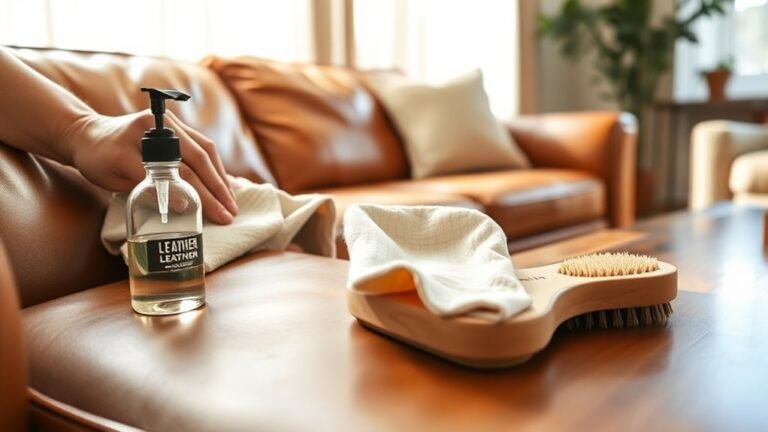
Grab a soft cloth and apply a small amount of leather conditioner evenly across the affected area. Gently rub it in with circular motions to ensure the conditioner penetrates deep into the leather fibers.
Use a soft cloth to gently rub leather conditioner in circular motions for deep nourishment.
Let it absorb for at least 15 to 20 minutes, then buff the surface with a clean cloth to remove any excess.
Regular conditioning keeps your leather supple, maintains its appearance, and extends its lifespan, especially after exposure to moisture or cleaning products.
Don’t skip this step if you want your couch to stay soft and durable.
Use Baking Soda to Neutralize Odors
Because urine can leave a lingering smell on your leather couch, you’ll want to neutralize odors quickly. Baking soda is a fantastic natural deodorizer that absorbs unpleasant smells effectively.
After cleaning and conditioning your couch, sprinkle a generous layer of baking soda over the affected area. Let it sit for several hours or overnight to give it time to work. Then, vacuum the baking soda thoroughly to remove all residue.
Here’s how to do it right:
- Spread evenly, focusing on spots where the smell is strongest
- Avoid rubbing it in; let it sit on the surface
- Use a vacuum with a brush attachment for best results
This simple step helps keep your leather couch smelling fresh without harsh chemicals.
Prevent Future Accidents With Protective Covers
To keep your leather couch safe from future accidents, using protective covers is a smart move. These covers act as a barrier, preventing liquids from soaking into the leather and making cleanup much easier.
You can choose from waterproof, washable, and easy-to-remove options that fit your style and needs.
| Cover Type | Benefits |
|---|---|
| Waterproof Pad | Blocks liquids completely |
| Fitted Slipcover | Stylish & snug fit |
| Throw Blanket | Quick coverage |
| Leather Protector | Guards against stains |
| Pet-Specific Cover | Durable & chew-resistant |
Frequently Asked Questions
Can Urine Damage the Leather’s Color Permanently?
Yes, urine can permanently damage your leather’s color if you don’t clean it quickly. The acids and salts can cause discoloration and staining, so act fast to minimize lasting damage and preserve your couch’s appearance.
Is It Safe to Use Vinegar on Leather?
You shouldn’t use vinegar directly on leather because its acidity can damage the finish and cause discoloration.
Instead, opt for a leather cleaner or a mild soap solution to safely clean without harming your couch.
How Long Does It Take for Leather to Dry Completely?
Drying leather takes time—usually 4 to 6 hours if you let it breathe naturally. Don’t rush it; leather needs patience to avoid damage.
You’ll know it’s ready when it feels cool and completely dry to touch.
Can Pet Urine Cause Mold on Leather Furniture?
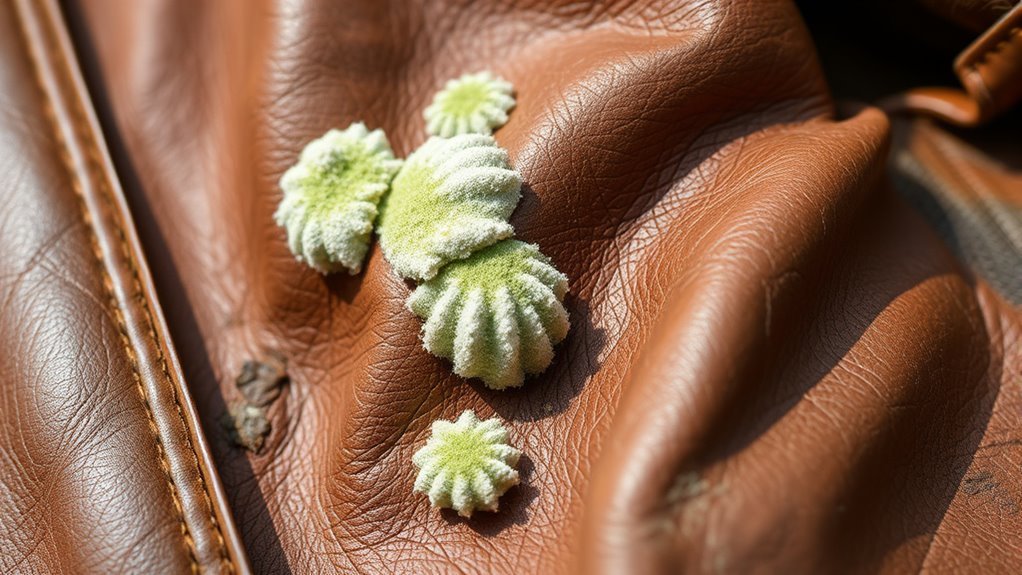
Yes, pet urine can cause mold on leather furniture if it’s not cleaned promptly. The moisture and organic material in urine create an ideal environment for mold growth, damaging your leather and causing unpleasant odors.
If urine is left to sit, it seeps into the leather and the padding beneath, increasing the chances of mold developing. Promptly cleaning and drying the affected area is crucial to prevent mold and preserve the furniture’s condition.
Are Commercial Leather Cleaners Better Than Homemade Solutions?
You might think commercial leather cleaners are better, but they’re not always necessary. Homemade solutions can work well if you use gentle ingredients. Just test first to avoid damage, and choose based on your leather’s needs.
Conclusion
Now that you’ve tackled that pesky mess like a true detective from the roaring twenties, your leather couch is fresh and clean again.
By acting quickly and following these simple steps, you’ve not only removed the stain but also protected your furniture for the future.
Remember, a little care goes a long way in preserving your leather’s charm. Keep those protective covers handy, and your couch will stay as timeless as a classic jazz tune.
With proper cleaning and regular maintenance, your leather couch can remain beautiful and stain-free. Cleaning pee from leather couch promptly ensures longevity and keeps your living space inviting.
Stay vigilant and enjoy the comfort and elegance of your well-maintained leather furniture for years to come.