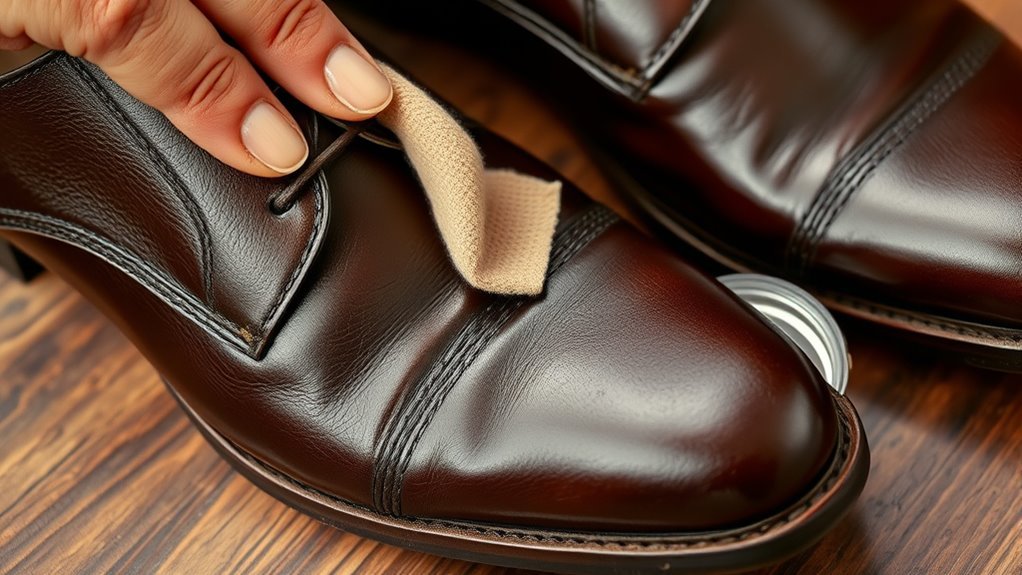
How to Remove Deep Scuff Marks from Leather Shoes: Step-by-Step Guide
To remove deep scuff marks from leather shoes effectively, begin by cleaning the area with an alcohol-based cleaner. This helps to remove dirt and oils that can interfere with the repair process.
Next, gently sand the scuff using 1200 grit sandpaper to smooth out the damaged surface.
Apply a leather filler evenly using a palette knife, then allow it to dry completely.
Once dry, smooth out the filler to blend it seamlessly with the surrounding leather.
After smoothing, seal the area to protect the repair.
Use recoloring markers to match the leather’s color precisely.
Finish by conditioning the leather to keep it supple and prevent cracking.
Avoid harsh tools during the process, and regularly protect your shoes to prevent future damage.
There’s plenty more to help you restore your leather shoes perfectly, ensuring they look great and last longer.
Preparing Leather Shoes for Deep Scuff Repair

Before you begin repairing deep scuff marks on your leather shoes, you’ll need to prepare the surface properly. Start by cleaning the leather shoes thoroughly with an alcohol-based cleaner to remove dirt, oils, and any residual debris.
Once dry, lightly sand the damaged area using 1200 grit sandpaper in gentle circular motions. This sanding creates a smooth, even surface that helps repair materials adhere better. After sanding, use a soft, dry clean cloth to wipe away all dust and residue, ensuring the leather is spotless.
It’s a good idea to test any filler or repair product on a hidden spot first to avoid discoloration. Finally, allow the leather to fully dry and condition it to restore moisture before applying any repair materials.
Cleaning and Removing Surface Debris

Start by brushing off any loose debris with a soft shoe brush to prevent scratching the leather. Then, use a mild cleaning agent on a damp cloth to gently lift dirt without soaking the material.
Always test your cleaning method on a small, hidden area to make sure it won’t damage the leather.
Brush Off Loose Debris
Although it might seem simple, brushing off loose debris is a crucial first step in restoring your leather shoes. Start by gently tapping your shoes to loosen dirt trapped in seams or crevices.
Then, use a soft-bristled shoe brush or a toothbrush, slightly dampened with water, to carefully brush away dirt and dust. Work in small circular motions, focusing especially on scuff areas where grime tends to settle. This technique helps lift and remove surface particles without damaging the leather.
After brushing, wipe your shoes with a clean, dry cloth to clear away any remaining dust. Taking these steps ensures your shoes are clean and ready for deeper scuff treatment, making the entire restoration process more effective.
Use Mild Cleaning Agents
When you want to lift dirt and light scuffs from your leather shoes without causing damage, mild cleaning agents like diluted white vinegar, baking soda paste, or gentle soap solutions work wonders. Dampen a soft cloth with your chosen mild cleaning agent and gently wipe the leather surface to remove surface debris and faint scuffs.
You can also use a soft toothbrush with mild soap to dislodge dirt lodged in creases. For stubborn scuffs, a slightly dampened melamine foam (magic eraser) can clean without abrasive harm if used carefully.
Always remember to test any mild cleaning agent on a small, hidden spot first to ensure it doesn’t discolor or damage your leather shoes. This careful approach keeps your shoes clean and looking fresh without risking harm.
Test Cleaning Methods
Before applying any cleaning agents to your leather shoes, you’ll want to remove loose dirt and debris by wiping the surface with a soft, damp cloth. This initial step guarantees that you’re not rubbing grit into the leather during cleaning.
Next, test your cleaning methods carefully:
Use a gentle brush, like a soft toothbrush, to dislodge particles without damaging leather. Try cleaning agents such as mild soap or white vinegar on a hidden spot first. Avoid harsh chemicals or abrasive tools that can harm the leather finish.
After cleaning, gently dry the area with a clean towel. Only proceed with deeper cleaning or scuff removal once the surface is debris-free.
Using Leather Repair Kits for Deep Scuffs

If you want to restore deep scuff marks on your leather shoes, leather repair kits offer a practical solution. Start by cleaning the damaged area thoroughly to guarantee the binder adheres properly. Apply the binder to secure the leather fibers, then use a palette knife to spread the filler evenly over deep scratches.
Allow it to dry completely before sanding it smooth. Next, apply the sealer included in the kit in thin coats, letting each layer dry to blend the repair seamlessly with the surrounding leather. This process strengthens the repair and prevents further damage.
Applying Leather Filler and Sealers
After securing the leather fibers and filling deep scratches with a repair kit, the next step involves applying leather filler and sealers to restore the surface. Use a palette knife to apply thin layers of leather filler, ensuring each layer dries before adding the next. This builds a smooth, even repair.
Once dry, apply a sealer over the filled area to lock in the repair and protect against moisture. Remember:
- Apply multiple thin layers of leather filler
- Level the filler with the surrounding leather
- Let each layer dry completely
- Use sealer to protect and prepare the surface
- Proper application prolongs the repair’s durability
This careful process ensures your leather shoes look flawless and the repair lasts longer.
Sanding and Smoothing the Repaired Area
Though the leather filler has dried, you’ll want to gently sand the repaired area using 1200 grit sandpaper to create a smooth, even surface that blends seamlessly with the surrounding leather. Use circular motions and apply minimal pressure to avoid damaging the leather or causing uneven spots.
Before sanding, clean the leather with an alcohol-based cleaner to remove any residue or oils that might interfere with the process. After sanding, wipe the area with a damp cloth to clear away dust and leftover residue, preparing the surface for the next steps.
This light sanding helps blend the filler into the leather, reducing visible repair lines and ensuring your shoe looks natural and well-maintained.
Using Recoloring Markers for Color Matching
When you want to restore your leather shoes to their original look, using recoloring markers offers a precise way to match and fix deep scuffs. Recoloring markers are specially designed to blend with leather shades, making them ideal for covering scratches and scuffs.
To get the best results, keep these tips in mind:
Select a recoloring marker matching your leather’s original color.
Apply the marker in light, even strokes to build up color gradually.
Avoid over-darkening by layering color slowly.
Let the marker ink dry fully before any further treatment.
Use the marker to minimize scuffs and restore a uniform leather surface.
Conditioning and Moisturizing Leather Post-Repair
To keep your leather shoes looking their best, you’ll want to condition and moisturize them right after repairing scuff marks. Applying a high-quality leather conditioner restores moisture and flexibility, preventing future damage like cracks and dryness.
Condition your leather shoes after fixing scuffs to restore moisture and prevent cracks and dryness.
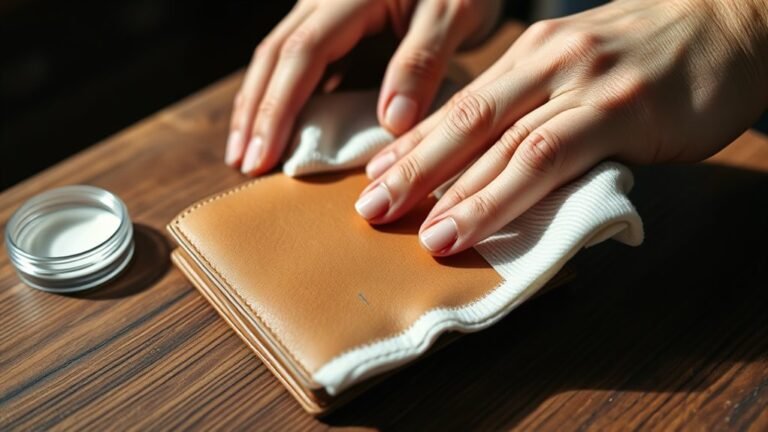
Use a soft cloth to evenly spread the conditioner, allowing it to penetrate deeply for maximum hydration. Let the conditioner fully absorb and dry before buffing with a clean, dry cloth to achieve a smooth, supple finish.
This moisturizing step seals in moisture and strengthens the leather’s durability. Regular conditioning not only extends the life of your repaired shoes but also maintains their rich appearance and feel. Make conditioning a routine part of your shoe care to keep your leather looking fresh and resilient.
Alternative Home Remedies for Deep Scuff Marks
If you want to tackle deep scuff marks without specialized products, several effective home remedies can help restore your leather shoes. Try these simple methods to reduce scuffs using common household items:
Apply white toothpaste with a soft cloth and buff gently to use its mild abrasive effect. Mix white vinegar and olive oil, then rub a small amount on the scuff to condition the leather.
Make a baking soda paste with water and buff the area in circular motions to lift marks. Massage coconut oil into the scuffed spot to moisturize and soften the leather.
Warm the leather slightly with a hairdryer, then rub with a soft cloth to improve scuff appearance.
After treating, use shoe polish to blend and protect the leather’s finish for a clean look.
Tips for Maintaining Leather Shoes to Prevent Scuffs
Although occasional scuffs are inevitable, you can considerably reduce their occurrence by regularly applying a leather protector spray and keeping your shoes well-conditioned with quality leather cream. This conditioning keeps the leather supple, making it less vulnerable to scratches and scuffs.
When cleaning, always use soft shoe buffers and avoid abrasive tools to prevent surface damage. Proper storage also plays an essential role; keeping your shoes in dust bags or on shoe trees minimizes exposure to elements that cause wear.
If you notice minor scuffs, address them promptly with gentle cleaning and conditioning to prevent deeper damage. By following these simple maintenance tips, you’ll extend the life of your leather shoes and keep them looking sharp with fewer scuffs over time.
Frequently Asked Questions
How to Get Deep Scuffs Out of Leather Shoes?
You can’t fully remove deep scuffs, but you can minimize them by cleaning, lightly sanding, applying leather filler, and using a matching recoloring marker.
Condition afterward to restore softness, or seek professional repair for severe damage.
Is It Possible to Remove Deep Scuff Marks?
You can’t fully remove deep scuff marks from leather shoes, but you can minimize their appearance by cleaning, filling, and recoloring. For severe damage, you’ll likely need professional restoration or consider replacing the leather altogether.
Will Magic Eraser Remove Scuff Marks on Shoes?
Yes, you can use a Magic Eraser to remove light scuff marks on shoes, but be gentle and test first.
It won’t work well on deep marks, and using it too hard might damage the leather.
How to Get a Deep Scratch Out of Leather?
You’ll want to fill the deep scratch with leather filler, then let it dry. After sanding it smooth, apply a matching recoloring marker, sealing and moisturizing to blend and protect your shoe’s surface perfectly.
Conclusion
Remember, “a stitch in time saves nine.” By addressing deep scuff marks on your leather shoes promptly and following these steps, you’ll keep them looking sharp and extend their life.
Take your time cleaning, repairing, and conditioning to restore their original shine. With a little care and the right techniques, your leather shoes will stay polished and ready for any occasion.
Don’t wait—start restoring your leather shoes today! Removing deep scuff marks from leather shoes not only enhances their appearance but also prolongs their durability and maintains their quality.