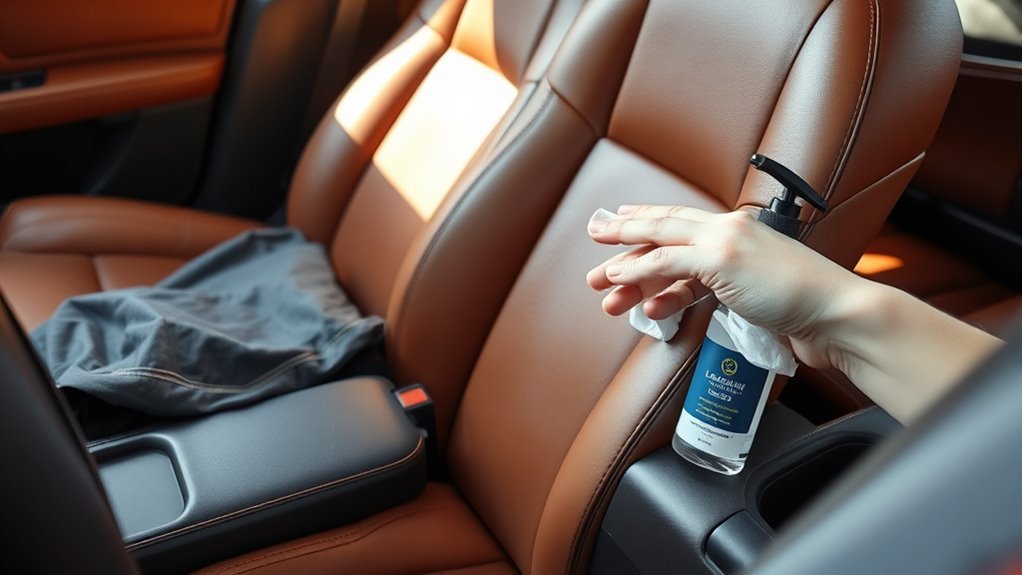
7 Tips to Protect Leather Seats From Car Seat Damage
To protect your leather seats from car seat damage, clean them regularly with a gentle leather cleaner and vacuum to avoid scratches. Conditioning the leather every few months helps keep it soft and prevents cracking. Always park in the shade or use sunshades to block harmful UV rays.
Keep sharp objects away from the seats and handle spills immediately by blotting, not rubbing. Using seat covers offers extra protection against daily wear and tear. Additionally, maintain stable temperature and humidity inside the car to preserve the leather’s quality.
Following these steps helps preserve your leather’s look and durability. There’s more to discover for long-lasting care to ensure your seats stay in excellent condition over time.
Clean Leather Seats Regularly

Although leather seats are durable, you should clean them regularly to maintain their appearance and prevent damage. Dirt, dust, and spills can quickly settle into the creases, causing stains and wear over time.
You’ll want to start by vacuuming the seats gently to remove loose debris without scratching the leather.
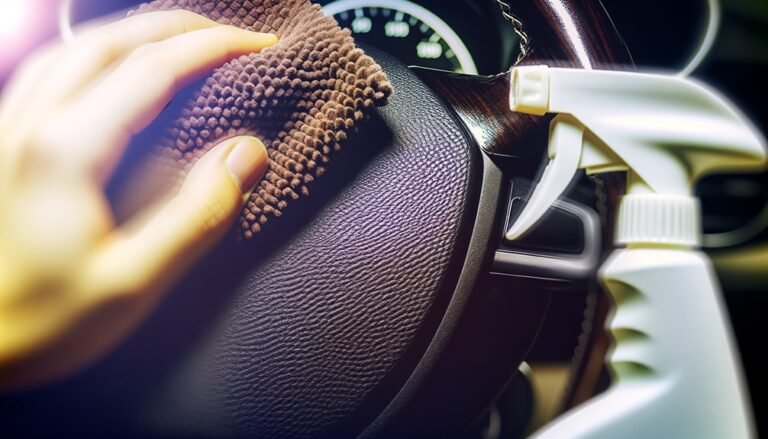
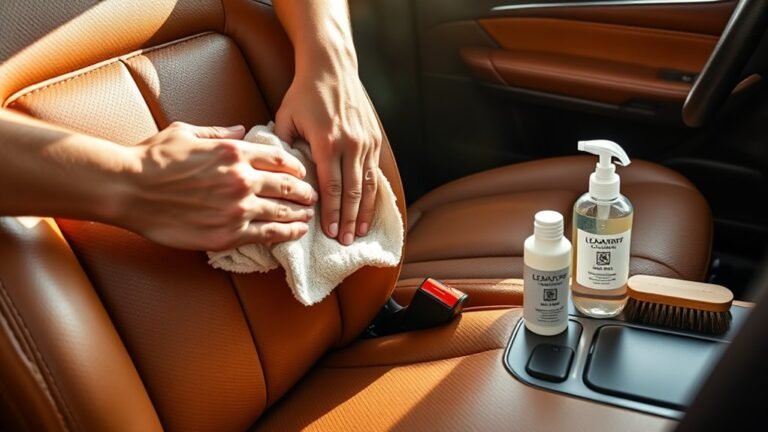
Afterward, use a damp microfiber cloth with a mild leather cleaner specifically designed for automotive seats. Avoid harsh chemicals or household cleaners; they can dry out or discolor the leather.
Wipe the seats carefully, paying attention to seams and folds where grime accumulates.
Regular cleaning not only keeps your seats looking fresh but also extends their lifespan by preventing cracks and fading.
Make cleaning your leather seats a simple habit to protect your investment.
Use a Quality Leather Conditioner

When you want to keep your leather seats soft and supple, using a quality leather conditioner is essential. It replenishes the natural oils that regular cleaning can strip away, preventing your leather from drying out and cracking.
Apply the conditioner evenly with a soft cloth, and let it absorb fully before wiping off any excess. This not only maintains the leather’s flexibility but also creates a protective barrier against spills and dirt.
Use a soft cloth to apply conditioner evenly, allowing full absorption for flexibility and protection.
Choose a conditioner specifically designed for automotive leather to avoid harsh chemicals that could damage the material. Conditioning your seats every three to six months will extend their lifespan and keep your car’s interior looking fresh and inviting.
Don’t skip this vital step. It’s key to preserving your leather’s appearance and comfort.
Avoid Direct Sunlight Exposure

Since sunlight can quickly fade and dry out leather seats, you’ll want to minimize their exposure whenever possible. Park your car in shaded areas or use a car cover to shield the interior from harsh UV rays.
If you don’t have access to covered parking, invest in sunshades for the windshield and windows to block direct sunlight. Over time, prolonged exposure causes leather to crack and lose its natural oils, reducing both comfort and appearance.
Regularly rotating your parking spots can also help prevent uneven fading. Remember, protecting your leather from the sun not only preserves its color but also extends its lifespan.
Taking these simple steps will keep your seats looking fresh and prevent costly repairs down the road.
Keep Sharp Objects Away
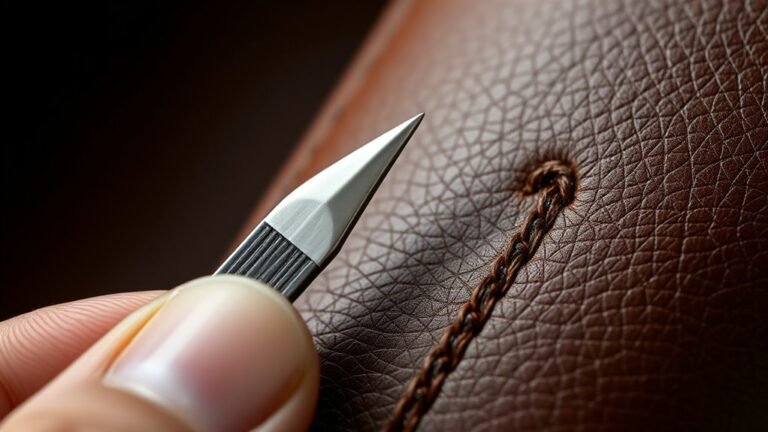
To keep your leather seats in top condition, always avoid placing sharp objects on or near them. Items like keys, pens, or tools can easily scratch or puncture the leather, causing permanent damage.
When carrying such objects, store them in compartments or bags to prevent accidental contact. Be especially cautious when handling groceries, sports equipment, or work gear inside your car.
If you need to transport items with sharp edges, wrap them in a soft cloth or place them on protective mats. Taking these simple steps helps maintain your seats’ smooth surface and preserves their appearance.
Address Spills and Stains Immediately
Keeping sharp objects away helps prevent physical damage, but spills and stains can cause just as much harm if left unattended. When you notice a spill, act quickly to blot the area with a clean, dry cloth. Don’t rub, as that can spread the stain or push it deeper into the leather.
Use a damp cloth with mild soap or a leather cleaner specifically designed for your seats to gently clean the affected spot. Avoid harsh chemicals or excessive water, which can damage the leather’s finish.
After cleaning, dry the area thoroughly and apply a leather conditioner to maintain softness and prevent cracking.
Promptly addressing spills preserves your leather’s appearance and extends the life of your seats, keeping your car interior looking fresh and well-maintained.
Use Seat Covers for Extra Protection
Although leather is durable, using seat covers adds an extra layer of protection that helps guard against spills, scratches, and everyday wear. You can choose from various materials like neoprene, polyester, or leatherette, each offering different levels of durability and style.
Seat covers are especially useful if you frequently transport pets, kids, or carry items that might damage the leather. They’re easy to remove and clean, saving you time and effort in maintenance.
When selecting covers, make certain they fit snugly to avoid shifting, which can cause wear underneath. By using seat covers, you not only preserve your leather’s appearance but also extend its lifespan, keeping your car interior looking fresh and well-maintained for years to come.
Maintain Proper Temperature and Humidity Levels
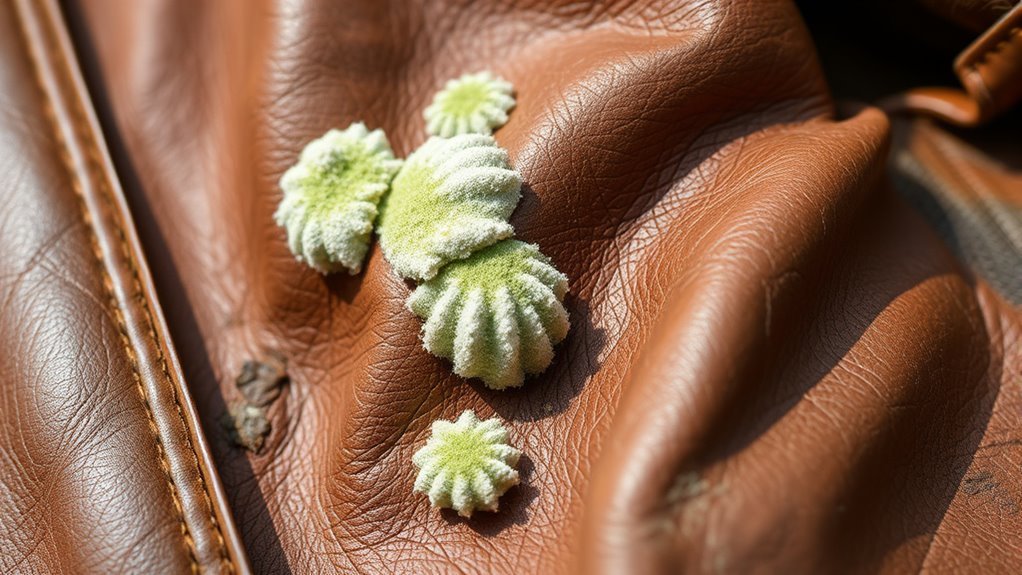
Since leather reacts to environmental changes, you should maintain proper temperature and humidity levels inside your car. Extreme heat can cause cracking, while excessive moisture leads to mold growth. Using climate control systems helps keep conditions stable, protecting your leather seats from damage.
Here’s a quick guide to ideal conditions:
| Condition | Ideal Range | Effect on Leather |
|---|---|---|
| Temperature | 60°F – 80°F | Prevents cracking and fading |
| Humidity | 40% – 60% | Avoids mold and dryness |
| Ventilation | Moderate airflow | Reduces moisture buildup |
Regularly checking and adjusting these factors guarantees your leather seats stay supple and attractive for years to come.
Frequently Asked Questions
Can Leather Seats Be Repaired if Scratched Deeply?
Yes, you can repair deep leather scratches. You’ll need a leather repair kit or professional help to fill and color the damaged area properly.
Acting quickly prevents further damage and keeps your seats looking great.
How Often Should Leather Seats Be Professionally Cleaned?
You should get your leather seats professionally cleaned at least once a year to maintain their condition.
If you drive frequently or in harsh conditions, consider twice a year to keep the leather supple and prevent damage.
Are There Specific Products to Avoid on Leather Seats?
You’ll want to steer clear of harsh household cleaners and ammonia-based products—they’re like uninvited guests that can damage your leather.
Instead, opt for gentle, leather-specific cleaners to keep your seats looking fresh and cared for.
Does Pet Hair Damage Leather Seats Over Time?
Pet hair itself doesn’t directly damage leather seats, but it can trap dirt and moisture, which might cause wear over time.
You should regularly vacuum and clean your seats to keep them looking fresh and prevent buildup.
Can Leather Seats Be Waterproofed Effectively?
Yes, you can waterproof leather seats effectively by applying a high-quality leather protector or waterproofing spray. Just make sure to clean the seats thoroughly first, and reapply the product regularly to maintain protection against spills and moisture.
Conclusion
Taking care of your leather seats isn’t just about looks—it’s about preserving comfort and value. Remember, “a stitch in time saves nine.” By cleaning regularly and conditioning often, you’ll keep the leather supple and prevent cracks.
Avoid harsh sun exposure or sharp objects that can cause scratches and tears. Act quickly on spills to prevent stains from setting in.
Using seat covers when needed protects against wear and tear. Also, maintaining your car’s environment by controlling humidity and temperature helps preserve the leather.
With a little effort, your leather seats will stay smooth and beautiful for years to come. Following these tips to protect leather seats from car seat damage ensures you maintain both comfort and the resale value of your vehicle.