5 Tips to Protect Your Leather Couch From Dogs
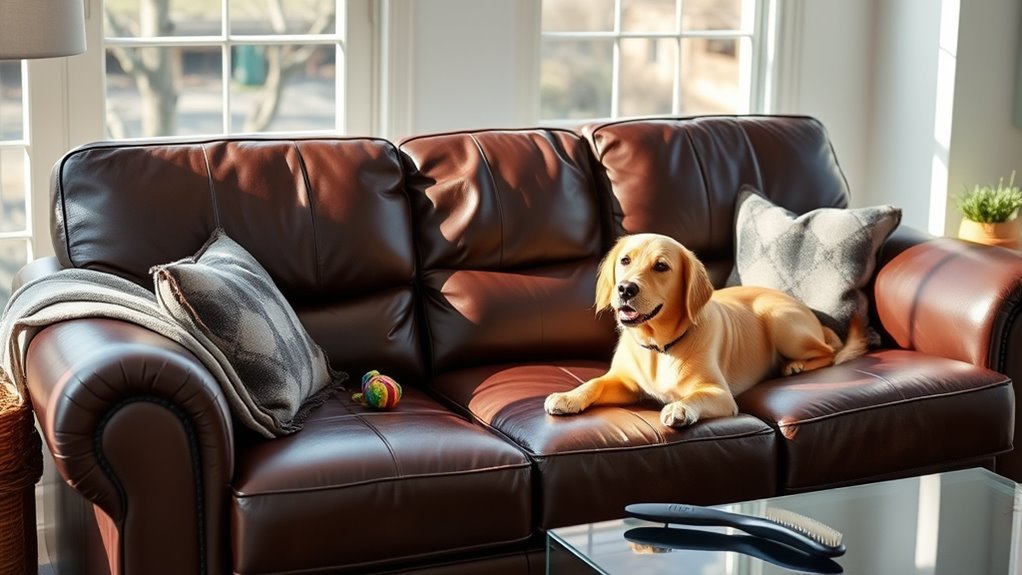
To protect your leather couch from dogs, use durable covers or throws that resist pet hair and moisture. Training your dog to stay off the couch with clear commands and rewarding good behavior is essential. Regularly trimming your dog’s nails helps prevent scratches and damage.
Clean up spills immediately using a soft cloth and mild soap, then dry the area thoroughly to maintain the leather’s quality. Conditioning your leather couch every few months keeps it soft, supple, and crack-free.
By following these simple tips, you can keep your leather couch looking great despite having dogs at home. Explore these strategies more deeply to ensure long-lasting protection and beauty for your furniture.
Use Protective Covers or Throws

Although leather is durable, using protective covers or throws can prevent scratches, stains, and wear from daily use. You’ll find that these accessories act as a barrier between your dog’s claws and the leather surface, minimizing damage.
Choose covers made from easy-to-clean, durable fabrics that resist pet hair and moisture. Throws are also versatile; you can remove and wash them regularly to maintain cleanliness.
When picking covers, ensure they fit snugly to avoid slipping, which can be uncomfortable for your dog and might expose leather areas.
Using protective covers also lets you preserve your couch’s appearance without sacrificing comfort.
Train Your Dog to Avoid the Couch

Since your leather couch can suffer damage from your dog’s nails and oils, training your dog to stay off the couch is a smart way to protect it. Start by clearly setting boundaries; use commands like “off” or “no” consistently whenever your dog approaches the couch.
Protect your leather couch by training your dog with clear boundaries and consistent commands like “off” or “no.”
Reward them with treats and praise when they obey to reinforce positive behavior. Provide a comfortable alternative, like a dog bed or blanket nearby, so they’ve their own cozy spot.
Be patient and consistent with your training sessions, keeping them short but frequent. Avoid punishment, as it can create fear or confusion.
Over time, your dog will learn to respect the couch as off-limits, helping you maintain your leather’s pristine condition without sacrificing your pet’s comfort.
Keep Your Dog’s Nails Trimmed

To prevent scratches and tears on your leather couch, keep your dog’s nails trimmed regularly. Long nails can easily gouge and damage the leather surface, leading to unsightly marks and costly repairs.
Check your dog’s nails weekly, especially if they don’t naturally wear down through activity. Use a good-quality nail clipper or grinder designed for dogs, and be careful not to cut too close to the quick, which can cause pain and bleeding.
If you’re unsure, ask your vet or groomer for a demonstration. Regular nail maintenance not only protects your couch but also keeps your dog comfortable and reduces the risk of accidental scratches on other surfaces.
Clean Spills and Stains Immediately
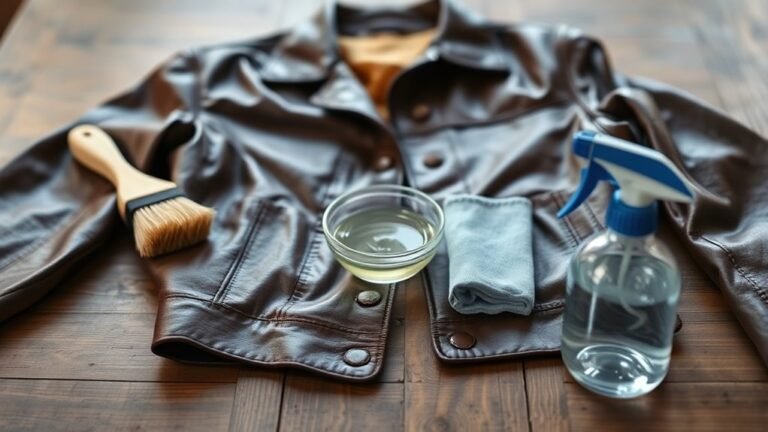
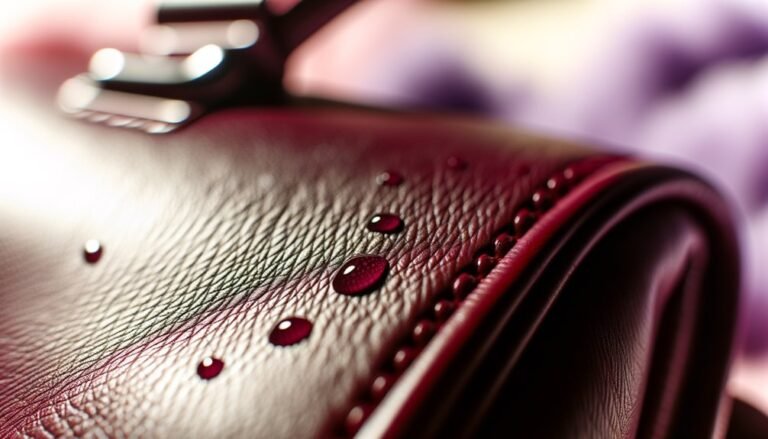
When spills happen, you need to act quickly to prevent stains from setting into your leather couch. Grab a clean, soft cloth and gently blot the spill, don’t rub, as that can spread the liquid and damage the leather.
Use a damp cloth with a mild soap solution if necessary, but avoid harsh chemicals that can strip the leather’s natural oils.
For stubborn stains, a leather cleaner designed specifically for your couch type works best.
After cleaning, dry the area thoroughly with a dry cloth to avoid moisture damage. Acting fast not only keeps your couch looking great but also prolongs its life.
Apply Leather Conditioner Regularly
Although leather is durable, it can dry out and crack without regular conditioning. To keep your couch looking fresh and resilient against your dog’s wear and tear, apply a leather conditioner every three to six months. This helps maintain moisture, prevents brittleness, and adds a protective layer against scratches and dirt.
Before applying, clean the surface thoroughly to avoid trapping grime. Use a soft cloth to spread the conditioner evenly, allowing it to absorb fully. Avoid over-conditioning, which can leave a sticky residue.
Regular conditioning not only extends your couch’s lifespan but also keeps it softer and more comfortable for both you and your pet. Make this a routine part of your leather care to enjoy a beautiful, durable couch for years.
Frequently Asked Questions
Can Certain Dog Breeds Damage Leather Couches More Than Others?
Yes, certain dog breeds with stronger jaws or more energetic behavior can damage leather couches more than others.
You’ll want to watch larger or more playful breeds closely to prevent scratches and tears on your leather furniture.
Are There Specific Leather Types More Resistant to Dog Damage?
Yes, full-grain and top-grain leather resist dog damage better than bonded or corrected leather.
You should choose these durable types because they’re thicker and more natural, helping your couch withstand scratches and wear from your pup.
How Do Temperature and Humidity Affect Leather When Pets Are Around?
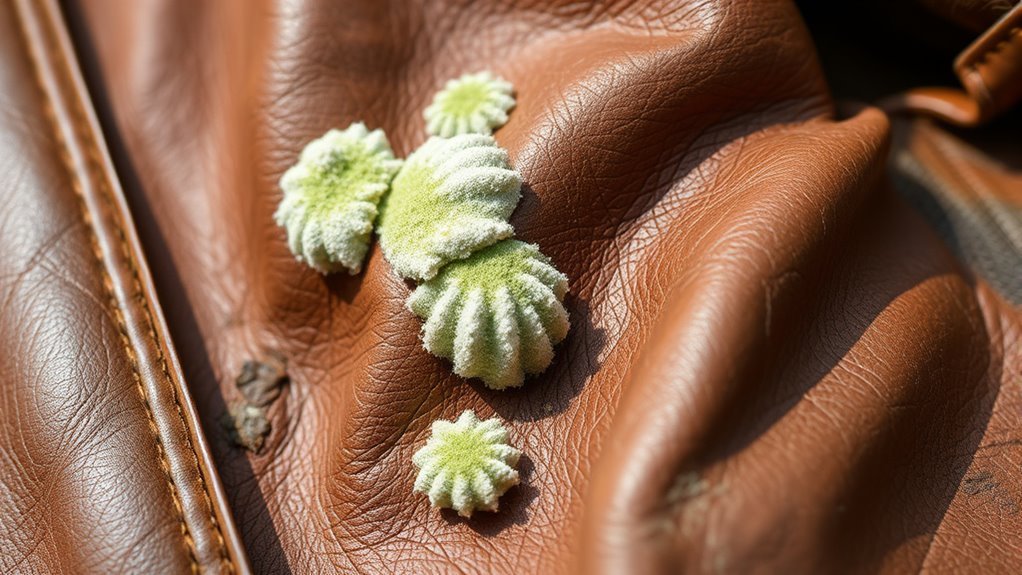
Temperature and humidity tremendously threaten your leather’s texture. Too much moisture makes it moldy and mushy, while dryness drives cracks and creases.
You’ll want to maintain moderate moisture and mild temperature to keep it comfy and clean.
What Are the Signs of Leather Damage Caused by Dogs?
You’ll notice scratches, tears, and discoloration on your leather when dogs damage it. Also, watch for stretched or cracked areas, and an unusual odor from saliva.
These signs mean your couch needs immediate care.
Can Dog Saliva Harm Leather Furniture Over Time?
Yes, dog saliva can harm leather furniture over time. It contains enzymes and moisture that break down the leather’s protective finish, causing stains, discoloration, and weakening the material.
Wipe spills quickly to protect your couch.
Conclusion
By using protective covers or throws, training your dog to avoid the couch, and keeping their nails trimmed, you’re taking strong steps to protect your leather couch. Cleaning spills immediately and applying leather conditioner regularly also help maintain its condition.
These actions prevent scratches, avoid stains, maintain softness, and preserve the beauty of your leather furniture. With these simple habits, you’re not just caring for your furniture—you’re creating a home where your dog and your leather couch can both thrive in harmony.
Implementing these 5 tips to protect your leather couch from dogs ensures long-lasting durability and keeps your living space stylish and comfortable.