How to Keep Tan Leather Seats Clean: Easy Care & Maintenance Tips
To keep your tan leather seats clean and looking their best, start by vacuuming loose dirt and debris regularly, especially in crevices. This simple step helps maintain the natural beauty of your leather and prevents buildup that can cause damage over time.
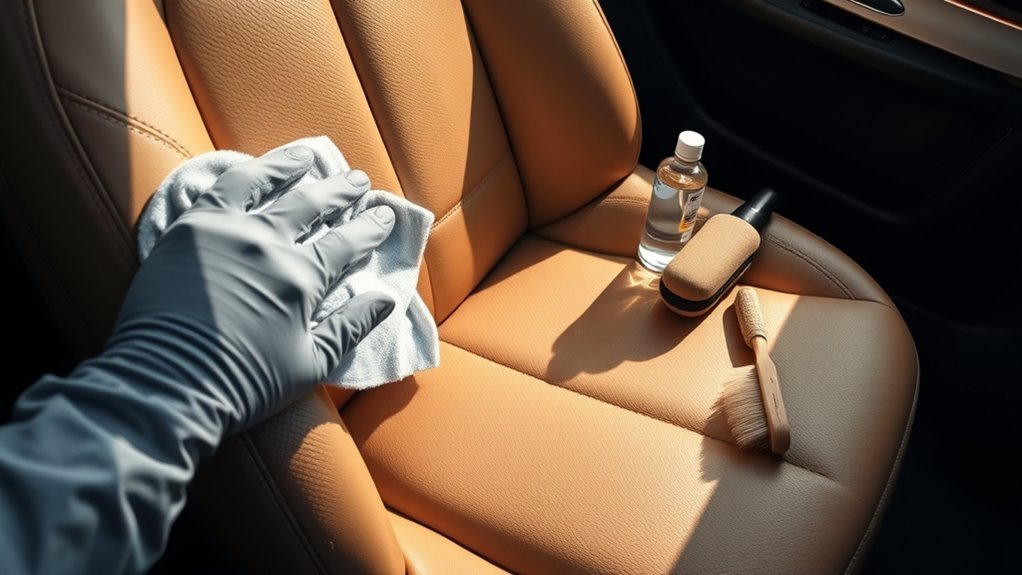
Always spot-test cleaners on hidden areas before applying. Use a gentle approach with a microfiber cloth or soft brush to clean the seats.
Condition your seats every few months to prevent drying and cracking. This is essential for preserving the leather’s softness and durability.
Avoid harsh chemicals or excess moisture, as these can harm the leather fibers and lead to discoloration.
Using tools like dry steamers can deepen cleaning without damage, offering a safe way to refresh your seats.
If you want to maintain that fresh look longer, there are smart care tips worth knowing that can make a big difference in the longevity of your tan leather seats.
Inspect for Pre-Existing Damage

Before you start cleaning your tan leather seats, carefully inspect them for any holes, tears, or weak spots. This step is vital for damage prevention during the cleaning process. You’ll want to identify and document any pre-existing damage to avoid making it worse.
Keep in mind that some perforations in leather seats are intentional for ventilation, not defects. When you inspect, be gentle around fragile areas to prevent further tearing. Avoid scrubbing with excessive force or hard tools, especially on damaged spots.
Also, watch for holes where cleaning solutions or water could seep through and harm the cushions beneath. By thoroughly inspecting your leather seats before cleaning, you’ll protect your investment and ensure the cleaning process goes smoothly without causing additional damage.
Clear Away Debris Thoroughly

Start by using a vacuum with a hose attachment to remove loose dirt and dust from every part of your tan leather seats. Pay special attention to cracks and crevices where abrasive particles can hide and cause damage.
Don’t forget to pick out larger debris by hand to keep the leather surface safe and clean.
Remove Abrasive Particles
When you want to keep your tan leather seats looking pristine, you need to remove abrasive particles like dirt, sand, and grit thoroughly. Use a soft-bristled brush or microfiber cloth to sweep debris gently from cracks and seams without scratching the leather. Avoid sharp tools that can damage the surface. Carefully lifting away dirt prevents buildup that causes wear.
| Feel Confident | Protect Your Investment | Enjoy Clean Comfort |
|---|---|---|
| No scratches | Leather lasts longer | Relax in freshness |
| Smooth texture | Maintains value | Pleasant touch |
| Spotless look | Preserves elegance | Inviting interior |
Taking care with debris removal keeps your seats smooth and beautiful, enhancing your driving experience every time.
Use Vacuum Effectively
Although vacuuming might seem straightforward, using the right attachments and techniques guarantees you clear debris thoroughly from your tan leather seats. Proper debris removal prevents dirt from embedding into the leather, which can cause wear and scratches over time.
Before applying any cleaning products, always vacuum the seats to avoid rubbing dirt deeper into the surface.
To use your vacuum effectively for thorough cleaning:
Use a hose attachment to reach seams, cracks, and perforations.
Employ a soft-bristled brush to dislodge dust from textured or hard-to-reach spots.
Vacuum gently around damaged or perforated areas to avoid worsening holes.
Clean your leather seats regularly, at least once a month, to prevent buildup.
This method ensures your tan leather seats stay spotless and well-maintained.
Conduct a Spot-Test Before Cleaning

Before cleaning your tan leather seats, you should always conduct a spot-test by applying a small amount of leather cleaner to a hidden area like the underside of the seat. Use a light-colored microfiber cloth to gently apply the cleaning product, which helps you easily spot any discoloration or color transfer.
Wait 5 to 10 minutes after application to observe any adverse reactions, ensuring the cleaner won’t damage your leather. Avoid harsh chemicals or abrasive tools during this test to prevent unnecessary harm.
Document the results of your spot-test before proceeding, so you know if the cleaning products are safe for the entire surface. This simple step protects your leather seats, saving you from costly damage and preserving their natural look.
Proper Techniques for Applying Leather Cleaner
Before you start cleaning, always spot-test the leather cleaner on a hidden area to avoid any damage. Apply the cleaner to a soft microfiber towel, never directly on the leather.
Use small, circular motions to gently lift dirt and keep your tan leather looking its best.
Spot-Test Before Application
When you apply a leather cleaner for the first time, always spot-test it on a hidden area like the underside of the seat. This helps you avoid unexpected discoloration or damage during full application. Here’s how to do it right:
Apply a small amount of cleaning solution on the hidden leather spot. Use a light-colored microfiber cloth or applicator pad to spread it gently.
Wait 10–15 minutes to observe any discoloration or adverse reactions. Only proceed with cleaning once you confirm no staining or deterioration occurs.
Perform spot-tests every time you switch to a new cleaner or conditioner. This simple step ensures your tan leather stays protected and looking great without risking damage during cleaning application.
Use Microfiber Towels
Although applying leather cleaner might seem straightforward, using the right microfiber towel technique guarantees you protect your tan leather seats from damage. Always start with a clean, dry microfiber towel to avoid scratches and guarantee even leather cleaning.
Lightly dampen the towel with cleaner or water, never soak it, to prevent excess moisture from seeping into the leather. When you wipe in circular motions, you lift dirt effectively without harming the surface. Work on small sections, frequently replacing or rinsing your microfiber towels to avoid spreading dirt.
Once you’ve cleaned the area, buff it gently with a dry microfiber towel to remove moisture and enhance the finish. This method guarantees your clean leather maintains its appearance and preserves your vehicle’s interior beautifully.
Circular Motion Cleaning
Mastering the right technique for applying leather cleaner makes all the difference in keeping your tan leather seats looking pristine. Use a microfiber cloth with a bit of leather cleaner and apply it using small, circular motions. This ensures even coverage and avoids streaks.
Remember, gentle cleaning is key. Don’t press hard or scrub aggressively to protect the leather’s finish. Work in small sections to maintain control and prevent the cleaner from drying unevenly.
- Use a damp microfiber cloth for better dirt lift
- Apply cleaner in small, circular motions
- Avoid harsh scrubbing to preserve leather texture
- Clean in small sections for consistent results
These steps help your leather maintain its natural look and extend its lifespan.
Using Soft-Bristled Brushes for Stubborn Areas
If you encounter stubborn dirt lodged in seams or textured areas, using a soft-bristled brush can make all the difference. Soft-bristled brushes gently loosen dirt buildup on textured leather without scratching the surface. Use a light hand and small circular motions to avoid damaging the finish.
For tougher spots, apply a mild leather cleaner to the brush first, then work it into seams and crevices. This method effectively lifts embedded grime without harming your tan leather seats. After brushing, always wipe the area with a microfiber cloth to remove loosened debris and prevent dirt from settling back in. Regular use of soft-bristled brushes helps maintain your leather’s appearance and prevents long-term issues like cracking or discoloration.
Conditioning Your Leather Seats
To keep your tan leather seats soft and prevent cracking, you should apply a high-quality leather conditioner every two to three months. Conditioning your leather seats replenishes natural oils lost during cleaning and daily use, maintaining their color and shine.
Apply a quality leather conditioner every 2–3 months to keep tan leather seats soft and crack-free.
Follow these steps for effective conditioning:
Use a small amount of leather conditioner on a clean, soft microfiber cloth. Work the conditioner in circular motions to evenly cover the surface. Let it sit for 20-30 minutes to absorb fully. Wipe off excess with a dry cloth to avoid greasy buildup.
Choose conditioners made specifically for leather, and avoid those with petroleum, wax, or silicone to prevent dullness. Regular conditioning helps prevent cracking and extends your leather seats’ lifespan.
Enhancing Cleaning With Dry Vapor Steamers
Although traditional cleaning methods work, using a dry vapor steamer can substantially enhance how you clean your tan leather seats. This tool produces low-moisture vapor at high temperatures, loosening dirt and grime embedded in perforations and textured areas without harsh chemicals.
Its excellent moisture control prevents over-saturating the leather, reducing risks of damage or mold growth. Many professional detailers prefer a dry vapor steamer for its effective, chemical-free deep-cleaning that preserves the leather’s integrity.
While high-quality units can be pricey, renting or buying second-hand makes them accessible. Incorporating a dry vapor steamer into your routine offers an eco-friendly, efficient way to keep your leather seats spotless and well-maintained, surpassing traditional cleaning methods in both care and performance.
Tips for Maintaining Leather Between Cleanings
While regular deep cleanings keep your tan leather seats looking fresh, maintaining them between sessions is just as essential. Consistent leather care prevents damage and prolongs their life. Use a damp microfiber cloth to wipe away dust and dirt regularly. Gently clean textured areas with a soft-bristled brush or microfiber applicator.
Apply leather conditioner every 2-3 months to keep the material hydrated and supple. Protect your seats from sun exposure to avoid fading and surface deterioration. Minimize spills by using seat covers or avoiding eating and drinking in your car.
Wipe seats with a damp microfiber cloth weekly
Clean perforated areas gently with a soft brush
Condition leather every few months
Shield seats from direct sunlight
These tips keep your tan leather seats looking pristine between cleanings.

Frequently Asked Questions
How to Keep Tan Leather Car Seats Clean?
You should vacuum your tan leather seats regularly and use a pH-balanced cleaner with a microfiber cloth. Spot test products first to ensure they don’t damage the leather.
Condition the leather a few times yearly to keep it soft and supple. Wipe seats gently with a damp cloth to maintain cleanliness and prevent buildup.
How to Maintain Beige Leather Seats?
You should regularly wipe your beige leather seats with a damp microfiber cloth and use a pH-balanced cleaner. Condition them every few months, clean spills immediately, and avoid harsh chemicals to keep them soft and stain-free.
What to Use to Clean Beige Leather Car Seats?
Think of your beige leather seats as delicate canvases. You’ll want to use a pH-balanced leather cleaner with a soft microfiber cloth, gently wiping in circles.
Avoid harsh chemicals, and always test on a hidden spot first.
How to Protect Light Colored Leather Car Seats?
You should apply a high-quality leather protectant made for light colors, clean regularly with a gentle leather cleaner, and use microfiber towels. Avoid direct sunlight, and address spills immediately to keep your light leather seats protected and fresh.
Conclusion
Keeping your tan leather seats spotless isn’t as tough as it seems. Imagine Sarah, who saved hundreds by regularly spot-testing and gently cleaning her leather, avoiding costly repairs. By inspecting for damage, clearing debris, and conditioning your seats, you’ll protect their beauty and durability.
Use soft brushes and even dry vapor steamers for stubborn spots. With a little care between cleanings, your leather will stay smooth and stunning for years to come.
To keep tan leather seats clean, consistent maintenance is key. Regular cleaning and conditioning will preserve their texture and color, ensuring your car interior looks fresh and inviting.