How to Get Rid of Marks on Leather With a Step-By-Step Guide
To get rid of marks on leather, first identify the type of stain you’re dealing with—dirt, ink, oil, or water. Knowing how to get rid of marks on leather is essential for maintaining its appearance and longevity. Start by gently wiping the area with a soft cloth dampened with mild soap and water.
For stubborn stains, apply a leather cleaner on a cloth, rubbing gently in circular motions. Ink and oil require special care like rubbing alcohol or cornstarch. Always test any method on a hidden spot first.
Following these basics helps preserve your leather, and there’s more to explore on precise stain treatments and upkeep. Proper care ensures your leather remains supple and attractive for years to come.
Identifying Different Types of Marks on Leather

Before you can effectively clean your leather, you need to identify the type of mark you’re dealing with. Marks on leather vary. Some are dirt and dust, others may be ink, oil, or water stains.
You might also find scuffs or scratches from everyday use. Take a close look: dirt usually sits on the surface, while oil tends to darken the leather. Ink marks appear as distinct spots, often stubborn to remove.
Water stains leave uneven discoloration or rings. Knowing exactly what you’re facing helps you choose the right cleaning method and prevents damage.
Don’t assume all marks respond to the same treatment; testing a small, hidden area first is a smart move.
Recognizing these differences sets you up for successful, safe cleaning.
Preparing Your Leather Surface for Cleaning

Knowing the type of mark on your leather helps you prepare the surface properly for cleaning. First, clear any dust or loose dirt by gently brushing the leather with a soft, dry cloth. This prevents dirt from spreading during the cleaning process.
Next, test a small, hidden area to verify your cleaning method won’t damage the leather. Avoid using harsh chemicals or excessive water, as these can dry out or stain the material.
If your leather has cracks or dryness, apply a leather conditioner beforehand to soften it. Make sure the area is well-ventilated and free from direct sunlight to avoid heat damage.
Using a Soft Cloth and Mild Soap Solution

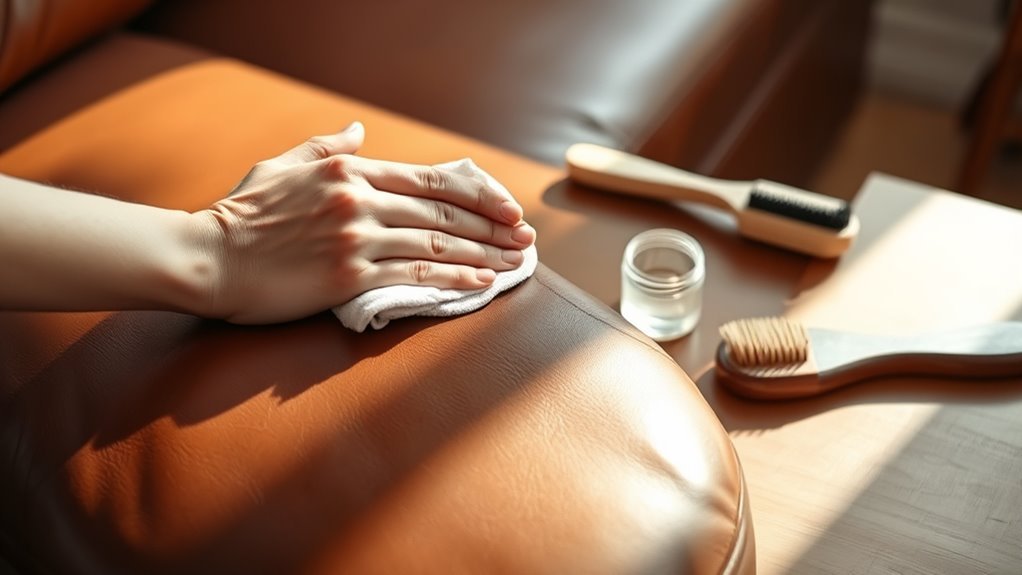
When you’re ready to clean the marks on your leather, dampen a soft cloth with a mild soap solution to gently lift dirt without damaging the material. Mix a few drops of mild liquid soap, like baby shampoo or gentle dish soap, with warm water.
Wring the cloth out well so it’s just slightly damp, not soaking wet. Wipe the affected area using soft, circular motions. Avoid scrubbing hard, as this can harm the leather’s finish.
After cleaning, use a dry, clean cloth to gently blot away moisture. Let the leather air dry naturally, away from direct heat or sunlight.
This simple method helps remove surface marks effectively while preserving the leather’s quality and appearance.
Applying Leather Cleaner for Stubborn Stains
If gentle cleaning doesn’t remove the marks, you’ll need to apply a specialized leather cleaner designed for tougher stains.
First, test the cleaner on a hidden spot to make sure it won’t damage or discolor the leather.
Always test leather cleaner on an inconspicuous area to prevent damage or discoloration before full application.
Once safe, apply a small amount of the cleaner to a soft cloth, not directly on the leather. Gently rub the stained area in circular motions, working from the outside toward the center.
Avoid scrubbing too hard to prevent damaging the leather’s surface.
After you’ve treated the stain, wipe away any excess cleaner with a clean, damp cloth.
Finally, let the leather air dry naturally, away from direct heat or sunlight.
This method targets stubborn marks without compromising your leather’s integrity.
Removing Ink Marks From Leather
Although ink marks can be tricky to remove from leather, you can effectively treat them with the right approach. Start by dabbing the spot gently with a cotton swab dipped in rubbing alcohol or a leather-safe ink remover. Avoid rubbing hard to prevent damage.
Then, wipe with a damp cloth and let it dry naturally. Finally, condition the leather to restore moisture.
| Step | Tool/Material | Tip |
|---|---|---|
| 1. Dab | Cotton swab, Alcohol | Use sparingly to avoid spread |
| 2. Blot | Clean cloth | Blot, don’t rub |
| 3. Dry | Air | Let leather dry naturally |
| 4. Condition | Leather conditioner | Apply evenly |
| 5. Repeat if needed | Same as step 1 | Test first on hidden area |
Treating Oil and Grease Stains Safely
Since oil and grease can deeply penetrate leather fibers, treating these stains requires a careful approach to avoid damage. Start by gently blotting excess oil with a clean cloth. Never rub, as it spreads the stain.
Then, sprinkle a light layer of cornstarch or talcum powder on the affected area and let it sit overnight to absorb the grease.
Finally, brush off the powder gently with a soft brush.
Here are key tips for safe treatment:
- Use only powder-based absorbents to lift oil without harsh chemicals.
- Avoid water or liquid cleaners, which can worsen the stain.
- Test any cleaning method on a hidden spot first to guarantee it won’t discolor your leather.
This cautious method helps protect your leather while effectively removing oil and grease marks.
Tackling Water and Salt Marks on Leather
When water or salt marks appear on leather, you’ll want to act quickly to prevent permanent damage. Start by gently blotting the area with a clean, dry cloth to absorb excess moisture. Never rub, as this can spread the stain.
Next, mix equal parts white vinegar and water. Damp a soft cloth with the solution, and carefully wipe the affected area. This helps neutralize salt deposits and reduces discoloration.
Afterward, use a dry cloth to remove any leftover moisture. Allow the leather to air dry naturally, away from direct heat or sunlight, which can cause cracking.
Conditioning Leather After Cleaning
After removing water and salt marks, your leather needs proper care to stay supple and durable. Conditioning restores moisture, prevents cracking, and keeps the surface soft.
Here’s how to condition your leather effectively:
Choose a conditioner suitable for your leather type. Test it on a small, hidden area first.
Apply a small amount of conditioner with a clean, soft cloth, rubbing gently in circular motions.
Let the leather absorb the conditioner for about 15-20 minutes, then buff off any excess with a dry cloth.
Preventing Future Marks and Maintaining Leather Quality
To keep your leather looking its best, you’ll want to take proactive steps that prevent marks before they appear. Start by regularly dusting and wiping your leather items with a soft, dry cloth to remove dirt and oils that can cause stains.
Avoid placing leather near direct sunlight or heat sources, as these can dry out and crack the material. Use a quality leather protector spray to create a barrier against spills and stains.
When handling leather, make sure your hands are clean and dry to minimize oils transferring. Store leather goods in breathable bags or covers to prevent moisture buildup.
Frequently Asked Questions
Can I Use Household Items Like Vinegar or Baking Soda on Leather?
You can use diluted vinegar sparingly on leather, but avoid baking soda as it can be too abrasive. Always test a small, hidden area first to prevent damage, and condition leather afterward to keep it soft and supple.
How Often Should I Clean Leather to Avoid Marks?
You should clean your leather every 3-6 months to prevent marks and buildup. Wipe spills immediately, and condition it regularly to keep it supple.
Don’t over-clean, or you might damage the leather’s finish.
Is It Safe to Use Leather Cleaning Products on Synthetic Leather?
Synthetic surfaces sometimes suffer stains, so stay smart: don’t default to leather cleaners. They can cause cracks or color changes.
Instead, select specialized synthetic-safe solutions, so you safeguard your stuff and keep synthetic leather looking splendidly spotless.
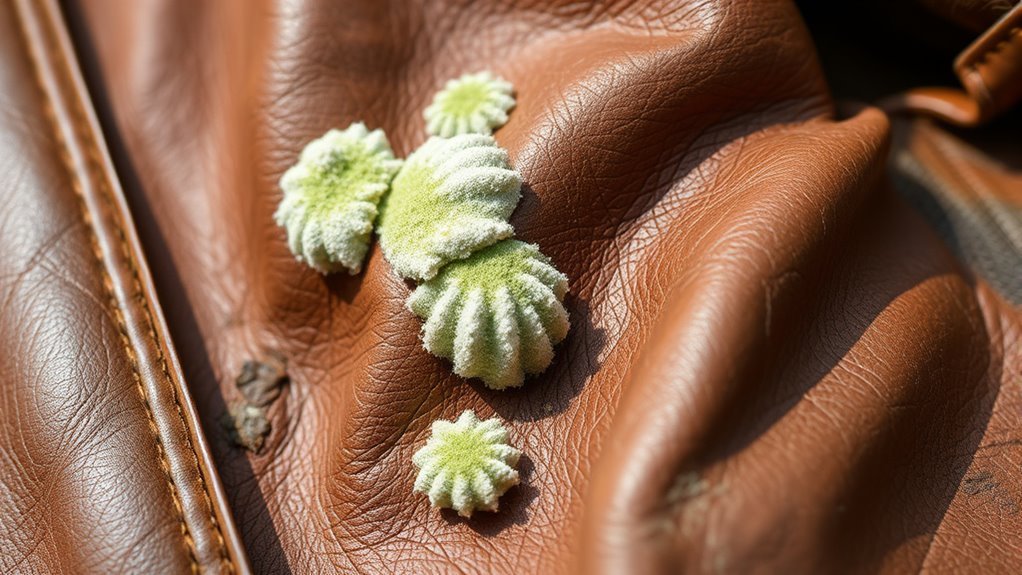
What Should I Do if Leather Gets Moldy?
If leather gets moldy, you should clean it quickly using a mixture of equal parts water and rubbing alcohol. Gently wipe the area, let it dry, then condition the leather to restore moisture and prevent cracking.
Can Sun Exposure Cause Marks or Damage on Leather?
Sunlight can absolutely cause damage and marks on leather. If you’re drying your leather in the sun, it might seem helpful, but you’re actually risking fading, cracking, and dryness.
Keep it shaded to protect your items.
Conclusion
Now that you know how to tackle every stubborn mark—from ink to grease—you’re just a few steps away from restoring your leather’s original beauty. But here’s the secret many miss: the real magic happens when you condition and protect it afterward.
Ready to see your leather transform and stay flawless longer? Keep following these simple steps, and you’ll unseal the full potential of your leather’s timeless charm.
By regularly using these leather cleaning and conditioning techniques, you ensure your leather stays soft, supple, and free from marks. Your next masterpiece awaits!