How to Get Grease Stains Out of Leather Shoes
To get grease stains out of leather shoes, start by sprinkling cornstarch or talcum powder on the stain and let it sit overnight to absorb the oil. This simple step helps lift grease without damaging the leather.
Next, gently brush off the powder and use a leather cleaner applied with a soft cloth for tougher spots. If needed, wipe the area with mild soap and water, but be careful not to soak the leather as excess moisture can cause damage.
Finally, finish by applying a leather conditioner to keep your shoes supple and prevent cracking. Keep going to explore more effective tips and care methods for maintaining your leather footwear.
Identifying the Type of Grease Stain

Before you treat grease stains on your leather shoes, you need to identify what kind of grease caused the stain. Different greases require different cleaning methods, so knowing the source helps you choose the right approach.
Is it cooking oil, motor oil, or something like shoe polish? Cooking oil often feels sticky and can leave a shiny residue, while motor oil is darker and heavier. Shoe polish, although oily, usually has a waxy texture and a distinct smell.
You can usually tell by where the stain came from. Did you cook, work on your car, or just apply polish?
Consider the source of the stain: cooking, car work, or shoe polish application?
Identifying the type of grease prevents damage caused by incorrect cleaning agents and ensures you treat the stain effectively without harming your leather’s finish.
Preparing Your Leather Shoes for Cleaning

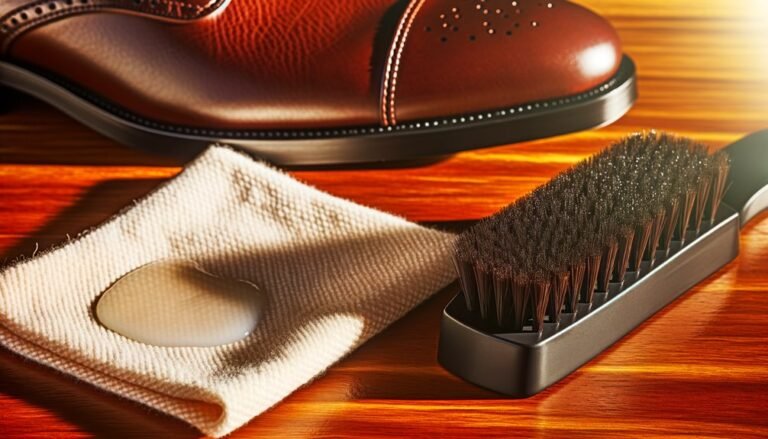
Once you’ve identified the type of grease stain, you’ll want to prepare your leather shoes properly to avoid further damage during cleaning. Start by removing any loose dirt or debris with a soft brush or a dry cloth. This prevents dirt from embedding deeper when you apply cleaning agents.
Next, test a small, hidden area of your shoe with any cleaner or product you plan to use to ensure it won’t discolor or damage the leather. Also, remove the shoelaces if possible; this makes cleaning easier and prevents them from getting stained.
Finally, work in a well-ventilated area and avoid direct sunlight, as heat can dry out the leather and cause cracks during the cleaning process.
Using Cornstarch or Talcum Powder to Absorb Grease

Although grease stains can seem stubborn, you can effectively lift them by applying cornstarch or talcum powder, which absorb the oil without damaging your leather shoes. Start by sprinkling a generous amount of either powder directly onto the stain.
Make sure the affected area is fully covered. Let the powder sit for several hours or, ideally, overnight to soak up the grease thoroughly.
Afterward, gently brush off the powder with a soft cloth or brush.
You might need to repeat this process if the stain persists. Avoid rubbing hard, as this can spread the grease or damage the leather’s surface.
Repeat as needed, but be gentle to prevent spreading grease or harming the leather surface.
This simple method works well for fresh stains and helps reduce oily marks before moving on to deeper cleaning if necessary.
Applying a Leather Cleaner for Tough Stains
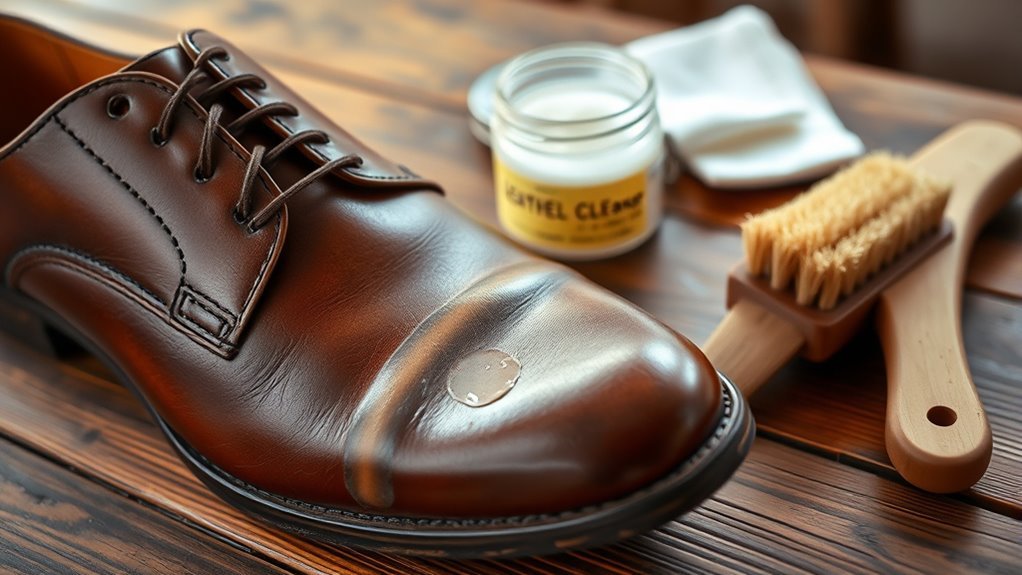
If cornstarch or talcum powder can’t fully remove the grease stain, you’ll need to apply a specialized leather cleaner designed to break down tough oils without harming the material. Start by choosing a cleaner specifically made for leather. Test it on a small, hidden area to ensure it won’t discolor or damage your shoe.
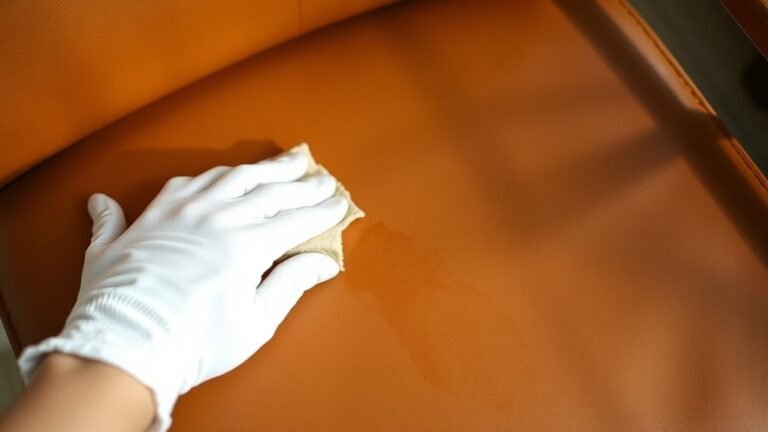
Then, apply a small amount of the cleaner to a soft cloth, gently rubbing it into the stained area in circular motions. Avoid soaking the leather.
Let the cleaner sit for a few minutes to penetrate the grease, then wipe off any residue with a clean, damp cloth.
Allow your shoes to air dry naturally away from direct heat or sunlight. This method tackles stubborn grease effectively while preserving your leather’s integrity.
Cleaning With Mild Soap and Water
When specialized leather cleaners don’t fully lift the grease stain, you can turn to a gentler approach using mild soap and water.
Start by mixing a few drops of mild liquid soap, like dish soap or castile soap, with lukewarm water.
Dampen a soft cloth in the soapy water and wring it out thoroughly. Avoid soaking the leather.
Gently rub the stained area in small circles, working from the outside inward to prevent spreading the grease.
After cleaning, wipe the area with a clean, damp cloth to remove any soap residue.
Finally, let your shoes air dry away from direct heat or sunlight.
This method is effective for light stains and helps maintain your leather’s natural oils without causing damage.
Utilizing Baking Soda as a Natural Remedy
Since baking soda naturally absorbs oils, you can use it to tackle grease stains on your leather shoes effectively. First, sprinkle a generous amount of baking soda directly onto the stain, covering it completely.
Sprinkle baking soda generously on grease stains to absorb oils and refresh your leather shoes naturally.
Let it sit for several hours or overnight to allow the powder to soak up the grease. Afterward, gently brush off the baking soda with a soft cloth or brush.
If the stain persists, repeat the process once more.
Baking soda not only lifts the grease but also deodorizes your shoes. Remember to test on a small, hidden area first to verify it doesn’t affect the leather’s color.
This natural remedy is safe, affordable, and easy to use, making it a great addition to your leather shoe care routine.
Treating Stains With Rubbing Alcohol Carefully
While baking soda works well for absorbing grease, tougher stains might need a stronger approach. You can use rubbing alcohol to break down stubborn grease on your leather shoes.
First, dampen a cotton ball or soft cloth with a small amount of rubbing alcohol. Don’t soak it.
Gently dab the stained area; avoid rubbing harshly as it can damage the leather’s finish. Work slowly, checking your progress frequently. If you notice any discoloration or damage, stop immediately.
After treating the stain, let the leather air dry away from direct heat or sunlight. This method targets grease without saturating the leather, but it’s best to test on a hidden spot first to ensure your shoes won’t be harmed.
Conditioning Leather After Cleaning
After removing grease stains, you’ll want to restore your leather shoes’ moisture and suppleness by conditioning them. Conditioning prevents the leather from drying out and cracking, keeping your shoes looking great. Here’s how to do it effectively:
Choose a leather conditioner suitable for your shoe type. Apply a small amount with a soft cloth, spreading evenly. Let the conditioner absorb fully, usually 15-20 minutes. Buff gently with a clean cloth to restore shine and softness.
Conditioning after cleaning is essential because grease removal can strip away natural oils. Regularly conditioning your leather shoes maintains their durability and enhances their appearance. Don’t skip this step to ensure your shoes stay comfortable and long-lasting.
Preventing Future Grease Stains on Leather Shoes
To keep your leather shoes looking their best, you’ll want to take steps that prevent grease stains from forming in the first place. Start by applying a quality leather protector spray designed to repel oils and water. Make sure to follow the instructions and reapply regularly to maintain effective coverage.
Avoid placing your shoes near greasy surfaces or handling them with oily hands. When you’re eating or working around grease, consider wearing old shoes to minimize risk. Store your shoes in a cool, dry place away from contaminants.
Finally, clean any minor spots immediately before they set in. By taking these simple precautions, you’ll extend the life of your leather shoes and keep them looking clean and polished longer. Prevention always beats tough stain removal.
Frequently Asked Questions
Can Grease Stains Damage Leather Permanently?
Yes, grease stains can permanently damage leather if you don’t act quickly. They might darken or weaken the material, so you should clean them promptly to keep your leather shoes looking great and lasting longer.
Are There Specific Leather Types More Prone to Grease Stains?
Think of leather like a sponge—open-pore types, like nubuck or suede, soak up grease more enthusiastically, making stains stick.
You’ll find smooth, finished leather resists stains better, so choose wisely to keep your shoes shining.
How Often Should Leather Shoes Be Professionally Cleaned?
You should get your leather shoes professionally cleaned every 6 to 12 months, depending on how often you wear them and their exposure to dirt or grease.
Regular care keeps them looking sharp and lasting longer.
Is It Safe to Use Household Solvents on Leather?
Don’t throw caution to the wind—using household solvents on leather isn’t safe. They can damage the finish or dry it out.
Stick to products made specifically for leather to keep your shoes looking sharp and lasting longer.
Can Grease Stains Affect the Shoe’s Warranty?
Yes, grease stains can void your shoe’s warranty if the damage results from improper care.
You should check the warranty terms and avoid harsh treatments that might worsen stains or damage the leather, preserving your coverage.
Conclusion
Cleaning grease stains from your leather shoes might seem tricky, but with patience and the right steps, you’ll restore their shine like a polished gem. Start by identifying the stain, then absorb excess grease with cornstarch or talcum powder.
Use gentle cleaners and condition the leather afterward to keep it supple. Remember, regular care and quick action can prevent stains from setting, ensuring your shoes stay looking sharp and fresh for every step you take.
By following these tips on how to get grease stains out of leather shoes, you can maintain their appearance and extend their life. Consistent cleaning and conditioning are key to preserving the beauty of your leather footwear.