How to Get Water Stains Out of Leather Step by Step
First, identify your leather type and assess how bad the water stain is. Gather a soft cloth, mild soap or leather cleaner, and some distilled water. Testing your cleaning method on a hidden spot is crucial to avoid damage.
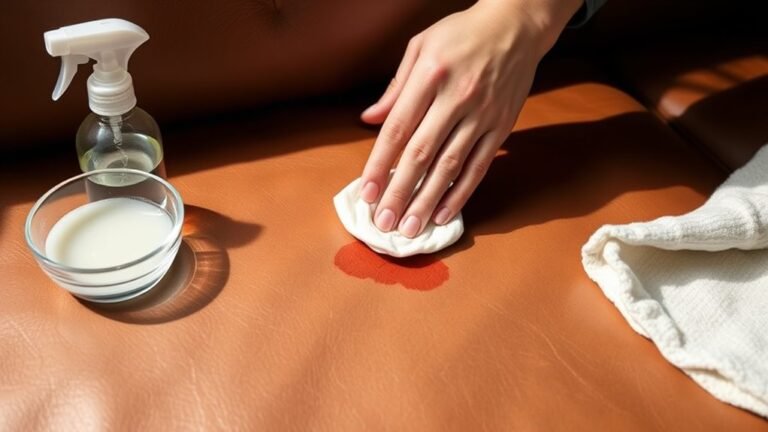
Gently blot any excess moisture without rubbing. Then, lightly dampen the stained area in small circles to even out the water stain.
Finish by applying leather conditioner and letting it dry naturally, away from heat. Keep going to uncover more detailed tips for perfect results.
Assess the Type of Leather and Stain Severity

Before you begin cleaning, you need to identify the type of leather and how severe the water stain is. Different leathers react differently to moisture. Smooth, finished leather tends to handle water better than suede or nubuck, which are more delicate.
Identify your leather type and stain severity before cleaning to choose the right method and avoid damage.
Check your item’s care label or test a small, hidden area with a damp cloth to see how it responds.
Next, examine the stain closely. Is it a light ring or a dark, saturated spot? The darker and more extensive the stain, the more careful and thorough your cleaning approach must be.
Understanding the leather type and stain severity helps you choose the right method and prevents further damage. Taking time here prevents costly mistakes later on.
Gather Necessary Cleaning Supplies

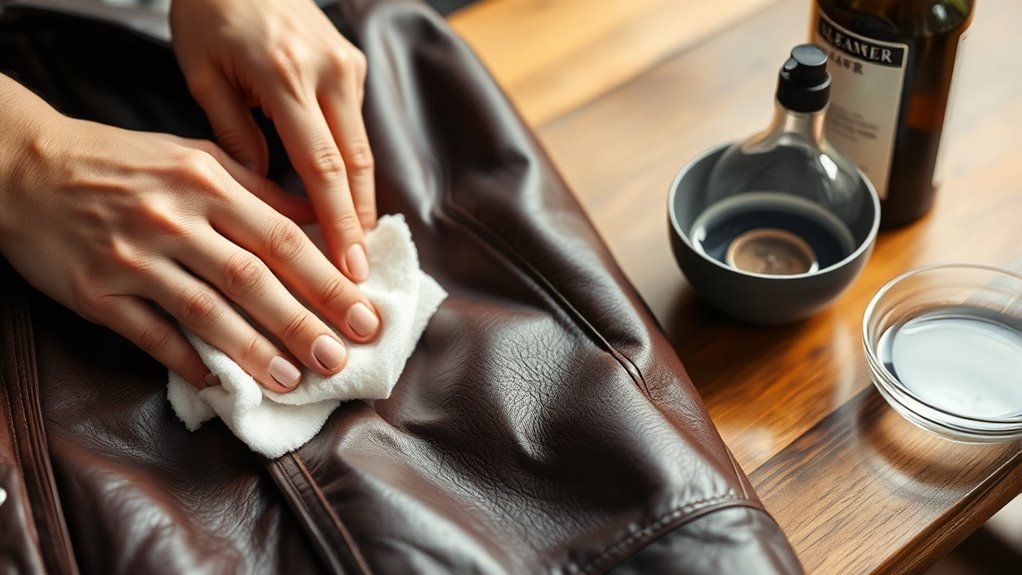
Although cleaning water stains from leather requires care, gathering the right supplies makes the process much easier and more effective. You’ll need a soft, clean cloth, preferably microfiber, to avoid scratching the leather.
Have a bowl of distilled water ready since tap water can contain minerals that might worsen stains. Mild soap, like a gentle dish detergent or a leather-specific cleaner, will help break down residue without damaging the material.
Keep a small spray bottle handy to lightly mist the leather if needed. Additionally, gather a leather conditioner to restore moisture and flexibility after cleaning.
Avoid harsh chemicals or abrasive tools. Having all these items on hand before you start guarantees a smooth, controlled cleaning process that protects your leather from further damage.
Test Cleaning Method on a Small Hidden Area

Since leather can react unpredictably to cleaning solutions, you should always test your method on a small hidden area first. Find a discreet spot, like the inside seam or underside of the leather item, where any potential damage won’t be noticeable.
Apply a small amount of your chosen cleaning solution or water mixture using a soft cloth or cotton swab. Wait for at least 10 to 15 minutes to observe any changes in color, texture, or finish.
If the leather darkens, stiffens, or shows signs of damage, stop immediately and try a gentler method.
Testing guarantees you won’t ruin the visible parts of your leather piece and gives you confidence that your cleaning approach is safe before tackling the water stains directly.
Gently Blot Excess Water With a Soft Cloth
When water stains appear on your leather, you’ll want to gently blot the excess moisture using a soft, absorbent cloth. Avoid rubbing, which can push water deeper or damage the leather’s surface. Instead, press lightly and lift the dampness away.
Use a clean cloth to prevent spreading dirt or oils. This step helps minimize stain severity and prepares the leather for further treatment.
| Cloth Type | Texture | Purpose |
|---|---|---|
| Microfiber | Smooth, soft | Absorbs moisture quickly |
| Cotton towel | Soft, fluffy | Gentle on delicate leather |
| Linen | Slightly coarse | Good for light blotting |
| Chamois leather | Velvety, soft | Highly absorbent |
| Paper towel | Thin, disposable | Use cautiously, avoid residue |
Use a Damp Cloth to Even Out Water Stains
After blotting away excess water, you can use a damp cloth to help even out the water stains on your leather. Dampen a soft cloth with lukewarm water, avoid soaking it, and gently wipe the stained area. This helps redistribute moisture and minimize the appearance of water spots.
Be sure not to rub harshly; instead, use light, circular motions. Here’s how to proceed:
- Lightly moisten a clean cloth with water.
- Gently wipe the stained leather in small circles.
- Allow the leather to air dry naturally, away from direct heat or sunlight.
This method helps the leather absorb moisture evenly, reducing contrast between stained and unstained areas. It’s a simple yet effective step before conditioning your leather.
Apply Leather Conditioner to Restore Moisture
Though the damp cloth helps even out water stains, your leather still needs conditioning to restore lost moisture and flexibility. Grab a high-quality leather conditioner designed specifically for your leather type. Apply a small amount onto a soft, clean cloth, then gently rub it into the stained area using circular motions.
A damp cloth evens stains, but conditioning restores your leather’s moisture and flexibility.
This helps replenish oils and prevents the leather from drying out or cracking. Don’t forget to treat the entire surface to maintain uniform texture and appearance.
Let the conditioner absorb fully, usually for about 15 to 20 minutes, before touching or using the item.
Regular conditioning after cleaning water stains keeps your leather supple and extends its lifespan, ensuring it looks great and feels soft for years to come.
Allow Leather to Dry Naturally Away From Heat
Since leather is sensitive to heat, you should let it dry naturally to prevent damage.
Using direct heat like hairdryers or radiators can cause the leather to crack, warp, or lose its shape.
Instead, follow these steps:
- Place the leather item in a well-ventilated area with indirect sunlight to promote even drying.
- Avoid hanging the leather in direct sun, as UV rays can fade and stiffen it.
- Allow several hours or even overnight for the leather to dry fully. Patience is key to preserving its texture and durability.
Frequently Asked Questions
Can Water Stains Cause Permanent Damage to Leather?
Yes, water stains can cause permanent damage to leather if left untreated. You should act quickly to clean and condition the leather to prevent discoloration, stiffness, or weakening of the material over time.
Addressing water stains promptly helps maintain the leather’s appearance and durability. Neglecting these stains may lead to irreversible damage and costly repairs.
How Often Should I Condition Leather After Cleaning?
You should condition your leather every 3 to 6 months after cleaning to keep it supple and protected.
If it’s exposed to harsh conditions, condition more often to prevent drying and cracking.
Is It Safe to Use Household Cleaners on Leather?
About 70% of household cleaners can damage leather’s finish. So, you shouldn’t use them directly.
Instead, stick to products made specifically for leather to keep it soft and safe without risking stains or cracks.
Can Water Stains Be Prevented on Leather Items?
Yes, you can prevent water stains on leather by regularly applying a water-repellent conditioner. Avoid exposing leather to excessive moisture and quickly blot any spills.
Keeping your leather clean and conditioned helps maintain its durability too.
What Types of Leather Are Most Resistant to Water Stains?
You’ll find full-grain and top-grain leathers are most resistant to water stains because of their dense surface.
Also, treated or waterproofed leathers repel moisture better, so choosing those helps keep your items looking great longer.
Conclusion
Getting water stains out of leather doesn’t have to feel like an uphill battle. By taking it step by step—assessing your leather, testing first, and treating with care—you’ll bring your leather back to life without a hitch.
Remember, patience is your best friend here; rushing can do more harm than good. Treat your leather gently, and soon those water stains will be just a distant memory.
With the right approach, removing water stains from leather becomes manageable, leaving your prized item looking as smooth as silk and well-maintained.