How to Clean a Leather Settee: Step-by-Step Guide
You should dust and vacuum your leather settee weekly to keep dirt from building up. Regular maintenance is essential for leather settee cleaning to preserve its appearance and durability.
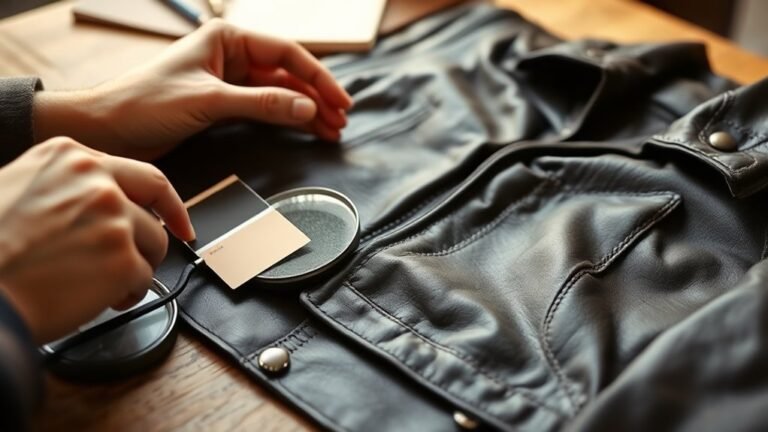
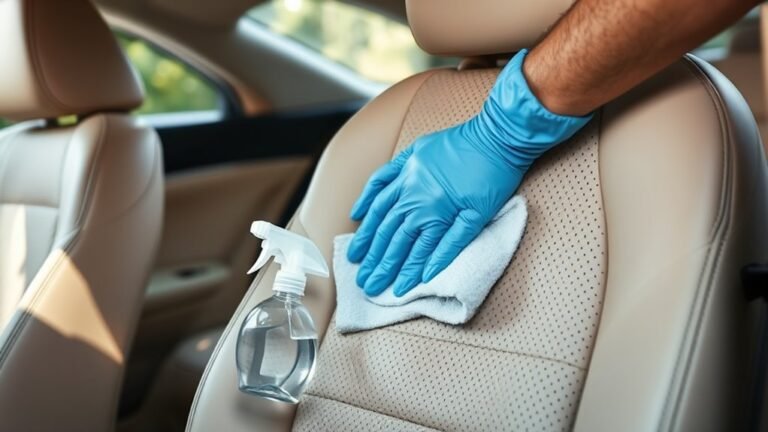
When cleaning, use a soft microfiber cloth dampened with mild soap and distilled water, wiping gently in circular motions.
Address spills right away to prevent stains and apply leather conditioner every few months. This keeps the leather soft and helps prevent cracks.
Avoid harsh chemicals and direct heat, as they can damage the leather.
Keep following for detailed stain removal tips and conditioning advice to keep your settee looking great. Proper care will ensure your leather settee remains a beautiful and comfortable piece in your home for years to come.
How Often to Clean a Leather Settee

Although it might seem tedious, you should dust and vacuum your leather settee weekly to keep dirt from building up. Regular cleaning prevents dust and debris from settling into the leather, which can cause wear over time.
When spills or stains happen, address them immediately to avoid long-term damage and keep your couch looking its best. For thorough maintenance, plan a deep clean and conditioning every six to twelve months, depending on how often you use the settee and the type of leather.
This process helps preserve the leather’s natural oils, preventing it from drying out, cracking, or fading. Always check the manufacturer’s care instructions to tailor your cleaning routine and maintain your leather couch’s condition effectively.
Essential Materials for Cleaning Leather
When cleaning your leather settee, having the right materials on hand makes the process easier and protects the leather’s finish. Start with a soft microfiber cloth or a vacuum’s soft brush attachment to gently remove dust without scratching.
Use distilled water to create cleaning solutions, avoiding mineral buildup that can discolor leather. For stains, mix white vinegar with distilled water for a safe, effective cleaner.
Choose a leather cleaner or a natural liquid soap that won’t strip the leather’s natural oils. After cleaning, apply a leather conditioner or natural oils like olive or coconut oil in small amounts to maintain suppleness and prevent cracking.
These essential materials ensure your leather settee stays clean and well-preserved without damage.
Step-by-Step Cleaning Process
Before you begin cleaning, vacuum your leather settee thoroughly using a soft brush attachment or microfiber cloth to remove dust and loose debris, ensuring a smooth and safe cleaning process.
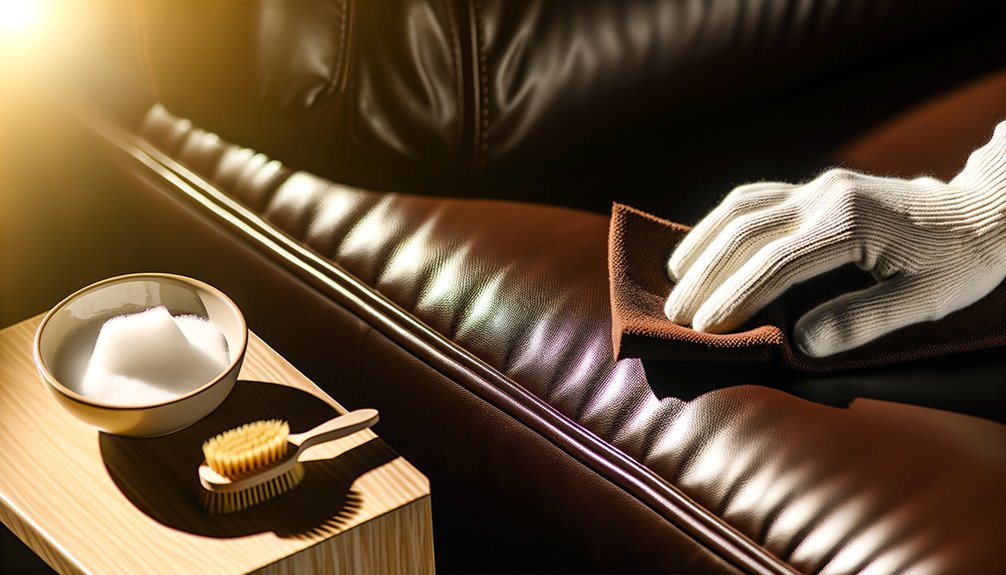
Next, prepare a gentle cleaning solution by mixing a few drops of mild liquid soap with distilled water. Dampen a microfiber cloth with the solution, make sure it’s not soaked, and gently wipe the leather surface in circular motions to lift dirt without causing damage.
Afterward, rinse the cloth with plain distilled water, wring out excess moisture, and wipe the settee again to remove any soap residue. Finally, use a clean, dry microfiber cloth to dry the leather completely, preventing water spots and helping maintain its natural shine.
This step-by-step process will keep your leather settee clean and well-cared for.
Techniques for Removing Stains
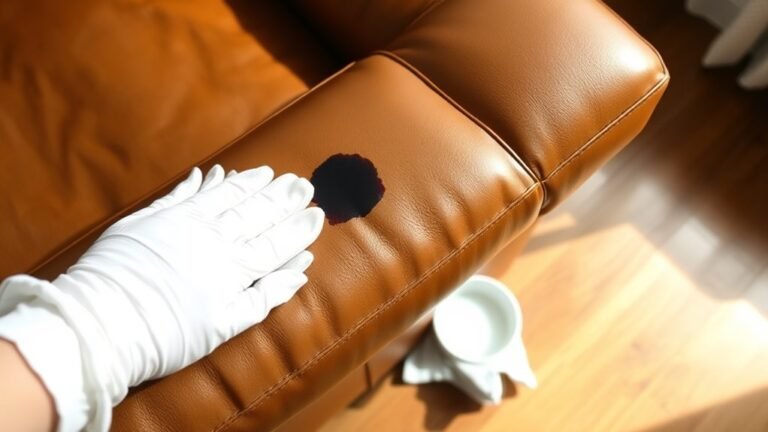
Since stains can quickly damage your leather settee, you should act immediately to treat them. Start by blotting the stain with a dry microfiber cloth to prevent it from setting deeper.
For water-based stains, use a damp cloth with a small amount of mild soap, then dry thoroughly. Oil or grease stains need baking soda applied gently overnight, then brushed off.
Ink stains require a cotton swab dipped in rubbing alcohol, applied gently after testing in a hidden spot. Here’s a quick guide to help you clean a leather couch effectively:
| Stain Type | Treatment Method |
|---|---|
| Water-based stains | Damp cloth with mild soap, dry thoroughly |
| Oil/Grease | Baking soda overnight, brush off |
| Ink | Rubbing alcohol, cotton swab, test first |
| Persistent stains | Specialized remover or professional help |
Conditioning Your Leather Settee
A high-quality leather conditioner can keep your settee supple and looking its best. To condition your leather, start with a clean surface. Remove dust and dirt first.
Use a soft cloth to apply the conditioner gently in circular motions, ensuring even coverage without saturating the leather. Never apply oils or conditioner directly from the container; always add them to your cloth or clothing to control the amount.
Apply conditioner with a soft cloth in gentle circles, never directly from the container to avoid over-saturation.
After applying, let the conditioner sit for at least 30 minutes to soothe the leather and nourish its fibers. Once absorbed, buff off any excess with a dry soft cloth.
Conditioning every 3 to 6 months prevents dryness, cracks, and fading, helping your leather settee maintain its natural beauty and extend its lifespan.

Avoiding Common Cleaning Mistakes
When cleaning your leather settee, steer clear of harsh chemicals like bleach or ammonia that can dry out and damage the leather. Don’t soak the leather or rush the drying process with heat sources like hair dryers, which can cause cracking.
Instead, use gentle cleaners and let it air dry naturally to keep your settee looking its best.
Harsh Chemicals to Avoid
Although it might be tempting to grab whatever cleaner you have on hand, using harsh chemicals can quickly ruin your leather settee. Avoid cleaning products containing bleach, ammonia, or alcohol-based cleaners, as they strip natural oils and damage the leather surface.
Stay away from all-purpose cleaners, wood cleaners, and glass cleaners since they often contain ingredients harmful to leather. Never use household products with sodium hypochlorite or abrasive substances, which cause irreversible damage.
Also, skip two-in-one cleaner and protector products not specifically formulated for leather; they can leave residue buildup. By steering clear of these harsh chemicals, you’ll protect your settee’s finish and extend its life, keeping it looking supple and vibrant for years to come.
Proper Drying Techniques
Steering clear of harsh chemicals is just one part of caring for your leather settee; how you dry it after cleaning makes a big difference too. After wiping down with a damp cloth and natural soap, follow these proper drying techniques to protect your leather:
- Gently blot excess moisture with a dry microfiber cloth and let the settee air dry in a well-ventilated area.
- Avoid direct heat sources like hairdryers, heaters, or sunlight as they can cause cracking or warping.
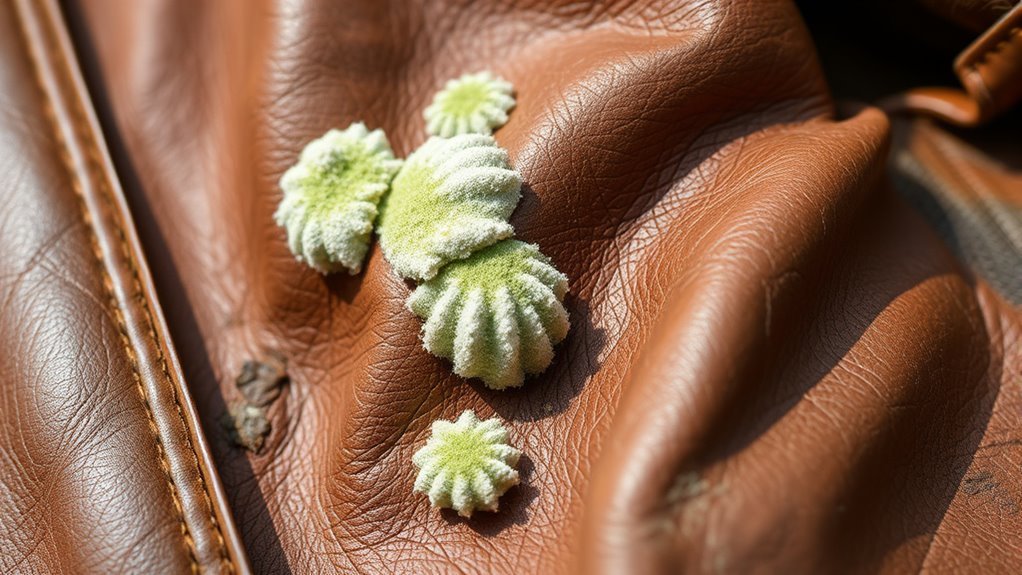
- Ensure the leather is completely dry before applying conditioners to prevent trapped moisture, which leads to mold or deterioration.
Tips for Long-Term Leather Care
To keep your leather settee looking its best for years, you should condition it every three to six months using a leather-specific oil or conditioner to prevent drying and cracking. Regularly clean leather surfaces with a clean cloth or microfiber cloth to remove dust and dirt buildup.
When you clean and condition your leather couch, you help maintain the leather sofa’s natural oils, preserving its texture and appearance. Always apply a leather conditioner evenly and avoid placing your settee in direct sunlight or near heat sources, as these can cause fading and damage. Using UV-protective sprays adds extra defense against sun damage. By following these tips and the manufacturer’s guidelines, you’ll ensure your leather remains supple, vibrant, and comfortable for years to come.
Frequently Asked Questions
What Is the Best Thing to Use to Clean Leather Sofas?
You should use a mild, pH-balanced cleaner like distilled water mixed with a bit of white vinegar or natural soap. Avoid harsh chemicals, and regularly condition your leather with oil or balm to keep it supple and lasting.
Can You Use Dawn Dish Soap on a Leather Sofa?
You can use Dawn dish soap on your leather sofa, but don’t plunge in headfirst. Dilute it with distilled water first. Test a hidden spot to avoid damage, and avoid frequent use to keep leather soft and safe.
What Should You Not Clean Leather Couches With?
You shouldn’t clean leather couches with bleach, ammonia, alcohol-based cleaners, or harsh chemicals. Avoid all-purpose cleaners, excessive water, steam, abrasive cloths, and scrubbing pads. They can damage, discolor, or scratch your leather settee.
How Do You Get Ingrained Dirt Out of a Leather Couch?
Think of ingrained dirt as stubborn shadows. You gently lift them by wiping with a damp cloth mixed with mild soap or a vinegar-water blend, being careful not to soak the leather.
Always test first!
Conclusion
By giving your leather settee a little regular TLC, you’re not just cleaning—it’s like whispering care into every inch. With the right materials and gentle touch, you’ll keep it looking fresh without any harsh surprises.
Remember, a little conditioning goes a long way in keeping that supple charm alive. Steer clear of shortcuts, and your leather will thank you with timeless comfort and style.
Proper care and maintenance are essential when you learn how to clean leather settee effectively. This ensures your furniture remains a cozy invitation for years to come.