How to Clean Leather Naturally: Safe & Effective Methods
To clean leather naturally, start by dusting it with a soft cloth to remove dirt.
Using natural ingredients for leather cleaning not only protects the material but also keeps it looking fresh and supple.
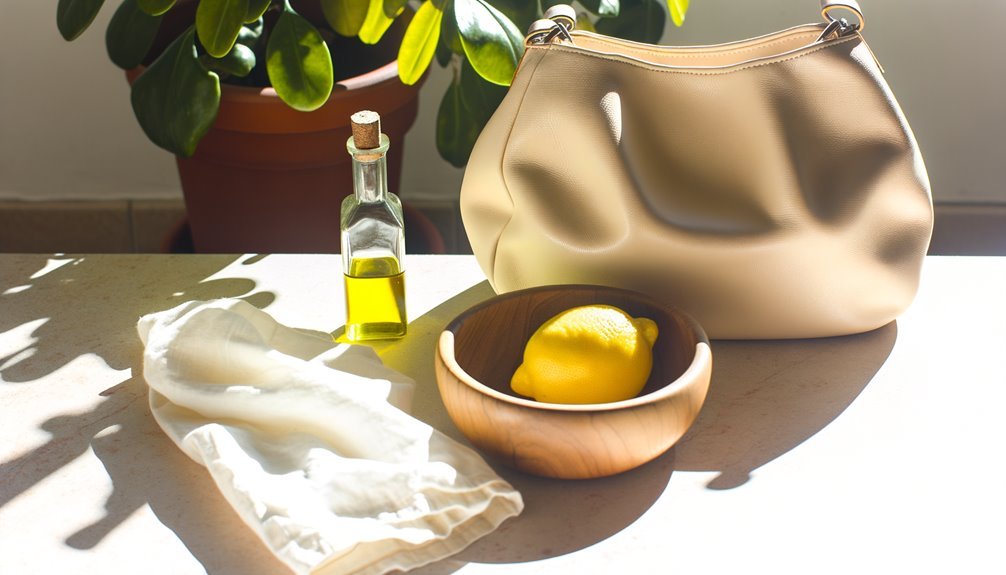
Mix white vinegar, a bit of coconut or olive oil, and dish soap for a gentle cleaner.
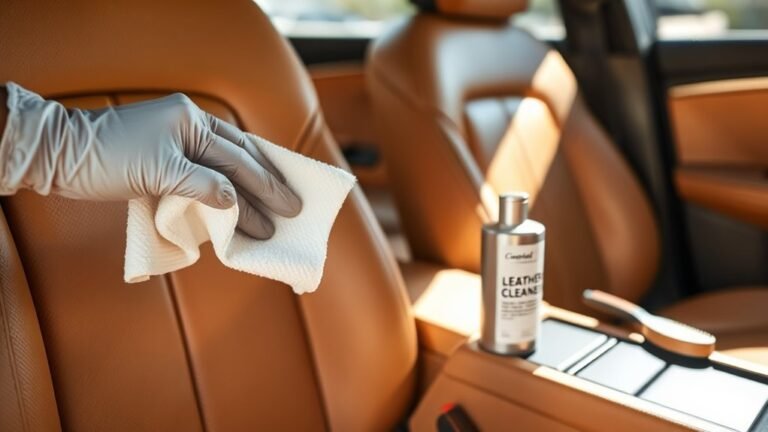
Dab a microfiber cloth in the solution, wipe leather in circles, then dry thoroughly.
Condition with natural oils like coconut oil to keep it soft.
Avoid harsh chemicals and direct sunlight to protect your leather.
Keep going, and you’ll find easy ways to tackle stains and maintain its look longer.
Regular natural cleaning helps preserve the leather’s quality and extends its lifespan.
Preparing Leather for Natural Cleaning

Before you start cleaning, make sure you identify the type of leather and check its care label to confirm it can handle natural cleaning methods. Begin by removing dust and loose debris using a dry microfiber cloth or a soft-bristled brush. This step preps the surface, allowing your cleaning solution to work more effectively without grinding in dirt.
Before applying any natural cleaning solution, test it on a small, hidden spot to avoid discoloration or damage. Once cleaned, ensure the leather is completely dry and free from oils or residues before you condition it. Proper preparation guarantees that your leather stays in great shape and responds well to natural cleaning, keeping it supple and protected for longer use.
Essential Ingredients for Homemade Leather Cleaner
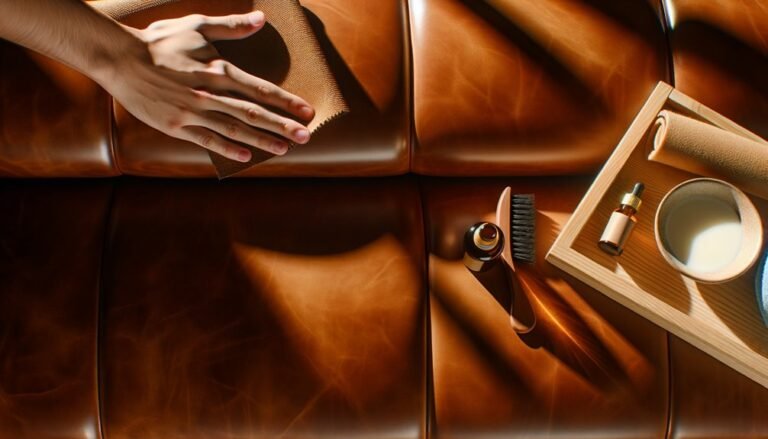
You’ll want to start with white vinegar because it gently breaks down dirt without harming your leather. Adding oils like coconut or olive oil helps keep the leather soft and conditioned.
A bit of dish soap cuts through grease, making sure your cleaner works effectively without damage.
Vinegar Benefits Explained
Although vinegar might seem simple, it packs powerful benefits for cleaning leather naturally. Vinegar’s acetic acid breaks down oils and grime, making it highly effective at removing dirt and stains without harsh chemicals.
When you dilute vinegar with water, it becomes a gentle cleaner that won’t damage leather fibers, preserving the material’s integrity. Plus, vinegar’s natural antibacterial properties make it great for disinfecting leather surfaces safely.
Using vinegar also helps neutralize odors, which keeps your leather items fresh. By incorporating vinegar into your homemade leather cleaner, you get a versatile ingredient that tackles cleaning, stain removal, and disinfecting all at once.
This makes vinegar a smart, eco-friendly choice for maintaining your leather’s cleanliness and shine naturally.
Oils for Conditioning
When conditioning leather naturally, oils like coconut oil and extra virgin olive oil play a crucial role in restoring moisture and preventing cracks. These natural oils deeply moisturize the leather, replenishing its essential oils and keeping it soft and supple.
Using them in your leather care routine helps maintain durability without harmful residues.
Keep in mind these tips for effective conditioning:
- Use oils sparingly and test on a small area to avoid buildup or discoloration.
- Add essential oils like eucalyptus for antibacterial properties and a fresh scent.
- Prefer natural oils over synthetic conditioners for better penetration and safer results.

Soap’s Cleaning Role
After conditioning your leather with natural oils, cleaning becomes the next step to keep it looking fresh and well-maintained. Mild soap, such as diluted dish soap or Castile soap, plays a vital role in homemade leather cleaners.
It helps emulsify dirt, oils, and stubborn stains, lifting them gently from the leather surface without stripping away natural moisture. Using just a small amount ensures you don’t over-saturate the leather, which can cause damage or drying over time.
Because mild soap is pH balanced near 7, it’s safe for delicate leather materials when diluted properly. Incorporating this gentle cleanser into your routine breaks down grime effectively, keeping your leather soft and supple while maintaining a clean leather appearance naturally and safely.
Step-by-Step Guide to Cleaning Leather Naturally
Since natural cleaning solutions can be gentle yet effective, you can easily refresh your leather items without harsh chemicals. Start by mixing 1 cup white vinegar, 1/2 cup coconut oil or EVOO, 1 teaspoon dish soap, and 10 drops eucalyptus oil to create a homemade cleaner. Before full cleaning, test it on a hidden spot to avoid discoloration.
Refresh your leather naturally with a gentle mix of vinegar, oil, dish soap, and eucalyptus oil—test first to ensure safety.
Follow these steps for stain removal and cleaning:
Dampen a microfiber cloth with the solution and gently wipe the leather in circular motions, avoiding excess moisture.
Use a second clean cloth with plain water to remove any residue.
Thoroughly dry the surface with a dry microfiber cloth.
How to Condition Leather With Natural Oils
You’ll want to choose natural oils like coconut oil or extra virgin olive oil to keep your leather soft and crack-free. Before applying, make sure the leather is clean and dry, then gently rub a small amount of oil in circular motions.
Conditioning once or twice a year helps maintain your leather’s look and durability.

Choosing Natural Oils
Although leather is durable, it needs regular conditioning to stay supple and crack-free. Choosing the right natural oils is essential to restore your leather’s moisture and prevent damage. You want oils that nourish without altering the leather’s color or finish.
Here are some great options to consider:
- Coconut oil: Deeply conditions and restores suppleness without harsh chemicals.
- Extra virgin olive oil (EVOO): A natural moisturizer that helps maintain flexibility.
- Mink oil: Known for its excellent waterproofing and conditioning properties.
Before fully applying any oil, test a small hidden area to ensure it won’t change the leather’s appearance. Using natural oils consistently is key to preserving and enhancing leather’s lifespan and look.
Application Techniques
When conditioning leather with natural oils, start by applying a small amount of your chosen oil, like coconut oil or extra virgin olive oil, to a soft microfiber cloth. Then gently rub it into the leather using circular motions to guarantee even absorption. Always test the oil on a hidden spot first to avoid discoloration.
After applying, use a clean, dry cloth to buff away excess oil, which helps maintain a natural shine without greasy residue. Don’t over-apply; too much oil can clog pores and damage the leather’s texture. Use a natural oil conditioner once or twice a year to keep leather soft and supple.
| Step | Tip |
|---|---|
| Apply oil | Use a soft cloth |
| Rub in | Circular motions |
| Test first | Avoid discoloration |
| Buff after | Use clean, dry cloth |
Maintenance Frequency
Conditioning your leather with natural oils like coconut oil or extra virgin olive oil at least twice a year keeps it soft and prevents cracking. Proper maintenance involves regular cleaning followed by light conditioning to restore moisture the leather loses over time.
After cleaning, wait 24 hours before applying oil to ensure deep absorption without overdoing it. Use a microfiber cloth to work the oil in gentle, circular motions for even coverage.
Condition leather twice yearly to maintain suppleness and durability
Apply oil sparingly to avoid greasy residue and monitor the leather’s look Always clean before conditioning to remove dirt and prepare the surface
Removing Common Stains Using Natural Methods
Since leather is a delicate material, you need to act quickly and carefully to remove stains naturally without causing damage. Start by blotting spills immediately with a damp cloth, using gentle pressure to avoid spreading stains.
For grease or oil stains, apply a baking soda and water paste, letting it sit overnight before brushing it off gently. Ink or dye stains require a cotton swab dipped in rubbing alcohol or hydrogen peroxide, but test first on a hidden spot.
To clean and deodorize leather surfaces, use a 1:1 mixture of white vinegar and water. For wine or Kool-Aid stains, blot with this vinegar solution, then sprinkle cornstarch or talcum powder to absorb any leftover dye or oil. Acting fast with these natural methods helps preserve your leather’s beauty.
Caring for Different Types of Leather
Because each type of leather has its own texture and finish, you’ll need to adjust your cleaning and conditioning routine accordingly. Treating full-grain leather gently with pH-balanced cleaners and conditioning it every 6-12 months helps prevent cracks.
Distressed leather benefits from mild cleaning and conditioning to keep its textured look while minimizing scuffs. White leather requires extra care with non-abrasive cleaners and careful stain removal to protect its delicate surface.
Here’s how to care for different leathers naturally:
Full-grain leather: Use gentle cleaning solutions and regular conditioning to maintain durability.
Distressed leather: Clean mildly and condition to preserve texture and reduce wear.
White leather: Focus on gentle cleaning and quick stain treatment to avoid discoloration.
Adjust your care to keep each leather type looking its best.
Tips for Maintaining Leather’s Appearance Over Time
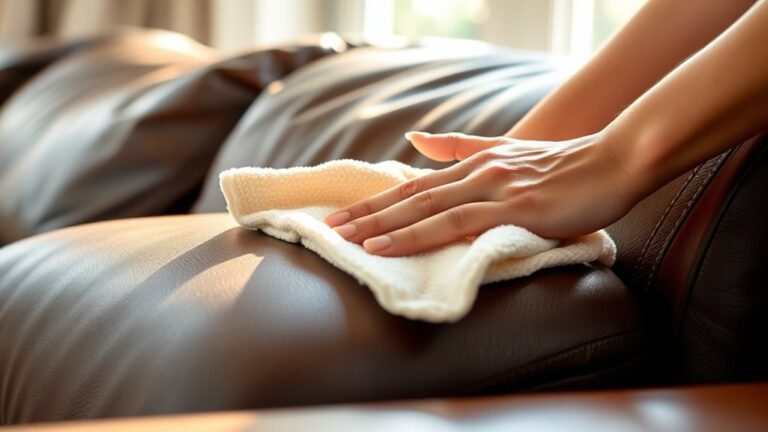
While leather is durable, it needs consistent care to keep its appearance fresh and supple over time. To maintain your leather, dust it regularly with a dry microfiber cloth every two weeks to prevent dirt buildup. This simple step helps keep the surface clean and avoids grime settling in.
Leather stays fresh and supple with regular dusting using a dry microfiber cloth every two weeks.
Apply a natural leather conditioner at least twice a year to replenish oils and prevent cracks. You can use a homemade cleaner and conditioner mixture every six months to soften the leather without harsh chemicals.
Also, protect your leather from direct sunlight using curtains or UV-blocking films to prevent fading. When spills happen, blot gently with a natural solution immediately to avoid stains.
Following these tips will keep your leather looking its best for years.

Preventing Damage and Extending Leather Furniture Life
To keep your leather furniture looking great and lasting longer, you need to care for it regularly and thoughtfully. Clean your leather gently using pH-balanced, natural solutions to prevent damage and maintain its softness. Always dry your furniture thoroughly before applying a conditioner to lock in moisture and keep the leather supple. Protect your investment by avoiding harsh chemicals that can strip oils and cause drying or cracking.
Here are key steps to extend your leather’s life:
Vacuum and dust every two weeks to prevent dirt buildup and surface wear. Use a natural conditioner twice a year to restore suppleness and prevent cracking. Shield leather from direct sunlight with curtains or UV filters to avoid fading and weakening.
Following these tips helps you prevent damage and keeps your leather furniture looking fresh.
Frequently Asked Questions
What Is the Best Home Remedy to Clean Leather?
You’ll want to mix white vinegar, coconut or olive oil, a bit of dish soap, and eucalyptus oil.
Test it first, then gently wipe your leather with a microfiber cloth to clean and nourish it naturally.
What Household Products Can You Use to Clean Leather?
Did you know 70% of leather damage comes from improper cleaning? You can use white vinegar diluted with water, mild dish soap, or coconut oil to clean and condition leather naturally without harsh chemicals or expensive products.
Is Dawn Dish Soap Okay for Leather?
Yes, Dawn dish soap is okay for leather if you dilute it with water. You should test a hidden spot first, clean gently, rinse well, and condition afterward to keep your leather soft and protected.
What Should You Not Use to Clean Leather?
Don’t let harsh chemicals dance on your leather’s delicate skin. You shouldn’t use bleach, ammonia, alcohol, or household wipes. Avoid abrasive solvents, baby wipes, and petroleum products like WD-40; they’ll strip, stain, and crack your leather’s beauty.
Conclusion
So, next time your leather looks like it’s survived a desert storm, don’t reach for harsh chemicals. Instead, grab some natural oils and gentle ingredients—you’ll be giving your leather the spa day it never knew it needed.
Ironically, treating it gently is what keeps it tough and timeless. By caring for it naturally, you’re not just cleaning leather; you’re preserving stories, spills, and all, wrapped in soft, lasting elegance.
Using natural methods to clean leather helps maintain its beauty and durability without damaging the material. This approach not only refreshes your leather but also extends its life, making natural leather care a smart choice.