Can You Use Coconut Oil on Leather? Pros, Cons & Tips
You can use coconut oil on leather, but it’s not the best choice for long-term care. While coconut oil may soften and enrich the color temporarily, it can cause discoloration, dark spots, and even brittleness over time.
Using coconut oil on leather also lacks protective qualities and may promote mold growth.
If you want to keep your leather supple and lasting, safer, specialized conditioners or lanolin work better. These products are designed specifically to nourish and protect leather without the risks associated with oils like coconut oil.
Keep going to explore smarter ways to care for your leather goods and ensure they stay beautiful and durable for years to come.
What Is Coconut Oil?

Coconut oil comes from the meat of mature coconuts harvested from coconut palms. This oil is mostly made up of saturated fats, so it stays solid at room temperature but melts when warmed.
You’ll find coconut oil widely used in skincare because it moisturizes, nourishes, and fights microbes, making it one of the natural oils you can trust.
When it comes to leather care, many people consider coconut oil due to its moisturizing properties. It can help condition leather by replenishing lost oils and preventing drying or cracking.
However, understanding what coconut oil is and how it functions is key before applying it to leather. Its composition and natural benefits make it an interesting option among various natural oils used for leather maintenance.
The Nature of Leather and Its Care Needs

Although leather comes from animal hides that undergo tanning to preserve them, it still needs regular care to stay flexible and look good. Tanning replaces water in the fibers with chemicals, which can make leather brittle and prone to cracking if you neglect conditioning.
Leather fibers naturally rely on oils to remain supple, so applying the right oil or conditioner keeps the material soft and resistant to drying or staining.
| Leather Care Aspect | Why It Matters | How You Feel |
|---|---|---|
| Cleaning | Removes dirt/grime | Satisfied, refreshed |
| Conditioning | Restores oils | Confident, protected |
| Protection | Shields from damage | Secure, valued |
Proper oil and conditioning maintain your leather’s beauty and longevity.
Effects of Coconut Oil on Leather

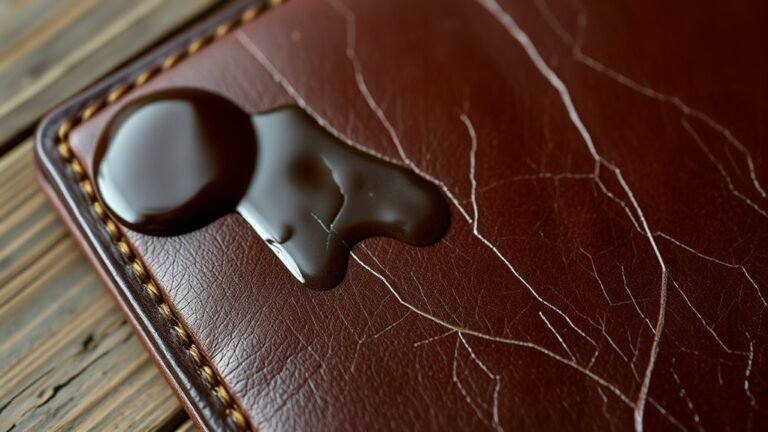
While applying certain oils might seem like a quick fix to soften and brighten your leather, using coconut oil can actually harm it over time. Though coconut oil temporarily softens and enhances your leather’s color, its conditioning benefits are short-lived.
Using coconut oil may soften leather briefly, but it ultimately damages and deteriorates the material over time.
Over time, coconut oil oxidizes, causing the leather to deteriorate, become brittle, and even crack.
Here are three key effects you should consider:
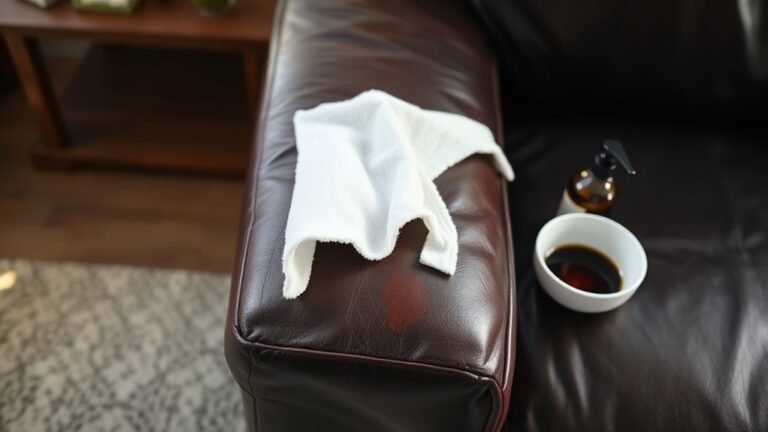
- Discoloration and dark spots may appear, especially on lighter leather.
- Lack of water and UV protection leaves your leather vulnerable.
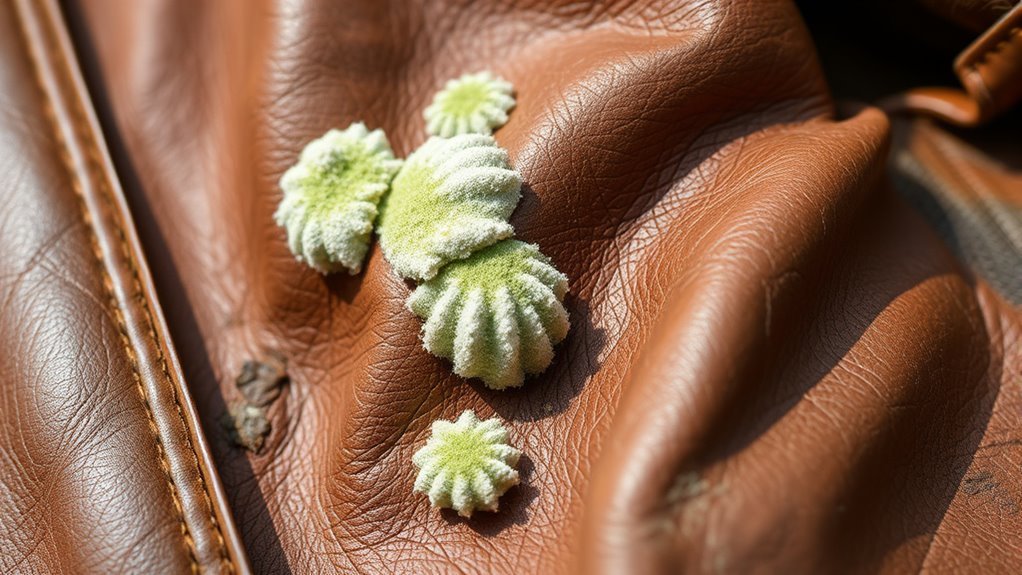
- Sticky residues can promote mold growth, damaging the leather’s integrity.
In short, coconut oil isn’t suitable for long-term leather conditioning and preservation. It may do more harm than good if used regularly.
Comparing Coconut Oil With Other Leather Oils
When you select an oil for leather care, it’s important to know how different options compare in aspects of effectiveness and potential risks. Coconut oil, while readily available, can darken and stain leather and may cause long-term damage due to oxidation.
In contrast, mink oil penetrates well, softening leather and adding waterproofing without heavy discoloration. Lanolin is a gentler leather conditioner that lasts longer and minimizes color changes, making it a safer choice than coconut oil.
Neatsfoot oil softens leather but risks weakening stitching and oxidizing over time, so it’s best for short-term use. Commercial products like Leather Honey outperform household oils by offering targeted moisturizing and protection.
For reliable leather care, you’ll want to choose conditioners designed specifically for leather rather than coconut oil.
How to Apply Coconut Oil to Leather Safely
Before applying coconut oil to your leather, you should always test it on a hidden spot to check for any discoloration. This guarantees your leather stays flawless during leather conditioning.
Follow these steps for safe application:
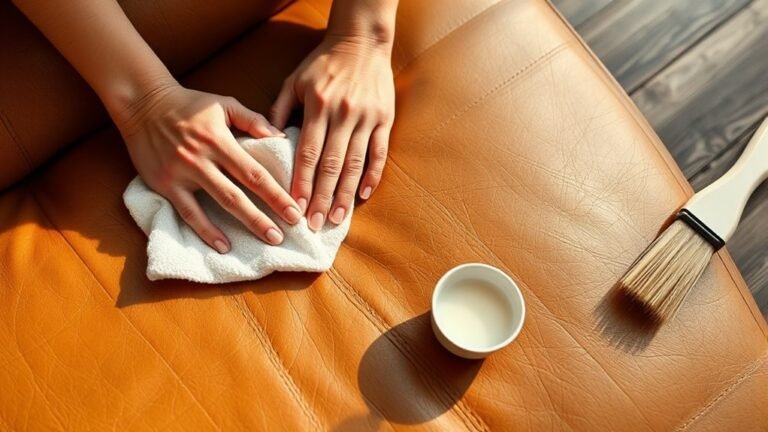
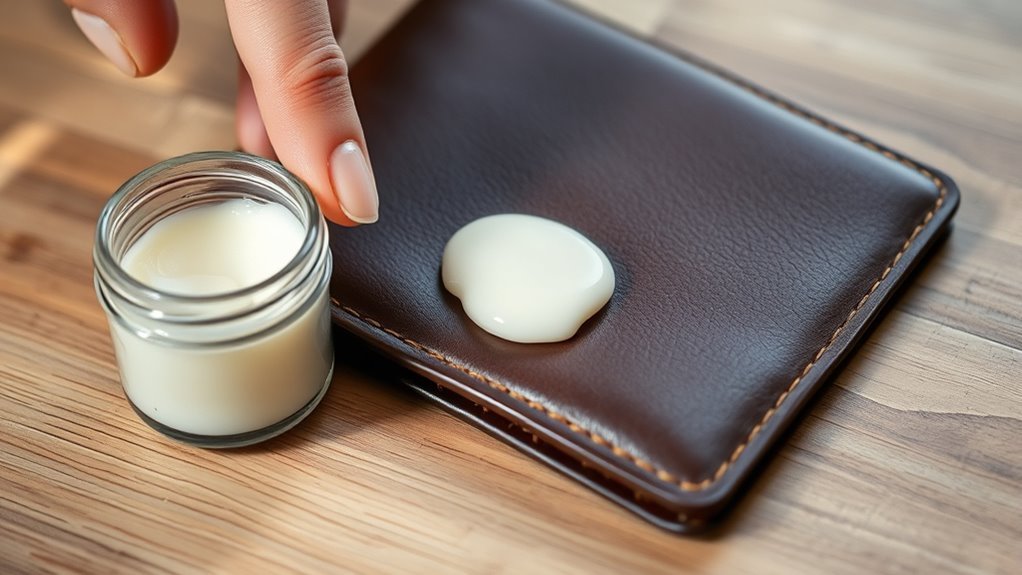
- Use a small amount of coconut oil on a clean, soft cloth, then gently work it in circular motions on the leather.
- Apply sparingly to avoid oversaturation, allowing the oil to absorb for 15-20 minutes.
- Wipe off any excess oil with a dry cloth to prevent a greasy residue.
Repeat cautiously and sparingly for ongoing care. This careful approach helps maintain your leather’s beauty while benefiting from coconut oil’s conditioning properties without risking damage.
Risks and Drawbacks of Using Coconut Oil on Leather
You should be aware that using coconut oil on leather can cause discoloration and darkening, especially on lighter items. Over time, the oil oxidizes and can weaken the leather’s texture, leading to deterioration. Plus, coconut oil doesn’t offer enough water or UV protection, which puts your leather at risk for cracking and fading.
Discoloration and Darkening
How does coconut oil affect the color of your leather items? When you apply coconut oil, it may initially make the leather look richer, but it often leads to uneven darkening and discoloration over time due to oxidation.
This can ruin the natural tone and finish of your leather. Consider these risks:
- Uneven darkening creates unattractive patches, especially noticeable on lighter leather.
- Oxidation of the oil causes long-term staining that’s tough to remove.
- Continuous use compromises the leather’s original color, leading to permanent discoloration.
If you want your leather to stay vibrant and uniform, it’s best to avoid coconut oil. Its tendency to darken and discolor leather can leave you with irreversible damage and frustration.
Oxidation and Deterioration
The darkening and discoloration caused by coconut oil are just the beginning of its impact on your leather. Over time, coconut oil undergoes oxidation, which breaks down leather fibers and accelerates deterioration.
This process produces acids that weaken the leather’s structure, increasing the risk of cracks. If you apply coconut oil repeatedly, it can leave behind a sticky residue that attracts dirt, further wearing down the leather.
Unlike specialized conditioners, coconut oil doesn’t create a protective barrier, leaving your leather exposed to environmental damage and additional oxidation. These combined effects can compromise both the durability and appearance of your leather, making coconut oil a risky choice if you want to preserve its quality and longevity.
Inadequate Protection Benefits
Why settle for coconut oil when it doesn’t offer the protection your leather truly needs? While it may seem natural, coconut oil can cause discoloration, especially on lighter leather, leaving unsightly dark spots. Worse, it oxidizes over time, breaking down your leather’s texture and strength.
You might think you’re protecting your item, but coconut oil falls short in essential ways:
- It doesn’t provide adequate water, UV, or pollutant protection, exposing leather to damage.
- The oil leaves a sticky residue that attracts dirt, accelerating wear and stains.
- Long-term use weakens leather fibers, increasing cracking and premature aging.
If you want to preserve your leather, don’t rely on coconut oil. It simply doesn’t deliver the protection your leather deserves.
Recommended Alternatives to Coconut Oil for Leather Conditioning
If you want to keep your leather in top shape, consider using lanolin or specialized leather conditioners instead of coconut oil. These products are designed to penetrate leather fibers effectively and prevent damage like cracking or staining.
Choosing the right conditioner helps maintain flexibility and extends the life of your leather items.

Lanolin Benefits Explained
Although coconut oil is a popular choice for leather care, you’ll find that lanolin offers a more effective and safer alternative for conditioning your leather items. Lanolin, a natural wax from sheep’s wool, penetrates deeply to restore moisture and softness without leaving greasy residue or darkening leather.
It’s a key ingredient in many premium conditioning products because it preserves your leather’s natural oils and appearance.
Here’s why lanolin stands out:
- It maintains leather’s suppleness by replenishing essential oils.
- It creates a protective barrier against moisture and pollutants.
- It’s gentle enough for delicate or valuable leather, ensuring long-lasting care.
Using lanolin-based conditioning products guarantees your leather stays soft, durable, and beautifully maintained over time.
Specialized Leather Conditioners
When you want to protect and nourish your leather without risking damage, specialized leather conditioners offer the best solution. Unlike coconut oil, a quality leather conditioner like Leather Honey is designed to penetrate and hydrate leather fibers effectively, preserving their natural suppleness.
These leather care products contain a balanced mix of oils, waxes, and softeners that prevent issues such as cracking, drying, and weakening of stitching. Many are eco-friendly, water-based, and non-toxic, making them safe for various leather items.
Best Practices for Maintaining Leather Longevity
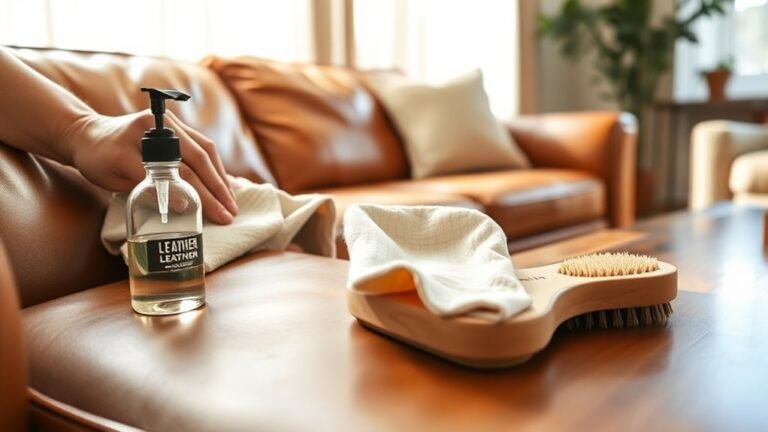
To maintain your leather’s longevity, you should clean it regularly with a specialized leather cleaner and a microfiber cloth to remove dirt and residues before applying any conditioner. Proper care ensures your leather stays supple and durable over time.
Follow these best practices:
- Always perform a patch test with any leather oil or cream to avoid unwanted color changes or damage.
- Apply conditioning products in thin, circular motions for even coverage and to prevent over-saturation.
- Let your leather dry completely for at least 24 hours after cleaning and conditioning to avoid trapped moisture.
Finally, protect your leather with a natural wax or water-resistant spray, reapplying periodically to enhance durability and water resistance. Consistent care keeps your leather looking its best for years.

Frequently Asked Questions
What Kind of Oil Can You Use on Leather?
You should use oils like lanolin, mink oil, or specialized leather conditioners designed to protect and hydrate leather. Avoid household oils, since they can damage or discolor your leather over time.
Always test first on a hidden spot.
What Household Items Can You Use to Oil Leather?
Back in the days of knights, you might’ve used household oils like olive or baby oil on leather, but you shouldn’t now. They can cause damage, so you’d better stick to leather-specific conditioners for the best care.
Conclusion
While coconut oil might seem like a miracle fix for your leather, using it can sometimes do more harm than good. Leather needs specialized care, and not all oils are created equal.
If you want your leather to last longer than a century, it’s best to stick with products designed specifically for it. Treat your leather right, and it’ll reward you with timeless beauty and durability—no coconut oil magic required! When considering whether you can use coconut oil on leather, remember that professional leather conditioners are safer and more effective options.