How to Use Murphy Oil Soap Safely on Leather
To use Murphy Oil Soap safely on leather, first identify your leather type to avoid damage. Murphy Oil Soap is a gentle cleaner that works well on many leather surfaces when used correctly. Mix about one teaspoon of soap per cup of lukewarm water, then do a patch test on a hidden area to ensure no discoloration occurs.
Use a soft cloth, wring it out well, and gently wipe the leather in small circles without soaking it. Avoid using too much liquid, as excess moisture can harm the leather. After cleaning, properly dry the leather with a clean towel.
Finally, condition the leather to maintain its finish and suppleness. Regular conditioning helps protect the leather from drying out and cracking. Keep going to discover more care tips for your leather.
Understanding Murphy Oil Soap and Its Ingredients

What exactly is Murphy Oil Soap, and why is it popular for cleaning? You’ll find it’s a gentle, plant-based cleaner made primarily from natural oils and potassium salts of fatty acids. These ingredients help break down dirt and grime without stripping surfaces of their natural oils.
It’s especially favored because it cleans effectively while being mild enough not to damage wood or other delicate materials. When it comes to leather, Murphy Oil Soap’s formula is designed to clean without harsh chemicals or detergents that might dry out or crack the material.
You’ll appreciate that it’s biodegradable and free from dyes and parabens, making it an eco-friendly choice. Understanding these components helps you see why Murphy Oil Soap is trusted for sensitive surfaces like leather.
Assessing Leather Type Before Cleaning

Since Murphy Oil Soap is gentle enough for delicate materials, you’ll want to determine the type of leather you’re working with before cleaning. Different leathers react differently to cleaning agents, so identifying your leather type helps prevent damage.
Here’s how to assess your leather:
- Check the finish: Aniline leather is soft and natural-looking, while coated leathers have a shiny, sealed surface.
- Feel the texture: Genuine leather feels warm and supple, unlike synthetic or bonded leather, which can feel cold or plasticky.
- Look for tags or manufacturer info: Tags often specify leather type or care instructions, guiding your cleaning approach.
Preparing Your Cleaning Solution

Before you start cleaning, you’ll need to mix Murphy Oil Soap with water to create a gentle solution that won’t harm your leather. Use a small bowl or bucket and add about one teaspoon of Murphy Oil Soap per cup of warm water. Stir gently to combine without creating too many suds.
Avoid using undiluted soap, as it can damage the leather’s finish. Prepare only enough solution to clean a small section of your leather item at a time, ensuring it stays fresh and effective.
Make sure the water is lukewarm, not hot, to prevent drying out or warping the leather. Once mixed, dip a soft cloth or sponge into the solution and wring it out thoroughly before applying it to your leather surface.
Performing a Patch Test on Leather
Although Murphy Oil Soap is gentle, you should always perform a patch test on a hidden area of your leather before cleaning the entire surface. This step ensures the soap won’t harm or discolor your leather.
Follow these steps for an effective patch test:
Follow these steps to safely test Murphy Oil Soap on your leather before full application.
- Mix a small amount of diluted Murphy Oil Soap according to your cleaning solution.
- Apply a small amount to an inconspicuous spot, like inside a seam or under a flap.
- Let it dry completely and check for any changes in color, texture, or finish.
If the test area looks normal and feels soft, you’re safe to proceed with cleaning the rest of the leather.
If you notice any damage, avoid using the soap and try an alternative cleaner.
Proper Technique for Applying Murphy Oil Soap
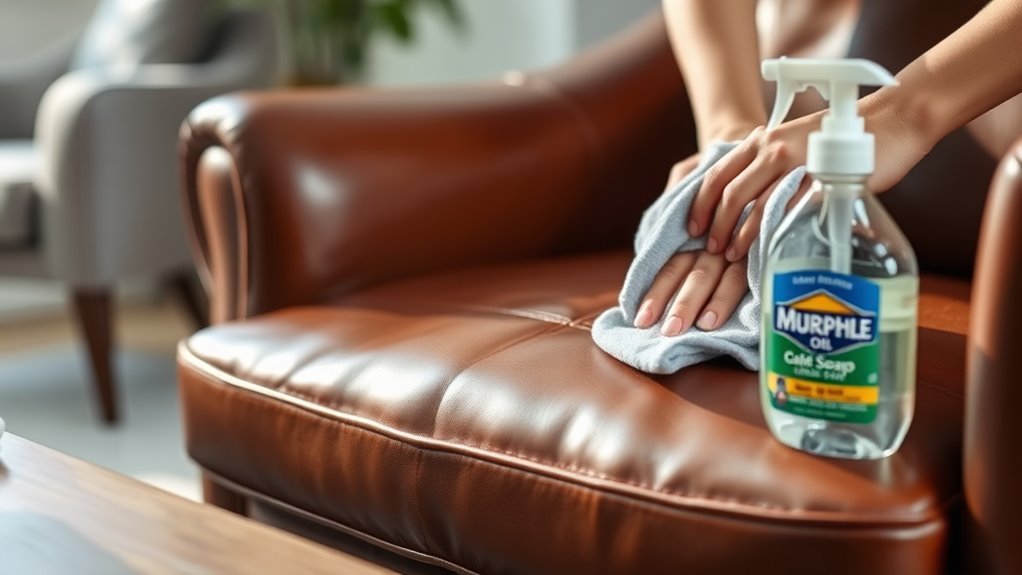
When you’re ready to clean your leather, start by diluting Murphy Oil Soap with water according to the package instructions to avoid over-saturating the material. Next, dip a soft cloth into the solution, wring it out well, and gently wipe the leather in small circular motions.
Avoid scrubbing hard; gentle strokes preserve the leather’s texture and sheen. Work on a manageable section at a time to maintain control and prevent uneven cleaning.
| Step | Action | Feeling |
|---|---|---|
| 1 | Dilute soap | Confident |
| 2 | Wring cloth thoroughly | Careful |
| 3 | Apply gently in circles | Calm |
| 4 | Clean section by section | Accomplished |
How to Remove Soap Residue From Leather
After gently cleaning your leather with Murphy Oil Soap, you’ll want to guarantee no soap residue remains behind. Soap residue can cause stiffness or discoloration if left on the surface.
To effectively remove it, follow these steps:
- Dampen a clean, soft cloth with plain water. Avoid soaking it to prevent over-wetting the leather.
- Wipe the cleaned area gently, going over it multiple times to lift away any leftover soap.
- Use a dry microfiber cloth to blot and absorb excess moisture, ensuring the leather doesn’t stay damp.
Drying and Conditioning Leather Post-Cleaning
Once you’ve removed all soap residue, let your leather air dry naturally, away from direct heat or sunlight to prevent cracking or fading. Avoid using hairdryers or heaters, as they can dry out the leather too quickly and cause damage.
After it’s completely dry, apply a high-quality leather conditioner to restore moisture and maintain suppleness. Use a soft cloth to rub the conditioner in gently, ensuring even coverage.
This step helps protect your leather from drying out and keeps it looking vibrant. Allow the conditioner to absorb fully before using or storing the item.
Frequency of Cleaning Leather With Murphy Oil Soap
Although leather is durable, you shouldn’t clean it with Murphy Oil Soap too often, as excessive cleaning can strip natural oils and cause dryness.
To keep your leather looking its best without damage, follow these guidelines:
- Clean only when necessary: Focus on cleaning leather when it’s visibly dirty or sticky rather than on a strict schedule.
- Limit deep cleaning: Use Murphy Oil Soap no more than every 3-6 months to avoid over-drying.
- Spot clean regularly: For minor spots or spills, use a damp cloth instead of a full cleaning to preserve leather’s natural moisture.
Alternatives to Murphy Oil Soap for Leather Care
When you want to maintain your leather’s condition without risking dryness from frequent use of Murphy Oil Soap, several alternative products can help. Leather conditioners with natural oils, like mink oil or neatsfoot oil, nourish and soften leather effectively.
You can also use saddle soap, which cleans while preserving moisture. For gentle cleaning, mild saddle or castile soap diluted with water works well.
Leather-specific wipes are convenient for quick touch-ups without over-wetting. Additionally, using a pH-balanced leather cleaner can prevent damage and maintain suppleness.
Whichever option you choose, always test it on a hidden area first to ensure it doesn’t discolor or harm the leather. This way, you’ll keep your leather looking great without over-relying on Murphy Oil Soap.
Frequently Asked Questions
Can Murphy Oil Soap Be Used on Suede Leather?
You shouldn’t use Murphy Oil Soap on suede leather because it can damage the delicate texture.
Instead, opt for a suede-specific cleaner to keep your suede looking fresh without risking discoloration or stiffness.
Is Murphy Oil Soap Safe for Colored or Dyed Leather?
Yes, you can use Murphy Oil Soap on colored or dyed leather, but you should always dilute it and test a small, hidden area first to avoid discoloration or damage.
Use sparingly and wipe dry afterward.
Can Murphy Oil Soap Remove Stains or Just Dirt?
Murphy Oil Soap can remove some light stains and dirt from leather, but it’s mainly designed for cleaning dirt and grime.
For tough stains, you’ll need a specialized leather cleaner to avoid damage.
Does Murphy Oil Soap Have Any Scent That Affects Leather?
Like a whisper in a quiet room, Murphy Oil Soap has a mild, pleasant scent that usually won’t affect your leather.
You won’t notice it lingering or altering your leather’s natural aroma, so you’re safe to use it.
Can Murphy Oil Soap Damage Leather if Left on Too Long?
Yes, Murphy Oil Soap can damage leather if you leave it on too long. You should always rinse it off promptly and dry the leather to prevent dryness or discoloration.
Don’t let it soak or sit.
Conclusion
So, you’re ready to treat your leather like royalty with Murphy Oil Soap? Just remember, it’s not a magic potion—test first, clean gently, and don’t drown your leather like it’s a bath bomb.
Skip the soap residue spa and always condition after. Overdoing it? Your leather won’t thank you with a standing ovation, just sad wrinkles. Use Murphy wisely, or your once-glorious leather might start looking like your grandma’s old armchair.
Keep it classy! To safely use Murphy Oil Soap on leather, always test a small area first, clean gently, avoid excessive moisture, and follow up with proper conditioning to maintain that rich, supple finish.