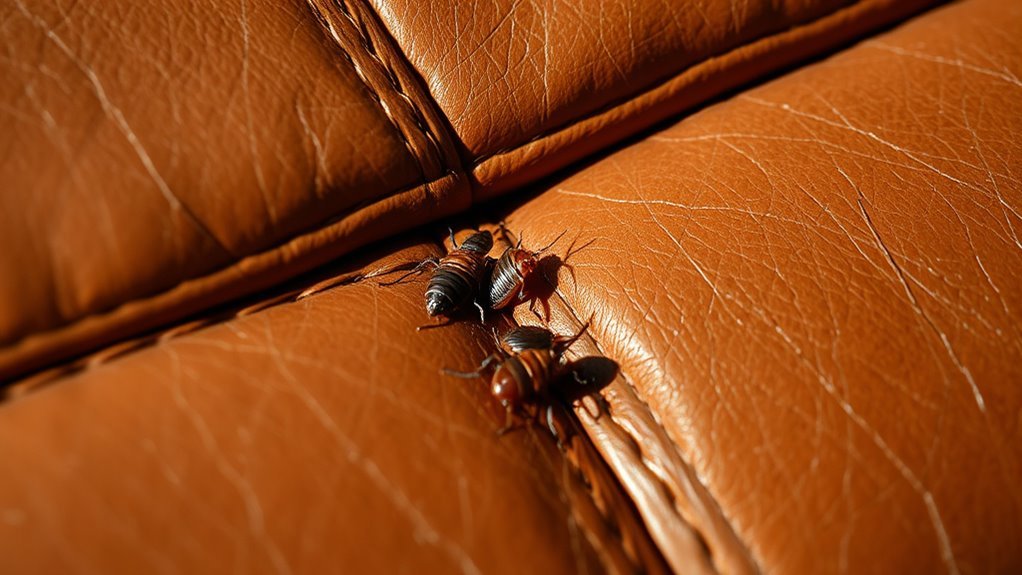
How Do Bed Bugs Go on Leather Couches?
You get bed bugs on your leather couch because they hitch rides on your clothes, bags, or secondhand items and settle into seams, creases, and cushions where they hide and feed. Bed bugs are drawn to the warmth and small cracks in your leather, making it a perfect spot for them to thrive. Human activity often spreads these pests without you noticing.
You can spot early signs like tiny rust-colored spots or shed skins on your leather couch. Being aware of these indicators can help you catch an infestation early. Keep reading to find out how to prevent and treat these pesky invaders effectively.
Common Hiding Spots for Bed Bugs on Leather Furniture

Although leather furniture may seem less inviting to pests, bed bugs can still find plenty of hiding spots in and around your leather couch. You’ll want to check seams and creases where the leather folds, as these narrow gaps provide perfect shelters.
Don’t overlook the underside of cushions or the lining beneath them. Bed bugs often hide there during the day. Bed bugs also squeeze into small cracks in the frame or underneath the couch, especially if it’s wooden or has fabric components.
Even the dust and debris that accumulate around the legs and base can harbor these pests. By carefully inspecting these common hiding spots, you can catch an infestation early and prevent bed bugs from spreading throughout your home.
How Bed Bugs Travel From Other Locations to Your Couch

Finding bed bugs tucked away in your leather couch is just one part of the problem. These pests don’t just appear out of nowhere; they hitchhike from infested locations.
Bed bugs can travel from nearby apartments, hotel rooms, or even public transportation, sneaking into your home through bags, boxes, or clothing. They’re experts at hiding in tiny crevices during transit, making it easy to overlook them.
Once they arrive, they quickly settle into your couch’s seams and folds. Understanding this travel method helps you stay vigilant about inspecting items before bringing them inside.
The Role of Human Interaction in Spreading Bed Bugs

Because bed bugs rely heavily on human activity to spread, your daily habits can unknowingly contribute to their movement from place to place. When you bring secondhand furniture, luggage, or clothing into your home, you might carry bed bugs along without realizing it.
Visiting infested places and then sitting on your leather couch can also transfer these pests. They latch onto your belongings or clothes and hitch a ride back.
Even guests who’ve encountered bed bugs elsewhere can introduce them to your couch.
By being cautious about what you bring inside and checking items carefully, you reduce the chances that bed bugs will find their way onto your leather furniture.
Your awareness and actions play a vital role in preventing their spread.
Identifying Early Signs of Bed Bugs on Leather Couches
If you want to catch a bed bug problem early, knowing the signs on your leather couch is essential. These pests are small and elusive, but a close inspection can reveal their presence before an infestation grows. Pay attention to subtle clues that signal bed bugs may have settled in.
Look for these early signs:
- Tiny reddish or rusty spots on the leather, which could be bed bug excrement
- Small, pale shed skins near seams or crevices
- Live bugs, usually about the size of an apple seed, hiding in stitching or folds
- A musty, sweet odor that’s unusual for your couch
- Fresh bite marks on your skin after sitting on the couch
Checking regularly helps you act fast and protect your furniture.
Why Leather Couches Can Still Attract Bed Bugs
Although leather might seem like an unlikely target, bed bugs are drawn to leather couches just as much as other furniture. You might think the smooth surface deters them, but bed bugs prioritize warmth, blood availability, and hiding spots, all of which your leather couch can provide.
The seams, crevices, and underneath cushions offer perfect hiding places. Plus, leather retains heat, making it inviting.
| Factor | Description | Why It Attracts Bed Bugs |
|---|---|---|
| Warmth | Leather retains body heat | Bed bugs seek warm environments |
| Hiding Spots | Seams and crevices | Provide shelter during the day |
| Proximity to Host | Often placed in living spaces | Close to humans for feeding |
| Surface Texture | Smooth but with imperfections | Allows limited grip but enough |
| Odor | Leather has subtle scents | Can mimic human scent traces |
Preventive Measures to Keep Bed Bugs Off Your Leather Couch
To keep bed bugs from infesting your leather couch, you need to act proactively and consistently. Regular checks and maintenance can make a huge difference. Start by inspecting seams and crevices for signs of bed bugs.
Keep your living area clean and clutter-free to reduce hiding spots. Use protective covers on cushions to create a barrier. When returning home from travel, immediately wash and dry clothes on high heat.
Finally, consider using natural deterrents like essential oils that repel bed bugs without damaging leather.
- Inspect couch seams and crevices regularly
- Maintain cleanliness and reduce clutter around the couch
- Use protective covers on cushions and armrests
- Wash travel clothes on high heat upon return
- Apply natural deterrents safe for leather surfaces
These steps help you stay ahead of bed bug infestations.
Effective Treatment Options for Bed Bug Infestations on Leather
When bed bugs invade your leather couch, tackling the problem quickly is essential to prevent a wider infestation. Start by thoroughly vacuuming every crevice, seams, and cushions to remove bugs and eggs.
Next, use a steam cleaner on high heat, as bed bugs can’t survive temperatures above 120°F. Be careful to avoid damaging the leather by testing a small area first.
After steaming, apply a bed bug-specific insecticide labeled safe for leather surfaces, following instructions precisely.
You can also use diatomaceous earth around the couch base; it’s a natural, non-toxic option that dehydrates bugs.
Finally, encase your couch with a bed bug-proof cover to trap any remaining pests.
Regularly inspect and repeat treatments as needed until you’re confident the infestation is gone.
Frequently Asked Questions
Can Bed Bugs Survive on Leather Without Feeding for Long?
No, bed bugs can’t survive long on leather without feeding. They need blood every few days to weeks, but leather itself doesn’t provide nourishment.
Because of this, you’ll find they hide nearby, waiting for their next meal.
Do Bed Bugs Prefer Leather Couches Over Fabric Ones?
You won’t believe it, but bed bugs don’t throw parties on leather couches! They actually prefer fabric ones because the tiny crevices offer better hiding spots.
How Quickly Can Bed Bugs Reproduce on Leather Furniture?
Bed bugs can reproduce quickly on leather furniture, laying hundreds of eggs within weeks. You’ll notice their population doubling every 16-20 days, so acting fast to treat your leather couch is essential to prevent infestations.
Are Certain Leather Types More Resistant to Bed Bugs?
Imagine a knight’s armor—some leather types, like full-grain, act tougher against bed bugs than softer, porous ones.
You’ll find they resist infestations better, making it harder for bugs to latch onto and hide in them.
Can Professional Heat Treatments Damage Leather Couches?
Yes, professional heat treatments can damage leather couches if not done carefully. You should guarantee the temperature stays within safe limits to avoid drying, cracking, or discoloring the leather during the process.
Conclusion
Think of bed bugs like uninvited guests slipping through cracks in your favorite leather couch. Just as one unnoticed hole in a dam can cause flooding, a tiny hiding spot lets these pests sneak in and multiply.
Remember, even leather isn’t a fortress—they hitch rides on your clothes or bags. Stay vigilant, check early signs, and act fast.
With the right prevention and treatment, you can keep your leather couch—and peace of mind—intact. Understanding how bed bugs go on leather couches is key to protecting your home.