What Is Microfiber Leather? Definition, Benefits & Uses Explained
Microfiber leather is a synthetic material crafted from ultra-fine polyamide fibers coated with polyurethane. This innovative construction is designed to look and feel like real leather, making it a popular alternative in various industries.
It’s durable, water-resistant, and resists peeling and cracking better than many faux leathers. Due to its flexibility and ease of care, you’ll find microfiber leather used in car interiors, fashion accessories, and furniture.
If you want to understand how microfiber leather stacks up to natural leather and other synthetic options, there’s plenty more to explore. This material offers a blend of aesthetics and functionality that appeals to many consumers.
Definition and Composition of Microfiber Leather

Although it looks and feels like genuine leather, microfiber leather is a synthetic material made from ultra-fine polyamide fibers, such as nylon or polyester, bonded together and coated with a polyurethane layer. You’ll find that its base fabric is created by weaving or knitting these microfibers, which come from melting and extruding polymers into very thin fibers.
This precise composition allows the material to mimic natural leather closely. The surface is often embossed with various textures and colors, giving it a realistic leather grain appearance. The polyurethane coating adds durability, water resistance, and that signature leather-like feel.
Unlike genuine leather, microfiber leather’s synthetic nature means it’s vegan and cruelty-free, without relying on animal hides. So, its unique fiber and coating structure define microfiber leather’s impressive composition.
Key Characteristics and Physical Properties
You’ll notice microfiber leather feels smooth and soft, often mimicking natural leather textures. It’s built to last, resisting cracks and wear while staying lightweight and flexible.
Plus, it breathes well and handles moisture without getting damaged, making it great for everyday use.
Texture and Feel
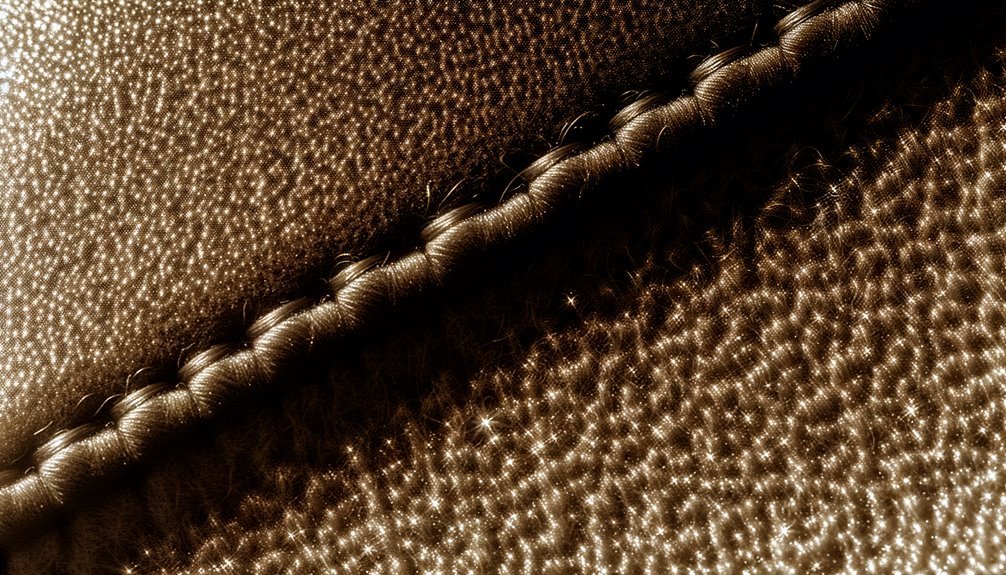
When you touch microfiber leather, you’ll notice its smooth, soft surface that closely mimics natural leather, often enhanced with embossing for added texture. The microfiber leather texture offers a uniform surface free from natural pores, giving it a sleek, synthetic leather texture.
Despite its plastic-like texture, it feels surprisingly velvety and luxurious, sometimes resembling suede or genuine leather depending on the finishing. This lightweight material provides a smooth feel that’s both flexible and comfortable, making it a practical leather alternative.
Its thinness, ranging from 0.002 to 0.004 inches, contributes to its flexibility while maintaining a soft surface. Overall, microfiber leather combines the appeal of an embossed finish with the benefits of a consistent, tactile experience that’s ideal for various applications.
Durability and Strength
Because microfiber leather resists cracking, peeling, and wear, it stands out as a highly durable material for everyday use. You’ll appreciate its stable surface, which offers excellent abrasion resistance, keeping it looking fresh despite frequent contact and friction.
Its impressive tear resistance, with a score around 7, highlights its strong tensile strength and flexural strength, allowing it to withstand stretching and bending without damage. This durability makes microfiber leather ideal for long-lasting applications in various industries.
Plus, its superior hydrolysis resistance ensures the material maintains integrity even when exposed to moisture. When you choose microfiber leather, you get a product with outstanding wear resistance and strength, designed to hold up over time while maintaining a stable, reliable surface that won’t easily degrade or lose its appeal.
Breathability and Water Resistance
Although microfiber leather isn’t fully waterproof, its tightly woven fiber structure allows for adequate breathability, letting some air pass through the material. This breathability and air permeability stem from the synthetic fibers’ unique fabric structure, enabling water vapor to escape and enhancing comfort.
The polyurethane coating adds water resistance, protecting against moisture and stains without sacrificing durability. While this coating prevents liquid absorption, it doesn’t make microfiber leather suitable for heavy or prolonged water exposure, which can damage the material over time.
Compared to PVC-based faux leathers, microfiber leather offers superior breathability, although it may not match genuine animal leather. Overall, its balance of breathability and water resistance makes microfiber leather a practical choice where moisture protection and comfort are priorities.

Common Applications and Uses
Where can you find microfiber leather in everyday life? This versatile material has numerous microfiber leather applications, making it a go-to choice for many products. You encounter it in automotive upholstery, especially car seats and interior panels, thanks to its durability and stain resistance.
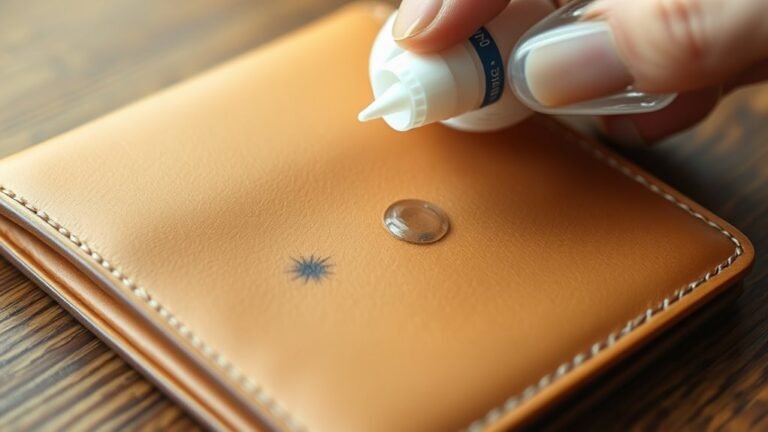
It also shines in fashion accessories like handbags and wallets, where its customizable colors and affordability stand out. Finally, furniture upholstery benefits from microfiber leather’s easy maintenance and long-lasting surface.
- Automotive upholstery: car seats and dashboards
- Fashion accessories: handbags, wallets, belts
- Furniture upholstery: sofas, chairs, office furniture
Besides being a vegan leather option, microfiber leather offers waterproof properties, high resistance to wear, and serves as an eco-friendly alternative to natural leather.
Comparison With Natural Leather
You’ll notice microfiber leather frequently replaces natural leather in many products due to its practicality and cost. Made from synthetic materials like polyester and nylon, microfiber leather offers a consistent texture without the natural pores found in real leather derived from animal hides.
While real leather boasts superior breathability and develops a unique patina over time, microfiber leather maintains a uniform appearance and is lighter in weight. Microfiber leather also stands out for its durability and cost-effective nature, requiring less maintenance compared to real leather.
However, it lacks the distinct scent and irregular grain patterns that characterize genuine leather. Overall, microfiber leather provides a practical, low-maintenance alternative to real leather, making it an appealing choice for those seeking leather-like qualities without the higher cost and upkeep.
Differences Between Microfiber and Other Synthetic Leathers
When you compare microfiber leather to other synthetics like PVC, PU, and micro-suede, you’ll notice key differences in breathability, flexibility, and durability.
Microfiber stands out with better resistance to cracking and peeling than PU and offers more comfort than PVC. Understanding these contrasts helps you choose the right material for your needs.

Microfiber Vs PVC Leather
How does microfiber leather stack up against PVC leather in everyday use? Both are synthetic materials, but microfiber leather outperforms PVC leather in durability, breathability, and flexibility. Its manufacturing process bonds fine polyester or nylon fibers with polyurethane, creating a material that resists abrasion and water better than PVC leather, which tends to crack and peel.
Consider these key differences:
- Durability & Feel: Microfiber leather is more resistant to wear and mimics genuine leather’s smooth texture, while PVC leather feels stiffer and plasticky.
- Environmental Impact: Microfiber leather is more eco-friendly due to its advanced production, whereas PVC leather relies on less sustainable plastic layers.
- Performance: Microfiber offers superior water resistance and UV stability, making it ideal for long-term use compared to PVC leather’s quicker degradation.
Choosing microfiber leather means opting for lasting quality and sustainability.
Microfiber Vs PU Leather
Although both microfiber and PU leather are popular synthetic alternatives to genuine leather, microfiber leather stands out for its superior durability and breathability. Made by bonding fine synthetic materials like polyester or nylon with a polyurethane coating, microfiber leather offers greater abrasion resistance and wear resistance than PU leather, which typically involves coating woven or nonwoven fabrics.
You’ll notice microfiber leather is more breathable, making it ideal for clothing and upholstery. Plus, it’s more environmentally friendly and less prone to cracking or peeling over time, unlike PU leather that can degrade faster with moisture exposure.
While microfiber leather usually costs more, its enhanced performance and longevity make it a smart choice if you want durable, high-quality leather alternatives.
Microfiber Vs Micro-Suede
Understanding the differences between microfiber and micro-suede can help you choose the right synthetic leather for your needs. Both are synthetic leather materials, but their texture, finish, and durability set them apart.
Microfiber is made from finely woven polyester and nylon fibers, offering a smooth or embossed finish with superior durability and stain resistance. Micro-suede, a specialized type of microfiber, features a soft, velvet-like texture and matte appearance designed to mimic genuine suede, making it ideal for upholstery and fashion.
Here are three key differences:
- Texture & Finish: Micro-suede has a plush, suede-like velvet finish; microfiber varies from smooth to embossed.
- Durability: Microfiber is generally tougher and more wear-resistant.
- Appearance & Use: Micro-suede emphasizes a suede look, perfect for aesthetic appeal in upholstery.

Care and Maintenance of Microfiber Leather
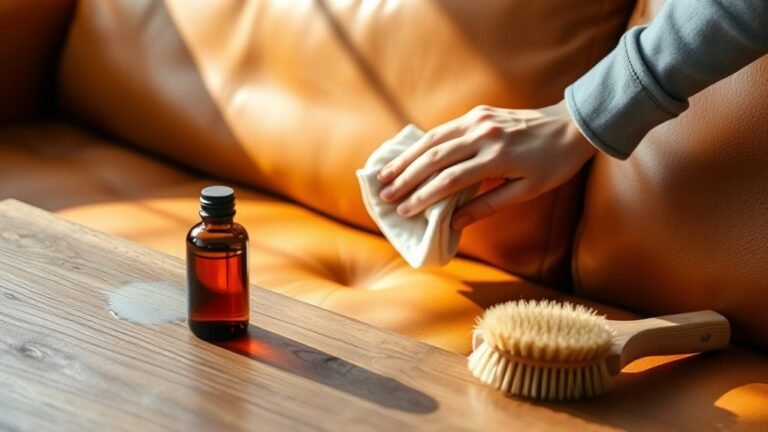
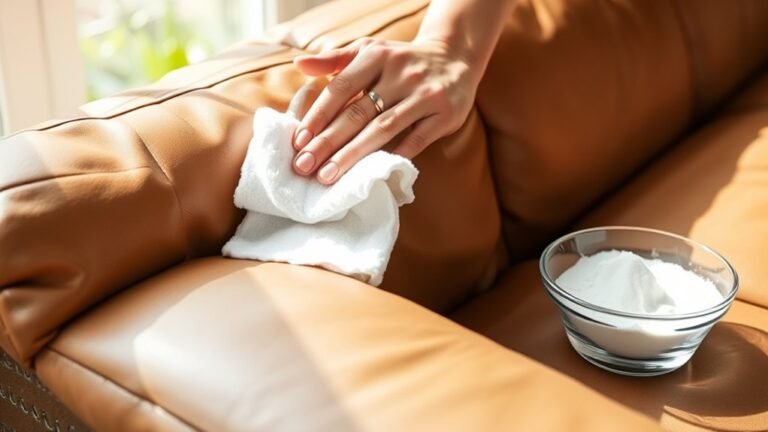
Since microfiber leather combines durability with a soft texture, caring for it properly makes sure it stays looking its best. You can easily clean dirt and stains by wiping the surface with a damp cloth or a mild soap solution.
For stubborn stains, gently scrub with a soft brush and mild cleaning agents to protect the coating. Regular conditioning with a specialized leather or microfiber conditioner supports crack prevention by maintaining flexibility.
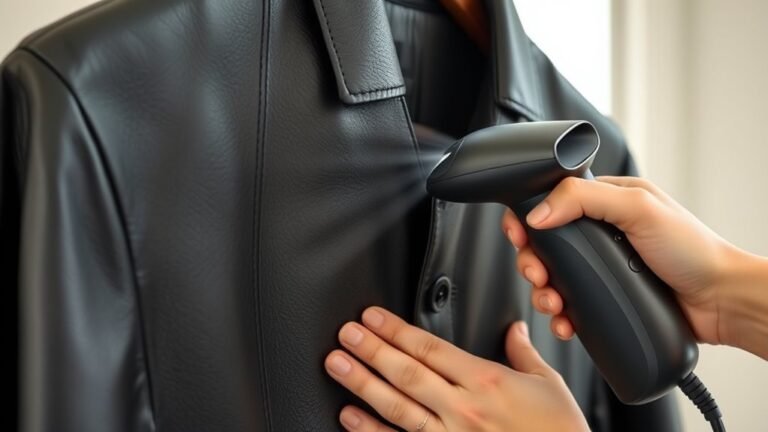
Avoid exposure to sunlight and excessive heat, as these reduce heat resistance and cause fading or cracking. When not in use, store your microfiber leather items in a cool, dry place, ideally covered with a breathable cloth.
Proper care and storage extend the lifespan of your microfiber leather products, keeping them durable and attractive for years.
Frequently Asked Questions
Is Microfiber Leather Good Quality?
Yes, microfiber leather is good quality. You’ll get durable, stain-resistant material that feels flexible and breathable.
It’s designed to last, resist wear, and maintain a consistent, premium look compared to many other synthetic leathers.
How Long Does Microfiber Leather Last?
Microfiber leather can last you 5 to 10 years, sometimes even longer if you treat it like royalty. Keep it clean, avoid harsh sun and water, and it’ll stay looking sharp without cracking or peeling.
What Are the Disadvantages of Microfiber?
You’ll find microfiber leather less breathable, causing discomfort in heat, and it’s not fully waterproof, so it can degrade with water exposure.
Plus, it lacks natural aging and may release chemicals harmful to health and environment.
Is PU Leather Better Than Microfiber Leather?
No, PU leather isn’t better than microfiber leather. You’ll find microfiber lasts longer, resists water and wear better, and stays flexible without cracking.
Plus, it’s more eco-friendly and looks nicer over time, making it the smarter choice.
Conclusion
Microfiber leather offers you a durable, eco-friendly alternative to natural leather, combining strength and softness like a well-worn pair of shoes. It’s versatile, easy to maintain, and often more affordable, making it a smart choice for everyday use.
Whether you’re choosing it for fashion, furniture, or accessories, microfiber leather gives you the look and feel you want without compromising on quality or care. You’ll appreciate its balance of style and practicality.
In conclusion, microfiber leather is an excellent option for those seeking sustainable, high-quality leather alternatives. Its durability, affordability, and easy maintenance make microfiber leather ideal for a variety of uses, ensuring you enjoy both comfort and style.