How to Build a Leather Chair and Ottoman: Step-by-Step Guide
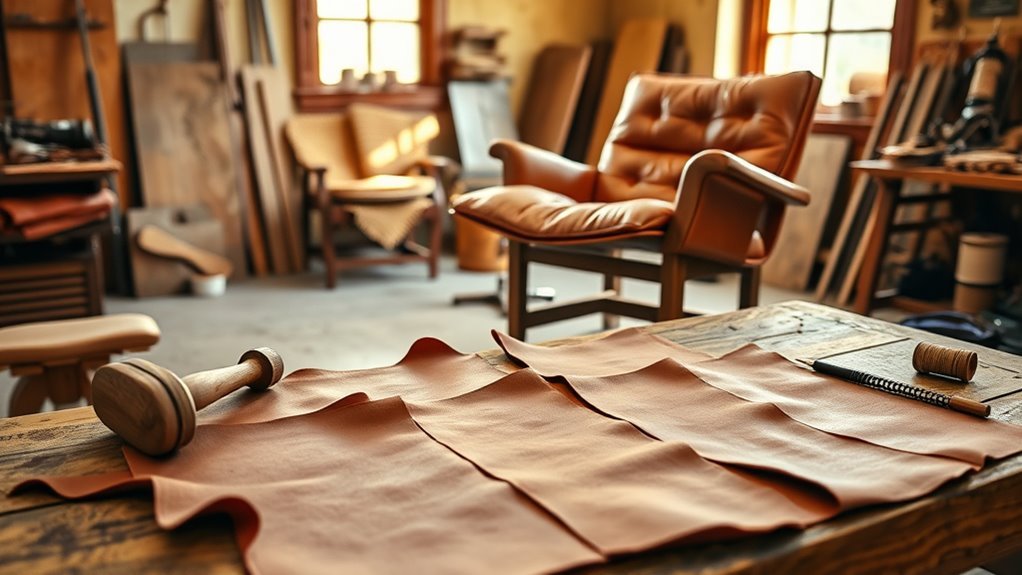
To build a leather chair and ottoman, start by choosing high-quality full-grain leather and durable hardwood like oak for your frame. Selecting the right materials is crucial for durability and aesthetics.
Measure your space carefully and design for comfort and style.
Cut leather panels with extra for wrapping, then upholster tightly, stapling securely for a smooth finish. Pay attention to detail to ensure a professional look.
Assemble all parts firmly, adding legs and optional storage features for functionality.
Proper care, including conditioning and avoiding sun exposure, will keep your leather chair and ottoman looking great for years. Regular maintenance preserves the leather’s softness and color.
Continue learning to master each essential step for a lasting piece.
Selecting the Right Leather and Materials

How do you choose the perfect leather for your chair and ottoman? Start by selecting high-quality full-grain or top-grain leather for durability and a premium look. Avoid bonded or lower-grade options that won’t last.
Check the leather’s thickness; it should be around 1.0 to 1.2 mm to stay sturdy yet flexible for upholstery. Pay attention to color and finish; neutral tones blend well with most decor, while distressed finishes add vintage charm.
Use a leather-buying guide to understand grain, texture, and grade distinctions, which helps you pick the best Leather Hide for your project. For budget-friendly DIY leather projects, consider leather remnants or closeouts from suppliers like The Leather Hide Store. They offer quality materials without breaking the bank.
Planning and Designing Your Chair and Ottoman

Start by measuring the space where your chair and ottoman will fit to make certain the right size and proportions. Next, choose materials and styles that match your taste and existing decor for a cohesive look.
Finally, plan functional features like cushion thickness and storage options to make your furniture both comfortable and practical.
Space and Size Considerations
Where you place your leather chair and ottoman can make all the difference in comfort and flow. Start by taking precise measurements of your available space to determine the maximum size your furniture can be.
Keep furniture scale in mind; your chair and ottoman should complement the room’s size without overwhelming it or feeling too small. Don’t forget to account for clearance; leave at least 18 inches around each piece to allow easy movement and foot traffic.
Also, consider the seat height, typically 16-20 inches for chairs, with ottomans slightly lower for comfort. Using these measurements guarantees your chair and ottoman will fit well, maintain proportion, and provide the functionality you want in your living space.
Style and Material Selection
What makes your leather chair and ottoman truly stand out is the careful selection of style and material. Start by choosing high-quality leather that fits your aesthetic. Distressed leather adds character, while smooth or vintage options provide different vibes.
Consider color and texture to complement your space. Measure your chair and leather ottoman precisely, adding extra inches for wrapping and seams to ensure full coverage.
Use heavy-duty upholstery techniques like reinforced seams and strong stitching to boost durability. Incorporate design details such as contrasting stitching, piping, or tufting to personalize your piece.
Finally, assure your frame uses sturdy hardwood with secure joinery to support weight and maintain shape over time. This thoughtful planning guarantees a stylish, long-lasting leather chair and ottoman you’ll love.
Functional Features Planning
Although selecting the right style and materials is essential, planning the functional features of your leather chair and ottoman guarantees they meet your daily needs. Start by evaluating how you’ll use them, considering seating comfort, storage options, and adjustability.
Focus on ergonomic elements like seat height, back support angle, and armrest placement to ensure lasting comfort. Don’t overlook functional additions such as built-in storage compartments or removable cushions to boost usability.
Choose durable materials that endure daily wear while matching your aesthetic. Finally, create detailed sketches or digital models to visualize how these features fit within your space and design.
This thoughtful planning ensures your chair and ottoman are not only stylish but practical and comfortable for everyday use.
Constructing the Hardwood Frame

You’ll start by choosing strong hardwood like oak or maple to guarantee your frame lasts. Then, you’ll use precise joinery techniques such as mortise and tenon to assemble the pieces securely.
Finally, reinforcing corners and adding braces will keep your frame stable and durable for everyday use.
Hardwood Selection Criteria
When selecting hardwood for your chair and ottoman frame, prioritize strength and stability to guarantee lasting durability. Choosing the right hardwood with proper grain stability and moisture content is essential.
Here’s what to focus on:
- Pick hardwoods like oak, maple, or cherry for their toughness and resistance to warping.
- Use kiln-dried lumber with 6-8% moisture content to avoid cracking and ensure stability.
- Opt for quarter-sawn or rift-sawn boards to maintain consistent grain stability and enhance appearance.
- Inspect boards for straightness, minimal knots, and uniform density to prevent weak spots.
Frame Joinery Techniques
Since a sturdy frame forms the backbone of your leather chair and ottoman, mastering strong joinery techniques is essential. Start by choosing between mortise and tenon or dowel joints for connecting hardwood pieces.
Mortise and tenon joints offer traditional strength, while dowel joints require drilling precise holes and inserting glued hardwood dowels for tight, durable connections. During assembly, keep everything aligned and clamp the frame to ensure it stays square.
To reinforce corners, attach corner blocks. Secure them with glue and nails or screws for added stability. You can also use pocket hole screws for angled joins, keeping fastenings hidden yet strong.
Focus on accuracy and solid joinery, and your frame will provide a reliable foundation for your leather chair and ottoman.
Structural Reinforcement Methods
After mastering strong joinery techniques, it’s time to focus on reinforcing your hardwood frame to withstand daily use. Using Appalachian hardwoods like oak or maple sets a solid foundation. To boost strength, rely on dowel joinery combined with corner blocking, securing them with glue and screws.
Adding steel reinforcement plates at critical joints offers extra durability. Here’s how to proceed:
- Integrate dowel joinery to tightly connect frame components.
- Install corner blocking to prevent movement at stress points.
- Apply steel reinforcement plates for unmatched joint stability.
- Use cross-bracing inside the frame to avoid racking and keep everything square.
These steps ensure your chair and ottoman stand firm, ready for comfort and longevity.
Cutting and Preparing Leather Pieces
Although cutting leather requires precision, you’ll want to leave 3-4 inches of extra material on each side to wrap and staple it securely around the frame. Start your preparation by measuring and marking the leather panels carefully.
Leave 3-4 inches extra leather on each side for secure wrapping and stapling around the frame.
Use sharp scissors or a rotary cutter to guarantee clean, straight edges for a professional finish. During cutting and preparation, keep your tools sharp to avoid jagged edges that can weaken the material.
Once cut, you’re ready to upholster, but first, focus on how the leather will wrap tightly with no wrinkles. Remember, the extra material is essential for pulling the leather taut and stapling it firmly.
Proper cutting and preparation set the foundation for a smooth, durable leather covering on your chair and ottoman.

Upholstering the Chair and Ottoman
How do you transform raw leather pieces into a sleek, upholstered chair and ottoman? Start by carefully removing old fabric and staples, exposing the frame and padding. Then, measure and cut your leather, leaving extra for seams and corners to guarantee a perfect fit.
Follow these steps for upholstering your furniture:
- Secure the leather to the frame, stapling from the center outward while pulling tight to avoid wrinkles.
- Use diagonal tucks or hospital corners for smooth, professional edges.
- Double-check all seams for snugness and adjust as needed.
- Reattach any remaining parts like legs or trim to complete the look.
With patience and precision, upholstering your leather furniture will give it a refined, polished finish.
Assembling the Components and Adding Storage
Once you’ve upholstered the chair and ottoman with care, it’s time to bring all the components together and add functional storage. Start by assembling the wooden frame securely, using glue, dowels, and screws.
Attach the upholstered panels, wrapping the leather tightly and stapling underneath for a clean look. Incorporate storage by adding a hinged or removable lid that fits perfectly into the frame, providing convenient access.
Finally, install the feet that complement the upholstery and seal exposed edges for durability.
| Step | Action | Tip |
|---|---|---|
| 1. Frame Assembly | Glue, dowel, screw joints | Ensure tight, stable joints |
| 2. Upholstery | Wrap leather, staple underside | Keep leather taut |
| 3. Storage | Add hinged/removable lid | Fit snugly for easy access |
| 4. Feet Installation | Attach legs to base | Match style with upholstery |
| 5. Sealing | Seal edges | Protect wood and leather |
Finishing Touches and Customizing Legs
Where do you start when adding the finishing touches to your leather chair and ottoman? Customizing the legs is a great place to begin. Choose leg styles—wood, metal, or upholstered—that complement your decor.
Then, consider staining wooden legs to match your leather upholstery and room colors. Secure the legs firmly using the right hardware like screws or bolts, ensuring stability and balance. Here’s how to perfect the finish:
- Select leg styles that reflect your personal taste and room aesthetic.
- Apply staining carefully for a cohesive look.
- Attach legs with sturdy hardware, checking for levelness.
- Adjust leg height to achieve your ideal comfort and style. These finishing touches will make your furniture truly stand out.
Caring for Your Leather Furniture
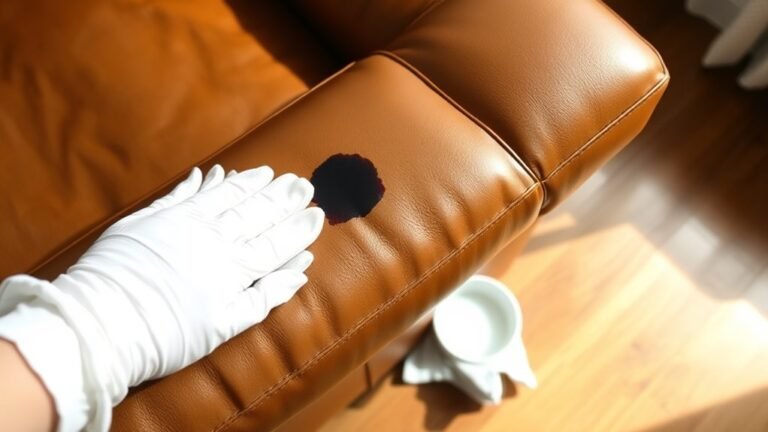
Although leather furniture offers timeless elegance and durability, it requires regular care to keep it looking its best. You should dust and wipe your chair and ottoman with a soft, dry cloth frequently.
Use a leather cleaner and leather conditioner every 6 to 12 months to maintain suppleness and prevent cracking. Always avoid direct sunlight and heat sources to protect against fading and drying.
For stain prevention, blot spills immediately with a clean, damp cloth and consider using leather-specific protectants to repel water and stains.
| Task | Frequency | Tip |
|---|---|---|
| Dust & Wipe | Weekly | Use a soft, dry cloth |
| Clean & Condition | Every 6-12 months | Use a leather cleaner & conditioner |
| Stain Prevention | As needed | Blot spills immediately; use protectants |
Frequently Asked Questions
What Fabric Pairs Well With Leather?
You’ll find neutral tones like beige and gray pair perfectly with leather, while textured fabrics add depth. Soft velvet creates luxury, and natural fibers like cotton offer a cozy, casual vibe that complements leather beautifully.
How to Make a Wooden Chair Step by Step for Beginners?
Imagine you’re crafting a sturdy oak chair; you start by cutting precise pieces, then join them with dowels and glue.
Sand thoroughly, apply your favorite stain, and finally, attach legs and any armrests you want.
Is It Okay to Mix Leather and Fabric Furniture?
Yes, you can mix leather and fabric furniture. Just coordinate colors and textures carefully to maintain balance and harmony.
This blend adds visual interest and can help you manage your budget without compromising style.
How to Protect a Leather Ottoman?
You’ll want to coat your leather ottoman with conditioner and protector spray, like shielding a treasure chest from sun and storms. Wipe it gently, avoid heat, and tackle spills fast to keep it looking flawless.
Conclusion
Now that you’ve crafted your leather chair and ottoman with care, remember that patience and precision make perfect. Every step—from selecting quality leather to adding those finishing touches—brings you closer to a piece that’s truly yours.
As the saying goes, “Measure twice, cut once.” With this mindset, your handcrafted furniture will not only look stunning but also stand the test of time.
By following these tips on how to build leather chair and ottoman, you can create a comfortable and stylish addition to your home that lasts for years to come.