How to Put a Belt Buckle on a Leather Belt: Step-by-Step Guide
To put a belt buckle on a leather belt, first choose a buckle that fits a belt about 1.5 inches wide and matches the belt’s style. Selecting the right belt buckle is essential for both function and fashion.
Then, slide the belt end through the buckle’s hinge, positioning it where you want the fit.
Insert the prong into the correct hole to secure the buckle snugly.
Make sure it sits firmly without shifting for comfort and stability.
Follow these steps, and you’ll find easy ways to customize and adjust your belt perfectly.
Selecting the Right Belt and Buckle

Before you attach a buckle, make sure you pick a belt about 1.5 inches wide to fit standard buckles. Choosing the right belt and buckle is essential for both function and style.
Start by selecting a leather belt that matches the buckle’s finish and design, ensuring a cohesive look. Check the buckle style, like center bar or heel bar, to confirm it suits your belt type for a secure fit.
Choose a leather belt that complements the buckle’s finish and style for a perfect, secure match.
Measure your waist or an existing belt to get the right length and hole placement before proceeding. Also, verify the buckle’s attachment method, whether screw, snap, or prong, fits your leather belt and preferred fastening style.
This careful selection will make attaching the buckle easier and guarantee your belt looks great.
Preparing Your Belt for Buckle Attachment

Once you’ve selected the right belt and buckle, the next step is to prepare your belt for attachment. Start by measuring your waist to determine the correct belt length. Choose a belt strap that fits comfortably and doesn’t exceed 1.5 inches in width to guarantee compatibility with standard buckles.
If your belt strap has pre-punched holes, check if their placement suits your waist size. If not, mark new hole placements about 1¼ inches apart for a perfect fit. Finally, trim the belt end to your desired length and finish it neatly, either with edge paint or by using a circular punch for a polished look.
Proper preparation ensures a smooth buckle attachment and a professional appearance.
Attaching a Standard Belt Buckle

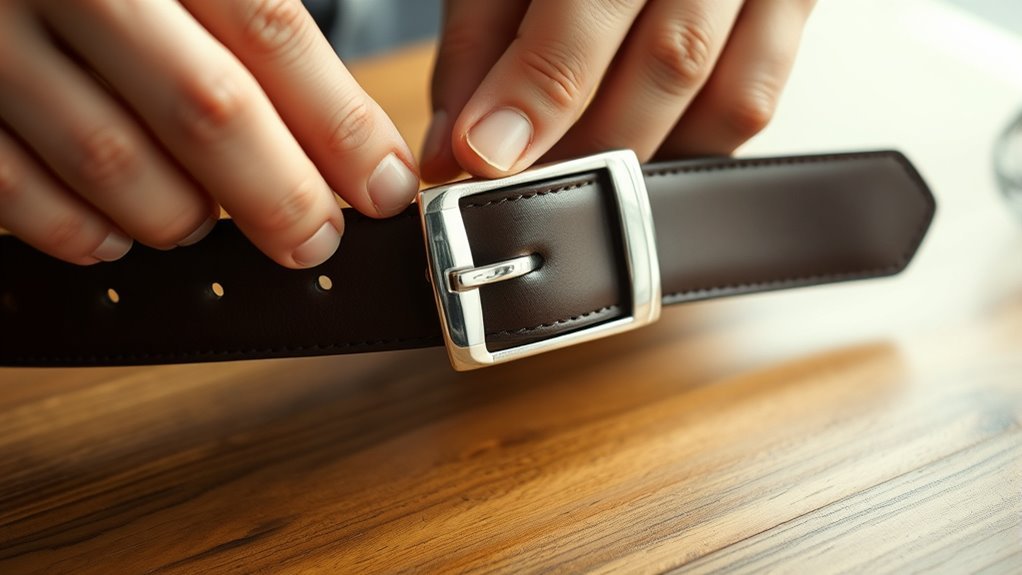
Although attaching a standard belt buckle might seem straightforward, doing it correctly guarantees a secure fit and polished look. Start by pulling the leather belt through the buckle hinge, positioning the buckle where you want the fit to be.
Slide the belt fully through the hinge, ensuring the buckle lies flat against the leather belts. Next, wear the belt normally and align the buckle so the hinge centers over the belt layers.
Insert the buckle’s prong into the appropriate hole to secure it in place. Finally, adjust the buckle to prevent shifting and make sure the belt fits comfortably.
Using the Shortcut Method for Buckle Attachment
If your belt buckle has a hinge that slides over the belt, you can use the shortcut method to attach it quickly. First, check the buckle’s hinge to make certain it fits over the belt. Slide the buckle onto the belt from the end, fitting the hinge carefully.
Then, pull the belt through and position the buckle where you want it, centered. Insert the prong into a belt hole to secure the buckle without threading through the standard hinge. This shortcut saves time and effort, making buckle attachment easy.
| Step | Action |
|---|---|
| 1. Verify Fit | Check hinge fits over belt |
| 2. Slide Buckle | Attach buckle via hinge |
| 3. Secure Prong | Insert prong into belt hole |
Adjusting Fit and Ensuring Stability
Once you attach the buckle, make certain it sits securely and the prong fits snugly into the belt hole without causing discomfort. Check for any unwanted movement and tighten or reposition the buckle if it feels loose or uneven.
Keeping the buckle stable ensures both comfort and durability as you wear your belt.
Achieving Secure Buckle Placement
To achieve a secure buckle placement, you need to center the buckle on the belt and align the hinge properly over the leather layers for maximum stability. After attaching the buckle, gently tug it to test its movement and ascertain it doesn’t shift or loosen.
If it feels unstable, make necessary adjustments by repositioning the buckle so the prong fits securely into the belt hole without any wobble. Verify that both the hinge and prong engage correctly and that the buckle lies flat against the belt for a snug fit.
Regularly inspect the attachment point, tightening screws or realigning the buckle as needed to maintain consistent stability. These steps guarantee your buckle stays firmly in place, providing durability and comfort throughout wear.

Proper Prong Hole Use
Although attaching the buckle securely is essential, properly using the prong holes plays an equally important role in keeping your leather belt stable and comfortable. Make sure the prong fits into a well-aligned hole to prevent slipping and maintain a snug fit.
Use a revolving punch to create clean, evenly spaced holes about 1¼ inches apart, ensuring consistent alignment. Adjust the prong placement as needed for comfort or changes in waist size, but avoid forcing it into stretched or damaged holes.
Always check that the prong fully passes through the hole and the buckle sits centered. Regularly inspect the holes for wear and reinforce or replace them if the buckle starts to shift, preserving both fit and belt longevity.
Preventing Buckle Movement
Properly securing the prong in the belt holes sets the foundation for preventing buckle movement. Start by aligning the buckle correctly over the belt holes before tightening to avoid shifting during wear.
Choose a belt hole that offers a snug but comfortable secure fit; this reduces unwanted buckle movement. After attaching the buckle, check its position and adjust if it shifts, ensuring it sits centered and stable.
Make sure the hinge and buckle are firmly fastened, and periodically inspect them for any loosening over time. Be careful not to overtighten the belt, as excessive tension can cause the buckle to move or become unstable.
Following these steps helps you maintain a secure fit and keeps your buckle stable throughout the day.
Customizing Your Belt With Decorative Elements
When you want to give your leather belt a unique touch, adding decorative elements like conchos and rivets can transform its look instantly. For effective customization, start by measuring your belt carefully to space conchos and decorative rivets evenly, usually 1-2 inches apart.
Use a leather punch or rotary punch to create clean holes so you don’t damage the leather. Choose screw-back or rivet-back conchos for easy swapping and flexibility in design.
Secure the elements firmly with screws or rivets, ensuring a balanced, polished appearance. To elevate the style further, consider adding edge paint or metallic accents around the hardware. This simple customization makes your belt stand out while maintaining durability and a professional finish.
Frequently Asked Questions
How Do You Attach a Belt Buckle to a Leather Belt?
You attach a belt buckle by threading the leather belt through it, then securing it with the prong into a hole or tightening screws if it’s screw-attached.
Make sure it’s centered and firmly in place for comfort.
What Is the Belt Buckle Rule?
The belt buckle rule says you should wear the buckle on your left side when facing forward. This keeps it easy to access, looks neat, and follows traditional style etiquette for most outfits.
Do Belt Buckles Go on All Belts?
Not all belts welcome buckles; some resist like a locked door. You’ll find that only belts with pre-punched holes or designed attachments can hold a buckle, so check your belt’s style before trying to add one.
How to Put on a Belt With No Buckle?
You thread the belt through your pants first, then fold the end back to create a loop. Tighten by pulling the strap snug, and secure it with a keeper or by tucking in the excess.
Conclusion
Now that you know how to put a belt buckle on a leather belt, you might wonder if the old “belt buckle must always be stitched” theory holds true. Turns out, with the right preparation and tools, you can securely attach a buckle without stitching, especially with snap or screw fasteners.
So, go ahead—customize your belt confidently, knowing you’re combining tradition with practical modern methods for a perfect fit and style. Using these techniques for how to put a belt buckle on a leather belt ensures durability and a professional look every time.