How to Get Stains Out of Leather: Easy and Effective Cleaning Tips
To get stains out of leather, start by identifying your leather type and the kind of stain you’re dealing with—whether it’s water, oil, ink, or blood. Each type of stain requires different care to effectively remove it without damaging the material.
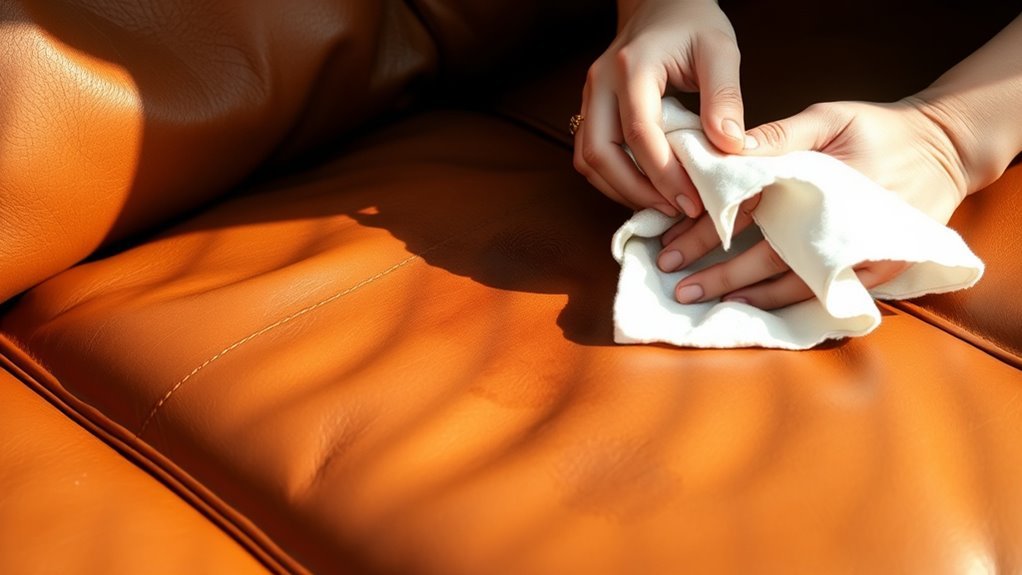
Blot water stains gently with a dry cloth to absorb moisture.
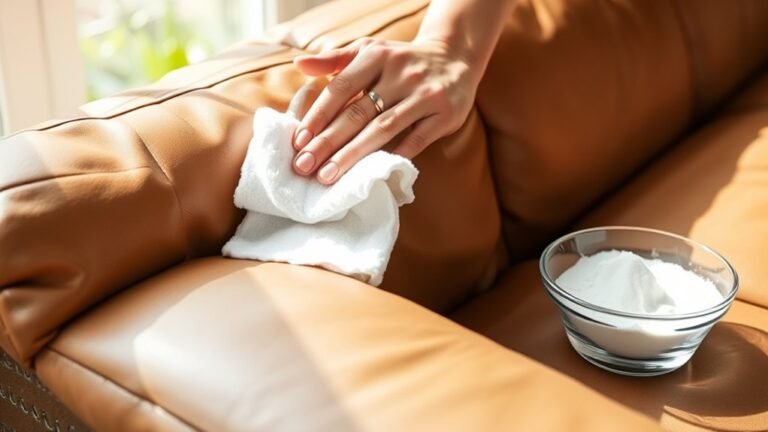
For oil stains, sprinkle talcum powder and let it sit to soak up the grease.
Use cold water carefully to treat blood stains.
Always test any cleaner on a hidden area first to avoid discoloration or damage.
After cleaning, condition your leather to keep it soft, supple, and protected from future stains.
By mastering these basics, you’ll maintain your leather’s appearance and durability, ensuring it looks great and is ready for tougher challenges ahead.
Why Proper Leather Care Matters

Although leather is durable, proper care is essential to keep your items looking great and lasting longer. When you regularly clean and condition your leather, you preserve its natural oils and finish, which helps prevent cracks, tears, and discoloration.
Proper leather care also plays a vital role in managing stains on leather. If you address stains quickly and use the right cleaning methods, you reduce the chance of permanent damage. Using a quality leather conditioner during maintenance nourishes the material, keeping it supple and resilient.
Identifying Different Types of Leather

Before you tackle stains, you need to know if your leather is real or faux, since each reacts differently to cleaning. Understanding the leather’s finish, whether smooth, suede, or nubuck, also helps you select the right treatment.
Identifying these types ensures you don’t accidentally damage your leather while cleaning it.
Real Vs Faux Leather
When you want to remove stains from leather, the first step is knowing whether you’re dealing with real or faux leather. Genuine leather comes from animal hide, showing natural imperfections and a distinct natural grain. It’s thicker, more durable, and develops a rich patina over time.
You’ll also notice a unique leather smell, unlike the chemical odor that faux leather often emits. Faux leather, made from synthetic material like polyurethane or PVC, has a uniform, plastic-like surface. It’s lighter and more affordable but tends to crack or peel as it ages.
Identifying these differences helps you choose the right cleaning method and avoid damage, ensuring your leather stays in great condition for years to come.
Leather Finish Types
Understanding the different leather finish types is essential for effective stain removal and maintenance. You’ll encounter various finishes like aniline leather, which is untreated or minimally treated, showcasing natural pores and markings, making it delicate leather that requires gentle cleaning techniques.
On the other hand, pigmented leather features a protective topcoat, enhancing durability and stain resistance but masking the natural grain. Surface-roughened finishes such as suede and nubuck need extra care because their texture can trap dirt easily.
Each leather finish has a distinct surface treatment, so correctly identifying the type helps you choose the right stain removal method without risking damage. Whether your leather is smooth, matte, glossy, semi-aniline, or pigmented, adapting your cleaning approach guarantees your leather stays in great condition.
General Tips for Removing Common Leather Stains

Before you start cleaning, make sure you know what kind of stain you’re dealing with to avoid making it worse. Always test your chosen method on a hidden spot to check for any damage or discoloration.
Identifying Stain Types
How do you tackle stains on leather without causing damage? The key is to first identify the stain type accurately. Water stains often show up as rings or patches; treat them quickly with a dry, soft cloth to avoid setting.
Oil stains, like grease or makeup, need absorbent powders such as talcum or baking soda to lift the residue without harming the leather surface. For blood stains and other organic stains, use cold water and gentle blotting to prevent deeper penetration.
Recognizing the stain type guides your stain removal approach, ensuring you pick the right cleaning method. This careful identification protects your leather and boosts your chances of effective stain removal every time.
Choosing Cleaning Methods
Although identifying the stain type is essential, choosing the right cleaning method makes all the difference in protecting your leather. Different types of stains, such as oil-based, water-based, or ink, require specific approaches to remove stains effectively.
Always test any cleaning product or home remedy on a small, hidden area first to avoid damage or discoloration. For water-based stains, gently blot the stain with a clean, damp cloth using distilled water, then spot dry with a clean cloth.
When using leather cleaner or home remedies, apply them with dabbing motions rather than rubbing to protect the leather’s surface. By matching your method to the stain type and testing any cleaning beforehand, you’ll maintain your leather’s look and durability while effectively removing stains.
Techniques for Treating Water, Oil, and Blood Stains
When you spot water, oil, or blood stains on your leather, acting quickly with the right technique can save your item from lasting damage. For water stains, gently blot the area with a dry cotton cloth and, if needed, lightly dampen with distilled water. Avoid harsh household remedies.
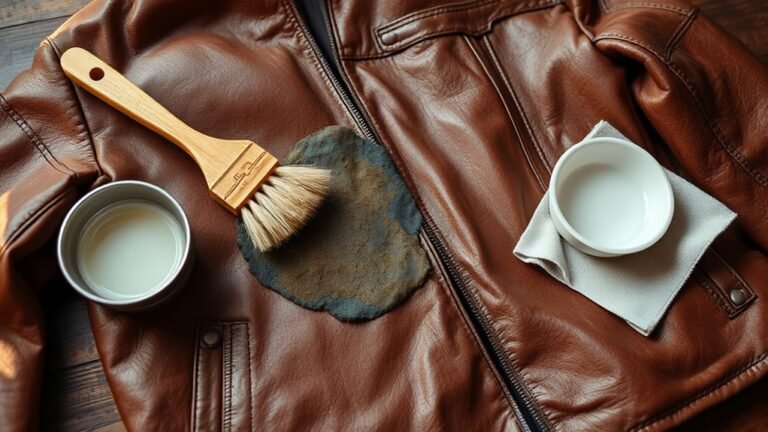
Oil stains demand absorption; sprinkle baby powder, talcum, or cornstarch generously, let it sit overnight, then brush off. Blood stains require a delicate touch: dab with cold water and gently sponge the spot with a damp cloth, steering clear of hot water which sets stains.
- Gently blot water stains with a dry cloth
- Absorb oil stains using powder overnight
- Dab fresh blood stains with cold water and a damp cloth
These gentle steps help preserve your leather’s look.
Handling Ink, Grease, and Sunscreen Stains
Beyond water, oil, and blood stains, leather can also attract ink, grease, and sunscreen marks that require careful attention. For ink stains, gently dab with rubbing alcohol or a leather ink remover, avoiding harsh rubbing to prevent spreading.
Grease stains need to be treated promptly; sprinkle baking soda, talcum powder, or cornstarch to absorb oil overnight, then brush off gently. Sunscreen stains respond well to baking soda or baby powder applied similarly.
Always test on a hidden area first to ensure no discoloration occurs. If stains persist, consider professional leather cleaning products or consulting a specialist to avoid damage. While vinegar is useful for some stains, avoid it here to prevent harm.
Prompt, careful treatment preserves your leather’s appearance and longevity.
Maintaining and Protecting Your Leather After Cleaning
To keep your leather looking its best after cleaning, you should apply a conditioner or moisturizer that restores suppleness and prevents cracking. Using a leather conditioner or leather moisturizer nourishes the material, helping you maintain appearance and extend its life.
Next, apply a protective sealant or leather spray to create a barrier against future stains and damage. Always store in a dry space, away from heat and sunlight, to avoid brittleness.
For effective leather care, follow these tips:
- Gently wipe your leather with a damp cloth regularly to remove dust and dirt
- Use leather spray to shield against spills and UV rays
- Keep leather items in a cool, well-ventilated area to prevent cracking and fading
This routine ensures excellent leather protection and lasting beauty.
Frequently Asked Questions
How Do You Get Tough Stains Out of Leather?
You tackle tough stains on leather by using specialized cleaners or saddle soap, gently scrubbing with a soft brush. For oil stains, apply powder overnight.
Test vinegar-water mix on a hidden spot before treating.
Does Leather Permanently Stain?
Yes, leather can permanently stain if you don’t clean spills quickly or use harsh cleaners. Some stains penetrate deeply, and aggressive scrubbing can cause damage.
You should always treat stains gently and promptly to avoid lasting marks.
How to Remove Color Stains From Leather?
They say, “A stitch in time saves nine.” You should gently clean color stains with a mild soap solution, test first, then use white vinegar or a leather-safe remover, and always condition afterward to keep leather supple and vibrant.
Does Vinegar Remove Stains From Leather?
Yes, vinegar can remove some stains from leather, especially water-based ones. But you should dilute it, test it on a hidden spot first, and avoid using it on oil or grease stains to prevent damage or discoloration.
Conclusion
Taking care of your leather isn’t just about looks—it’s about preserving its story. Just like a knight’s armor, your leather needs proper care to stay strong and beautiful through time.
By identifying stains early and treating them with the right methods, you’ll keep your leather in great shape. Remember, consistent maintenance not only removes stains but also protects your prized pieces, ensuring they last for many adventures ahead.
Keep your leather shining like new! With the right stain removal techniques, your leather will remain durable, attractive, and ready to accompany you on countless journeys.