How to Remove Mold from Leather: Easy and Safe Cleaning Tips
If you find mold on your leather, it’s important to know how to remove moldy leather safely and effectively. First, wear an N95 mask, gloves, and goggles to protect yourself from spores.
Take the item outside and gently brush off any loose mold spores.
Next, clean the affected area with a mixture of equal parts rubbing alcohol and white vinegar using a damp cloth.
Allow the leather to dry in a well-ventilated, shaded spot to prevent further damage.
Once dry, apply a leather conditioner to restore flexibility and maintain the leather’s quality.
Proper care and maintenance will help prevent mold from returning. There are additional steps you can take to keep your leather safe and fresh for the long term.
Identifying Mold on Leather
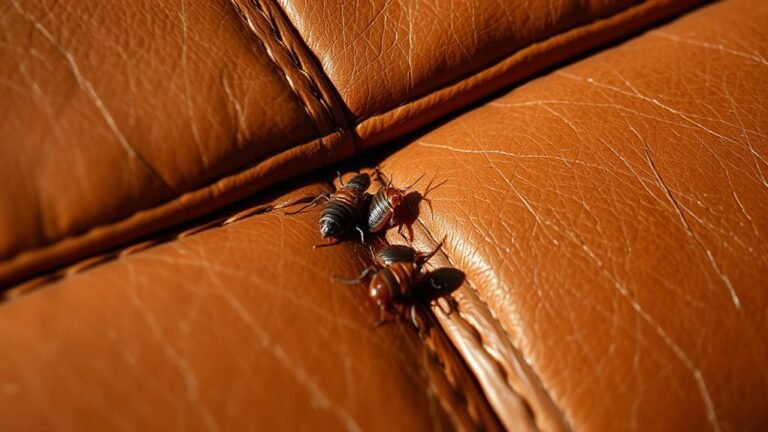
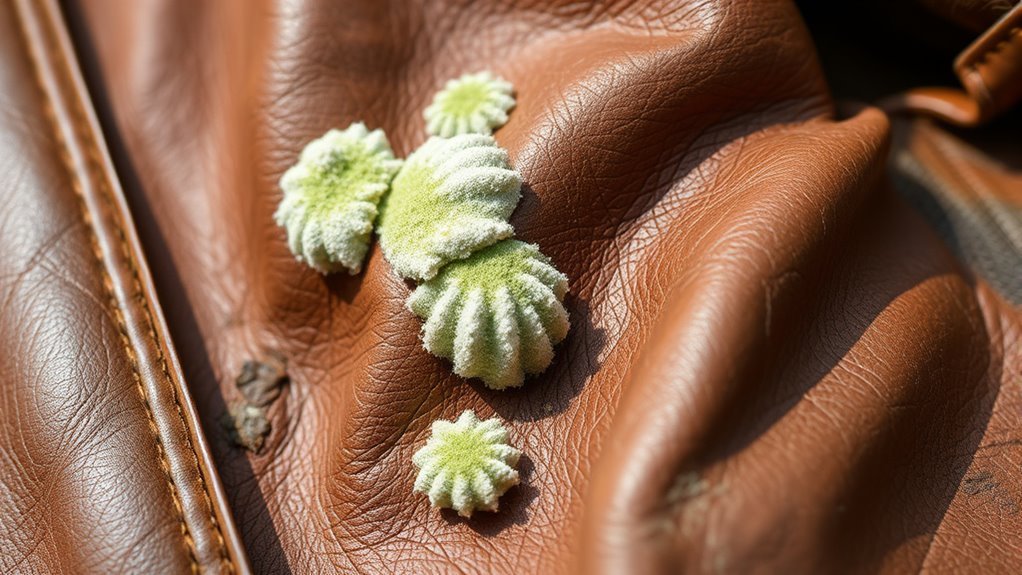
How can you tell if leather has mold? You’ll often notice fuzzy or slimy patches in black, green, white, or gray colors on the surface. A musty or earthy smell is another clear sign mold has taken hold.
Fuzzy, slimy patches in black, green, white, or gray and a musty smell indicate mold on leather.
Mold thrives in places where humidity is above 70%, so check the environment around your leather items. Sometimes mold penetrates deep into the leather fibers, making surface cleaning alone ineffective.
It’s important to differentiate between mold and other substances like dirt or wax. You can do this by testing a small area with solvents such as mineral spirits or alcohol. If it’s mold, the patch will react differently than dirt.
Spotting these signs early helps you tackle mold before it causes lasting damage to your leather.
Health Risks Associated With Mold Exposure

You should know that mold spores from leather can trigger asthma attacks and allergic reactions when inhaled. Touching moldy leather without protection may cause skin irritation or more serious health problems.
To stay safe, always use gloves and a mask when handling moldy leather.
Respiratory and Allergy Risks
Because mold spores can easily become airborne during cleaning, you risk inhaling them, especially if you’re sensitive. Breathing in these spores may trigger allergic reactions like sneezing, coughing, or skin irritation.
If you have asthma or other respiratory conditions, mold exposure can worsen your symptoms or even cause bronchitis. Those with weakened immune systems face an increased risk of severe complications.
It’s important to understand that even brief exposure can impact your health, so you should handle moldy leather carefully. Knowing the respiratory and allergy risks helps you take these dangers seriously, ensuring you’re prepared to manage them effectively while cleaning.
Always stay aware of how mold spores affect your body to protect your wellbeing during the removal process.
Protective Measures Required
Understanding the health risks tied to mold exposure makes taking protective measures a must when handling moldy leather. Mold spores can trigger respiratory issues, allergic reactions, and skin irritation, so you need to shield yourself properly.
Always wear PPE like N95 masks, gloves, goggles, and aprons to block direct contact and inhalation of spores. Mold also releases microbial volatile organic compounds that may cause headaches and dizziness, making protective measures even more critical.
Guarantee proper ventilation in your workspace to reduce airborne contaminants. Without these steps, extended exposure can worsen asthma or other respiratory conditions.
Necessary Protective Equipment for Mold Handling

When handling mold on leather, you need the right protective gear to keep yourself safe. Make sure to wear an N95 or N100 respirator to avoid breathing in spores, and use chemical-resistant gloves to protect your skin from mold and cleaning agents.
Don’t forget safety goggles and protective clothing to shield your eyes and body during the cleaning process.
Essential Personal Protective Gear
Although mold removal can be tricky, you can protect yourself by wearing the right gear. When tackling moldy leather goods, your protective gear is vital to guarantee safety during the removal of mold.
Always wear safety equipment like chemical-resistant gloves to keep your skin safe from mold and cleaning agents. Use non-vented goggles or safety glasses to shield your eyes from splashes.
Don’t handle leather goods with bare hands, as mold spores can cause allergic reactions. Additionally, work in a well-ventilated space or outdoors to minimize inhalation of mold spores or chemical fumes.
Wearing this essential personal protective gear helps you safely and effectively remove mold while protecting your health and preserving your leather items.
Respirator and Glove Use
Protecting your respiratory system and skin is a key part of handling mold on leather. Always wear a N95 or N100 respirator to filter out mold spores and prevent inhaling harmful microorganisms.
Chemical-resistant gloves, like nitrile or rubber gloves, shield your skin from mold and harsh cleaning agents, making them essential personal protective equipment. Don’t forget non-vented goggles or safety glasses to protect your eyes from spores and chemical splashes.
Work in a well-ventilated area to reduce mold spore concentration and avoid respiratory irritation. After cleaning, dispose of contaminated gloves, the respirator, and other PPE properly.
Wash your hands thoroughly to prevent spreading mold spores to other surfaces or yourself. Using the right respirator and gloves ensures safe, effective mold removal from your leather items.
Preparing Leather for Mold Removal
Before you start removing mold from leather, you need to prepare the item carefully to prevent spreading spores and further damage. First, examine the leather closely to confirm it’s mold, not just dirt or stains.
Proper preparation is key before removing mold from leather to avoid spreading spores or causing damage.
Wear gloves, a mask, and goggles to shield yourself from spores. If the leather feels damp, dry or freeze it quickly to stop mold growth. Isolate the item in a sealed plastic bag or container marked as contaminated.
Outside, gently remove loose mold with a soft brush or a HEPA-filter vacuum to avoid spreading spores indoors. Using rubbing alcohol on a cloth, lightly wipe the surface to disinfect and prepare it for deeper cleaning.
Taking these steps ensures you protect both yourself and the leather before tackling mold removal.

Effective Cleaning Solutions for Moldy Leather
You can tackle mold on leather using natural remedies like a mix of rubbing alcohol and white vinegar or choose mild soap solutions for gentle cleaning. Be careful not to soak the leather; instead, use a damp cloth to avoid damage.
After cleaning, drying and conditioning the leather will help protect it from future mold growth.
Natural Cleaning Remedies
Although mold on leather can seem stubborn, natural cleaning remedies like lemon juice offer an effective way to tackle it. Lemon juice contains citric acid, which kills the mold and helps remove mold from your leather surface.
Always test on a light coloured hidden spot first, as lemon juice can sometimes darken leather. Use a soft brush to gently scrub the affected area, then let it dry completely.
For large area infestations or professional leather, consider expert help. After cleaning, store the item in a plastic bag to prevent future growth.
| Remedy | Tips |
|---|---|
| Lemon juice | Test on hidden area; kills the mold |
| Soft brush | Use gently to avoid damage |
| Drying | Thoroughly dry leather afterwards |
| Storage | Keep in plastic bag to Rid Of Mold |
Chemical Treatment Options
When mold invades your leather, chemical treatments offer powerful solutions to eliminate spores and disinfect the surface. You can wipe moldy leather with a solution of 3/8 oz salicylanilide in one quart of rubbing alcohol to kill mold spores effectively.
Alternatively, diluted alcohol, mixing equal parts denatured or rubbing alcohol with water, works well for wiping away mold. Follow this by thorough drying in an airflow to prevent regrowth.
For persistent mold, vaporizing paradichlorobenzene-paraformaldehyde in a sealed container can eliminate spores, but you’ll need to replace chemicals regularly. Using low-pressure sprays designed for leather items also removes mildew odors and spots without damaging the material.
After treatment, apply a quality wax dressing to restore shine and create a protective barrier against future mold growth.
Step-by-Step Mold Removal Process
Before diving into mold removal, start by carefully inspecting the leather for fuzzy growth, discoloration, or musty odors to confirm mold presence. Once confirmed, follow these steps to tackle the mold effectively:
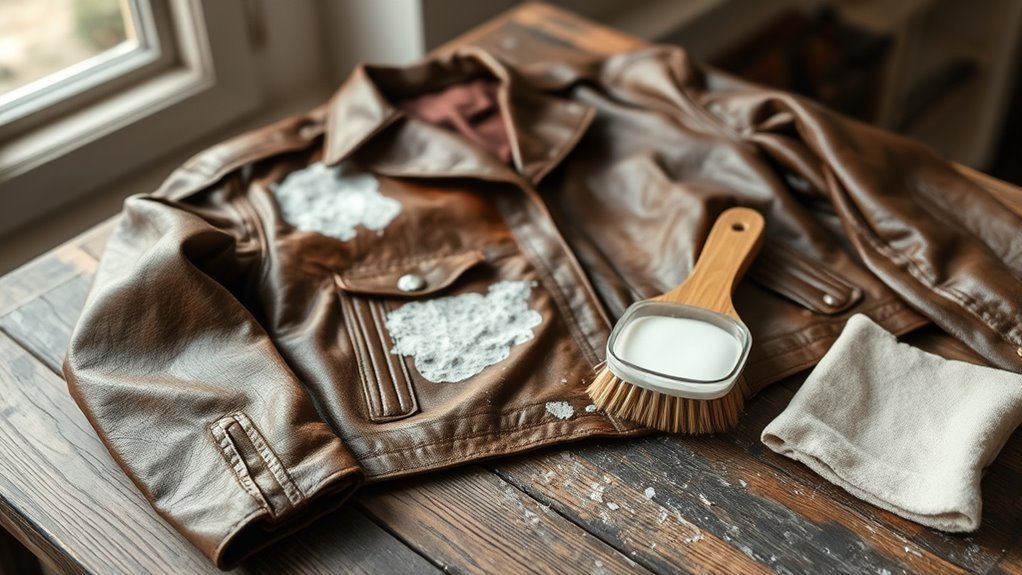
- Take the leather outside and gently brush off loose mold spores with a soft brush or use a vacuum equipped with a HEPA filter to avoid spreading spores indoors.
- Mix equal parts rubbing alcohol and white vinegar. Dampen a cloth with this solution and gently clean the affected areas, ensuring you don’t soak the leather.
- Pat the leather dry using a soft cloth and let it air dry completely in a shaded, well-ventilated space to prevent new mold growth.
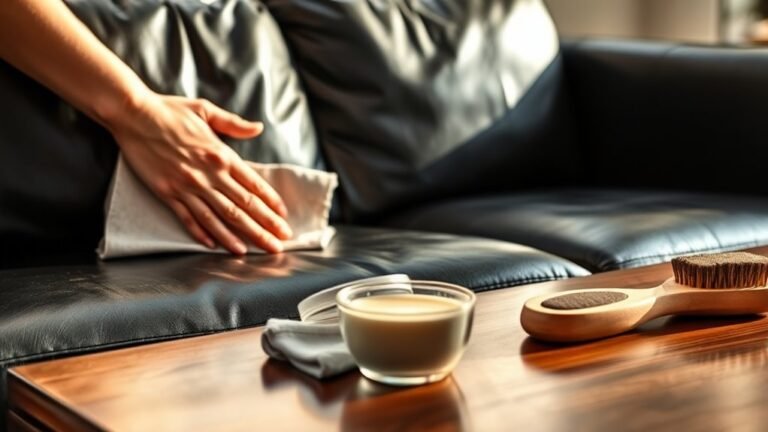
- After drying, apply a quality leather conditioner to restore moisture and protect the leather from future mold.
Drying and Conditioning Treated Leather
How do you guarantee your leather stays in top condition after mold removal? Start by gently patting the leather dry with a soft, absorbent cloth to remove excess moisture. Then, let it air dry in a well-ventilated area, keeping it away from direct sunlight and heat sources to prevent cracking.
Make sure the leather is completely dry before moving on. Once dry, apply a high-quality leather conditioner like Premium Leather Cream to restore moisture and flexibility. Regular conditioning not only maintains suppleness but also helps create a protective barrier.
Preventing Future Mold Growth on Leather
To keep mold from returning on your leather, you need to store it in a dry, cool, and well-ventilated place. Here’s how to protect your leather items effectively:
- Use breathable covers or cloth bags instead of plastic to prevent moisture buildup.
- Place silica gel packets or desiccants nearby to absorb excess humidity.
- Inspect your leather regularly for early signs of mold and clean it promptly.
- Apply leather conditioner periodically to maintain flexibility and create a protective barrier.

Safe Disposal of Mold-Contaminated Materials
Although cleaning can remove surface mold, you should dispose of leather items that are heavily mold-infested or deeply penetrated to protect your health and prevent mold spores from spreading. Seal contaminated leather in thick plastic bags to contain spores and avoid cross-contamination.
Always dispose of these bags outdoors, away from living spaces and food prep areas. Avoid reusing or donating moldy leather, as it poses ongoing health risks.
If you’re unsure about local disposal rules, check with your waste management services to follow proper guidelines. Taking these steps helps keep your environment safe and prevents mold from returning or spreading to other belongings.
When to Seek Professional Restoration Services
If mold has deeply penetrated your leather or caused extensive damage, you should seek professional restoration services. Professionals use specialized cleaning techniques, ozone treatments, and chemical processes that aren’t safe for you to try at home.
Here’s when to call in the experts:
- Mold resists your initial cleaning attempts or odors linger after treatment.
- The leather item is valuable, antique, or holds sentimental value.
- You notice health symptoms or mold spores spread widely during cleaning.
- Mold has deeply embedded itself into the leather fibers, causing extensive damage.
Halting DIY efforts and consulting a specialist ensures your leather gets proper care and reduces health risks. Don’t risk further damage or exposure. Professionals have the skills and tools to restore your leather safely and effectively.
Frequently Asked Questions
Can Mold Be Removed From Leather?
Yes, you can remove mold from leather if it’s caught early. Use rubbing alcohol or vinegar to clean it, test a small spot first, and dry thoroughly to prevent mold from returning.
Can Moldy Leather Be Saved?
You can save moldy leather if you catch mold early, like spotting a shadow before it spreads. Clean it gently, dry it well, and condition it.
Otherwise, deep damage might mean you’ll need professional help or replacement.
Can Vinegar Remove Mold From Leather?
Yes, vinegar can remove mold from leather due to its antifungal properties. But you should test it on a small area first, since it might cause discoloration or not fully eliminate deeply embedded mold spores.
Is Rubbing Alcohol or Vinegar Better for Mold?
When it comes to mold, rubbing alcohol’s your knight in shining armor. It kills spores fast without staining leather.
Vinegar works too but can darken leather and leave odors, so stick with alcohol for a safer clean.
Conclusion
Don’t let mold turn your leather into a science experiment gone wrong! With the right gear and cleaning tricks, you can zap that pesky mold like a superhero battling a villainous blob. Imagine your leather shining brighter than a diamond in the sun, fresh and mold-free.
Just follow the steps, dry and condition it well, and keep future mold at bay like a fortress. If things get out of hand, don’t hesitate to call in the pros! Proper mold removal from leather is essential to maintain its beauty and durability. Remember, regular cleaning and conditioning help prevent mold growth and keep your leather looking its best.