How to Clean Mold From a Leather Jacket in 7 Easy Steps
First, inspect your leather jacket to see how much mold is present, paying close attention to moist areas like the underarms. Cleaning mold from a leather jacket requires gentle care to avoid damaging the material.
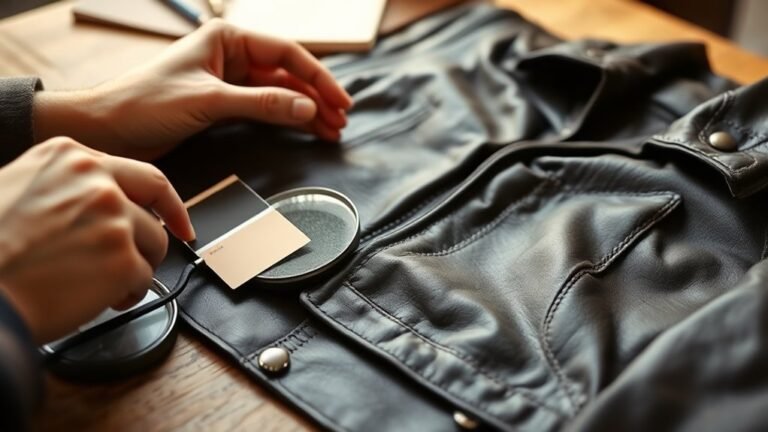
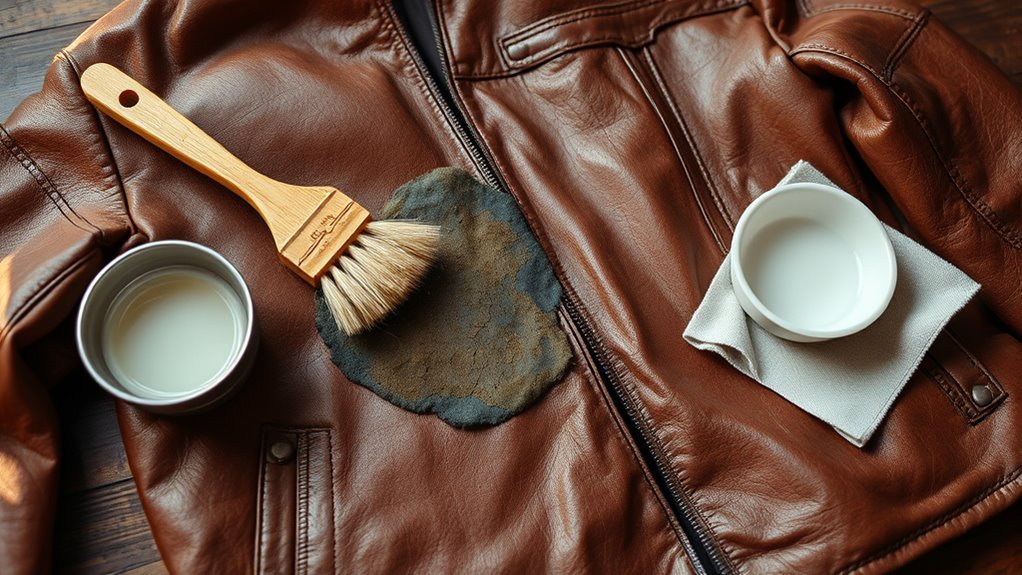
Gather your cleaning supplies, including vinegar diluted with water, a soft cloth, and gloves. Always test a hidden spot first to ensure the solution won’t affect the color or texture.
Outside, gently brush off any surface mold. Then, using the vinegar mixture, carefully wipe down the affected areas. Dry the jacket thoroughly away from direct heat sources.
Finish by applying a leather conditioner to keep the jacket supple and prevent future mold growth. Keep going to discover detailed tips for a thorough, safe clean.
Assess the Extent of Mold on Your Leather Jacket

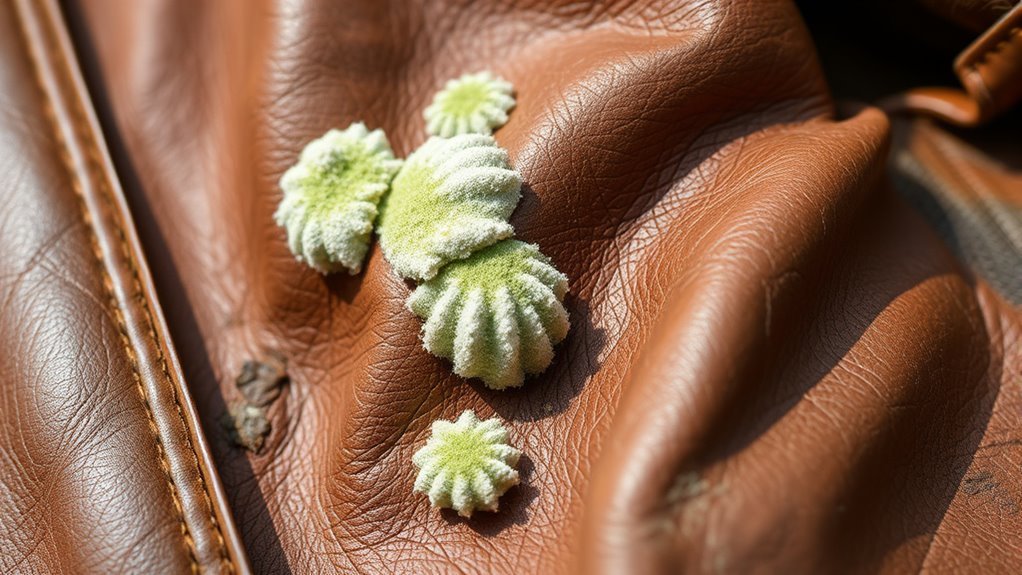
Before you begin cleaning, carefully inspect your leather jacket to determine how widespread the mold is. Check every seam, pocket, and collar for any fuzzy patches or discoloration.
Inspect your leather jacket thoroughly for mold, checking seams, pockets, and collars for any discoloration or fuzz.
Pay close attention to areas that trap moisture, like under the arms or around zippers. If you find just a few small spots, you can probably handle the cleaning yourself without too much trouble.
However, if mold has spread extensively or deeply penetrated the leather, you might consider professional help to avoid damage. Also, note if the mold has caused any odor or stiffness, as this can indicate more serious issues.
Taking the time to assess the damage accurately helps you decide the right approach and prevents unnecessary cleaning that could harm your jacket.
Prepare Your Cleaning Supplies

Since mold can damage leather if treated improperly, you’ll want to gather the right cleaning supplies to protect your jacket while effectively removing the mold. Having everything ready guarantees a smooth, safe cleaning process without causing further harm.
Here’s a simple checklist of what you’ll need:
| Supply | Purpose |
|---|---|
| Soft cloth or sponge | Gently wipes mold without scratching |
| Leather cleaner | Safely removes dirt and mold |
| Distilled water | Prevents mineral stains |
Additional items like gloves and a mask can protect you from spores. Avoid harsh chemicals to keep your jacket in top shape. Preparing these supplies beforehand will make your mold removal efficient and safe.
Test a Small Area for Colorfastness

Once you have your cleaning supplies ready, it’s important to test a small, hidden area of your leather jacket to check for colorfastness. This step guarantees your cleaning solution won’t damage or discolor the leather.
Here’s how to do it:
- Choose a discreet spot, like inside the cuff or under a seam.
- Dampen a soft cloth with your cleaning solution and gently blot the area.
- Wait a few minutes to see if any color fades, bleeds, or changes texture.
If the leather remains unchanged, you’re good to proceed with the full cleaning. If you notice any discoloration or damage, switch to a milder solution or consult a professional cleaner to protect your jacket.
Testing first saves you from costly mistakes later.
Remove Surface Mold Gently
Although mold can seem stubborn, you can remove surface mold from your leather jacket carefully to prevent damage. Start by taking your jacket outside to avoid spreading spores indoors.
Use a soft brush or a dry microfiber cloth to gently brush off the mold. Avoid using water or harsh chemicals at this stage, as they can harm the leather’s finish. Here’s a quick guide:
| Step | Tool Needed | Tip |
|---|---|---|
| 1. Take outside | None | Prevent indoor contamination |
| 2. Brush mold | Soft brush | Gentle, circular motions |
| 3. Wipe off | Dry microfiber | Avoid pressing too hard |
| 4. Inspect | Good lighting | Check for remaining mold |
| 5. Repeat if needed | Soft brush | Don’t rush; be patient |
Removing surface mold delicately ensures your jacket stays in great shape.
Clean the Leather With a Mild Solution
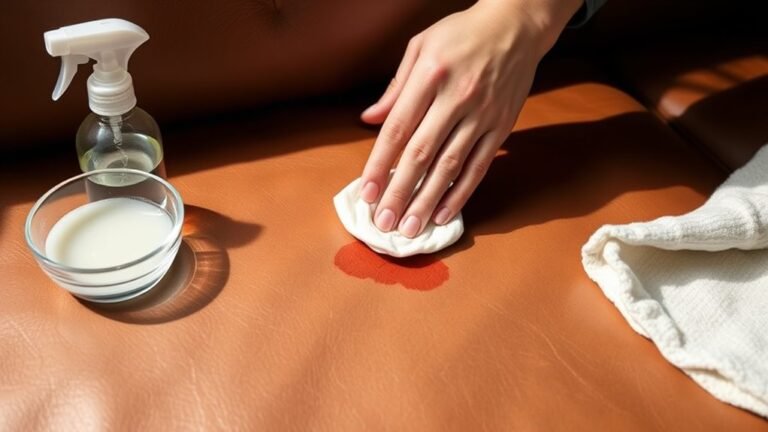
After gently removing the surface mold, you’ll want to clean the leather to eliminate any lingering spores and stains. Start by mixing a mild cleaning solution: combine one part white vinegar with two parts water.
Mix one part white vinegar with two parts water to gently clean mold spores from leather surfaces.
Then, follow these steps:
- Dip a soft cloth into the solution, wring it out well to avoid soaking the leather.
- Gently wipe the affected areas, working in small circular motions to lift mold without damaging the material.
- Use a clean, damp cloth to remove any residue from the solution.
This method guarantees you clean effectively without harsh chemicals or over-saturating the leather. Remember, less moisture is better; too much can harm the jacket.
With this mild solution, you’ll keep your leather safe while tackling stubborn mold spores.
Dry the Jacket Properly
Because leather is sensitive to moisture, you’ll need to dry your jacket carefully to prevent damage or warping. After cleaning, gently blot excess moisture with a soft, dry cloth. Don’t rub, as that can damage the leather.
Next, hang your jacket on a wide, padded hanger to maintain its shape and allow air to circulate evenly. Avoid direct sunlight, radiators, or hair dryers, since heat can cause the leather to crack or shrink.
Instead, let it air dry in a well-ventilated room at room temperature.
Check your jacket regularly as it dries to ensure no damp spots remain. Proper drying establishes the stage for restoring your jacket’s condition without causing further harm.
Condition the Leather to Restore Moisture
When you’ve dried your leather jacket thoroughly, it’s essential to restore its natural oils to keep the material supple and prevent cracking. Conditioning replenishes moisture lost during cleaning and drying. Here’s how to do it effectively:
After drying your leather jacket, restore its oils to keep it supple and prevent cracking.
- Choose the Right Conditioner: Pick a leather conditioner suitable for your jacket type, preferably a cream or lotion designed for smooth leather.
- Apply Evenly: Use a soft cloth to apply a small amount in circular motions, covering the entire jacket evenly without soaking the leather.
- Let It Absorb: Allow the conditioner to penetrate the leather for several hours or overnight, then buff lightly with a clean cloth to remove excess product.
This process protects your jacket from dryness and keeps it looking fresh and durable after mold removal.
Frequently Asked Questions
Can Mold on Leather Jackets Cause Health Issues?
Yes, mold on leather jackets can cause health issues, especially if you’re sensitive or have allergies. It can trigger respiratory problems and skin irritation, so you should clean mold promptly to protect your health and your jacket.
How Can I Prevent Mold Growth on Leather Jackets?
You can’t let your leather jacket throw a mold party! Keep it dry, store it in breathable bags, avoid damp places, and use leather conditioner regularly.
These simple steps will keep mold far, far away from your prized jacket!
Is It Safe to Use a Leather Jacket After Mold Removal?
Yes, you can safely wear your leather jacket after mold removal, as long as you thoroughly clean, dry, and condition it.
Make sure no mold remains, and store it properly to prevent future growth and maintain its quality.
Can Mold Damage the Stitching or Lining of Leather Jackets?
Yes, mold can damage stitching and lining. It weakens fibers, causes discoloration, and creates unpleasant odors.
To protect your jacket, you’ll want to clean mold promptly, inspect regularly, and store it in dry, ventilated spaces.
Should I Store My Leather Jacket Differently After Mold Removal?
Yes, you should store your leather jacket in a cool, dry place with good ventilation after mold removal.
Avoid plastic bags; instead, use a breathable garment bag to prevent moisture buildup and future mold growth.
Conclusion
It’s funny how tackling mold on your leather jacket not only freshens it up but also reminds you to care for your favorite things. By following these simple steps, you’re not just cleaning—you’re restoring life to a piece that holds memories.
So, next time you spot a little mold, don’t stress; grab your supplies and get to work. You’ll be surprised how quick and satisfying it feels to bring your jacket back to its best.
Remember, regular mold removal from leather and proper maintenance will keep your jacket looking great for years. Cleaning mold from a leather jacket is easier than you think and well worth the effort.