How to Disinfect a Leather Couch Safely & Effectively
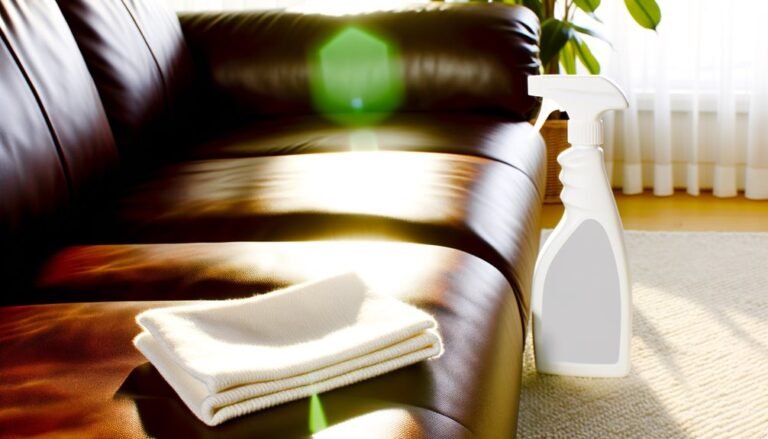
To disinfect your leather couch safely, start by dusting it with a soft microfiber cloth.
Use a gentle, pH-balanced soap diluted in distilled water and test on a hidden spot.
Wipe the surface gently without soaking it, then dry thoroughly.
Avoid alcohol-based disinfectants that can damage leather.
After cleaning, apply a conditioner every few months to keep the leather soft and crack-free.
Keeping these steps in mind will help you protect and maintain your couch’s appearance and durability for years.
Understanding Leather Types and Their Sensitivities

Although leather is a durable material, its different types require specific care when disinfecting. You’ll find full-aniline leather is the most delicate, so you need to use gentle cleaning and conditioning to avoid damage.
Semi-aniline and protected leathers are a bit tougher since they have a pigment or finish layer, making them more resistant to cleaning agents. Raw or untreated leather is highly porous and can easily stain or get damaged by harsh disinfectants, so be very cautious.
Distressed or vintage leather has a textured surface that may trap dirt but is generally more forgiving during cleaning. Since each leather type reacts differently, always check the manufacturer’s recommendations before you start disinfecting your leather couch.
Essential Tools and Materials for Safe Disinfection
Knowing the type of leather you’re working with helps you choose the right tools and materials for cleaning and disinfecting. Start with a soft microfiber cloth or a vacuum with a soft-brush attachment to gently remove dust without damaging the surface.
Identify your leather type first, then use a soft microfiber cloth or vacuum with a gentle brush to clean safely.
Use a leather cleaner or mild soap mixed with distilled water to prepare a gentle cleaning solution, avoiding harsh chemicals. For disinfecting and stain removal, have diluted white vinegar ready.
Apply solutions with a spray bottle or a damp cloth that’s wrung out to prevent excess moisture. Finally, keep a clean, dry microfiber cloth handy to thoroughly dry and buff the leather after cleaning or disinfecting.
Using these essential tools and materials ensures you maintain your couch’s quality while effectively disinfecting it.
Step-by-Step Process to Clean a Leather Couch
Before you start cleaning, remove any loose dust and debris from your leather couch using a microfiber cloth or a vacuum with a soft brush attachment. Next, mix mild soap with distilled water to create a gentle cleaning solution.
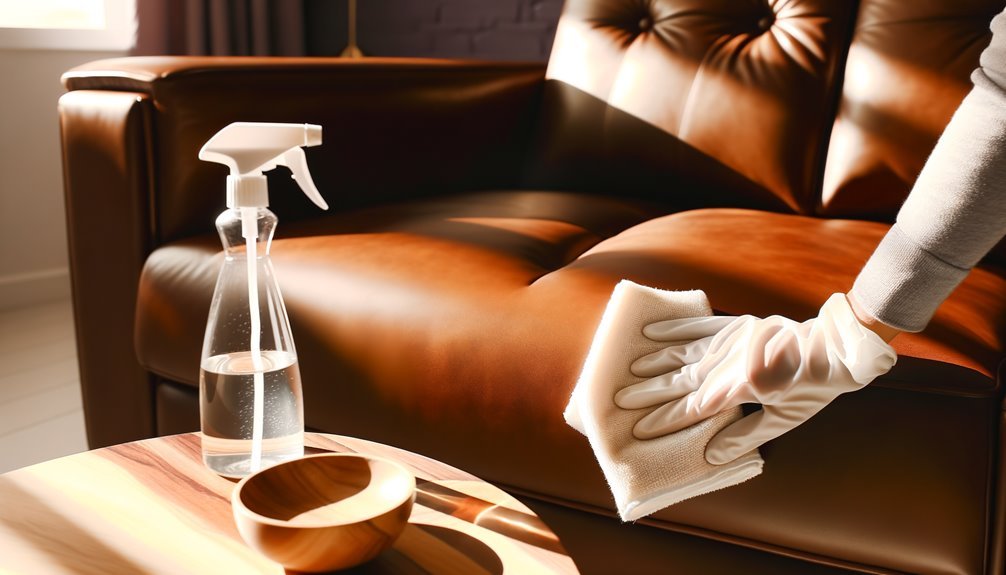
Dampen a microfiber cloth with this mix and wipe the leather surface using gentle circular motions to clean thoroughly. Avoid soaking the leather. After wiping, allow it to dry completely.
To maintain suppleness and prevent cracks, apply a small amount of olive or coconut oil mixed with liquid soap, then buff the leather with a clean microfiber cloth to restore its shine.
This step-by-step process helps keep your leather couch clean, fresh, and well-maintained without causing damage.

Effective Methods to Remove Stains Without Damage
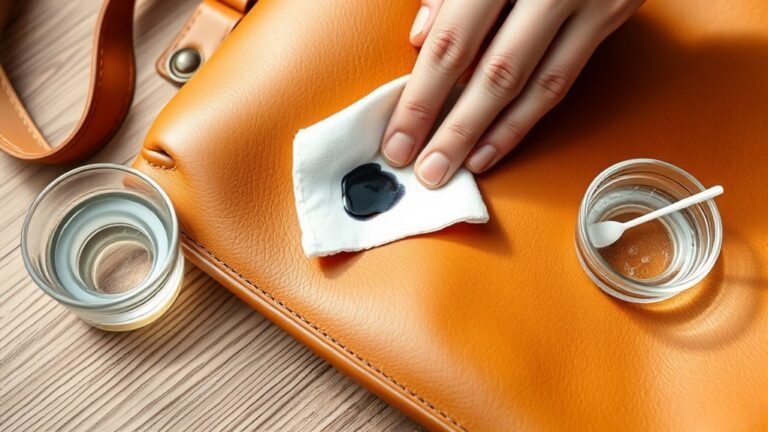
When you notice a stain, blot it immediately with a dry microfiber cloth to stop it from setting. Use a gentle mix of distilled water and white vinegar to lift stains safely without harming the leather.
After cleaning, don’t forget to condition the leather to keep it soft and protected.
Immediate Stain Blotting
A clean, dry microfiber cloth is your best tool for blotting stains immediately on a leather couch. When a stain appears, gently blot it, never rub or scrub, as this can spread the stain or push it deeper into the leather.
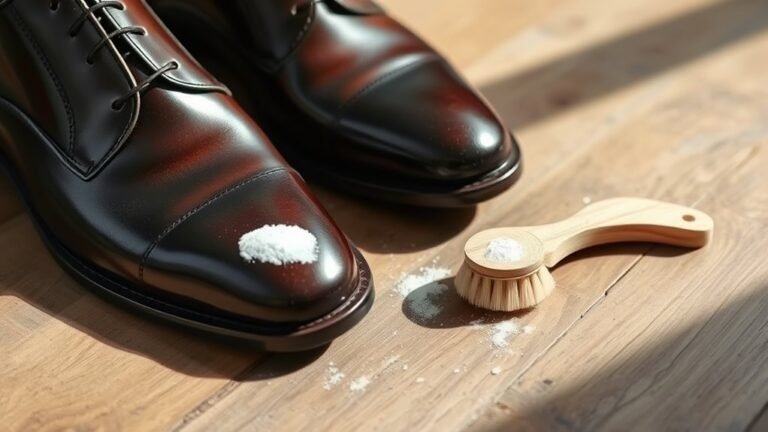
For water-based stains, use a damp cloth with distilled water or mild soap to lift the stain carefully. If you’re dealing with oil or grease, sprinkle baking soda or talcum powder on the stain and let it sit overnight before brushing it off.
After blotting or treating the stain, always dry the area thoroughly with a clean cloth to prevent moisture damage. Acting quickly and carefully helps protect your leather couch from permanent stains and preserves its appearance.
Safe Cleaning Solutions
How can you safely clean your leather couch without risking damage? Using safe cleaning solutions is key to keeping your leather looking fresh without harm. Opt for gentle mixtures like equal parts distilled water and white vinegar or mild liquid soap diluted with distilled water.
Avoid harsh chemicals, which can strip natural oils and discolor your couch. Always use a damp microfiber cloth, wrung out well, and wipe in circular motions to lift stains effectively while protecting the leather’s surface.
After cleaning, rinse the cloth with plain distilled water to remove residue, then dry with a soft microfiber cloth to maintain a clean leather finish.
Mix distilled water and white vinegar for stain removal
Use mild soap with distilled water for dirt lift
Avoid bleach and ammonia to prevent damage
Wipe gently with a damp microfiber cloth
Rinse and dry thoroughly after cleaning

Conditioning After Cleaning
Since cleaning can strip your leather couch of its natural oils, you’ll want to preserve it afterward to keep the material soft and supple. After you clean a leather couch, apply a small amount of olive or coconut oil mixed with gentle liquid soap as a natural leather conditioner.
Use a soft, circular motion to evenly spread the mixture, then let it sit for a few minutes. Wipe off any excess with a clean, dry microfiber cloth. Conditioning every 6 to 12 months helps prevent cracks, dryness, and fading, especially after removing stains.
Avoid over-conditioning, as too much product can leave the leather greasy or sticky. Always test your leather conditioner on a hidden spot first to ensure it won’t discolor or damage your couch.
Safely Disinfecting Leather Without Harsh Chemicals
When you want to disinfect your leather couch without risking damage, choose gentle methods that protect its finish and color. Harsh chemicals can strip leather’s natural oils and affect its dye, so it’s best to avoid alcohol-based cleaners.
Instead, focus on mild, pH-balanced soaps or saddle soap for cleaning. Use a damp microfiber cloth to apply the solution softly, ensuring you don’t saturate the leather. Always test your cleaning products on a hidden spot first to avoid surprises.
Natural sunlight exposure can also help disinfect your couch safely. Here’s how to disinfect leather without harsh chemicals:
-
- Clean with a damp microfiber cloth and mild soap
- Avoid alcohol-based disinfectants
- Use leather-specific cleaners when possible
- Test solutions on a hidden area
- Allow sunlight exposure for natural disinfection
Conditioning Leather After Disinfection
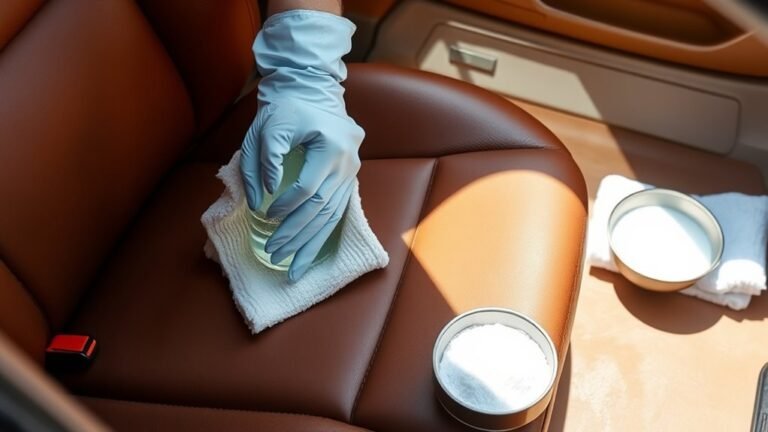
After disinfecting your leather couch, it’s important to restore its natural moisture by conditioning it properly. You’ll want to choose the right product, like a leather conditioner or natural oils such as coconut or olive oil.
Apply it evenly with a soft cloth, let it soak in, and then wipe off any excess to keep your leather soft and protected.
Importance of Conditioning
Although disinfecting your leather couch is essential for cleanliness, it can strip away the natural oils that keep the leather soft and flexible. That’s why it’s vital to condition your leather immediately after cleaning to restore moisture and prevent damage.
When you clean and condition regularly, you help maintain its suppleness and appearance. Here’s why conditioning matters:
- Replenishes oils lost during disinfection
- Prevents drying out, cracking, and brittleness
- Enhances the leather’s protective layer against stains
- Maintains the couch’s luster and lifespan
- Keeps leather soft, flexible, and visually appealing
Choosing Conditioning Products
How do you choose the right conditioner to keep your leather couch soft and protected? Start by selecting a leather conditioner that’s pH-balanced to restore moisture lost during disinfection and prevent cracking.
Make sure it’s formulated specifically for your leather type, whether aniline, semi-aniline, or full-grain, to ensure the best results. Conditioning every 3 to 6 months helps maintain suppleness and shields against environmental damage.
Before applying broadly, always test the product on a small, hidden area to avoid discoloration. This careful selection guarantees your leather stays nourished and durable, preserving its look and feel over time.
Choosing the right conditioner is key to extending your couch’s life after disinfecting.
Conditioning Application Tips
When you condition your leather couch, make sure the surface is completely dry to avoid trapping moisture that can cause damage. Proper application of leather conditioner helps maintain softness and prevents cracking after disinfection.
Before you apply, test the conditioner on a hidden spot to ensure it won’t alter the color or finish. Use a soft, clean cloth to spread the conditioner evenly in circular motions, allowing better absorption.
Follow the recommended amount and frequency, usually every 3 to 6 months, to keep your couch in top shape. Finally, wipe off any excess to prevent a sticky or greasy feel.
Ensure leather surface is fully dry before application
Test leather conditioner on a small, hidden area
Apply evenly with a soft cloth in circular motions
Follow manufacturer’s guidelines for amount and frequency
Remove excess conditioner after application to avoid residue
Tips to Protect Leather From Sun and Environmental Damage
To keep your leather couch looking its best, you’ll want to guard it from sun and environmental damage that can cause fading, drying, and cracking. Avoid placing your leather sofa in direct sunlight, as UV rays break down natural oils and fade color.
Use UV-protective sprays or install window films to shield your couch from harmful rays. Consider curtains or blinds to limit exposure further. Keep your leather away from heat sources like radiators or fireplaces to prevent drying and cracking.
Regularly clean and condition your leather every 3-4 months to maintain its moisture barrier and ensure lasting durability. By taking these steps, you’ll extend your leather sofa’s life and keep it looking vibrant and supple for years to come.

Avoiding Common Mistakes When Cleaning Leather Furniture
Although leather furniture requires regular cleaning to stay fresh, using the wrong methods can cause lasting damage. When cleaning leather, avoid harsh chemicals like rubbing alcohol. It can strip natural oils and discolor the surface.
Excessive water or soaking can lead to swelling and stains, so use minimal moisture. Don’t scrub aggressively; this risks scratching and weakening the leather.
Generic all-purpose or wood cleaners aren’t suited for leather and may harm it. Also, steer clear of steam cleaning or high heat, which dry out leather and cause cracks.
Keep these points in mind to protect your couch’s beauty:
- Avoid rubbing alcohol and harsh chemicals
- Use minimal water when cleaning leather
- Don’t scrub stains aggressively
- Skip all-purpose and wood cleaners
- Avoid steam and high heat cleaning methods
Routine Maintenance for Long-Lasting Leather Appearance
Since leather is a natural material, routine maintenance is essential to keep your couch looking its best and lasting for years. Start by dusting your leather couch weekly with a dry microfiber clean cloth or vacuum using a soft brush attachment to remove dust and prevent dirt buildup.
Wipe spills immediately with a damp clean cloth to avoid stains and never use harsh chemicals, as they can damage the finish. Every 6 to 12 months, deep clean and condition the leather with products designed specifically for leather to maintain its suppleness and prevent cracks.
Also, protect your couch from direct sunlight and heat sources to avoid fading and drying. Regularly inspect for any signs of wear and address issues promptly to extend your leather couch’s lifespan.
Frequently Asked Questions
Can I Spray Lysol on My Leather Couch?
You shouldn’t spray Lysol directly on your leather couch because it can damage and discolor the leather. Instead, use a damp cloth with mild soap or a leather-safe disinfectant, and always test first on a hidden spot.
How Do You Disinfect Leather Without Ruining It?
Disinfect leather like you’d gently pet a kitten. Use a leather-specific cleaner or mild soap with distilled water. Avoid harsh chemicals, wipe softly with a damp microfiber cloth, and let sunlight naturally sanitize without damage.
How Long Can Bacteria Live on Leather?
Bacteria can live on leather for 2 to 3 days, but factors like heat and sunlight can shorten this. You should clean and disinfect regularly since leather’s porous nature traps bacteria, affecting their survival time.
How Long Does COVID Live on Leather Seats?
You’ll find COVID-19 can live on leather seats up to 72 hours, but its lifespan is shorter than on steel or plastic.
Temperature and airflow affect this, so clean and disinfect regularly to keep your leather safe.
Conclusion
You might worry that disinfecting your leather couch will damage its finish, but using the right methods and gentle products keeps it safe and looking great.
By following the steps carefully, you’ll remove germs without drying or cracking the leather. Regular cleaning and conditioning not only protect your couch but also extend its life.
With a little care, your leather furniture can stay fresh, clean, and beautiful for years to come. Proper disinfection of a leather couch is key to maintaining its appearance and durability.