How Do You Soften Stiff Leather Fast in 10 Steps
To soften stiff leather fast, start by cleaning it gently with a mild soap and dry cloth. Applying a quality leather conditioner evenly is essential for restoring suppleness. Then, massage in some natural leather oil for deeper softness.
Warm the leather lightly with a hairdryer on low, being careful not to overheat. Gently stretch or bend the leather to help loosen stiffness. Stuff shoes or bags to maintain their shape during the process.
Avoid soaking the leather with water, as this can cause damage. Store it in a cool, breathable spot to preserve its condition. Keep following these steps consistently to master leather care fully.
Clean the Leather Thoroughly

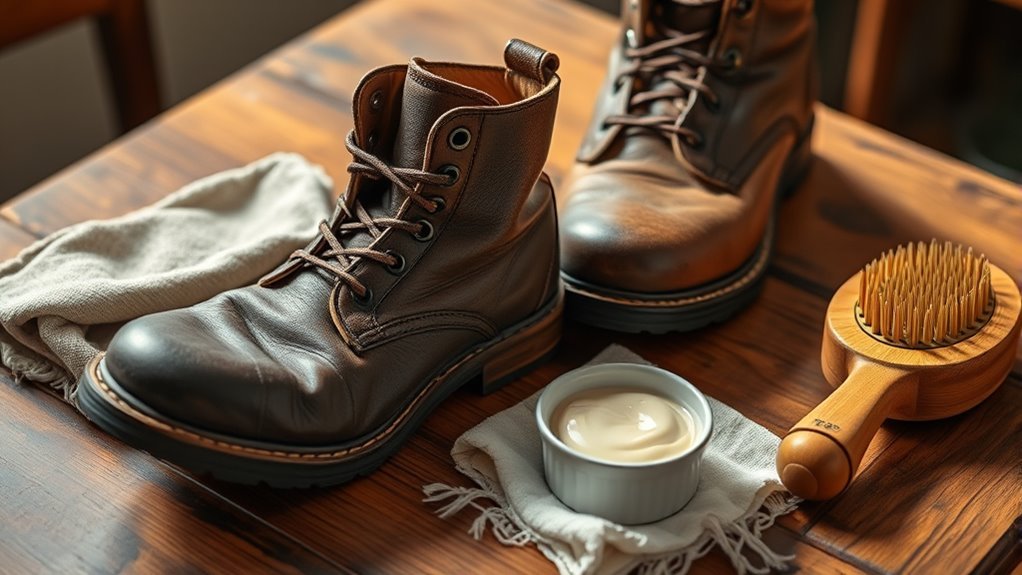
Before you can soften stiff leather, you need to clean it thoroughly. Start by wiping the surface with a dry cloth to remove dust and loose dirt.
Then, mix a small amount of mild soap with water to create a gentle cleaning solution.
Dip a soft cloth into the solution, wring it out well, and gently wipe the leather in circular motions. Avoid soaking the leather, as excess moisture can cause damage.
Once cleaned, use a separate damp cloth to remove any soap residue.
Finally, let the leather air dry completely in a cool, shaded area. Never use direct heat or sunlight.
Proper cleaning guarantees dirt and oils don’t block your efforts to soften the leather later on. This step sets a clean foundation for the next treatment.
Apply Leather Conditioner

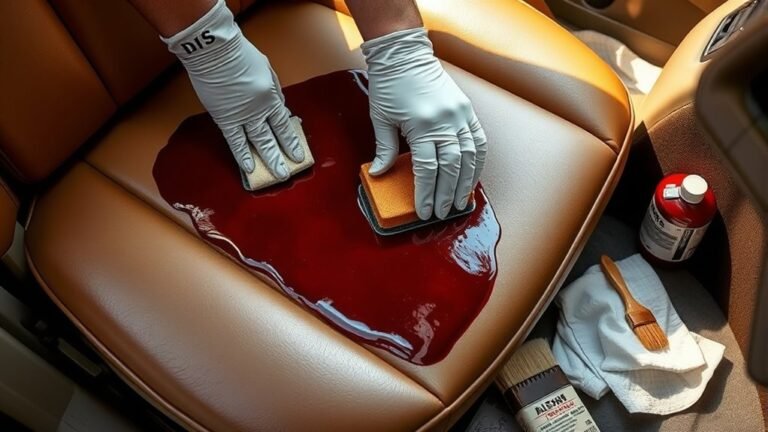
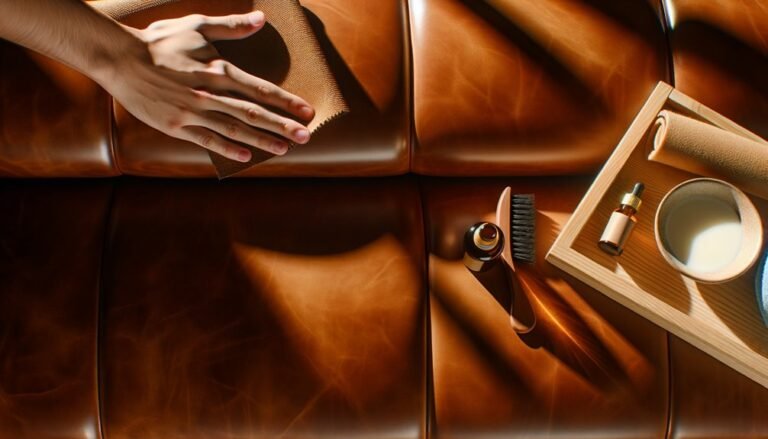
Once the leather is completely dry, you can apply a quality leather conditioner to restore its natural oils and flexibility. Use a soft cloth to spread the conditioner evenly, working it in gently with circular motions.
Let the conditioner absorb for about 20 minutes, then buff off any excess with a clean cloth. This process helps prevent cracking and keeps the leather supple.
| Step | Action |
|---|---|
| Prepare | Choose a suitable leather conditioner |
| Apply | Rub conditioner in circular motions |
| Finish | Let absorb, then buff excess off |
Repeat this conditioning every few months to maintain softness and durability. Avoid over-applying, as too much conditioner can clog the leather’s pores.
Use Leather Oil for Deep Softening

If you want to deeply soften your leather beyond what conditioner can achieve, using leather oil is a great next step. Leather oils penetrate the fibers more intensely, restoring flexibility and preventing cracking.
Before applying, make sure your leather is clean and dry. Use a small amount of oil on a soft cloth and gently rub it into the leather in circular motions.
Avoid over-saturating, as too much oil can weaken the material or cause discoloration.
After application, let the oil absorb for several hours or overnight in a cool, ventilated area. This process revitalizes stiff leather quickly and effectively, making it supple and ready for everyday use.
Regular oiling, spaced out appropriately, helps maintain softness and prolongs your leather’s lifespan.
Gently Massage the Leather
After applying leather oil, you’ll want to gently massage the leather to help the product penetrate evenly and restore its suppleness. Use your fingertips to work the oil into the leather with soft, circular motions.
Focus on areas that feel especially stiff or cracked, but avoid pressing too hard to prevent damaging the material. This gentle massaging increases blood flow within the leather fibers, encouraging flexibility and reducing brittleness.
Take your time, spending several minutes massaging each section for the best results. As you do this, you’ll notice the leather gradually becoming more pliable and softer to the touch.
This step not only distributes the oil effectively but also helps awaken the leather’s natural texture, making it more comfortable and durable over time.
Stretch the Leather Carefully
While the leather is still supple from the oil and massage, you can start stretching it carefully to improve its flexibility. Begin by gently pulling the leather in different directions, avoiding sudden or forceful tugs.
Focus on the stiffest areas, but be mindful not to overstretch and damage the fibers. Repeat this process a few times, allowing the leather to relax between stretches.
| Step | Action | Tip |
|---|---|---|
| 1 | Apply gentle pulls | Use slow, steady pressure |
| 2 | Stretch different areas | Target stiff spots first |
| 3 | Hold stretch briefly | Avoid overstretching |
| 4 | Let leather rest | Allow fibers to adjust |
| 5 | Repeat as needed | Combine with massage/oil |
Wear the Leather Item Frequently
Though it might seem simple, wearing your leather item often is one of the best ways to break it in and soften stiff areas. Every time you use it, the leather naturally flexes and molds to your body shape, loosening up its rigidity.
Don’t be afraid to wear your leather boots, jacket, or gloves regularly even if they feel stiff at first. This consistent movement encourages the fibers to relax, improving comfort and flexibility over time.
Just make sure to avoid harsh conditions that could damage the leather, like heavy rain or extreme heat.
Use a Hairdryer on Low Heat
If you want to speed up the softening process, you can use a hairdryer on low heat to gently warm the leather. Hold the hairdryer about six inches away and keep it moving to avoid overheating or damaging the material.
Warm leather becomes more pliable, making it easier to flex and soften. After heating, bend and manipulate the leather gently to encourage flexibility.
Heating leather softens it, allowing gentle bending to enhance flexibility and ease the break-in process.
Be cautious not to apply high heat or focus on one spot for too long, as this can cause the leather to dry out or crack.
Using a hairdryer is a quick method to prepare your leather for conditioning or wearing, helping it break in faster without compromising its quality.
Always follow up with a leather conditioner to maintain softness and prevent drying.
Stuff Leather Shoes or Bags
A simple way to help soften leather shoes or bags is to stuff them with soft materials like cloth or paper. This technique gently stretches the leather, preventing it from staying stiff or developing unwanted creases.
You want to use materials that fill the shape without putting too much pressure, such as clean rags or tissue paper. Insert the stuffing firmly but carefully, ensuring the leather maintains its natural form.
Leave the stuffed item in a cool, dry place for at least 24 hours. Over time, this will help the leather relax and become more flexible.
Remember to check periodically and adjust the stuffing if needed. This method complements other softening techniques without risking damage to your leather goods.
Avoid Excessive Water Exposure
Since leather is a natural material, exposing it to too much water can cause stiffness, discoloration, and even damage. You should avoid soaking your leather items or using excessive water when cleaning them.
Avoid soaking leather; too much water causes stiffness, discoloration, and damage to this natural material.
Instead, use a slightly damp cloth for light cleaning and immediately dry the leather with a soft towel.
If your leather does get wet, let it air dry away from direct heat or sunlight to prevent it from becoming brittle.
Overexposure to water breaks down leather’s oils, making it hard and prone to cracking.
By limiting water contact, you preserve the leather’s natural flexibility and softness.
Always remember, gentle care and minimal moisture are key to keeping your leather supple and extending its lifespan.
Store Leather Properly Between Uses
Keeping your leather dry is just one part of maintaining its softness. To keep your leather supple, store it properly between uses. Avoid stuffing leather items into tight spaces or plastic bags, which trap moisture and cause stiffness.
Instead, opt for breathable fabric bags or wrap your leather in a soft cotton cloth. Store leather in a cool, well-ventilated area away from direct sunlight or heat sources, which can dry out and crack the material.
If your leather item is a bag or jacket, hang it on a padded hanger to maintain its shape and prevent creases. Proper storage preserves the leather’s natural oils, helping it stay soft and flexible longer.
Frequently Asked Questions
Can Lemon Juice Soften Leather Effectively?
Lemon juice can soften leather, but it’s acidic and might damage it if you’re not careful.
You’ll want to dilute it and test a small area first to avoid drying or discoloring your leather item.
Is Vinegar Safe for Softening Stiff Leather?
You shouldn’t use vinegar to soften stiff leather because its acidity can damage the material.
Instead, try leather conditioner or mink oil to safely restore softness without risking harm to your leather items.
How Long Does Leather Take to Soften Naturally?
Leather takes several days to weeks to soften naturally, depending on its thickness and condition.
You can speed this up by regularly using leather conditioner and gently flexing the leather to help it become more pliable.
Can Freezing Leather Help Make It More Pliable?
Freezing leather won’t make it more pliable; it can actually dry out and damage the fibers.
Instead, you should use leather conditioner and gently work the leather to soften it safely and effectively.
Does Sunlight Exposure Improve Leather Softness?
You shouldn’t rely on sunlight exposure to soften leather; it actually dries out and stiffens it. Studies show up to 70% of leather’s natural oils evaporate under UV, making it more brittle, not softer.
Conclusion
Think of your stiff leather like a young sapling—firm but full of potential. By cleaning, conditioning, and gently coaxing it with warmth and care, you’re nurturing it to bend gracefully with time.
Just as a gardener tends to their plant, your efforts will transform rigidness into supple strength. Follow these steps patiently, and soon your leather will move with the ease and comfort of a tree swaying softly in the breeze.
Using these techniques to soften stiff leather fast will help restore its natural flexibility. With consistent care, your leather will become more pliable and durable, ensuring it looks and feels great for years to come.