How Do You Get Grease Stains Out of Leather Quickly?
If you get a grease stain on leather, act fast by blotting the excess with a dry cloth—don’t rub it in. Grease stains on leather can be tough, but quick action helps prevent permanent damage.
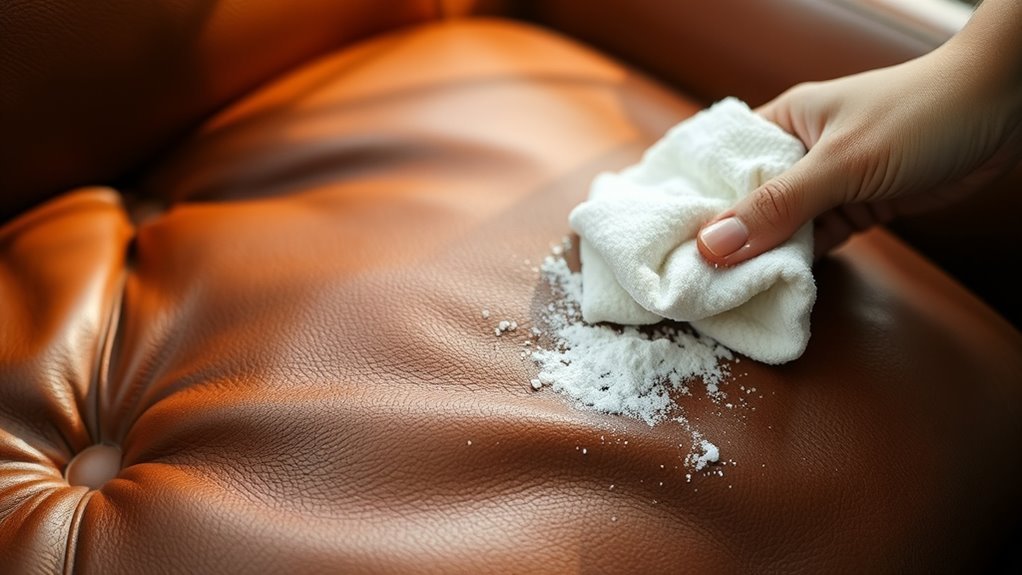
Sprinkle baking soda or cornstarch over the stain, let it sit to absorb the grease, then gently brush it off. Follow by wiping the area with a damp cloth and mild soap, then dry it carefully.
Conditioning afterward keeps the leather soft and protected. Keep going to discover more effective tips for tackling grease stains on leather.
Understanding Grease Stains on Leather

Why do grease stains on leather seem so stubborn? It’s because leather is porous, allowing oils to seep deep into its fibers. When grease lands on leather, it doesn’t just sit on the surface. It absorbs quickly, making removal tricky. You can’t just wipe it away like you’d with water-based stains.
Plus, leather’s natural oils and texture can trap grease, causing dark spots and potential damage if treated improperly. Understanding this helps you approach cleaning with the right methods and products.
Knowing how grease interacts with leather fibers ensures you won’t worsen the stain by using harsh chemicals or excessive scrubbing.
Immediate Steps to Take After a Grease Spill

Knowing how grease penetrates leather helps you act quickly to limit damage. The moment grease spills, grab a clean, dry cloth or paper towel and gently blot the area, don’t rub, or you’ll push the grease deeper.
Blot grease spills immediately with a dry cloth—avoid rubbing to prevent deeper stains.
Next, keep blotting until you remove as much excess grease as possible. Avoid using water, which can spread the stain or harm the leather’s finish.
Instead, let the leather breathe by leaving the spot exposed to air, but don’t apply heat or direct sunlight, as that can dry out the leather and cause cracking.
Acting fast prevents the grease from setting, making later cleaning easier.
Using Baking Soda to Absorb Grease

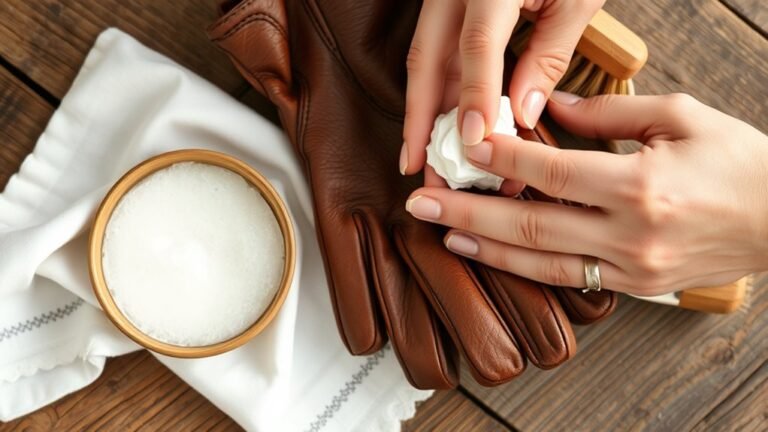
Although grease stains can feel stubborn on leather, you can effectively lift them using baking soda. Sprinkle a generous layer over the stain and let it sit for a few hours. The baking soda will absorb the grease, making it easier for you to brush off afterward.
Be gentle when removing the powder to avoid damaging the leather.
Here’s a quick guide:
| Step | Tip |
|---|---|
| Sprinkle baking soda | Use enough to cover stain |
| Let sit | Wait 2–3 hours for best results |
| Brush off | Use a soft brush or cloth |
Repeat if necessary, but avoid soaking the leather. This method is safe and quick for fresh stains.
Applying Cornstarch for Stain Removal
When grease stains settle into leather, cornstarch can help draw them out effectively. First, sprinkle a generous amount of cornstarch directly over the stain, ensuring it fully covers the affected area.
Let it sit for several hours or overnight to absorb the grease thoroughly.
Avoid rubbing the powder in; just let it work on its own. After the waiting period, gently brush off the cornstarch with a soft cloth or brush.
You’ll notice the powder has absorbed much of the grease, lightening the stain markedly. If needed, repeat the process for stubborn stains.
Cornstarch is a gentle, natural solution that won’t damage your leather, making it a quick and easy step before moving on to deeper cleaning methods.
Cleaning With Mild Soap and Water
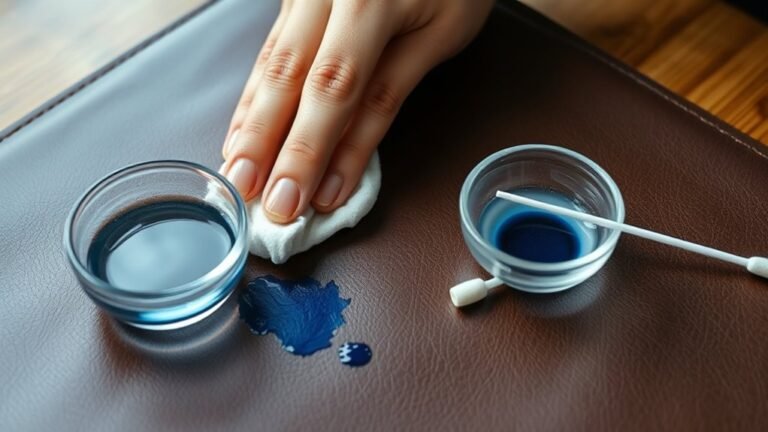
After using cornstarch to lift the grease, you can clean the leather more thoroughly with mild soap and water. Mix a small amount of gentle soap, like baby shampoo or saddle soap, with warm water.
Use mild soap and warm water after cornstarch to gently clean leather without soaking it.
Dampen a soft cloth in the solution and wring it out well. Avoid soaking the leather.
Gently wipe the stained area without rubbing harshly. Then, use a clean, damp cloth to remove any soap residue.
Finally, dry the leather with a soft towel and let it air dry away from direct heat.
- Use mild soap suitable for leather
- Avoid soaking the leather with water
- Wring out cloth thoroughly before wiping
- Gently clean without scrubbing hard
- Dry leather naturally, away from heat sources
Using Leather Cleaner and Conditioner
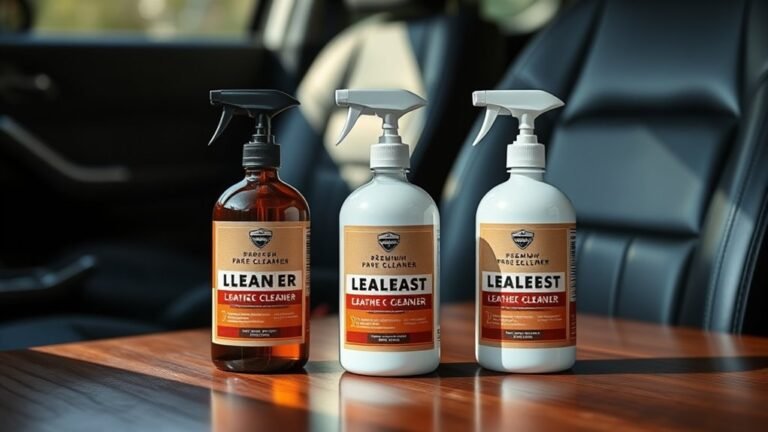
Since mild soap and water mightn’t fully restore your leather’s natural oils, using a specialized leather cleaner and conditioner can help remove remaining grease residues while keeping the material supple and protected.
Start by applying a small amount of leather cleaner on a soft cloth, then gently rub it over the grease stain in circular motions. Avoid soaking the leather to prevent damage.
Once the stain lifts, wipe off any excess cleaner with a clean, damp cloth and let the leather dry naturally.
Afterward, apply a leather conditioner evenly to replenish moisture and maintain flexibility. This step also creates a protective layer that helps your leather resist future stains.
Using these products regularly guarantees your leather stays clean and lasts longer without drying out or cracking.
Preventing Future Grease Stains on Leather
Regularly using leather cleaner and conditioner helps remove grease and keeps your leather soft, but preventing stains before they happen saves you time and effort.
To protect your leather items, you can take a few simple steps that minimize the risk of grease stains.
Apply a leather protector spray to create a barrier against oils and spills. Avoid placing leather near food prep areas or oily surfaces. Wash your hands before handling leather to reduce transfer of oils.
Store leather items in dust bags or covers to keep them clean. Wipe spills immediately with a dry cloth to prevent absorption.
Frequently Asked Questions
Can Grease Stains on Leather Cause Permanent Damage?
Yes, grease stains on leather can cause permanent damage if you don’t act quickly. You’ll want to clean them promptly to prevent discoloration and deterioration, preserving your leather’s look and texture over time.
Are There Any Professional Services for Leather Grease Stain Removal?
Yes, you can find professional leather cleaning services specializing in grease stain removal. They’ll use safe, effective methods to restore your leather.
Just search local or online leather care experts and schedule an appointment for quick, reliable help.
Is It Safe to Use Alcohol-Based Products on Leather?
You shouldn’t use alcohol-based products on leather because 78% of leather damage cases stem from harsh chemicals.
Instead, use a leather cleaner or conditioner to protect it without drying or cracking the material.
How Often Should Leather Be Conditioned After Cleaning Grease Stains?
You should condition your leather every 3 to 6 months after cleaning grease stains to keep it soft and prevent cracking.
If the leather feels dry sooner, go ahead and condition it more often to maintain its quality.
Can Grease Stains Affect Leather’s Color or Texture Long-Term?
Yes, grease stains can permanently darken leather and change its texture if left untreated.
You’ll want to clean them quickly and condition the leather to restore softness and prevent long-term damage or discoloration.
Conclusion
Grease stains on leather can feel frustrating, but acting quickly makes a big difference. Did you know that 90% of grease stains can be effectively treated if you address them within the first hour? By using simple household items like baking soda or mild soap, you can keep your leather looking great.
Remember, treating stains promptly and conditioning your leather regularly helps preserve its beauty and longevity. Using these quick and easy methods is key to removing grease stains from leather effectively. You’ve got this!