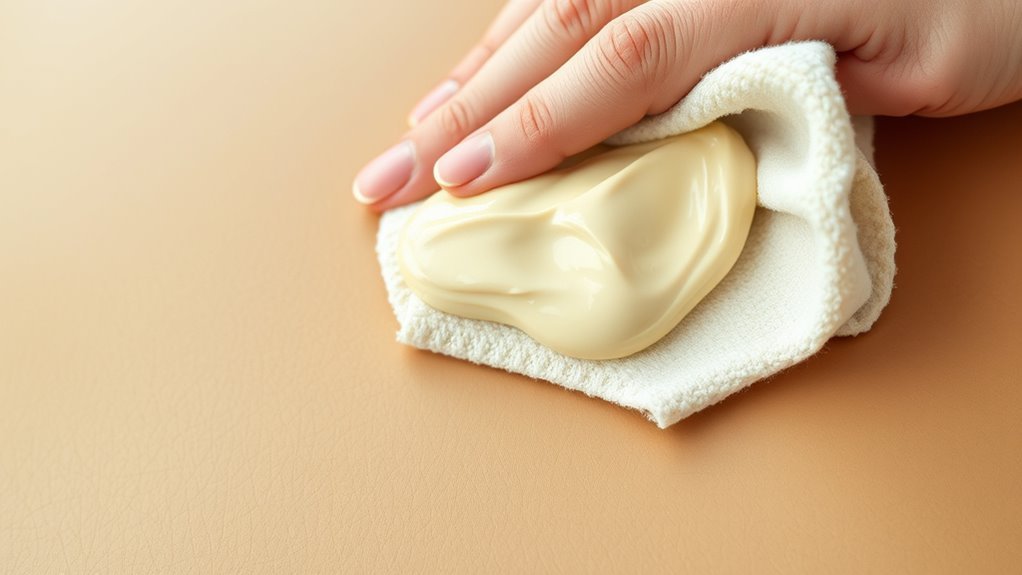
Can You Use Leather Conditioner on Faux Leather?
You shouldn’t use traditional leather conditioner on faux leather because it’s made from synthetic materials like polyurethane that don’t absorb oils the same way genuine leather does. Applying conditioner can leave sticky residue, cause peeling, or discolor the surface.
Instead, you’ll want to clean faux leather with mild soap and water and consider protectants designed specifically for synthetics. If you want to keep your faux leather looking great and lasting longer, there are better care methods to know.
Understanding Faux Leather Materials

How does faux leather differ from genuine leather? Unlike genuine leather, which comes from animal hides, faux leather is a synthetic material designed to mimic the look and feel of real leather.
Faux leather mimics real leather’s look but is made from synthetic materials, not animal hides.
You’ll find it made from plastics like polyurethane (PU) or polyvinyl chloride (PVC).
This means faux leather is generally more affordable, resistant to water, and easier to clean.
However, it lacks the natural breathability and aging qualities of genuine leather.
When you handle faux leather, you might notice a smoother, more uniform texture, and it won’t develop patina over time.
Understanding these differences is key before you decide how to care for it, especially since faux leather doesn’t respond to treatments the same way real leather does.
How Leather Conditioners Work

Leather conditioners work by replenishing moisture and oils that genuine leather loses over time, helping it stay soft and prevent cracking. When you apply a conditioner, it seeps into the leather’s fibers, restoring flexibility and enhancing its natural appearance.
These products often contain natural oils, waxes, and sometimes silicone, which nourish and protect the leather from drying out and fading. By regularly conditioning your leather items, you maintain their durability and extend their lifespan.
The conditioner also forms a protective layer that repels dirt and moisture, keeping your leather looking fresh. Since genuine leather is porous, it absorbs these nutrients effectively, which is why conditioners work so well.
Understanding this process is key before deciding whether to use such products on faux leather.
Risks of Using Leather Conditioner on Faux Leather

Although leather conditioners work wonders on genuine leather, they can cause problems when used on faux leather. Since faux leather is made from synthetic materials, conditioners designed for natural leather mightn’t absorb properly, leaving a sticky or greasy residue. This can attract dirt and dust, making your item look worse over time.
Additionally, some conditioners contain oils and chemicals that can break down the synthetic surface, leading to cracking or peeling. You might also notice discoloration or uneven texture after applying leather conditioner, ruining the smooth finish of your faux leather.
Using the wrong product can shorten the lifespan of your faux leather goods, so it’s important to avoid leather conditioners unless specified safe for synthetics.
Alternative Products for Faux Leather Care
Since faux leather requires different care than genuine leather, you’ll want to choose products specifically designed for synthetic materials. Using the wrong cleaner or conditioner can cause damage or discoloration.
Instead, opt for gentle cleansers and protectants made for vinyl or polyurethane surfaces. Here’s a quick guide to alternative products for faux leather care:
| Product Type | Purpose | Application Tips |
|---|---|---|
| Mild Soap Solution | Cleans dirt and grime | Use a soft cloth, avoid soaking |
| Silicone Spray | Adds water resistance | Apply sparingly, wipe excess off |
| Fabric Protector | Guards against stains | Spray evenly, let dry completely |
| Vinyl Conditioner | Restores softness and shine | Use monthly, test on small patch |
These alternatives help maintain your faux leather’s look without risking damage from traditional leather conditioners.
Tips for Maintaining Faux Leather Durability
To keep your faux leather looking its best over time, you’ll want to handle it with care and follow a few simple maintenance steps. Faux leather is durable but can crack or peel without proper attention. Here are three key tips to help maintain its durability:
- Clean Regularly: Wipe down with a damp cloth and mild soap to remove dirt and oils. Avoid harsh chemicals that can damage the surface.
- Avoid Direct Sunlight: Prolonged exposure to sunlight can cause fading and drying. Keep your faux leather items away from windows or use curtains to block UV rays.
- Condition Occasionally: Use products designed specifically for faux leather to maintain flexibility and prevent cracking. Regular conditioning keeps the material soft and resilient.
Following these steps will extend the life of your faux leather and keep it looking fresh.
Frequently Asked Questions
Does Faux Leather Require Conditioning as Often as Real Leather?
No, you don’t need to condition faux leather as often as real leather since it’s synthetic and more resistant to drying out.
Just clean it regularly and apply a suitable conditioner occasionally to keep it looking fresh.
Can Using Leather Conditioner on Faux Leather Change Its Color?
Like a sudden rainstorm changing the sky, using leather conditioner on faux leather can sometimes alter its color.
You shouldn’t expect drastic changes, but test a small area first to avoid any unwanted surprises.
Are There Any Eco-Friendly Conditioners Safe for Faux Leather?
Yes, you can find eco-friendly conditioners made specifically for faux leather. These usually use natural oils and plant-based ingredients, so you won’t damage the material or environment.
Always check labels to ensure compatibility with faux leather.
How Do Temperature Changes Affect Faux Leather Treated With Conditioner?
Temperature changes can cause faux leather treated with conditioner to expand or contract, possibly leading to cracking or peeling.
You should keep it in stable environments and avoid extreme heat or cold to maintain its condition.
Can Leather Conditioner Improve the Flexibility of Faux Leather?
You might think leather conditioner boosts faux leather’s flexibility, but it usually doesn’t. Instead, it can help maintain appearance and prevent cracking.
If you want real flexibility, consider products made specifically for faux materials.
Conclusion
You want your faux leather to stay soft and vibrant, not cracked or sticky. Picture gently wiping a smooth, supple surface that gleams with care—not soaked or damaged by the wrong products.
Instead of leather conditioner, choose cleaners made just for faux materials to keep that sleek look alive. These products help maintain the texture and appearance without causing harm.
With the right touch, your faux leather will stay inviting and fresh, like new, ready for you to enjoy every day. Using the proper faux leather conditioner and cleaner is essential to preserving its beauty and durability.