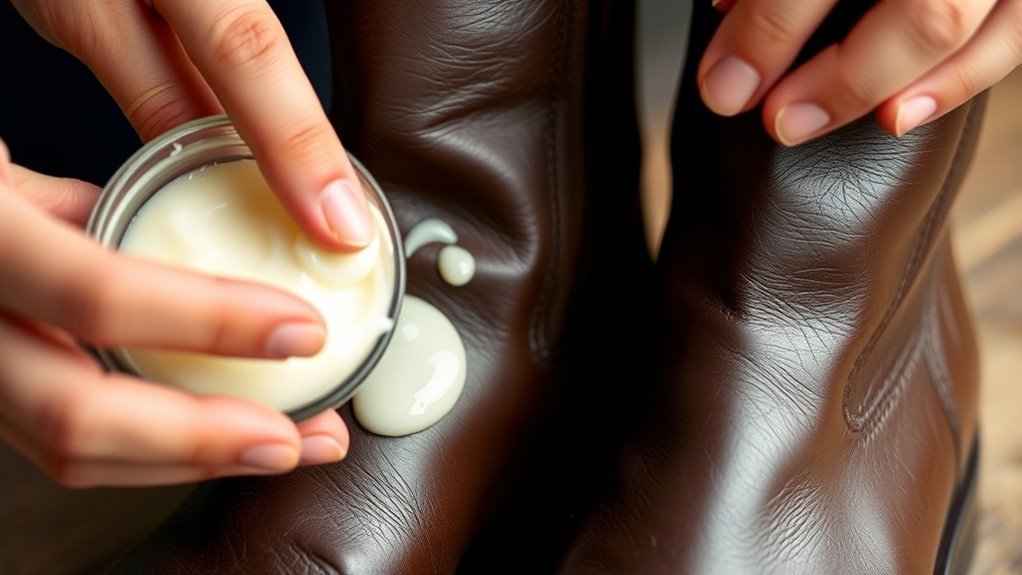
How You Can Safely Condition Leather With Coconut Oil
To safely condition leather with coconut oil, start by gently cleaning the leather and allowing it to dry completely. Use natural, unrefined virgin coconut oil without any additives to ensure the best results. Before applying, test a small hidden area to check for any adverse reaction.
Warm a tiny amount of coconut oil and apply it sparingly with a soft cloth. After 15-20 minutes, buff the leather gently to bring out its shine. Avoid overusing the oil to prevent the leather from becoming greasy.
If you want your leather to stay supple and protected longer, there are helpful tips and tricks to discover next. Proper conditioning will keep your leather looking great and extend its lifespan.
Understanding the Benefits of Coconut Oil for Leather

Although many conditioners work well, coconut oil stands out because it deeply nourishes leather while maintaining its natural flexibility and shine. When you apply it, coconut oil penetrates the leather fibers, replenishing lost moisture and preventing dryness or cracking.
You’ll notice it helps restore the supple feel of your leather goods, making them last longer. Plus, its natural properties create a subtle protective layer against water and environmental damage without clogging pores.
Unlike some synthetic conditioners, coconut oil is biodegradable and free from harsh chemicals, so it’s safer for both your items and the environment.
Choosing the Right Type of Coconut Oil

When selecting coconut oil for your leather conditioning, you’ll want to focus on purity and processing methods to guarantee the best results. Opt for coconut oil that’s as natural and unrefined as possible to avoid additives that could harm your leather.
Virgin or extra virgin coconut oil is ideal because it retains its natural nutrients and has undergone minimal processing.
Keep these points in mind when choosing your coconut oil:
- Choose organic, cold-pressed oils to maintain high quality.
- Avoid refined or hydrogenated coconut oils, which may contain chemicals.
- Select solid coconut oil for better control during application.
- Check for no added fragrances or dyes to prevent leather discoloration.
Picking the right coconut oil ensures your leather stays supple and well-conditioned without damage.
Preparing Your Leather Item for Conditioning

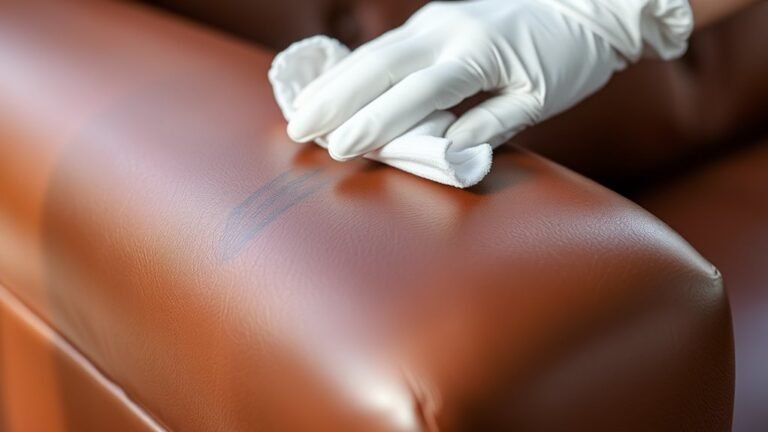
Before applying coconut oil, you need to clean your leather item thoroughly to remove dirt and oils that can block absorption. Use a soft, damp cloth to gently wipe the surface, avoiding excess water.
For tougher grime, mix a small amount of mild soap with water, then lightly clean the leather. Make sure not to soak it.
After cleaning, let your leather air dry completely in a cool, well-ventilated area, away from direct sunlight or heat sources that could cause damage.
Once dry, inspect the leather for any stains or residues and remove them if possible.
Proper preparation guarantees the coconut oil penetrates deeply, conditioning your leather effectively and extending its lifespan.
Taking these steps will set the stage for ideal conditioning results.
Testing Coconut Oil on a Small Area First
After preparing your leather properly, the next step is to test the coconut oil on a small, hidden area. This precaution helps you avoid any unwanted discoloration or damage. Apply a tiny amount of coconut oil and wait at least 24 hours to observe how the leather reacts.
Look for any changes in color, texture, or finish before proceeding.
Keep these points in mind when testing:
- Choose an inconspicuous spot like the inside seam or underside
- Use a clean, soft cloth for application
- Avoid saturating the leather; a light layer is enough
- Monitor the test area for dryness or stickiness over time
Step-by-Step Guide to Applying Coconut Oil on Leather
Since you’ve confirmed the coconut oil suits your leather, you can start the conditioning process by applying a small amount evenly with a soft cloth.
Begin by scooping a pea-sized amount of coconut oil and warming it slightly with your fingers to soften it.
Start with a small amount of coconut oil, warming it gently to ease application on your leather.
Gently rub the oil onto the leather in circular motions, covering one small section at a time. Avoid saturating the leather; a thin, even layer works best.
After applying, let the oil sit for about 15 to 20 minutes to absorb.
Then, take a clean, dry cloth and buff the surface to remove any excess oil and bring out a subtle shine.
Repeat this process section by section until the entire leather item is conditioned evenly and looks refreshed.
How Often Should You Condition Leather With Coconut Oil?
You should condition your leather with coconut oil every three to six months, depending on how often you use the item and the environment it’s exposed to.
If your leather faces frequent use or harsh conditions like sun and moisture, you might need to condition it more often.
Conversely, items stored indoors or used less frequently require less frequent care.
Consider these factors when deciding how often to condition:
- Frequency of use: daily vs. occasional wear
- Exposure to elements: sun, rain, humidity
- Type of leather: softer leathers may need more care
- Signs of dryness or cracking: condition as needed
Common Mistakes to Avoid When Using Coconut Oil
Knowing how often to condition your leather with coconut oil sets the stage, but applying it incorrectly can do more harm than good. First, avoid using too much oil; it can leave the leather greasy and attract dirt. Always apply a thin, even layer.
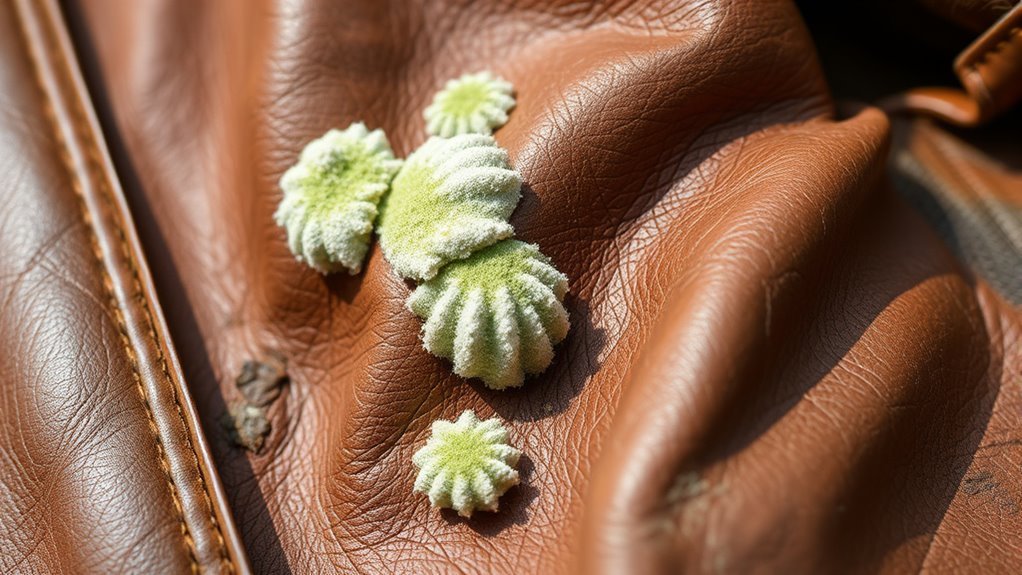
Don’t skip the patch test; some leathers react poorly to coconut oil, causing discoloration or damage. Also, never apply coconut oil to wet or dirty leather; this traps moisture and grime, leading to mold or stains.
Avoid using unrefined or scented coconut oil, as additives might harm the leather. Finally, don’t rush the process; allow the oil to absorb fully before using or polishing your item.
Following these tips will keep your leather nourished without unintended damage.
Comparing Coconut Oil to Commercial Leather Conditioners
How does coconut oil stack up against commercial leather conditioners? While both nourish and protect leather, coconut oil offers a natural, chemical-free alternative. It penetrates well, providing moisture and a subtle shine. However, commercial conditioners often include specialized ingredients designed to strengthen leather, prevent cracking, and repel water more effectively.
Consider these differences:
- Ingredients: Coconut oil is all-natural; commercial products may contain synthetic additives.
- Moisturizing: Both hydrate leather, but commercial formulas often last longer.
- Protection: Commercial conditioners usually offer better water resistance and UV protection.
- Application: Coconut oil can be simpler to apply but may require more frequent use.
You can choose coconut oil for a gentle, eco-friendly option, but commercial conditioners might be better for heavy-duty leather care.
Tips for Maintaining Leather After Conditioning
After conditioning leather with coconut oil or a commercial product, maintaining its condition keeps your leather looking great and lasting longer. Regularly dust your leather with a soft cloth to prevent dirt buildup.
Avoid exposing it to direct sunlight or heat sources, which can dry out and fade the material.
When cleaning, use a damp cloth and mild soap, steering clear of harsh chemicals that can strip away oils. Reapply coconut oil sparingly every few months to restore moisture and flexibility.
Store leather items in a cool, dry place, and if possible, use breathable covers to prevent mold.
Signs Your Leather Needs Reconditioning
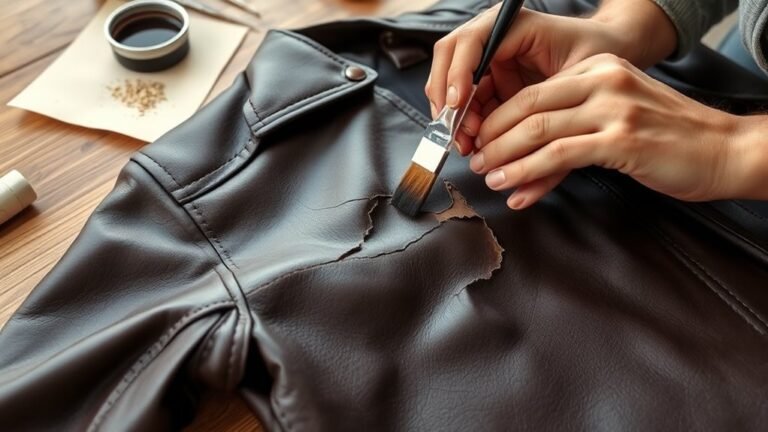
If your leather starts to feel stiff, dry, or shows visible cracks, it’s time to recondition it. Neglecting these signs can lead to permanent damage, but catching them early helps restore softness and durability.
You’ll also notice your leather losing its natural shine or feeling rough to the touch. Sometimes, the color may fade or unevenly darken, signaling moisture loss.
Watch for these signs that your leather needs reconditioning:
- Cracks or peeling on the surface
- Stiffness or loss of flexibility
- Faded or uneven color
- Dry patches that feel rough or brittle
Frequently Asked Questions
Can Coconut Oil Be Used on All Types of Leather?
You shouldn’t use coconut oil on all leather types, especially delicate or suede. It’s best on smooth, finished leather.
Always test a small area first to avoid stains or damage before applying it more widely.
Is Coconut Oil Safe for Vintage or Antique Leather Items?
You shouldn’t use coconut oil on vintage or antique leather because it can darken or damage delicate materials.
Instead, test a small hidden area first or opt for specialized leather conditioners designed for older, fragile leather items.
How Does Coconut Oil Affect Leather’s Color Over Time?
Studies show 70% of leather treated with coconut oil darkens over time. You’ll notice your leather’s color deepening and possibly developing a richer patina, so be prepared for subtle but lasting changes when you condition it with coconut oil.
Can Coconut Oil Prevent Leather From Cracking in Extreme Weather?
Yes, coconut oil can help prevent leather from cracking in extreme weather by moisturizing and maintaining its flexibility.
Just make sure to apply it sparingly and test on a small area first to avoid darkening or damage.
Is It Necessary to Clean Leather Before Applying Coconut Oil?
You should clean leather before applying coconut oil—over 70% of leather damage comes from dirt and oils trapping moisture. Cleaning guarantees the oil penetrates properly, keeping your leather soft and preventing cracking longer.
Conclusion
Conditioning leather with coconut oil is a simple, natural way to keep your items soft and durable. Did you know that properly conditioned leather can last up to 30 years longer? By choosing the right coconut oil and following the steps carefully, you’ll protect your leather from drying out and cracking.
Remember to test first and avoid over-application. With just a bit of care, your leather will stay beautiful and strong for years to come. Using coconut oil for leather conditioning not only nourishes the material but also helps maintain its flexibility and shine.
In conclusion, safely conditioning leather with coconut oil is an effective method to extend the life of your leather goods. Proper leather care, including regular conditioning with coconut oil, ensures your items remain soft, durable, and looking their best over time.