Why Do Bed Bugs Live in Leather Couches?
You find bed bugs in your leather couch because its seams, folds, and crevices offer perfect hiding spots where they can stay out of sight. Leather also traps warmth and creates a dark environment, both of which bed bugs prefer for feeding and breeding. These pests flatten to fit into tiny gaps, making leather furniture an ideal, cozy shelter.
If you want to understand how they settle in and how to spot them, keep exploring these details. Bed bugs are nocturnal and hide during the day, so their presence in leather couches can often go unnoticed. Paying attention to small signs like tiny blood stains or dark spots can help you detect an infestation early.
Understanding Bed Bug Behavior and Habitat Preferences

Although bed bugs are notorious for infesting mattresses, they don’t limit themselves to bedrooms. You need to understand that these pests seek out places where they can easily hide and access a blood meal.
Bed bugs are nocturnal, so they hide during the day in cracks, crevices, and tight spaces close to their host. They’re attracted to warmth and carbon dioxide, which leads them to human resting spots.
You mightn’t realize it, but bed bugs can live in furniture, luggage, and even electronics. Their flat bodies allow them to squeeze into tiny gaps, making detection tough.
Knowing their behavior helps you spot signs early and take action before they spread throughout your home. Stay vigilant and inspect areas beyond your bed regularly.
Characteristics of Leather Couches That Attract Bed Bugs

Since leather couches often have numerous seams, folds, and hidden crevices, they provide ideal hiding spots where bed bugs can easily settle. You’ll find that the smooth surface of leather seems less hospitable, but those tight joints and stitching offer shelter and protection.
Also, leather retains warmth, making it a cozy environment for bed bugs to thrive. The dark color of many leather couches further attracts these pests, as they prefer dim, undisturbed areas.
| Characteristic | Why It Attracts Bed Bugs |
|---|---|
| Seams and Folds | Offer secure hiding places |
| Warmth Retention | Creates a comfortable environment |
| Dark Color | Provides low-light conditions preferred |
Understanding these traits helps you know why leather couches are prime targets.
How Bed Bugs Hide in the Seams and Crevices of Leather Furniture

The seams and crevices in leather furniture don’t just attract bed bugs; they give them the perfect spots to hide and multiply. When you examine your leather couch, you’ll notice tiny gaps where seams meet or where cushions tuck into the frame.
Bed bugs slip easily into these narrow spaces, out of sight and reach. You mightn’t spot them because they flatten themselves to fit into the smallest cracks. These hiding places shield them from your cleaning efforts and even pest control treatments.
If you want to protect your furniture, it’s essential to inspect these areas regularly. Paying attention to the stitching lines, folds, and any tears can help you catch bed bug activity early before they spread throughout your home.
The Role of Warmth and Darkness in Bed Bug Infestations
When bed bugs look for a place to settle, they’re drawn to warmth and darkness because these conditions help them stay hidden and thrive. You’ll find that leather couches offer just the right environment.
The material retains body heat, creating a cozy habitat for bed bugs. Plus, the seams and folds shield them from light, keeping them safe from predators and disturbances.
This combination allows bed bugs to feed at night and retreat during the day without risk.
If you’ve noticed these pests, it’s often because your couch provides these ideal conditions. Understanding how warmth and darkness attract bed bugs helps you take targeted action to prevent infestations and protect your home.
Common Signs of Bed Bugs in Leather Couches
Although bed bugs are small, you can spot signs of their presence in your leather couch if you know what to look for. Check for tiny rust-colored stains on the leather, which are their droppings.
You might also notice small, white eggs or shed skins tucked into seams and crevices.
Look closely for tiny white eggs or shed skins hidden in seams and crevices of your leather couch.
Another giveaway is a musty, sweet odor that bed bugs emit when they infest an area heavily.
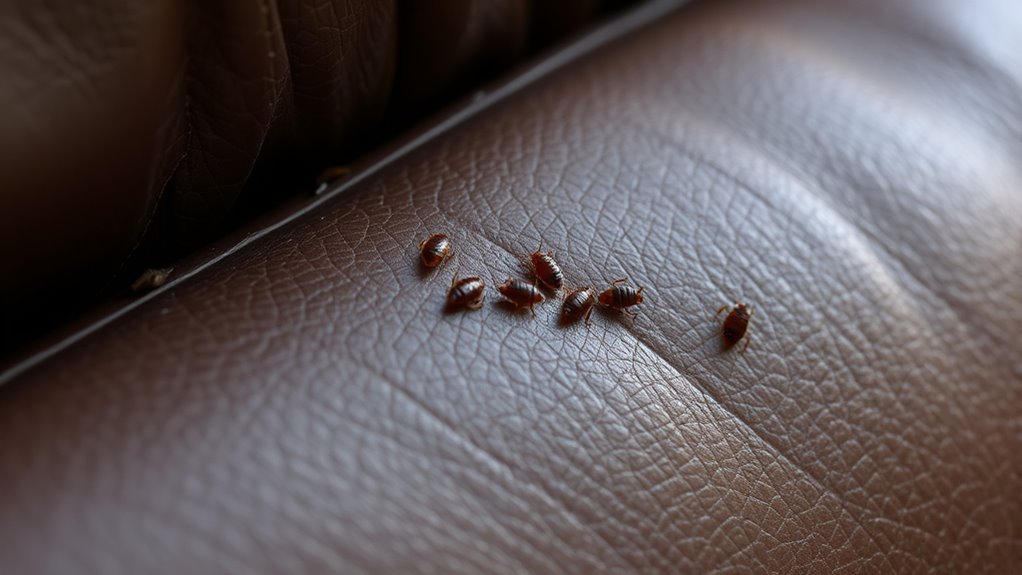
If you wake up with unexplained red, itchy bites, your couch could be harboring these pests. Carefully inspect the folds, under cushions, and stitching for live bugs, which are reddish-brown and flat.
Catching these signs early helps you act quickly before the infestation spreads further in your home.
Risks Associated With Bed Bugs Living in Leather Furniture
Since bed bugs thrive in the hidden crevices of leather furniture, you risk not only an uncomfortable living environment but also potential health issues like itchy bites and allergic reactions. These pests are more than just a nuisance; they can considerably impact your well-being and daily comfort.
When bed bugs infest leather couches, you face:
- Persistent itching and skin irritation from bites
- Allergic reactions that may require medical attention
- Sleepless nights due to discomfort and anxiety
- The spread of bed bugs to other areas of your home
Ignoring these risks can lead to worsening infestations and increased health problems.
Knowing the dangers helps you act quickly to protect yourself and your living space.
Effective Methods to Prevent Bed Bug Infestations on Leather Couches
To keep bed bugs from invading your leather couch, you need to take proactive steps that target their hiding spots and prevent their spread. Regularly inspect seams, crevices, and underneath cushions for signs of bed bugs.
Use protective covers designed to seal your couch tightly, making it harder for bugs to settle.
Avoid bringing used furniture indoors without thorough inspection and treatment.
Maintain cleanliness by vacuuming your couch and surrounding areas frequently, focusing on cracks and edges.
Keep clutter away from your leather furniture since it offers additional hiding places.
Finally, be cautious when traveling. Inspect hotel furniture and wash your clothes immediately upon returning home to reduce the risk of transporting bed bugs.
These measures help you prevent infestations before they start.
Treatment and Cleaning Tips for Bed Bug-Infested Leather Furniture
When you discover bed bugs in your leather furniture, prompt and careful treatment is essential to stop the infestation from spreading. Start by isolating the piece to prevent bugs from migrating.
Next, use a vacuum with a brush attachment to remove bugs and eggs from crevices. Avoid soaking the leather but wipe it gently with a mild soap solution to clean surfaces.
Finally, consider professional heat treatment or insecticide safe for leather to fully eradicate the pests.
Here are key steps for treating your leather furniture:
- Isolate the infested item immediately
- Vacuum thoroughly, focusing on seams and folds
- Clean gently with a mild soap and water solution
- Seek professional pest control if infestation persists
Act quickly to protect your home from further bed bug issues.
Frequently Asked Questions
Can Bed Bugs Survive on Leather Couches Without Feeding?
No, bed bugs can’t survive long on leather couches without feeding.
They need blood meals every few weeks to live, so if they don’t find a host, they’ll eventually die from starvation.
Do Bed Bugs Prefer Leather Over Fabric Furniture?
You might picture bed bugs favoring soft fabric, but they don’t prefer leather over fabric furniture.
They choose hiding spots based on crevices and proximity to hosts, not the material’s texture or type, so leather isn’t a preference.
How Long Do Bed Bugs Live Inside Leather Couches?
Bed bugs can live inside leather couches for several months, usually up to six months without feeding. You’ll need to act quickly since they hide well and survive long, making treatment essential to eliminate them completely.
Their ability to remain dormant without nourishment makes them particularly challenging to detect and remove. Regular inspection and thorough cleaning of leather furniture are crucial steps in controlling an infestation.
Professional pest control may be necessary if the problem persists, as these bugs can easily spread to other areas of your home.
Are Leather Couches Harder to Treat for Bed Bugs?
Of course, leather couches are just *delightful* bed bug fortresses. Yes, they’re harder to treat because bugs hide in creases and seams, and harsh chemicals risk ruining your “luxury” leather.
Good luck fumigating without a meltdown!
Can Bed Bugs Transfer From Leather Couches to Other Furniture?
Yes, bed bugs can easily transfer from leather couches to other furniture. They crawl and hide in cracks, so you’ll want to inspect and treat all nearby items to prevent the infestation from spreading throughout your home.
Conclusion
Now that you know why bed bugs love leather couches—warmth, darkness, and hidden seams—you can take action. Imagine Sarah, who found bites after guests stayed over; she caught the infestation early by checking her couch’s crevices. Don’t wait like she almost did.
Stay vigilant, inspect regularly, and treat promptly to keep your leather furniture bug-free. With the right steps, you’ll protect your home and enjoy your couch worry-free. Remember, regular leather couch inspection is key to preventing bed bug infestations and maintaining a comfortable living space.