What Do You Use to Clean a Leather Sofa?
To clean a leather sofa effectively, start by identifying its type—aniline, semi-aniline, pigmented, or bonded leather. This step is important because choosing the right cleaner depends on the leather finish.
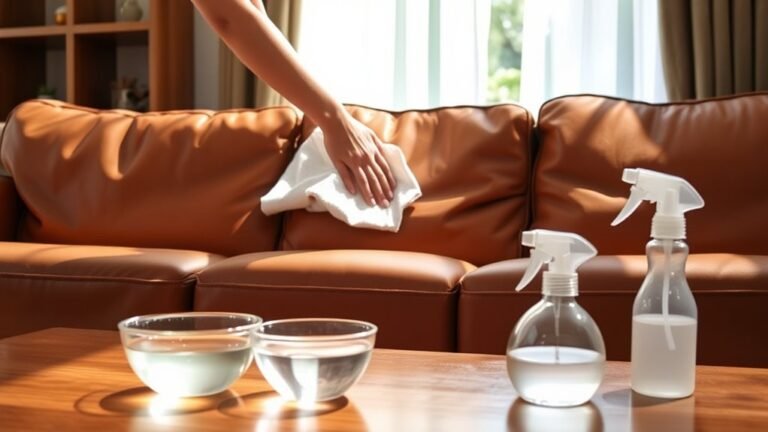
Use a soft microfiber cloth along with a mild soap mixed with lukewarm water, or opt for a commercial leather cleaner designed specifically for your sofa’s type. Gently wipe the surface in circular motions without soaking the leather.
After cleaning, apply a leather conditioner to keep the material soft and prevent cracks. If you want to keep your sofa looking great longer, there’s more useful care advice ahead.
Understanding Different Types of Leather

Before you start cleaning, you need to know what type of leather your sofa has. Different leathers require different care, so identifying the material is essential.
Aniline leather is soft and porous, absorbing liquids easily, so you should avoid harsh cleaners.
Semi-aniline has a light protective coating, making it a bit more durable but still delicate.
Pigmented leather features a thick protective finish, meaning it can handle stronger cleaning products without damage.
Bonded leather, made of leather scraps mixed with polyurethane, is less durable and often requires gentle cleaning.
By understanding your sofa’s leather type, you’ll choose the right method and avoid ruining its surface.
Take a moment to check manufacturer tags or consult your retailer for specifics before you plunge into cleaning.
Essential Supplies Needed for Cleaning

Knowing the type of leather your sofa has helps you pick the right cleaning supplies. You’ll need gentle products to avoid damage. Start with a soft cloth for dusting and wiping.
Then, choose a leather cleaner suited for your sofa’s finish. Don’t forget a leather conditioner to maintain softness and prevent cracking.
Here’s a simple list to guide you:
| Supply | Purpose | Tips |
|---|---|---|
| Soft Cloth | Dusting & wiping | Use microfiber, dry |
| Leather Cleaner | Removing dirt | Test on hidden spot |
| Leather Conditioner | Moisturizing & protection | Apply sparingly |
Stick to these essentials to keep your sofa looking fresh and extend its life.
How to Prepare Your Sofa Before Cleaning

Although cleaning your leather sofa might seem straightforward, taking a few preparatory steps guarantees better results and protects your furniture. First, remove any loose cushions and throw pillows to give you full access to all surfaces.
Start by removing cushions and pillows for complete access before cleaning your leather sofa.
Next, use a soft brush or vacuum with a brush attachment to clear dust, dirt, and crumbs from crevices and seams. This prevents grime from rubbing deeper into the leather during cleaning.
Check your sofa for any stains or spots to treat separately later. Also, test your cleaning solution on a hidden area to ensure it won’t discolor or damage the leather.
Finally, verify your sofa is dry and in a well-ventilated room to avoid moisture buildup while cleaning. These steps set the stage for a thorough, safe cleaning session.
Using Mild Soap and Water Solutions
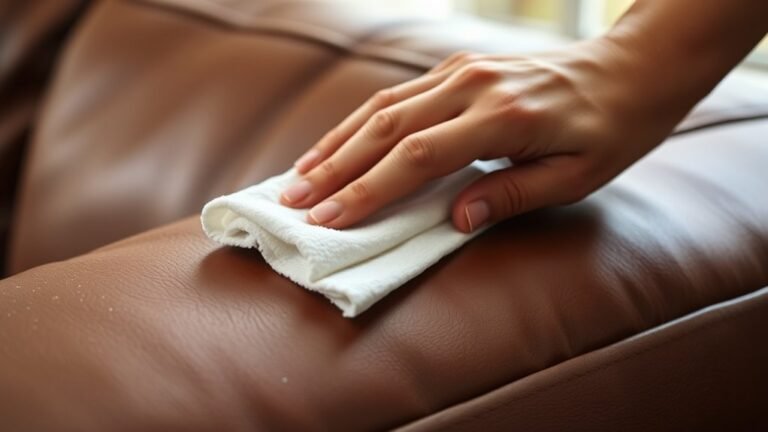
Once you’ve prepped your sofa and made sure your cleaning solution is safe to use, you can start with a mild soap and water mixture. Mix a few drops of gentle, moisturizing soap into a bowl of lukewarm water. Dip a soft cloth into the solution, wring it out until damp, and gently wipe the leather surface.
Avoid soaking the leather to prevent damage.
Focus on small sections to control moisture and ensure even cleaning. After wiping, use a dry microfiber cloth to absorb any excess moisture.
Keep these tips in mind:
- Use circular motions to lift dirt without scrubbing harshly
- Rinse your cloth frequently in clean water
- Test on a hidden area first to avoid discoloration
This method helps remove grime while preserving the leather’s natural oils.
Best Commercial Leather Cleaners Available
When you want a reliable and efficient way to clean your leather sofa, choosing the right commercial cleaner can make a big difference. Products like Lexol Leather Cleaner and Leather Honey Leather Cleaner are popular for their gentle yet effective formulas.
They break down dirt without stripping leather’s natural oils, helping maintain softness and durability. If you prefer something with conditioning included, consider Chamberlain’s Leather Milk, which cleans and nourishes in one step.
Always test any cleaner on a hidden spot first to ensure it doesn’t affect color or texture. Using a commercial cleaner designed specifically for leather is safer than generic household products, which might cause damage.
With the right product, you’ll keep your sofa looking fresh and extend its lifespan.
Homemade Natural Cleaning Remedies
If you prefer avoiding commercial products, you can easily make effective leather cleaners at home using natural ingredients. These remedies are gentle, cost-effective, and eco-friendly, perfect for maintaining your leather sofa’s look and feel.
Here are three simple homemade solutions:
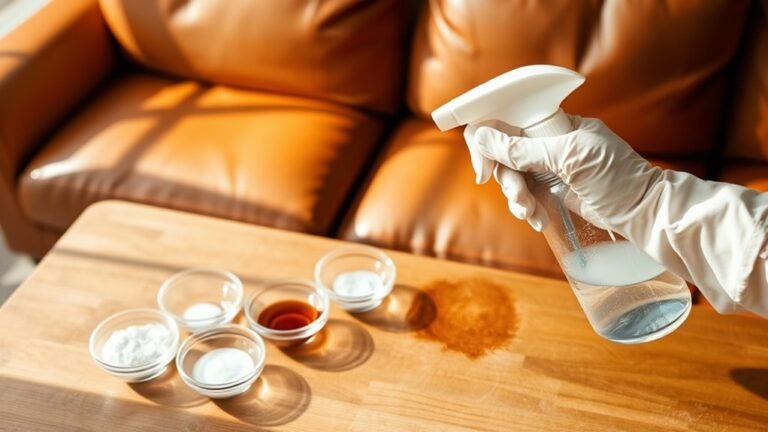
Mix equal parts white vinegar and water in a spray bottle; lightly mist your sofa and wipe with a soft cloth to remove dirt and restore shine.
Combine one part olive oil with two parts lemon juice for a nourishing cleaner that also conditions the leather.
Use a mild castile soap diluted in water to gently clean your sofa without stripping its natural oils.
Always test any remedy on a small hidden area first to guarantee it won’t damage your leather’s finish.
Techniques for Removing Stains From Leather
Although leather is durable, stains can still happen, and knowing how to tackle them quickly helps preserve your sofa’s appearance. Start by blotting spills immediately with a clean cloth to prevent absorption.
For tougher stains, use a gentle soap solution or a leather cleaner. Avoid scrubbing harshly to prevent damage. Test any cleaner on a hidden spot first.
After treating the stain, wipe with a damp cloth and dry promptly.
| Stain Type | Removal Technique |
|---|---|
| Ink | Use rubbing alcohol lightly |
| Oil/Grease | Sprinkle baking soda, then wipe |
| Wine | Blot, then mild soap solution |
| Dirt | Damp cloth and gentle cleaner |
| Sweat | Vinegar and water mix, blot |
Conditioning Your Leather Sofa After Cleaning
Since cleaning can strip away natural oils, you’ll want to condition your leather sofa to restore its softness and prevent cracking. Conditioning replenishes moisture, keeps the leather supple, and extends its lifespan.
Conditioning restores softness, prevents cracking, replenishes moisture, and keeps your leather sofa supple and long-lasting.
Here’s how to do it effectively:
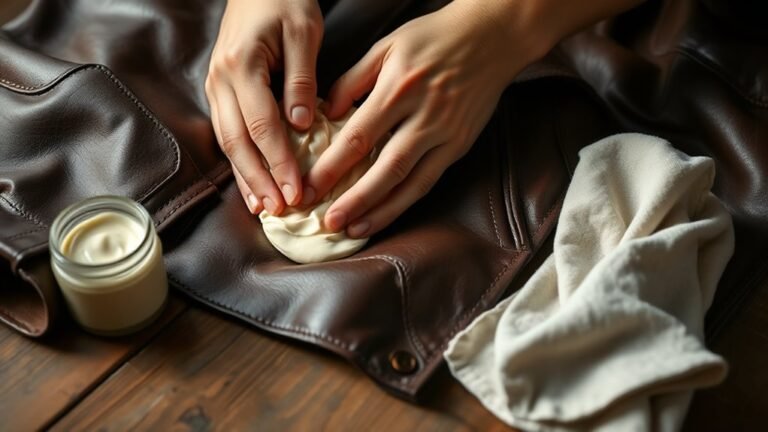
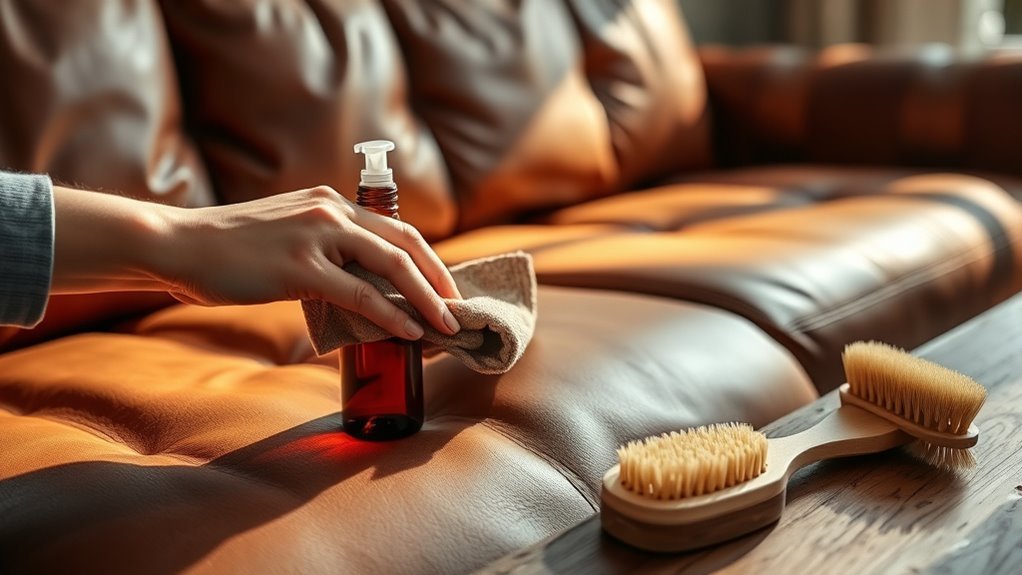
Apply a small amount of leather conditioner to a soft cloth, working it gently into the surface in circular motions. Let the conditioner absorb for about 10-15 minutes, allowing the leather to soak up the nourishing oils.
Buff the sofa lightly with a clean, dry cloth to remove excess conditioner and enhance its natural shine.
Regular conditioning after cleaning not only maintains your sofa’s luxurious feel but also helps protect it from future wear and tear.
Preventative Tips to Keep Leather Sofas Clean Longer
To keep your leather sofa looking fresh and clean for longer, you need to adopt simple daily habits and protective measures. Wipe spills immediately with a soft, dry cloth to prevent stains.
Avoid placing your sofa in direct sunlight or near heat sources, as this can cause fading and cracking. Use throws or slipcovers in high-use areas to minimize wear and dirt buildup.
Regularly dust your sofa with a microfiber cloth to remove dirt and prevent it from settling into the leather. Rotate cushions periodically to ensure even wear.
Finally, keep pets off the sofa or trim their nails to avoid scratches. By following these tips, you’ll extend your leather sofa’s beauty and durability without extra effort.
Frequently Asked Questions
Can I Use Baby Wipes to Clean a Leather Sofa?
You can use baby wipes on your leather sofa, but only if they’re alcohol-free and gentle. Test a small hidden spot first to avoid damage.
For best results, follow up with a leather conditioner afterward.
How Often Should I Professionally Clean My Leather Sofa?
You should get your leather sofa professionally cleaned every 12 to 18 months to maintain its condition. Regular professional care removes deep dirt and oils, keeping your sofa looking fresh and extending its lifespan.
This routine cleaning helps prevent damage and preserves the sofa’s natural texture and color. Staying on schedule with professional cleaning ensures your leather furniture remains comfortable and attractive for years to come.
Is It Safe to Use Vinegar on Leather Sofas?
You might think vinegar’s natural, but it’s too acidic for leather and can cause damage.
Instead, use a cleaner made specifically for leather to keep your sofa looking great without risking stains or cracks.
What Should I Do if My Leather Sofa Gets Wet?
If your leather sofa gets wet, you should immediately blot the area with a dry, soft cloth. Don’t rub or use heat.
Let it air dry naturally, away from direct sunlight or heaters to prevent damage.
Can Leather Sofa Color Fade From Cleaning Products?
Like walking on thin ice, using harsh cleaning products can definitely make your leather sofa’s color fade.
You should stick to gentle, leather-specific cleaners to keep its rich hue vibrant and avoid any damage.
Conclusion
Now that you know the best ways to clean your leather sofa—whether with mild soap, a commercial cleaner, or a natural remedy—you’re halfway to keeping it looking great.
Coincidentally, the same gentle care that removes stains also helps preserve its softness and shine.
So, by cleaning and conditioning regularly, you’re not just maintaining its appearance; you’re extending its life.
Using the right products and techniques to clean a leather sofa ensures it stays beautiful and durable over time. It’s a win-win that your sofa will thank you for every day.