How to Disinfect Leather Safely Without Damaging It
To disinfect leather safely, it is important to first identify your leather type since sensitive leathers like suede or nubuck need extra care.
Using leather-specific cleaners or mild soap with a damp cloth is recommended, while avoiding harsh chemicals like bleach or alcohol that can damage the material.
Always test any disinfectant on a hidden spot before applying it widely. Spray lightly and let the leather air dry—never soak it to prevent damage.
Finish the process by applying a leather conditioner to keep the material supple and maintain its quality.
Keep these steps in mind, and you’ll find tips to help preserve your leather’s quality even better.
Understanding Leather Types and Their Sensitivity

When disinfecting leather, you need to understand the type you’re dealing with because each reacts differently to cleaning agents. Leather types vary in porosity and sensitivity, which affects how you should sanitize them.
Recognizing your leather type is essential, as each responds uniquely to disinfectants and cleaning methods.
Suede and nubuck, for example, are highly porous and sensitive, making them prone to damage from water, alcohol, and harsh chemicals. You’ll want to use gentle methods on these to avoid ruining their texture.
In contrast, full-grain and top-grain leathers are more durable and can handle mild disinfectants if you test first on hidden spots. Bonded leather, made from glued scraps, is the most fragile and can deteriorate quickly if exposed to improper cleaning agents.
Knowing your leather type ensures you choose the right disinfectants without causing discoloration or cracking.
Recommended Cleaning Products for Leather
Choosing the right cleaning products plays an essential role in preserving your leather’s quality and appearance. For effective leather care, always opt for leather-specific cleaning products like saddle soap or pH-neutral cleaners. These guarantee gentle yet thorough cleaning without harming the leather’s finish.
Avoid harsh chemicals such as bleach, ammonia, or alcohol-based solutions, as they can damage color and texture. To disinfect leather safely, use leather disinfectant sprays formulated for this purpose, but apply them carefully to prevent damage. For routine cleaning, mild soap with water or specialized leather wipes work well to remove dirt and oils. Always follow the manufacturer’s instructions on any cleaning products to maintain your leather’s longevity and keep it looking its best while disinfecting effectively.
Step-by-Step Guide to Cleaning and Sanitizing Leather
Properly cleaning and sanitizing leather involves a few straightforward steps that help keep its surface both clean and protected. Start by dusting the leather with a microfiber cloth and vacuuming crevices to remove dirt and debris.
Begin leather care by dusting with a microfiber cloth and vacuuming crevices to remove dirt and debris.
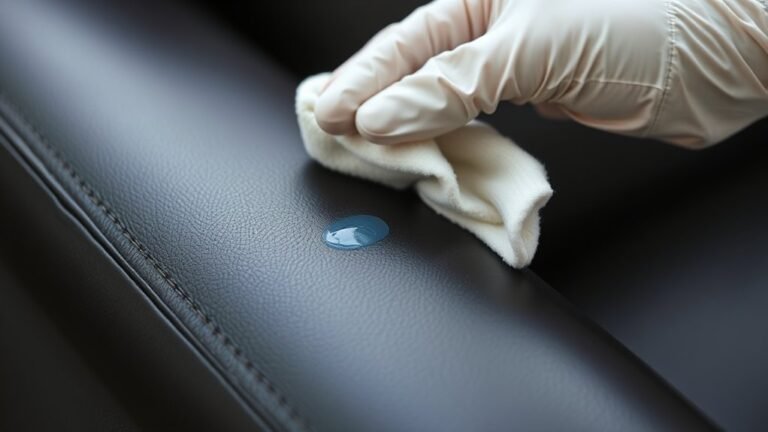
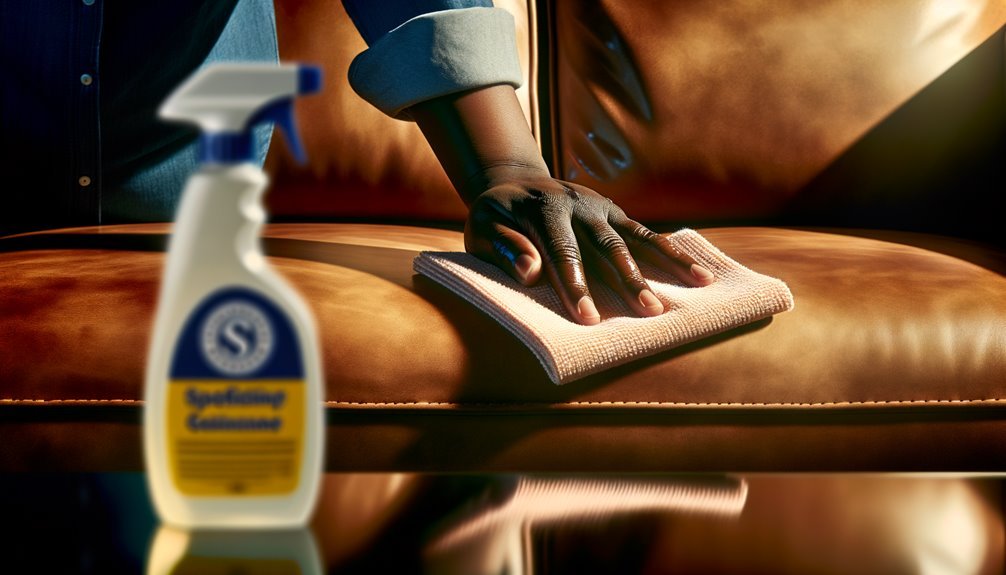
Next, focus on cleaning leather by wiping it gently with leather cleaning wipes or a damp cloth using a pH-neutral soap solution. To disinfect leather, test your disinfectant on a hidden spot, then spray lightly from 6–8 inches away, keeping the surface wet for one minute.
This process helps kill germs and viruses live on the surface. After disinfecting, let the leather air dry completely, avoiding heat or sunlight. Finally, apply a leather conditioner to restore moisture and maintain its appearance.
This step-by-step method ensures effective cleaning while protecting your leather.

Precautions to Prevent Damage During Disinfection
Since leather is sensitive to harsh treatments, you should always test disinfectants on a hidden area first to verify they won’t cause discoloration or damage. To sanitize leather without risking harm, avoid using harsh chemicals like bleach or ammonia, as they can dry out and crack the material.
When you disinfect your leather, use a damp microfiber cloth with mild, pH-balanced soap or a leather cleaner, applying disinfectants sparingly. Never soak leather or use excessive moisture, which can cause warping or deterioration.
After cleaning, let the leather air dry naturally in a well-ventilated area, steering clear of direct sunlight or artificial heat sources. Following these precautions will help you disinfect your leather safely and maintain its quality.
Maintaining Leather After Disinfection
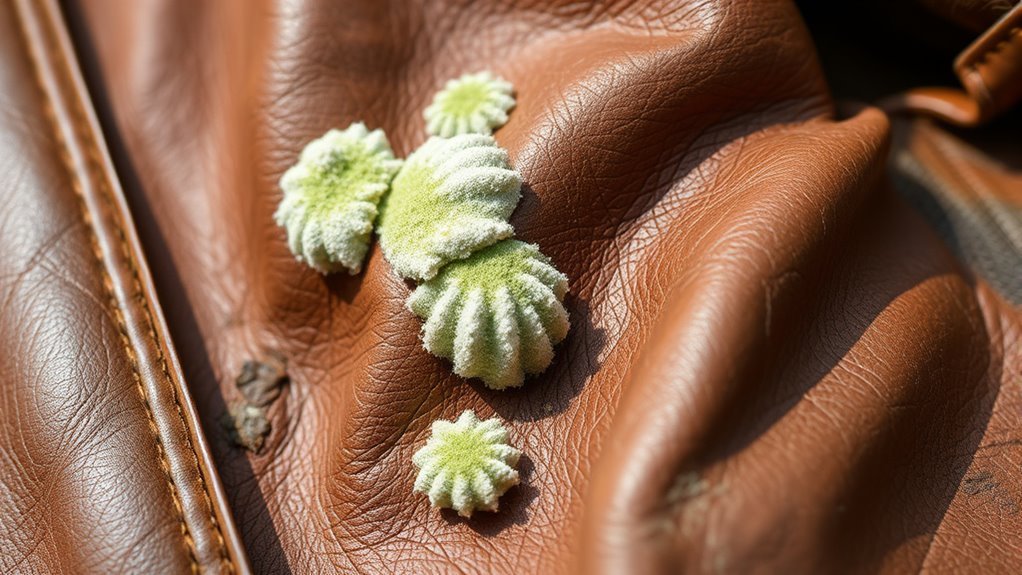
Once you’ve disinfected your leather, taking steps to maintain its condition will keep it looking and feeling great. First, allow the leather to fully air dry for at least 15-30 minutes after disinfecting to avoid trapping moisture, which can cause mold or damage.
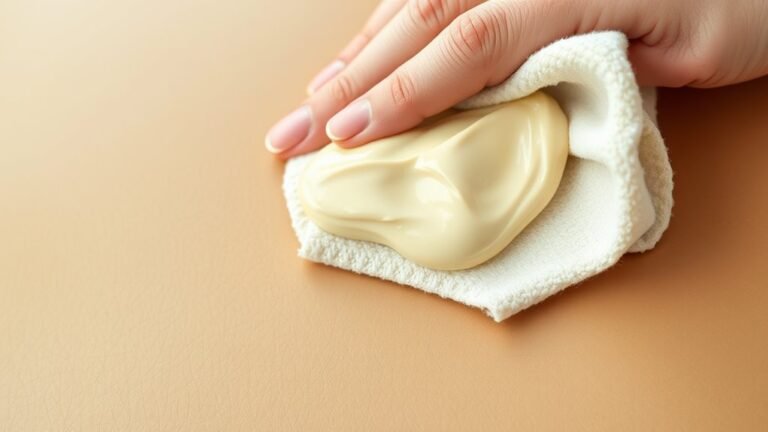
After it’s dry, apply a high-quality leather conditioner specifically formulated for leather. This replenishes lost oils and preserves suppleness, preventing cracking and drying. Avoid using harsh cleaners or conditioners not designed for leather, as they can alter the surface or color.
Regularly conditioning your leather after disinfecting with a suitable leather cleaner and conditioner maintains its natural luster and extends its lifespan. By following these steps, you’ll keep your leather clean, healthy, and looking its best over time.
Frequently Asked Questions
What Disinfectant Can Be Used on Leather?
You can use Clorox™ Disinfecting Mist, 70% isopropyl alcohol cautiously, white vinegar mixed with water, or leather-specific disinfectant sprays.
Avoid bleach, ammonia, or rubbing alcohol directly to protect your leather from damage or discoloration.
Is It Okay to Use Lysol Wipes on Leather?
You shouldn’t use Lysol wipes on leather; they can cause up to 70% surface damage like fading or cracking. Instead, choose leather-safe disinfectants and apply gently with a microfiber cloth to keep your leather looking great.
Does Leather Absorb Bacteria?
Yes, leather does absorb bacteria because its semi-porous nature traps microbes in its fibers and natural oils. You should clean and disinfect it regularly to reduce bacteria, though some may remain embedded deep inside.
Is Dawn Dish Soap Okay for Leather?
Yes, you can use Dawn dish soap on leather if you dilute it properly. It’ll clean dirt and oils gently, but always test first on a hidden spot and follow up with a conditioner to keep leather soft.
Conclusion
When disinfecting leather, always approach with attention and accuracy. Choosing compatible cleaning products prevents potential problems, protecting your prized possessions. By following the steps steadily and safely, you’ll safeguard surfaces without sacrificing softness or sheen.
Remember, routine care and cautious cleaning create confidence in your leather’s longevity. So, stay smart, stay safe, and strike the perfect balance between sanitation and softness to keep your leather looking lively and lasting longer.
Proper leather disinfection involves using the right methods and products to maintain both cleanliness and material integrity. Prioritizing these practices ensures effective disinfection while preserving the leather’s texture and appearance.