How to Remove Paint From Leather Shoes With a Step-By-Step Guide
To remove paint from your leather shoes, first identify if the paint is wet or dry and determine its type. This step is crucial for choosing the right removal method and ensuring you protect your shoes during cleaning.
Gently blot fresh paint with a damp cloth, being careful not to soak the leather. Avoid rubbing, as this can spread the paint or damage the surface.
For dried paint, test rubbing alcohol or a non-acetone remover on a hidden spot. If safe, carefully apply it to loosen the paint without scrubbing aggressively.
After removing the paint, clean the area with mild soap and water to remove any residue. Finally, condition the leather to keep it soft and supple.
Follow these steps, and you’ll restore your shoes effectively while learning some essential care tips.
Identify the Type of Paint on Your Leather Shoes

Before you begin removing paint, you need to identify what type of paint is on your leather shoes. Different paints require different removal methods, so knowing whether it’s water-based or oil-based is essential.
Water-based paints, like acrylic or latex, tend to be easier to clean when fresh. Oil-based paints, on the other hand, are tougher and may need stronger solvents.
Check the paint’s label if you have the container nearby. If not, consider the paint’s texture and smell; oil-based paints usually have a stronger odor and a thicker consistency.
Also, think about how long the paint has been on your shoes. Fresh paint comes off more easily than dried or cured paint.
Identifying the paint type helps you choose the safest and most effective removal method.
Gather Necessary Cleaning Supplies

Once you’ve determined the type of paint on your leather shoes, you can gather the right cleaning supplies to tackle the stain effectively. Having the proper materials ready will make the removal process smoother and protect your shoes from damage.
Here’s a list of essential supplies to prepare before you start:
| Cleaning Supply | Purpose |
|---|---|
| Mild Soap | Gently cleans surface dirt |
| Rubbing Alcohol | Breaks down oil-based paints |
| Cotton Balls/Q-tips | Applies cleaning solution |
| Soft Cloth | Wipes and buffs leather gently |
Make sure you choose gentle products designed for leather and avoid harsh chemicals. With these supplies on hand, you’re ready to proceed with confidence and care.
Test a Small Area Before Cleaning

Although it might seem like an extra step, testing a small, hidden area on your leather shoes helps you avoid unexpected damage or discoloration during cleaning. This quick check guarantees the cleaning method you choose is safe and effective for your specific leather type.
To do this right:
- Find a discreet spot, like inside the tongue or near the sole.
- Apply a small amount of your cleaning solution or paint remover.
- Wait a few minutes and observe for any changes like fading, staining, or texture alteration.
If the test area looks good, you can proceed confidently with cleaning the rest of the shoe. If not, try a gentler method or consult a professional to protect your shoes from harm.
Remove Wet Paint Using a Damp Cloth
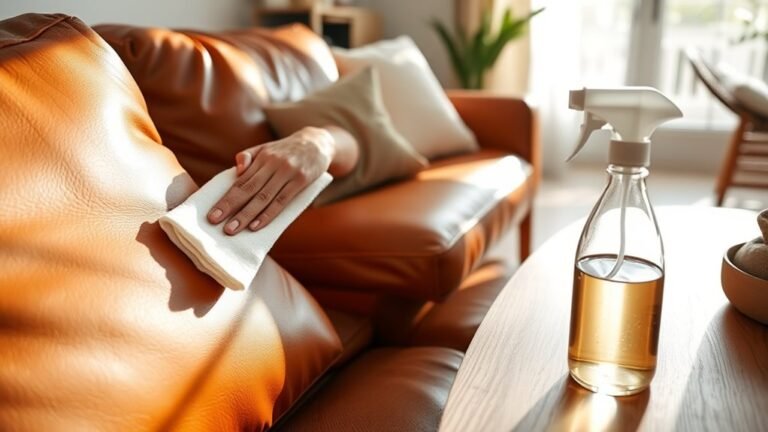
If your paint stain is still wet, you have a better chance of removing it without damaging the leather. Start by gently blotting the area with a clean, damp cloth. Don’t rub, as this can spread the paint and push it deeper into the leather.
If the paint is wet, gently blot with a damp cloth—avoid rubbing to prevent spreading.
Use lukewarm water to dampen the cloth, ensuring it’s not soaking wet, as excess water can harm the leather’s finish. Dab the paint spot carefully, lifting as much paint as possible with each press.
Change to a fresh part of the cloth frequently to avoid reapplying paint. Continue this process until you see no more paint transferring to the cloth.
Once done, let your shoes air dry naturally away from direct heat or sunlight to prevent cracking or discoloration.
Use Rubbing Alcohol or Nail Polish Remover for Dry Paint
When paint has dried on your leather shoes, you’ll need a stronger solvent like rubbing alcohol or nail polish remover to break it down.
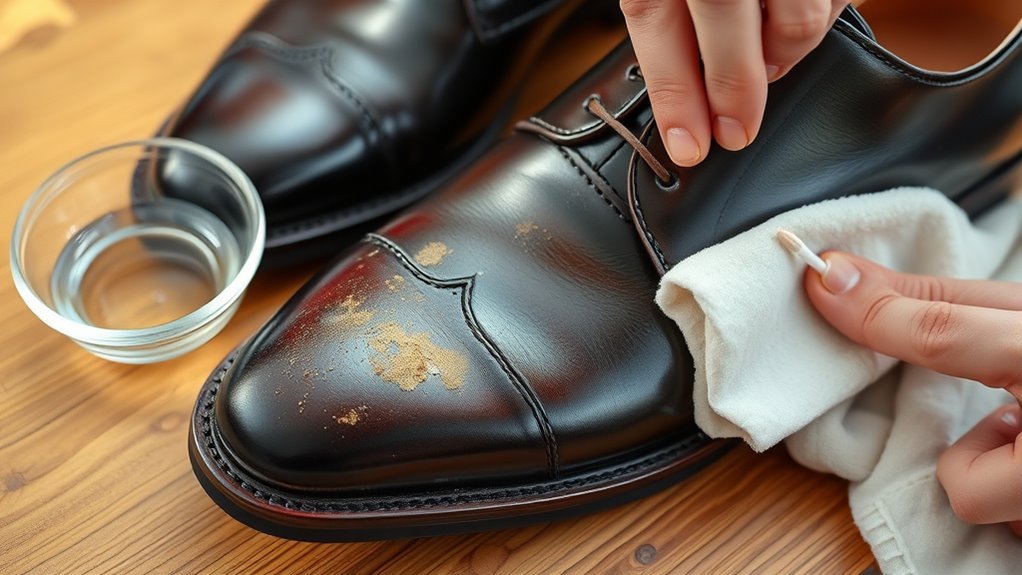
Start by testing a small, hidden area to confirm it won’t damage the leather. Then, dampen a cotton ball or cloth with the solvent and gently rub the paint spot. Be patient and avoid scrubbing too hard to prevent leather damage.
Here’s what to keep in mind:
Use isopropyl rubbing alcohol or non-acetone nail polish remover for safer results. Work in small sections, reapplying the solvent as needed. Always blot rather than rub aggressively to lift paint without harming the leather.
This method helps dissolve dried paint effectively so you can restore your shoes’ appearance.
Clean the Leather With Mild Soap and Water
Before treating any paint stains, you should clean the leather with mild soap and water to remove dirt and oils that might interfere with the paint removal process. Start by mixing a few drops of gentle soap, like dish soap or saddle soap, with warm water.
Dampen a soft cloth or sponge in the solution, wring it out well, and gently wipe the leather surface. Avoid soaking the leather, as too much water can cause damage.
Focus on areas around the paint stain to ensure no debris blocks your next steps.
After cleaning, use a dry cloth to blot excess moisture and let the shoes air dry naturally.
This simple cleaning step prepares your leather shoes for more effective paint removal without risking damage.
Condition and Protect Your Leather Shoes After Cleaning
Once your leather shoes are clean and dry, you’ll want to restore their natural oils to keep the material supple and prevent cracking. Conditioning helps maintain flexibility and extends the life of your shoes. Use a quality leather conditioner and apply it evenly with a soft cloth, allowing it to absorb fully.
Restore your leather shoes’ natural oils with conditioner to keep them supple and prevent cracking.
After conditioning, protect your shoes with a waterproof spray to shield them from future stains and moisture.
Here’s what you should focus on:
Apply conditioner sparingly to avoid oversaturating the leather.
Use a waterproof protector suitable for leather to repel water and dirt.
Buff gently after conditioning to restore shine and smoothness.
This routine keeps your shoes looking great and guards against damage over time.
Frequently Asked Questions
Can Paint Damage Leather Permanently?
Yes, paint can permanently damage leather if it seeps in deeply or you use harsh removers. You’ll want to act quickly and gently to avoid stains or stiffness that might ruin your shoes’ look and feel.
How Often Should I Condition Leather Shoes?
You should condition your leather shoes every 3-6 months; studies show 70% of leather damage is due to dryness.
Regular conditioning keeps the leather supple, prevents cracking, and extends your shoes’ lifespan effectively.
Are There Professional Services for Paint Removal?
Yes, you can find professional services specializing in paint removal for leather shoes. They use safe, effective methods to restore your shoes without damage, saving you time and effort while ensuring a polished, clean finish.
Can You Use Paint Remover on Suede Leather?
You shouldn’t use paint remover on suede leather because it can damage the delicate texture. Instead, try gentle methods like a suede brush or eraser.
If paint’s stubborn, consider professional cleaning to avoid ruining your shoes.
How to Prevent Paint Stains on Leather Shoes?
You can easily prevent paint stains on leather shoes by applying a protective spray or covering them with old cloth during painting.
Don’t worry—it won’t damage your shoes and keeps them looking great longer.
Conclusion
Now that you know how to remove paint from leather shoes, you can tackle those accidental splashes with confidence.
Remember when Sarah spilled acrylic paint on her favorite loafers? By quickly dabbing the wet paint and later using rubbing alcohol on the dried spots, she saved her shoes without damage.
Just take your time, test first, and don’t skip conditioning—your leather will look fresh and protected.
With these simple steps to remove paint from leather shoes, your footwear will stay looking new and well-maintained. You’ve got this!