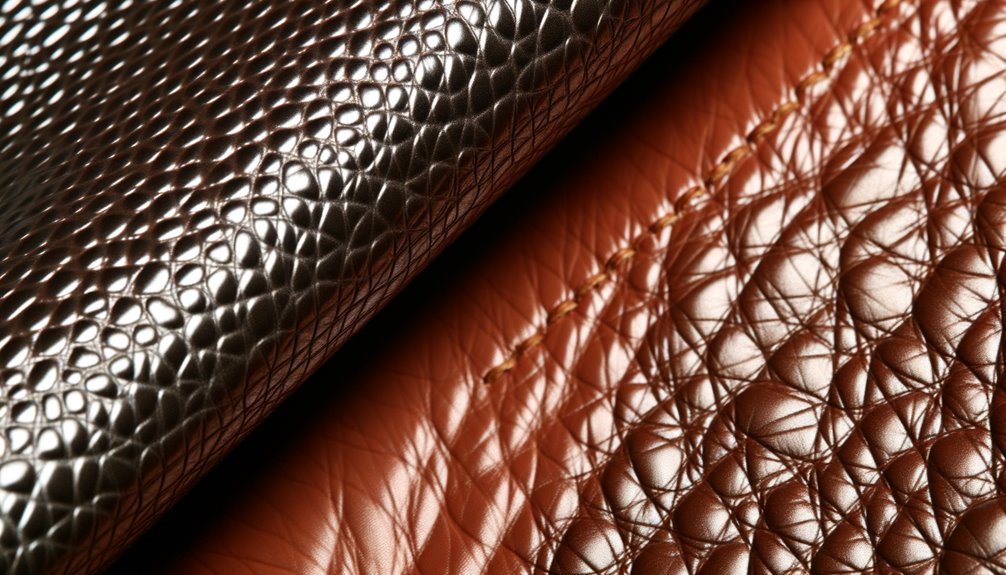
Is Faux Leather Real Leather? The Truth Explained Simply
Faux leather isn’t real leather; it’s a man-made material crafted to mimic leather’s look using synthetic fabrics and plastic coatings. This material is often chosen for its affordability and ease of maintenance compared to genuine leather.
While faux leather is more affordable and easy to maintain, it lacks the natural imperfections, warmth, and patina that genuine leather develops over time.
You’ll notice it feels stiffer and often has a chemical scent, unlike the soft, supple texture of real leather.
If you want to understand these differences better and how they affect durability and care, keep exploring the details.
Defining Faux Leather

What exactly is faux leather? It’s a synthetic material designed to mimic real leather’s look and feel. Made from plastics like polyurethane (PU) or polyvinyl chloride (PVC), faux leather isn’t sourced from animal hides but manufactured through chemical processes.
This imitation leather, also known as artificial leather, often has a consistent texture and pattern, unlike genuine leather’s natural variations. If you’re looking for a more affordable and easy-to-maintain alternative, faux leather fits the bill perfectly.
It’s popular in budget-friendly and vegan products because it avoids animal-derived materials. Just remember, despite its leather-like appearance, faux leather lacks the organic fibers and aging qualities of real leather, making it a distinct, man-made option rather than authentic leather.
Understanding Real Leather
How can you tell if leather is truly real? Real leather comes from animal hides, primarily cattle, treated through tanning to preserve durability. Full-grain leather, made from the top layer, is the highest quality and shows natural imperfections and unique grain patterns that synthetic materials simply can’t replicate.
Unlike artificial leather or vegan leather, which are designed to mimic real leather’s look, genuine real leather absorbs moisture and has an earthy smell. You’ll notice that real leather develops a distinctive patina over time, adding character.
In contrast, synthetic materials lack these irregularities and age differently. When examining leather, focus on texture, smell, and visible grain patterns to distinguish authentic full-grain leather from lower-quality or artificial alternatives.
Material Composition of Faux Leather
Although faux leather aims to replicate the look of real leather, it’s made entirely from synthetic materials rather than animal hides. Its material composition consists mainly of a fabric base, often polyester or other synthetic fibers, coated with a plastic layer.
This plastic coating is usually polyurethane (PU) or polyvinyl chloride (PVC), both man-made substances that give faux leather its leather-like appearance. The synthetic nature allows manufacturers to texture and dye the surface to mimic real leather’s grain, but it lacks natural pores and imperfections found in genuine leather.
Understanding this material composition helps you realize that faux leather is a completely man-made product designed to imitate leather’s look without using animal products, relying solely on synthetic fabric bases and plastic coatings.
Differences in Durability Between Faux and Real Leather
While faux leather can look appealing at first, it won’t hold up like real leather over time. Real leather boasts superior durability and longevity, often lasting decades with proper care. It resists cracking and peeling, even as it ages, developing a natural patina that enhances its strength.
On the other hand, faux leather typically shows wear and tear within 2-5 years, especially lower-quality versions. It’s prone to cracking, peeling, and fading, particularly when exposed to moisture or frequent use. Although high-quality faux leather can initially mimic real leather’s durability, it generally lacks the long-term resilience you get with genuine leather.

Appearance and Texture Comparisons
You’ll notice that faux leather often looks more uniform and smooth compared to the natural variations and imperfections in real leather. When you touch it, faux leather feels more synthetic, while real leather offers a softer, textured feel.
These differences in appearance and texture make it easier to tell them apart up close.
Visual Differences Highlighted
When examining leather up close, you’ll notice real leather boasts natural imperfections, irregular grain patterns, and unique scars that give it authenticity. These blemishes and subtle variations in texture create a surface finish that feels organic and varied.
Over time, genuine leather develops a patina, enhancing its character and depth. In contrast, faux leather displays a uniform grain pattern and a smooth, often plastic-like surface finish without natural flaws. It lacks the subtle pores and imperfections seen in real leather.
Additionally, real leather absorbs water quickly, darkening the spot, while faux leather repels water due to its synthetic nature, maintaining its original look. These visual differences make it easier for you to distinguish between natural and artificial leather at a glance.
Touch and Feel Variations
The differences you see in leather’s appearance carry over to how it feels to the touch. When you handle real leather, you notice its supple texture, natural grain variations, and pliability. It feels warm and soft, developing a smoother, richer patina over time.
In contrast, faux leather often feels stiffer and less pliable, with a more uniform texture that lacks the natural softness of genuine leather. You might also detect a slight chemical scent from faux leather, unlike the earthy, woody aroma of real leather.
While real leather responds to your touch with malleability and warmth, faux leather tends to feel cold and plasticky, emphasizing the tactile differences that set them apart beyond just looks.
Surface Imperfections Contrast
Although both real and faux leather might look similar at first glance, their surface imperfections tell very different stories. When you examine genuine leather, you’ll notice natural irregularities like scars, wrinkles, and uneven grain patterns that contribute to its authentic appearance.
These surface imperfections develop over time, giving real leather a unique texture and patina you won’t find in faux leather. On the other hand, faux leather usually displays a consistent, uniform texture and pattern, lacking the depth and variation of genuine leather’s natural flaws.
If you look closely, faux leather’s surface appears smooth and factory-finished, which contrasts sharply with the distinctive, imperfect character of real leather’s surface. These differences help you easily distinguish between authentic and synthetic materials.
Environmental and Ethical Considerations
Because faux leather is made from synthetic materials like polyurethane or PVC, it avoids using animal products and appeals to those seeking vegan and cruelty-free options. However, you should consider its environmental impact.
Faux leather relies on fossil fuels, making it less eco-friendly than you might expect. It’s not biodegradable and can take hundreds of years to break down, releasing harmful chemicals in the process. The chemical use during production raises ethical concerns, as these substances can be toxic to both workers and the environment.
While choosing faux leather helps avoid animal exploitation, you must weigh this against its significant plastic waste and pollution footprint. Understanding these trade-offs helps you make more informed, conscious choices about your materials.
How to Identify Real Leather vs. Faux Leather
You can spot real leather by checking its smell, texture, and how it reacts to water. Real leather has natural imperfections and absorbs moisture, while faux leather looks uniform and repels water.
Try these simple tests to know if you’re holding genuine leather or a synthetic copy.

Key Leather Differences
How can you tell real leather from faux leather at a glance? Genuine leather, made from animal hides, shows natural grain and irregularities in texture, while synthetic leather, or imitation, looks uniform and smooth.
Real leather often has an earthy smell, unlike the chemical scent of faux leather. Another key difference is water absorption: genuine leather soaks up moisture quickly, but synthetic leather repels it due to its plastic coating.
Over time, real leather softens and develops a unique patina, giving it character, whereas faux leather remains largely unchanged without forming a patina.
Authenticity Tests
Recognizing the subtle differences between genuine and faux leather becomes easier when you know which tests to perform. Authenticity tests focus on key traits like smell, surface texture, and moisture absorption to help you identify real leather.
Check for natural imperfections; real leather has irregular patterns, while faux leather looks uniform. Smell the material; genuine leather has an earthy aroma, whereas faux leather smells plastic-like. Feel the surface texture; real leather is soft and supple, faux leather often feels stiff or plasticky.
Test moisture absorption by pressing a drop of water; real leather absorbs it quickly, faux leather repels it. Observe the patina over time; real leather develops a unique sheen, while faux leather remains unchanged.
These tests ensure you accurately distinguish between real and faux leather.
Maintenance and Care Requirements
Although faux leather mimics the look of real leather, it demands much less upkeep. Its maintenance and care are straightforward. Just regular wiping with a damp cloth and mild soap keeps it looking fresh.
Since faux leather is resistant to stains and doesn’t absorb water, spills are easier to manage compared to real leather. However, you should avoid sunlight and extreme temperatures to prevent cracking or fading.
Unlike genuine leather, it doesn’t need conditioning, making it easy to clean and maintain.
| Aspect | Faux Leather Care Tips |
|---|---|
| Cleaning | Use damp cloth and mild soap |
| Stain Resistance | Resists stains, no absorption |
| Damage Prevention | Avoid direct sunlight and heat |
| Upkeep | Wipe regularly, no conditioning needed |
Cost Implications of Choosing Faux or Real Leather
Choosing between faux leather and real leather often comes down to cost, and understanding the price differences can help you make a smarter purchase. Genuine leather typically costs more due to animal hides and tanning, reflecting its durability and long-term value.
Faux leather offers a budget-friendly alternative but may wear out faster, impacting overall expenses. When weighing your options, consider these points:
- Genuine leather demands a higher upfront cost but lasts longer.
- Faux leather is cheaper initially, ideal if you’re budget-conscious.
- Bonded leather sits between faux and full-grain leather in price and quality.
- Durability affects how often you’ll need replacements, influencing total cost.
- A thorough price comparison helps balance cost against long-term value.

Applications and Use Cases for Faux and Real Leather
Where do faux and real leather fit into your daily life? Faux leather, a synthetic material made from plastic compounds, often appears in fashion accessories, furniture, and upholstery. Its vegan-friendly nature and cost-effectiveness make it a popular choice if you want style without animal products or a high price tag.
On the other hand, real leather, derived from animal hides, excels in durability and develops a unique patina over time. You’ll find it in high-end handbags, shoes, and luxury furniture, where longevity and natural texture matter most.
Both materials have diverse applications: choose faux leather for ethical concerns and budget-friendly options, or real leather when you value superior durability and timeless aesthetics in your belongings.
Frequently Asked Questions
Is Faux Leather as Good as Real Leather?
Faux leather isn’t as good as real leather in durability or breathability, but it’s more affordable, easier to maintain, and cruelty-free.
You’ll appreciate its uniform look, though it won’t develop the same patina over time.
How Long Will Faux Leather Last?
Imagine your faux leather jacket lasting about 3 to 5 years with care.
If you avoid sun, heat, and harsh cleaning, it can last up to 8 or 10 years before cracking or peeling becomes obvious.
What Are the Disadvantages of Faux Leather?
You’ll find faux leather less durable, prone to cracking and peeling over time. It won’t develop a natural patina and often contains chemicals.
Plus, it’s not environmentally friendly due to its plastic-based materials.
What Is Faux Leather Made Of?
Think of faux leather as a clever costume. It’s made from fabric like polyester or cotton, coated with plastic layers like polyurethane or PVC. You’ll find dyes and textures added to mimic real leather’s look and feel.
Conclusion
You might wonder if faux leather is real leather, but the truth is, it’s a clever imitation made from synthetic materials. While it doesn’t have the natural durability or unique aging of real leather, faux leather offers affordability and easier maintenance.
Understanding these differences helps you make a choice that fits your needs and style. So, enjoy knowing what you’re really getting, and pick the option that suits your lifestyle best. When deciding between faux leather and real leather, consider factors like cost, care, and appearance to find the perfect match for you.